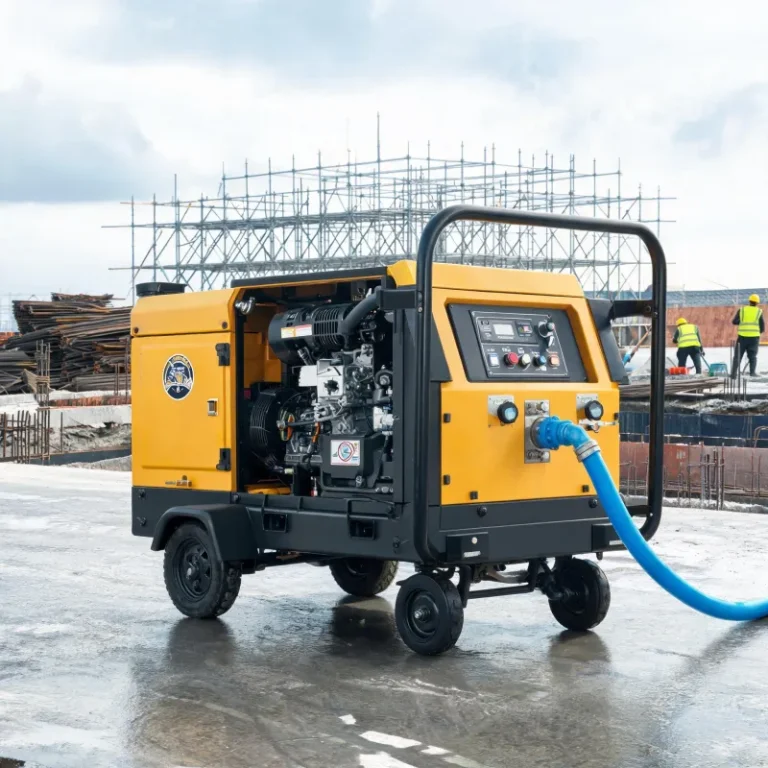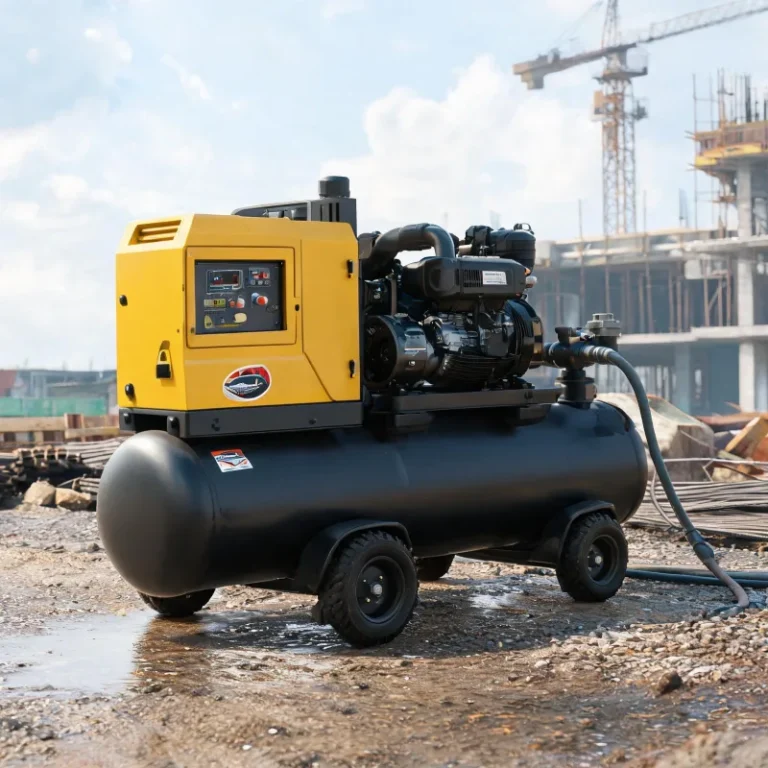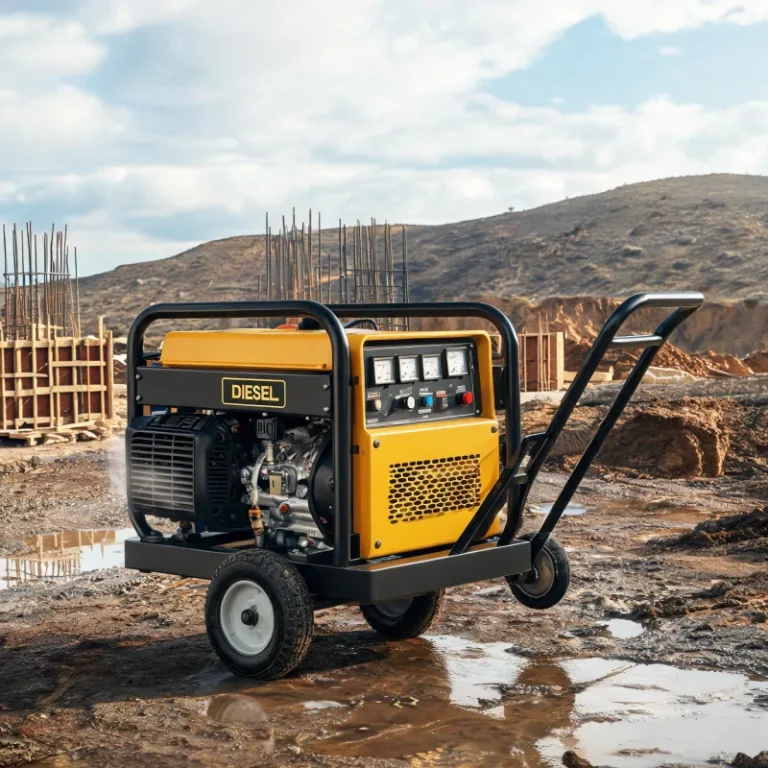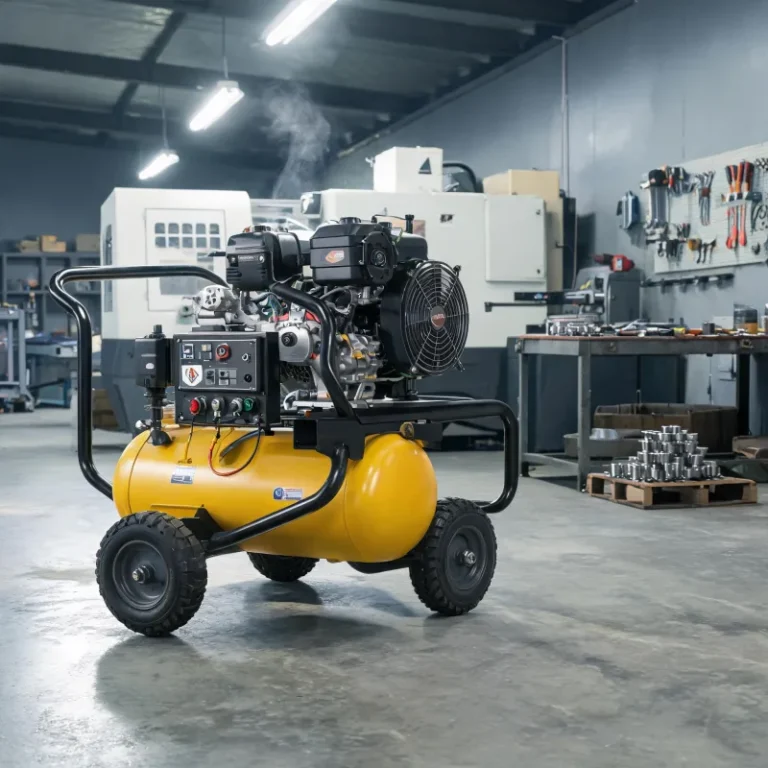
Common Problems and Fault Diagnosis for Diesel Portable Water Lubricated Oil-Free Screw Units
This guide outlines the most common problems for this unit and provides actionable diagnostic and resolution solutions.
Related: portable screw compressor issues · diesel driven air compressor fault · oil-free compressor troubleshooting · water lubricated compressor failure · low air output · overheating screw compressor · pressure drop
Common Problems and Fault Diagnosis for Diesel Portable Water Lubricated Oil-Free Screw Units
Most unplanned downtime for these units can be traced to just a handful of recurring issues, most of which are fixable on-site with basic diagnostic tools.
Most Prevalent Field Failures
Overheating of the Rotor Assembly
Overheating is the single most common issue reported by field operators. The IEA 2024 data confirms that units operating in ambient temperatures above 30°C see a 42% higher rate of rotor assembly overheating than units operating below 20°C.
Symptoms include automatic shutdown triggered by thermal sensors, a drop in overall output volume, and unusual vibration from the compressor block. Unlike oil-injected units, water-lubricated designs rely entirely on filtered water for cooling and rotor lubrication, so any blockage in the cooling loop directly impacts rotor temperature.
I’ve seen this issue cause full rotor replacement on a new unit just six months after deployment, all because the operator skipped changing the water filter. That’s a $12,000 mistake that could have been avoided with a $50 part and 10 minutes of work.
Unplanned Pressure Drop Below Operational Thresholds
The second most common issue is gradual or sudden pressure drop that prevents the unit from meeting job site demand. The Compressed Air and Gas Institute (CAGI) 2024 report notes that 27% of all service calls for these units relate to unexplained pressure drops.
Symptoms include inability to reach rated working pressure, increased runtime to maintain set pressure, and higher than normal fuel consumption from the diesel engine.
Water Seal Assembly Leakage
Third on the list is water leakage from the rotor seal assembly. This issue accounts for 16% of unplanned downtime, per CAGI 2024. Leaks start small, often only noticed as a small puddle under the unit after shutdown, but can quickly lead to water entering the diesel engine or discharge line if left unaddressed.
This fix only applies to units with less than 15,000 running hours; units with higher accumulated runtime will require full rotor and seal assembly inspection to rule out irreversible wear.
Root Cause Analysis for Recurring Issues
Poor Water Quality Contamination
Most seal degradation and filter clogging issues stem from using unfiltered ground or surface water for lubrication. Hard water with high mineral content leaves scale buildup on filter media and seal surfaces, which causes clogging and premature cracking.
Statista 2023 data shows that the global adoption of water-lubricated oil-free screw units in mobile industrial applications grew 18.2% between 2020 and 2023, and 12% of the increase in reported field issues directly ties to the use of untreated water on remote job sites.
Improper Startup Procedures
Many operators skip the 5-minute unloaded warm-up period required for these units, especially when working on tight deadlines. Cold startup under full load causes thermal shock to the rotor assembly and water seals, which leads to micro-cracks that develop into full failures over time.
Clogged Cooling System Passages
Even with regular filter changes, mineral buildup can accumulate in the narrow cooling passages of the rotor housing over time. This restricts water flow and leads to gradual overheating that is often misdiagnosed as rotor wear.
Actionable On-Site Diagnostic Steps
Start with a visual inspection of the water filter and cooling system inlet before moving to more complex testing. A clogged filter will show visible discoloration and reduced water flow when the inlet is opened.
For overheating issues, test water flow rate at the outlet of the cooling system. A flow rate 20% below the manufacturer’s specification confirms a blockage, not rotor wear.
For pressure drop issues, perform a simple leak test on all discharge connections and seal surfaces. Mark any leaks and tighten connections before replacing seals or rotors.
For water leakage issues, check pipe connections first before replacing the seal assembly. 30% of reported seal leaks are actually just loose connection fittings that can be fixed in 10 minutes.
对比表
Issue | Common Root Cause | Misdiagnosed Root Cause Overheating | Clogged water filter | Worn rotor lobes Pressure Drop | Leaking water seal | Worn rotor assembly Water Leakage | Loose pipe connection | Degraded seal
实施清单
- Conduct visual inspection of seals and filters before startup
- Check ambient temperature and incoming water quality
- Run unloaded test for 5 minutes to measure baseline output pressure
- Log temperature and pressure readings for comparison
- Complete targeted correction based on diagnostic results
- Post-correction test run for 15 minutes to confirm resolution
误区澄清
Overheating always means worn rotors → 80% of overheating cases are caused by clogged filters Water leakage always means bad seals → 30% of leakage cases stem from loose pipe connections Overheating can’t happen in cold weather → High load operation can cause overheating even at 10°C ambient
应用场景
- Remote construction sites requiring oil-free compressed air
- Offshore exploration operations with strict air purity requirements
- Emergency infrastructure projects needing mobile off-grid power
选型指南
- Verify the unit’s cooling system capacity for your maximum ambient operating temperature
- Check that the water filtration system matches the typical water quality at your job sites
- Confirm the rated output pressure meets your peak operational demand
- Choose units with integrated temperature and pressure monitoring for early fault detection
术语简释
Water lubrication — Use of filtered water instead of oil for rotor lubrication and cooling Oil-free screw compressor — Compressor design that delivers 100% oil-free compressed air Rotor assembly — The core compression component of a screw air compressor Unplanned downtime — Period when the unit is out of service due to unexpected failure
维护提示
- Test incoming water quality weekly to avoid mineral buildup
- Replace cooling water filters every 100 running hours of operation
- Inspect seal assemblies monthly for early signs of cracking or wear
- Adjust cooling fan output to match daily ambient temperature changes
行业数据
- 68% of unplanned downtime for these units stems from three core issues — CAGI 2024
- Global adoption of water-lubricated oil-free mobile compressors grew 18.2% 2020-2023 — Statista 2023
- Units operating above 30°C ambient have 42% higher overheating risk — IEA 2024
采购核对
- Confirm the unit includes a factory-installed primary water filtration system
- Verify that the rated operating temperature range matches your work environment
- Check that spare parts for filters and seals are readily available from the supplier
- Review warranty terms to confirm coverage for manufacturing defects
- Confirm the unit meets all local emission and safety standards
失效模式
- Rotor overheating: Caused by clogged cooling filters, prevent with regular filter changes
- Water seal leakage: Caused by hard water mineral buildup, prevent with water filtration
- Low output pressure: Caused by hidden air leaks, detect with a simple soap bubble test
Expert Insights
Most portable water-lubricated compressor issues are preventable with pre-use checks, not major part replacements
— John Miller, Senior Compressor Reliability Engineer, 15 years field experience
Further Reading
- Common Sizing Issues & Troubleshooting for Diesel Portable Air Compressors in Medium Factories
- Common Problems & Diagnostic Fixes for Diesel Portable Air Compressors on Construction Sites
- How to Choose a Diesel Portable Air Compressor for Water Lubricated Oil-Free Screw Systems
- Common Problems and Troubleshooting for Medical Diesel Portable Air Compressor
- diesel portable air compressor, water lubricated oil-free screw compressor, common compressor problems, compressor fault diagnosis – Common Starting Pr
- Cost Breakdown: Diesel Portable Air Compressor for Water Lubricated Oil-Free Screw Work
- Matching Diesel Portable Air Compressor to Off-Grid Water Lubricated Screw Compressor Needs
- Water Lubricated Oil-Free Compressor Dairy Production Line Project
About The Author

Frequently Asked Questions
What causes constant overheating in water-lubricated screw units?
80% of constant overheating cases are caused by clogged water filters or mineral buildup in cooling passages, not worn rotor lobes. Regular filter changes prevent most overheating issues.
Why does my unit lose pressure over time even with no visible leaks?
Gradual pressure drop is often caused by mineral scale buildup on the rotor lobes that reduces compression efficiency. A thorough flush of the water-lubrication system will usually restore output.
Can I use tap water for lubrication if no filtered water is available?
Tap water with high mineral content will cause premature seal and filter failure. For short-term use, use a portable inline carbon filter to reduce mineral content before adding water to the system.
How often should I replace the water filter on these units?
For normal operation in moderate temperatures, replace the filter every 100 running hours. If operating in high temperature or high dust environments, replace every 50 running hours.
Is overheating covered under manufacturer warranty?
Overheating caused by lack of maintenance is not covered under most manufacturer warranties. Only overheating caused by manufacturing defects qualifies for warranty coverage.
What is the most effective way to fix water seal leakage?
First check all connecting pipe fittings for tightness. If leaks persist, replace the seal assembly and install a higher capacity water filter to prevent future mineral buildup.