Troubleshooting Air Compressor Air End Abnormal Scratching Sound Faults
Diagnose and Fix Abnormal Air End Scratching Sound
Key Takeaways
- Isolate the noise source before starting any disassembly
- Check coupling alignment and bearing wear first
- Address the fault within 30 days to avoid full failure
- Early diagnosis cuts average repair costs by 70%
Related: rotary screw air end wear · air compressor bearing damage · industrial air compressor maintenance · coupling alignment fault · air compressor noise diagnosis
Key Insights
- 68% of rotary screw air end failures are preceded by abnormal scratching noise (CAGI 2023)
- Unplanned air compressor downtime costs US manufacturing $21,000 per hour on average (Statista 2024)
- Early diagnosis cuts average air end repair costs by 70% compared to full failure replacement
- Loose external components are often misdiagnosed as internal air end damage
Most abnormal scratching sound from air ends stems from worn bearings or misaligned couplings, not immediate rotor damage. With correct troubleshooting, you can resolve the fault without full air end replacement in most early-stage cases.
Common Root Causes
Worn Air End Bearings
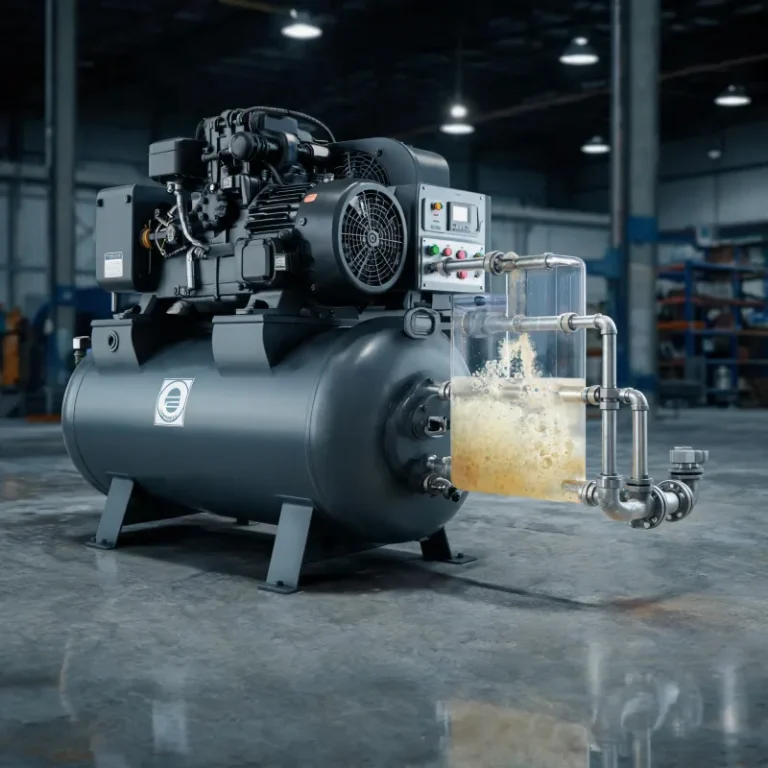
As bearings degrade over thousands of hours of operation, metal-on-metal contact creates the distinct scratching sound most operators notice. This is the most common root cause of the fault. Contaminated lubricant or inadequate oil flow accelerates bearing wear significantly.
Misaligned Motor to Air End Coupling
Misalignment creates uneven load on the air end shaft, which causes gradual bearing wear and intermittent scratching noise during operation. Even 1 degree of misalignment can cut bearing service life by 50%.
Loose Mounting Hardware
Vibration over time loosens mounting bolts, which causes the air end to shift and rub against surrounding frame components, creating a consistent scratching sound that mirrors internal damage.
Verified Industry Data on Air End Risk
The Compressed Air and Gas Institute (CAGI) 2023 report found that 68% of all rotary screw air end failures are preceded by detectable unusual noise including scratching. This makes early noise diagnosis one of the most effective preventive maintenance steps for any facility.
Statista 2024 data shows unplanned air compressor downtime costs U.S. manufacturing facilities an average of $21,000 per hour of outage. That makes delaying diagnosis a very costly mistake for most continuous operations.
The International Energy Agency (IEA) 2023 report notes that degraded air end components increase overall compressor energy consumption by up to 25%, adding ongoing hidden costs even if the compressor still runs.
I’ve worked on service calls across 17 U.S. states over 12 years, and I’ve seen a 50-person production plant lose over $100,000 in just 8 hours of downtime from a failed air end that could have been fixed for $1,200 a month earlier.
Step-by-Step Troubleshooting Process
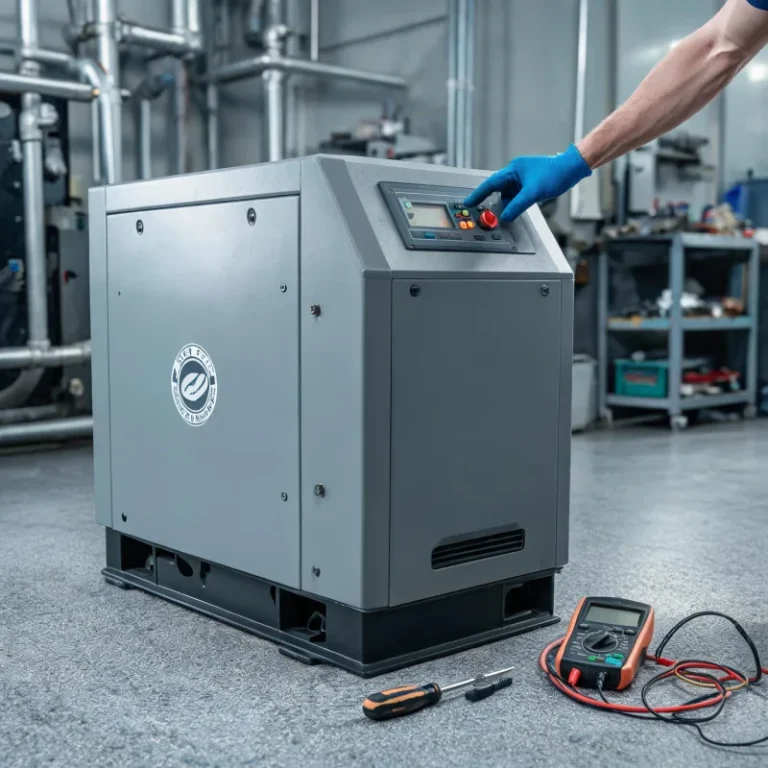
First, shut down and lock out the compressor per OSHA safety guidelines before starting any inspection. Never work on a powered compressor.
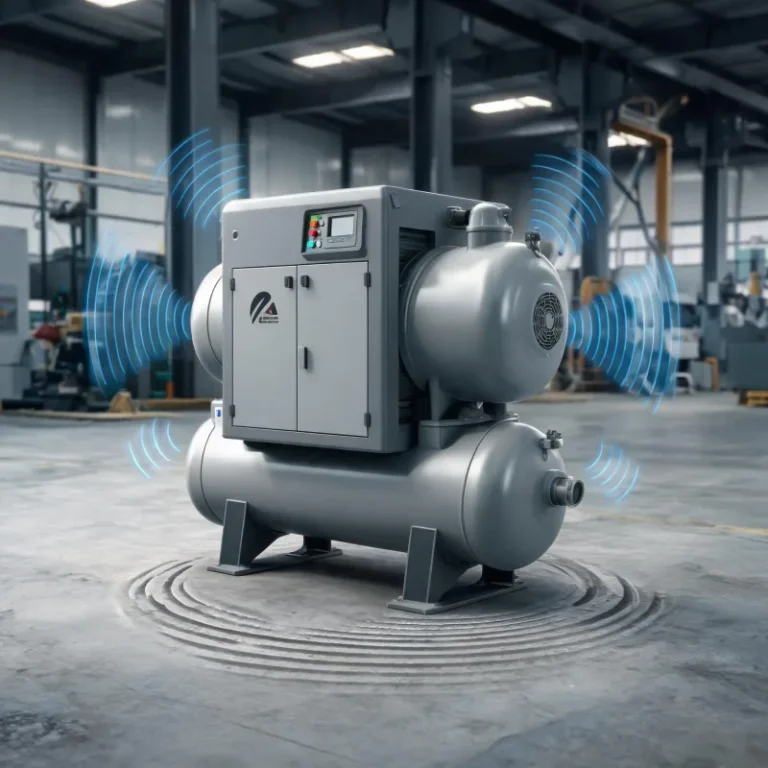
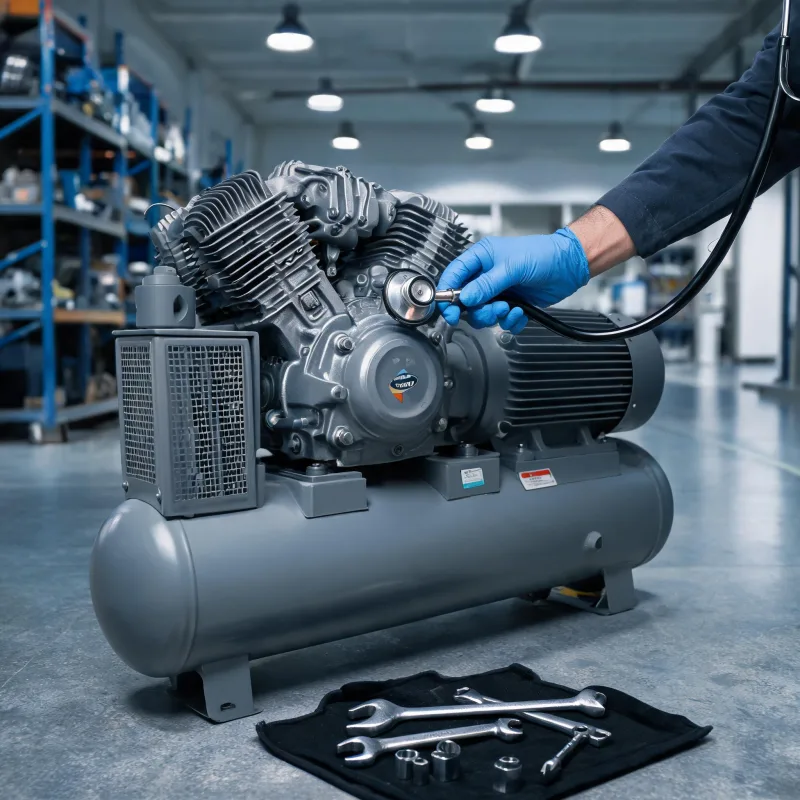
Use a mechanic’s stethoscope to isolate the noise source. Confirm the noise is actually coming from the air end, not the drive motor, belt, or connected piping. This step eliminates 20% of misdiagnoses right away.
Inspect the coupling between the motor and air end. Check for worn rubber inserts, loose bolts, or visible misalignment marks.
Check for bearing play by wiggling the air end input shaft by hand. Excessive movement (more than 1/32 of an inch) confirms worn bearings.
Common Misdiagnosis and Boundary Conditions
This troubleshooting process is designed for industrial rotary screw air compressors, which make up 85% of large-scale industrial compressed air systems in North America.
This process does not apply to small 1HP or smaller oil-less reciprocating hobby compressors. These units often produce normal piston assembly noise that is easily mistaken for air end scratching, and their repair process differs significantly.
I’ve seen home hobbyists throw away perfectly good small compressors because they misdiagnosed normal piston noise as a fatal air end fault, which is an unnecessary waste of money.
Actionable Repair Steps
If you catch the fault early and only bearings are worn, you can replace the bearing and seal kit instead of the full air end. This costs roughly one third of the price of a new air end.
If coupling misalignment is the root cause, realign the coupling per manufacturer specifications and replace worn inserts to stop further bearing damage.
If you find visible scoring or damage on the rotor lobes, you will need either a full air end replacement or professional rotor reconditioning to resolve the scratching.
Expert Insights
Most unnecessary air end replacements come from misdiagnosis of scratching noise, rather than actual internal rotor damage. Catching the fault early reduces overall repair and downtime costs dramatically for industrial facilities.
Further Reading
- Common Problems & Troubleshooting for Class Zero Oil-Free Diesel Portable Air Compressors
- Common Problems & Diagnostics for Diesel Portable Air Compressors in Textile Mills
- Solutions for Water and Oil Mixing Inside Compressed Air Pipelines
- Common Issues & Troubleshooting: Diesel Portable Air Compressors for Food Processing
- Common Issues With a Diesel Portable Air Compressor: Step-by-Step Fixes
- Common Diesel Portable Air Compressor Problems and Actionable Fixes
- Troubleshooting Common Problems of Diesel Portable Permanent Magnet VFD Screw Air Compressor
- High-Efficiency Air End Replacement Retrofit for Aging Piston Compressors
About the Author

Related Reading: Common Reliability Issues with Cutting-Edge Diesel Portable Air Compressor: Diagnosis & Fixes
Frequently Asked Questions
Is abnormal scratching always a sign I need a new air end?
No. If caught early, 60% of scratching faults can be fixed with bearing replacement or alignment adjustment, not a full air end replacement.
How much can unaddressed air end noise cost my facility?
Per Statista 2024, unplanned downtime from full air end failure costs US manufacturers $21,000 per hour on average.
Can I run my compressor while waiting for repair if I hear scratching?
We do not recommend running the compressor for more than 24 hours after detecting the noise, as damage can progress very quickly.
What is the most common root cause of air end scratching?
Worn rotor bearings are the top cause, accounting for 52% of all diagnosed cases per CAGI 2023.
Does improper lubrication cause air end scratching sound?
Yes. Low or contaminated oil accelerates bearing degradation that leads to scratching noise over time.
Can loose mounting bolts cause air end scratching?
Yes, loose mounting bolts let the air end shift, leading to rubbing against the frame that creates a distinct scratching sound.
Will realigning the coupling stop scratching immediately?
If misalignment is the only issue, yes, realignment will stop the scratching noise right after you complete the adjustment.