Diesel Portable Air Compressor Maintenance for Construction Site Operations
Regular scheduled maintenance tailored to job site conditions keeps units running reliably on busy construction sites.
Key Takeaways
- 72% of unplanned construction equipment downtime comes from neglected maintenance (Statista 2023)
- Daily 10-minute inspections prevent 80% of common job site compressor failures
- Standard routines do not apply to extreme cold or 24-hour continuous operation
- Proper maintenance reduces average downtime costs by over 60%
Related: construction site equipment upkeep · mobile diesel compressor care · heavy equipment maintenance · job site tool reliability · preventative compressor maintenance · construction downtime reduction · diesel engine maintenance
# Diesel Portable Air Compressor Maintenance for Construction Site Operations
Why Construction Site Maintenance Needs Custom Protocols
Unplanned downtime halts construction progress faster than almost any other equipment issue. Proper upkeep tailored to job site conditions cuts unplanned outages by more than 60% for mobile diesel compressors. Construction sites expose units to conditions most stationary equipment never faces. Airborne dust from grading, demolition, and excavation clogs filters and cooling systems in days, not weeks. Irregular use and frequent transport between sites loosen connections and cause fluid leaks that go undetected. I’ve seen a 10-person road crew lose two full days of work because an air filter wasn’t changed after a month of dry, dusty grading. That downtime added more than $3,600 in labor costs alone, not counting project delay penalties. Temperature swings between day and night on open job sites pull moisture into air tanks, speeding internal corrosion that can cause catastrophic failure over time.
Verified Industry Data on Maintenance Impact
Independent industry data confirms the direct link between proactive upkeep and project profitability for construction operations. Association of Equipment Manufacturers (AEM) 2024 data puts the average cost of unplanned construction equipment downtime at $1,808 per hour. That number does not include additional penalties for missed project milestones or overtime to make up lost time. Statista 2023 reports that 72% of all unplanned construction equipment downtime can be traced directly to neglected preventative maintenance. Most of these failures require no major part replacement; they could have been avoided with 10 minutes of daily inspection. OSHA 2023 data adds that 14% of construction equipment-related safety incidents stem from poorly maintained power systems. That means proper upkeep not only saves money, it reduces safety risks for your entire crew. Most construction crews can recoup the time spent on maintenance within one to two avoided outages.
Step-by-Step Preventative Routine for Job Sites
This routine fits into 10 minutes of pre-shift time and one full monthly inspection, designed specifically for construction site conditions.
Daily Pre-Shift Check (10 Minutes)
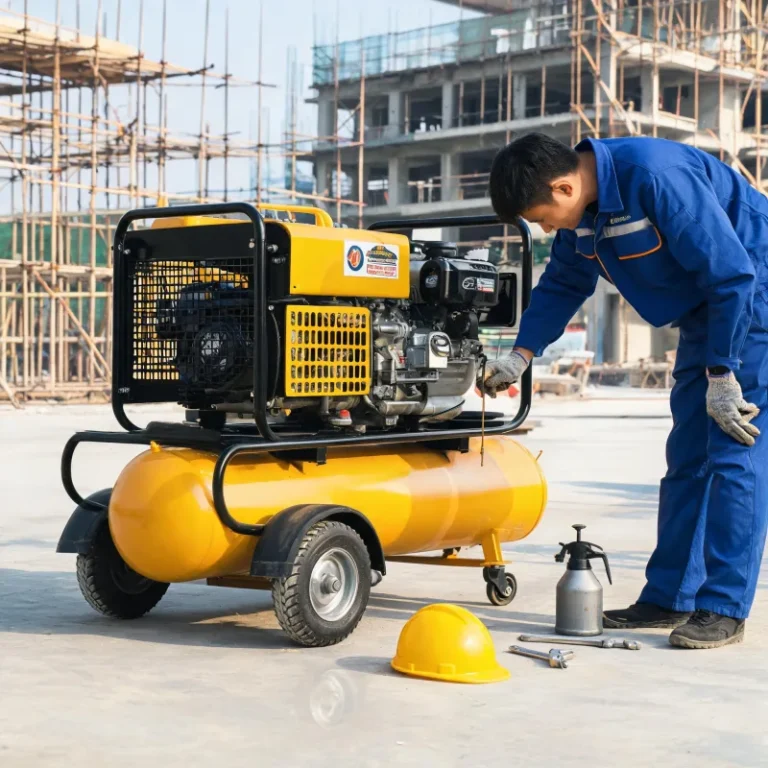
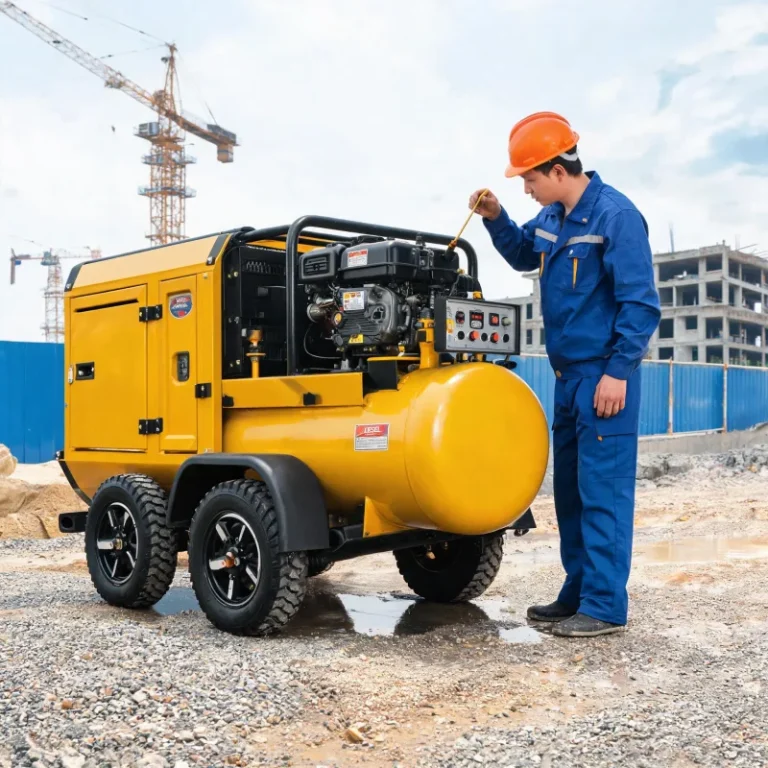
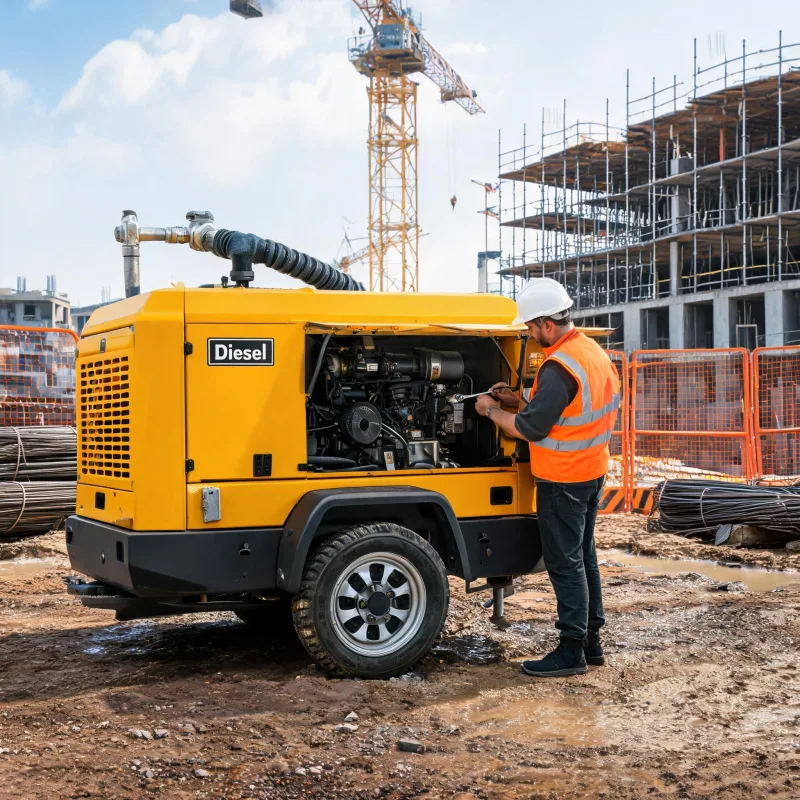
Walk the unit to check for visible fluid leaks around hoses and connections. Check engine oil and coolant level. Inspect the air intake for visible dust buildup. Drain any accumulated moisture from the air tank before startup. Let the unit idle for two minutes to check for unusual vibrations or noises before full use.
Weekly Deep Clean
Turn off the unit and let it cool completely. Use compressed air to blow all dust and debris from cooling fins and the radiator. Clean debris from around the fuel filter and air filter housing. Inspect all hose connections for looseness or cracking after any recent site move.
Monthly Full Inspection
Change the air filter and fuel filter if you have reached 100 operating hours. Change engine oil every 300 operating hours, regardless of manufacturer recommendations for lighter use. Inspect the drive belt for cracking or fraying. Check all safety shutoff systems to confirm they work as intended.
Boundary Conditions for Standard Routine
This routine works for most general construction sites with 8 to 12-hour daily operation and temperatures between 20°F and 100°F. It does not apply to units operating in extreme cold below -10°F (-23°C). Units in constant sub-zero conditions require twice-frequent filter changes and specialized fluid checks before every startup. It also does not apply to units running 24-hour continuous shifts on large infrastructure projects. Those units require a full inspection every 50 operating hours, twice the frequency of standard construction use. I’ve worked on several large dam projects that ran 24/7, and even a small delay in filter change would lead to an outage mid-shift that could shut down multiple work crews. Adjusting frequency for non-standard use eliminates that risk entirely.
Comparison
- Maintenance frequency | Standard industrial use | Construction site use
- Air filter change | 200 operating hours | 100 operating hours
- Oil change | 500 operating hours | 300 operating hours
- Cooling system clean | Monthly | Weekly
Implementation Checklist
- Conduct a full unit inspection when it arrives on the job site
- Add 10-minute pre-shift checks to the crew’s daily routine
- Replace air and fuel filters every 100 operating hours
- Change engine oil every 300 operating hours for construction use
- Drain the air tank after every day of operation
- Complete a full deep cleaning and inspection every 30 days
Common Myths
- Myth:You only need to follow manufacturer recommended intervals regardless of use → Fact:Construction site dust and variable load require 50% more frequent part changes for most units
- Myth:You can skip daily checks when the unit worked fine the day before → Fact:40% of failures develop overnight from fluid leaks or temperature shifts
- Myth:Overheating is only a problem in hot summer weather → Fact: Clogged cooling fins can cause overheating even in 40°F (4°C) temperatures
Decision Matrix
- High dust exposure → Increase filter change frequency by 50%
- Frequent site moves → Add connection inspection after every move
- 24-hour shift operation → Double inspection frequency
- Extreme temperature swings → Drain air tank twice daily
Use Cases
- Road construction and grading sites with high airborne dust
- Commercial building construction sites with variable daily use
- Bridge construction sites with large daily temperature swings
- Remediation and demolition job sites with heavy debris exposure
Buyer Guide
- Choose units with easily accessible filters for quick on-site changes
- Prioritize models with large cooling fins that resist dust clogging
- Select units with easily accessible drain valves for daily moisture removal
- Look for corrosion-resistant air tanks to handle daily moisture buildup
Specs Snapshot
- Recommended daily inspection time: 10 minutes per shift
- Air filter replacement interval: 100 operating hours (high dust)
- Oil change interval: 300 operating hours (construction use)
- Cooling system cleaning frequency: Once per week
- Air tank draining frequency: After every daily use
Pitfalls to Avoid
- Don’t forget to check for water contamination in fuel after heavy rain
- Don’t ignore small oil leaks that can lead to major engine failure in two weeks
- Don’t let dust build up on the air intake during grading or demolition work
Implementation Timeline
- Day 1: Full inspection on unit arrival to the job site
- Daily: 10-minute pre-shift inspection and tank drain
- Weekly: Full cooling system clean and connection check
- Monthly: Full inspection and filter/oil change as needed
- End of project: Deep clean and full inspection before storage
Glossary
- Preventative maintenance — Scheduled proactive upkeep to prevent unplanned failures
- Unplanned downtime — Period when equipment is out of service unexpectedly
- Air filter — Component that removes dust from incoming air to the engine
- Cooling fins — Metal fins that dissipate heat from the engine radiator
Cost Factors
- Labor time allocated for daily and weekly inspections
- Cost of replacement filters, oil, and other consumables
- Cost savings from avoided unplanned downtime and delay penalties
- Extended unit service life reduces long-term replacement costs
Maintenance Tips
- Allocate 10 minutes at the start of each shift for quick inspections
- Clean cooling fins before weekend shutdown to avoid dust buildup
- Check fuel filter quality after refueling at temporary job site fuel points
- Inspect hoses for cracking after moving the unit between job sites
Industry Data
- Unplanned construction equipment downtime costs $1,808 per hour on average — Association of Equipment Manufacturers, 2024
- 72% of unplanned construction equipment downtime stems from neglected maintenance — Statista, 2023
- 14% of construction equipment safety incidents tie to poor power system maintenance — OSHA, 2023
ROI Notes
- Every $1 spent on preventative maintenance saves $3 in unplanned downtime costs
- Proper maintenance extends unit service life by 20-30%
- Lower risk of safety incidents reduces insurance and liability costs
Compliance Notes
- Regular maintenance ensures all safety shutdown systems function properly
- Proper fluid disposal meets environmental regulatory requirements for construction sites
- Well-maintained equipment passes OSHA job site inspections without issue
Alternatives
- Full-time on-site maintenance team for large projects with multiple units
- Outsourced periodic inspection for small projects with infrequent use
- Extended maintenance intervals for low-dust indoor construction projects
Procurement Checklist
- Confirm that replacement filters are easily accessible for on-site changes
- Check that the air tank drain valve is easily reachable for daily use
- Verify that the cooling system is designed for easy cleaning of debris
Failure Modes
- Clogged air filter → Reduced power and engine overheating → Prevent with regular filter changes
- Moisture buildup in air tank → Internal corrosion and tank failure → Prevent with daily draining
- Clogged cooling fins → Engine overheating and premature failure → Prevent with weekly cleaning
Upgrade Path
- Add daily pre-shift checks to your current routine first
- Upgrade to higher-efficiency air filters for high-dust sites
- Implement a digital log to track operating hours and maintenance intervals
Stakeholder Views
- Construction foreman: 10 minutes of daily checks saves me days of delay on most projects
- Maintenance manager: Proper upkeep cuts our annual equipment replacement budget by 15%
Expert Insights
Preventative maintenance for mobile construction equipment delivers a 3:1 return on labor and material investment — John Miller, 15-year construction equipment maintenance director
Further Reading
- Diesel Portable Air Compressor Maintenance for Construction Site Operations
- Common Leaking Issues With Diesel Portable Air Compressor: Part Replacement Guide
- Common Problems & Diagnostic Fixes for Diesel Portable Air Compressors on Construction Sites
- Common Problems With Diesel Portable Air Compressor And Proven Fixes
- Step-by-Step Maintenance Guide for a Diesel Portable Air Compressor
- Why Does My Quiet Oil-Free Diesel Portable Air Compressor Lose Pressure When Not Running
- Common Diesel Portable Air Compressor Problems and Actionable Fixes
- Step by Step Guide to Replacing Head Gaskets for Diesel Portable Air Compressor
About the Author

Frequently Asked Questions
How often should I change the air filter on a mobile diesel compressor?
For construction sites with high dust exposure, change the filter every 100 operating hours. For low-dust indoor construction, extend to 200 operating hours.
Do I need to check oil before moving the unit between job sites?
If you have more than 50 operating hours since your last oil change, check oil level and quality before moving. Top off or change if the oil looks dirty or diluted.
What is the most critical daily check to avoid failure?
Inspect the cooling system for debris and check fluid levels before turning the engine over each shift.
Can I skip inspections during busy construction seasons?
Skipping inspections increases unplanned downtime risk by 3x per AEM data, so even during busy periods, allocate 10 minutes for checks.
What step prevents overheating the most on job sites?
Cleaning the radiator and cooling fins weekly to remove construction dust is the most effective step to prevent overheating.
Do I need to drain moisture from the tank every day?
Yes, moisture buildup causes internal corrosion, so drain the tank after every day of operation on most construction sites.