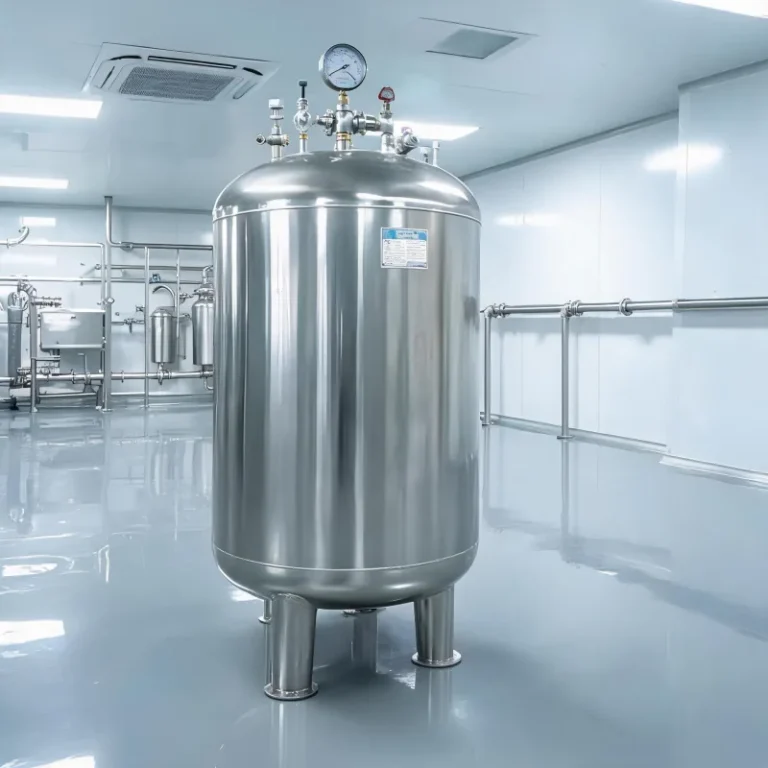
Stainless Steel Air Receiver Tanks for Food and Pharmaceutical Production Lines
Related Reading: Stainless Steel Air Receiver Tanks for Food and Pharmaceutical Production Lines
About The Author

Frequently Asked Questions
Why can't I use a standard carbon steel air receiver for food production?
Carbon steel corrodes over time, releasing particles and creating crevices that trap bacteria. This leads to product contamination and potential costly recalls, per 2023 FDA data.
What grade of stainless steel is best for my production line?
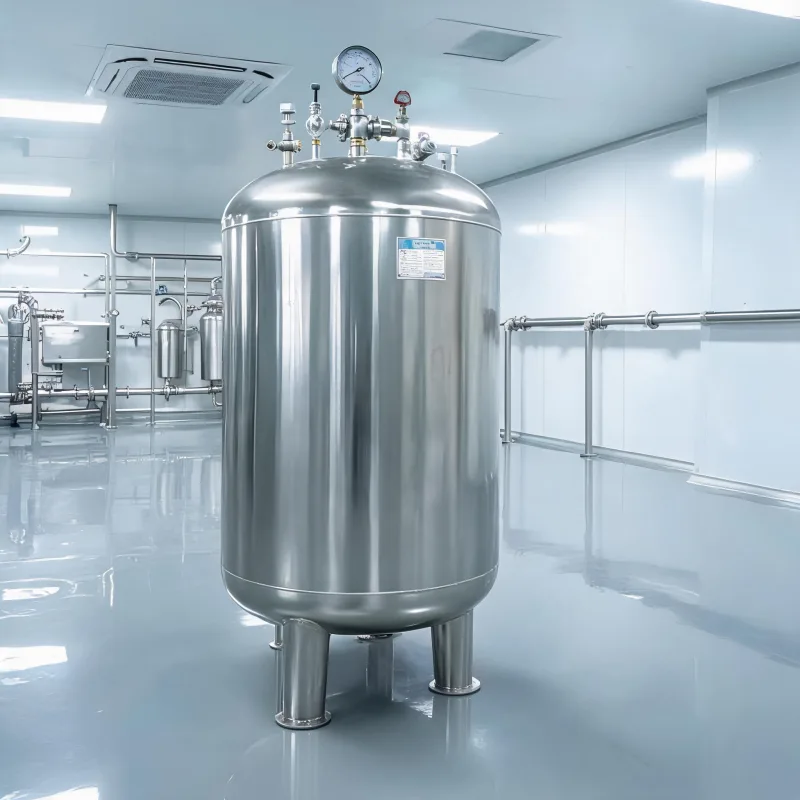
304 stainless steel works for most non-sterile food applications. 316L stainless steel is required for acidic foods, high-moisture processing, and all pharmaceutical production.
Do these tanks require special maintenance?
Standard maintenance includes monthly full condensate drainage, annual weld inspection, and every 3-5 year passivation testing. Sterile pharma lines require annual passivation testing.
Are stainless steel air receivers compliant with FDA and cGMP rules?
Properly manufactured, finished, and documented tanks are fully compliant. Always request a signed compliance certificate from your supplier before purchase.
When is a standard stainless steel tank not suitable?
Standard mill-finish stainless steel tanks are not suitable for sterile injectable pharmaceutical production, which requires electropolishing to meet low surface roughness standards.
How do I size a tank for my production line?
Use the standard rule of 1-3 gallons of storage per CFM of compressor output, add 10% extra volume for condensate drainage to prevent bacterial growth.
Do I need to specify internal coating for these tanks?
No, high-quality passivated stainless steel does not require additional internal coating. Coatings can chip and flake over time, introducing new contamination risks.