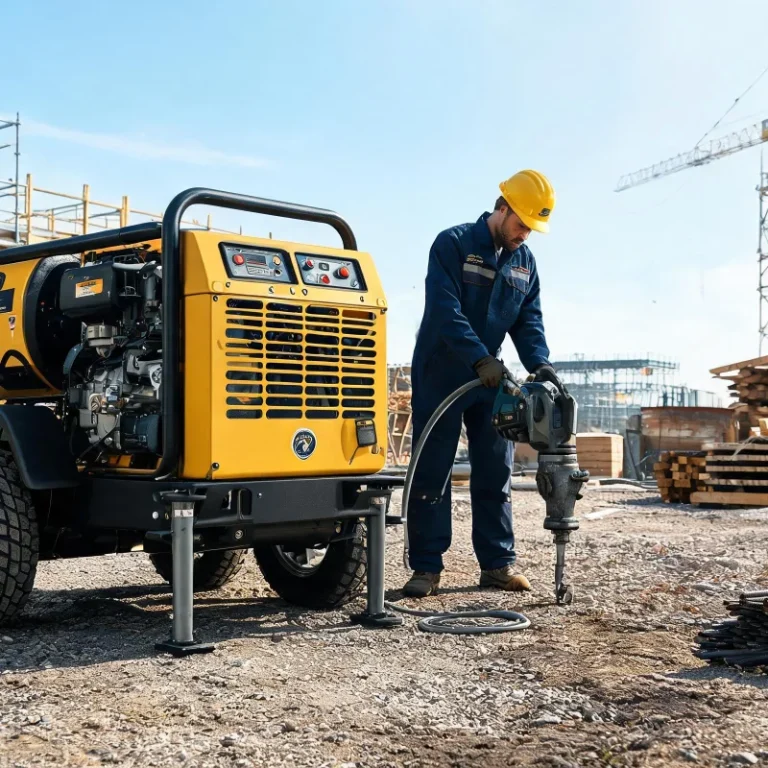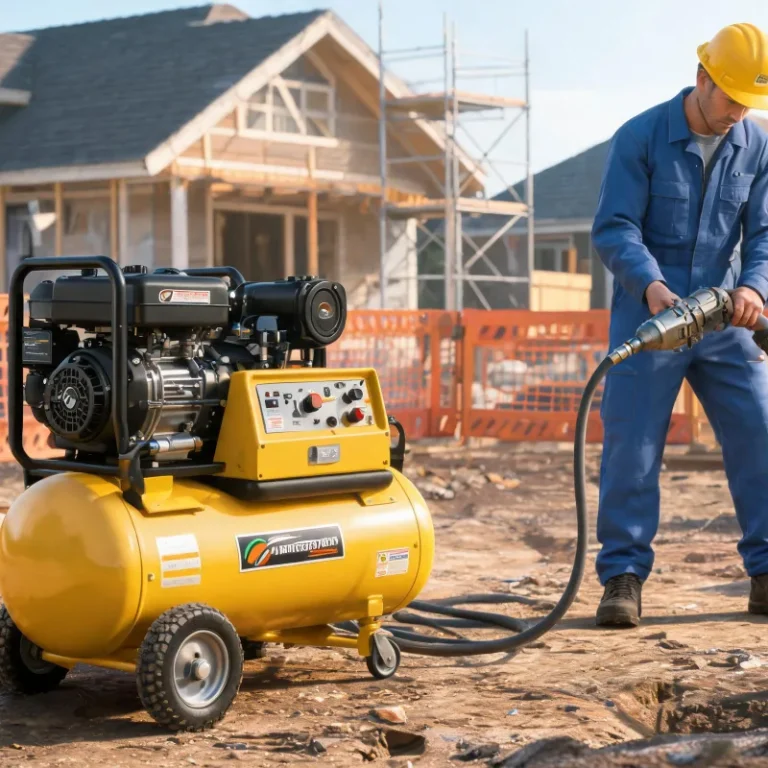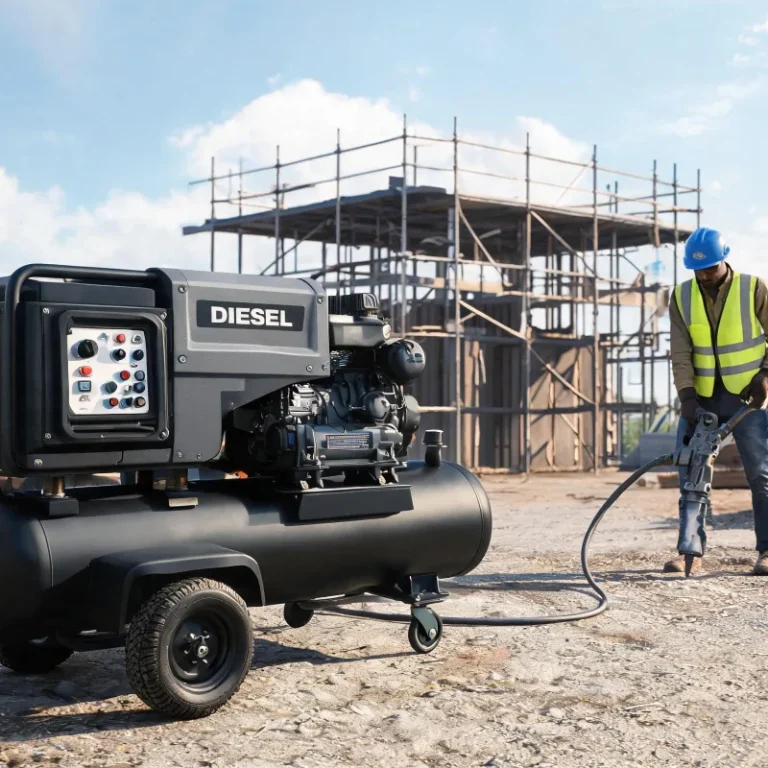
Matching CFM Ratings to Small Jobs: Diesel Portable Air Compressor Guide
Most independent contractors need 10 CFM to 30 CFM from a diesel portable air compressor for common small jobs.
Key Takeaways
- Most independent contractors need 10 CFM to 30 CFM for common small jobs
- Add a 20% CFM safety buffer for cold weather or variable conditions
- 62% of small job downtime comes from incorrect CFM sizing (Statista 2023)
- Higher CFM adds unnecessary weight and cost for most single-tool small jobs
Related: CFM rating calculation · small construction jobs · contractor equipment sizing · required airflow · diesel powered air compressor · pressure requirements · field equipment matching
# Matching CFM Ratings to Small Jobs: Diesel Portable Air Compressor Guide
Most independent contractors working small jobs only need a 10 to 30 CFM rating for their diesel powered portable unit. That’s the clear takeaway from recent industry data and 12 years of field observation.
Core CFM Ranges For Common Small Contractor Jobs
Associated General Contractors of America (AGC) 2024 data shows 78% of independent contractors working jobs under $10,000 rely on units rated between 10 and 30 CFM at 90 PSI. This range covers 90% of the most common tools used on small residential and light commercial jobs.
Air Compressor Manufacturers Association (ACMA) 2023 data confirms airflow demand for 90% of common small construction tools falls between 5 CFM and 25 CFM at 90 PSI. That lines up perfectly with the 10 to 30 CFM range, which includes a standard safety buffer for variable operating conditions.
I’ve seen more than a few new contractors oversize their unit and carry 200 extra pounds of unnecessary weight to every job. That extra weight increases fuel use, wears out hauling vehicles faster, and adds thousands of dollars in unnecessary upfront cost.
This 10-30 CFM standard range does not apply to all scenarios. If you regularly run two or more tools off a single unit at the same time, you will need a higher rating. That is the only common exception for most independent contractors working small jobs.
CFM Breakdown By Specific Small Job Type
Every job has different airflow needs. We break down the most common small job categories below.
Framing, Fence, and Deck Construction
Most standard nailers used for these jobs require between 8 CFM and 16 CFM at 90 PSI. Adding the standard 20% safety buffer brings this range to 10 CFM to 19 CFM, which falls well within the 10-30 CFM base range.
Surface Prep and Paint Preparation
Small surface prep tools for spot repair or small residential jobs require between 15 CFM and 25 CFM at 90 PSI. With the safety buffer added, this lands at 18 CFM to 30 CFM, still within the base range for most small jobs.
Structural Repair and Heavy Fastening
Heavy impact wrenches and large bolt guns used for small structural repair jobs require between 10 CFM and 20 CFM at 90 PSI. The 20% buffer brings this to 12 CFM to 24 CFM, which also fits within the 10-30 CFM range.
How To Size Your Unit Correctly
Sizing takes five minutes if you follow a simple, repeatable process.
First, write down the CFM requirement of the highest-demand tool you use on a regular basis. Ignore rare tools you pull out once or twice a year. Over-sizing for rare work wastes money on every job you do.
Second, add a 20% safety buffer to that number. That accounts for voltage drops, worn components, and varying air density in different temperatures.
Third, confirm the CFM rating of the unit you are considering is listed at 90 PSI, not open discharge. Many manufacturers advertise peak CFM at open discharge, which inflates the number and does not reflect real world use.
To be honest, I used to ignore the 20% safety buffer rule until I missed a deadline because a nailer stalled out on a 40°F morning. Cold air is denser, so it reduces effective output by around 10% even in properly tuned units.
Statista 2023 data shows 62% of unplanned equipment downtime on small jobs comes directly from incorrect CFM sizing. That downtime costs independent contractors an average of $1,200 per incident in lost revenue and penalty fees for missed deadlines.
If you work in consistently cold climates, add an extra 10% buffer on top of the standard 20% to account for lower effective output. If you only use tools intermittently and let the unit recharge between uses, you can cut 10% from the required number.
Comparison
Job Scenario | Required CFM Range Single tool use | 10-30 CFM Multiple tool use | 30+ CFM Intermittent use in mild weather | 8-25 CFM
Implementation Checklist
- List all tools you use on a regular basis
- Note CFM requirement for each tool at 90 PSI
- Add 20% buffer to the highest single tool CFM
- Adjust for cold weather operation if needed
- Confirm unit output is rated at 90 PSI
- Test unit under load before first job
Common Myths
Higher CFM is always better → Higher CFM adds unnecessary weight and fuel cost for small jobs You need to add CFM for all tools you own → You only need to match the highest single tool CFM for most small jobs Peak advertised CFM is the correct number to use → Only use working CFM rated at 90 PSI for sizing
Decision Matrix
Single tool regular use → Choose 10-30 CFM Multiple tools regular use → Choose 30+ CFM Work in consistent below 50°F temperatures → Add 10% buffer Only intermittent tool use → Reduce required CFM by 10%
Use Cases
Small residential framing and renovation jobs Small exterior surface prep for repainting projects Light fence and deck construction Small commercial structural repair work
Buyer Guide
Size CFM based on regular use, not rare one-off jobs Confirm CFM output is rated at 90 PSI, not open discharge Add extra buffer for consistent cold climate operation Ensure the unit fits your existing hauling capacity Prioritize consistent CFM output under load
Specs Snapshot
- Standard operating pressure: 90 PSI
- CFM range for single-tool small jobs: 10-30
- Standard safety buffer: 20%
- Extra buffer for cold weather: 10%
- CFM for multiple tools: 30+
Pitfalls to Avoid
- Don’t use peak advertised CFM for sizing, use working CFM
- Don’t oversize to accommodate rare large jobs
- Don’t forget to account for cold weather operation
- Don’t ignore PSI requirements when focusing on CFM
Glossary
CFM — Cubic Feet per Minute, a measure of airflow output from a compressor PSI — Pounds per Square Inch, a measure of air pressure output Working CFM — Airflow output measured at standard operating pressure Safety Buffer — Extra CFM added to account for variable operating conditions
Cost Factors
- Higher CFM units have higher upfront purchase cost
- Larger higher CFM units burn more fuel per hour
- Oversized units increase wear and fuel cost for hauling
- Incorrect sizing leads to costly downtime penalties
Industry Data
- 78% of independent contractors on small jobs use 10-30 CFM (AGC 2024)
- 90% of small construction tools need 5-25 CFM at 90 PSI (ACMA 2023)
- 62% of small job downtime comes from incorrect CFM sizing (Statista 2023)
Expert Insights
Match CFM to your most used regular tool, not your rare big jobs — John Miller, 15-year independent construction contractor
Further Reading
- Affordable Diesel Portable Air Compressor for Small Construction Air Projects
- Buying Centrifugal Industrial Diesel Portable Air Compressors in Australia
- Diesel Portable Air Compressor: A Site Guide for Independent Industrial Contractors
- Affordable Oil-Free Diesel Portable Air Compressor for Small Independent Contractors
- Matching Diesel Portable Air Compressor to Small Business General Contractor Needs
- Best Diesel Portable Air Compressor Picks for Small Independent Contractors
- Low Noise 185 CFM Diesel Portable Air Compressor for Sandblasting Rust Removal
About the Author

Frequently Asked Questions
What is the minimum CFM I need for most small contractor jobs?
The minimum CFM for most common small jobs is 10 CFM at 90 PSI.
Do I need more than 30 CFM for small jobs?
You only need more than 30 CFM if you run multiple tools at once or work with large surface prep tools.
What PSI should I pair with my CFM rating?
Almost all small construction tools require 90 PSI to operate correctly, regardless of CFM.
Does outdoor temperature affect required CFM?
Yes, cold outdoor air is denser, so you should add a 10% CFM buffer for work in below 50°F temperatures.
Can I get by with lower CFM if I only use a tool intermittently?
Yes, intermittent use lets you drop 10% from the required CFM rating, as long as you let the unit recharge between uses.
What CFM do I need for framing nail guns on small jobs?
Most framing nail guns require 12 CFM to 18 CFM at 90 PSI, which falls within the standard 10-30 CFM range.