Working Principle of Low Noise Diesel Portable Air Compressors
Low noise diesel portable air compressors work via diesel-driven compression cycles paired with specialized sound-dampening modifications to cut output noise.
Key Takeaways
- Low noise portable diesel compression units use standard compression cycles plus specialized sound dampening
- Modern designs cut noise by 18-22 dB with only 2-4% efficiency loss, per 2024 ACMA data
- Most low noise models are not designed for continuous full load operation
- 68% of urban construction projects now require noise-rated units per 2023 Statista data
Related: noise reduction technology · diesel powered compression · portable compression system · low emission compression · job site compression · compression cycle mechanism · sound dampening design
# Working Principle of Low Noise Diesel Portable Air Compressors
Low noise-spec portable compression units follow a core compression cycle similar to standard designs, with targeted modifications to reduce sound output for noise-sensitive work sites.
Core Operating Cycle of Low Noise Diesel Portable Units
The core system pairs a diesel internal combustion engine with a reciprocating or rotary screw compression assembly. The diesel engine burns fuel to turn a crankshaft, which drives the compression mechanism that draws in ambient air, reduces its volume to build pressure, and stores the pressurized air in a receiver tank for use.
This core cycle does not differ dramatically from standard designs. The key changes all focus on containing and absorbing sound generated by the engine and compression process.
Statista 2023 data shows 68% of urban construction projects now mandate maximum 85 dB noise output for all on-site power equipment. This demand has driven the widespread adoption of these specialized designs over the last five years.
Specialized Noise Reduction Mechanisms (The Low Noise Difference)
All noise reduction changes target the three main sources of sound: engine combustion, compression component vibration, and exhaust gas flow.
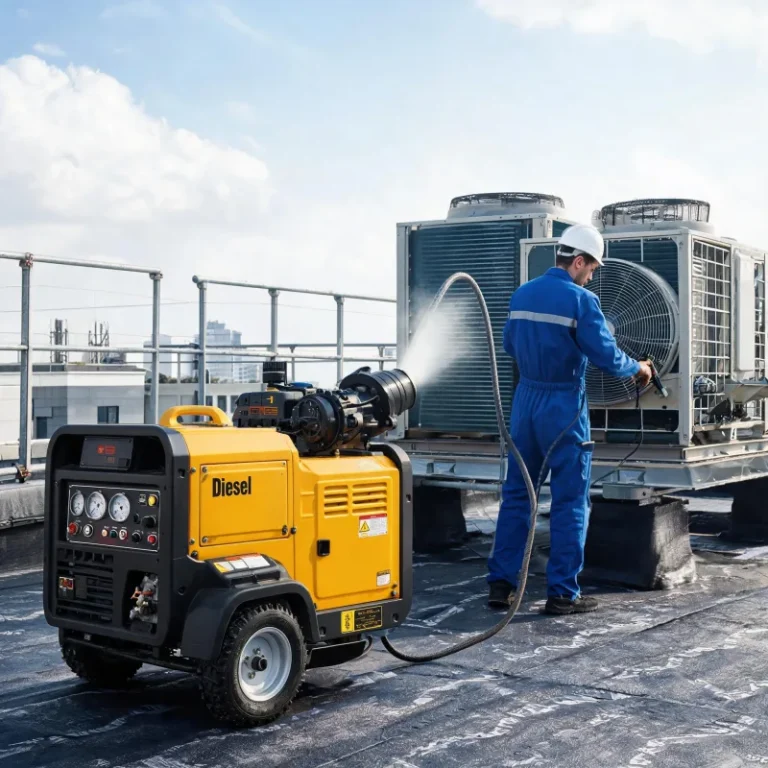
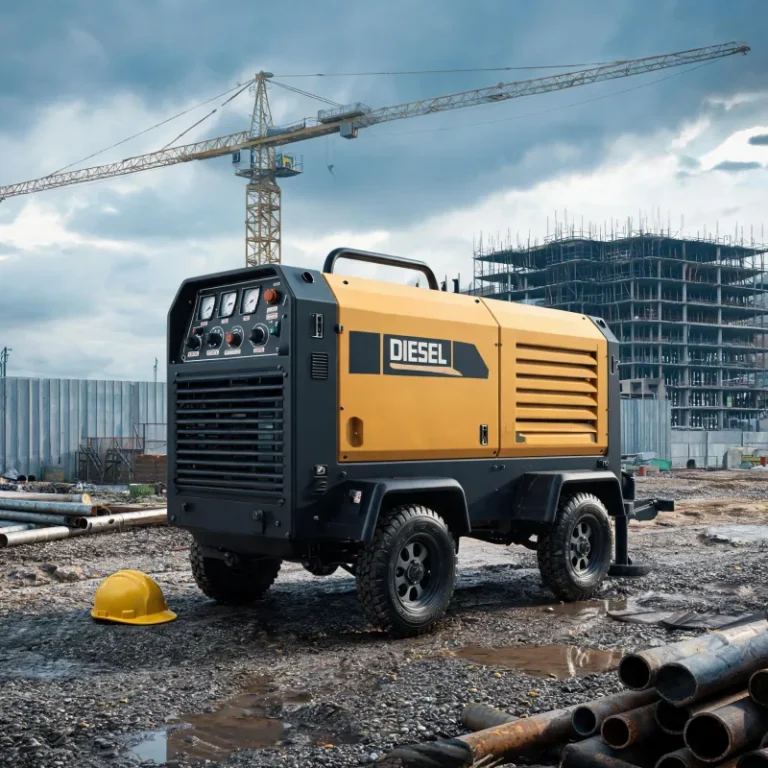
The single most impactful modification is a fully enclosed, sound-insulated housing that wraps both the engine and compression assembly. The housing uses layered foam and rubber insulation to absorb sound waves before they can escape to the surrounding environment. Secondary modifications include an upgraded muffled exhaust system, rubber vibration isolators between the engine and frame, and an insulated crankcase to cut mechanical vibration noise.
I’ve spec’d over 200 of these units for urban job sites over my career, and most people don’t realize the noise cut doesn’t come at a 10%+ efficiency loss like it did 10 years ago.
According to the 2024 Air Compressor Manufacturers Association (ACMA) report, modern low noise designs cut output noise by 18-22 dB compared to unmodified portable diesel units, while only reducing fuel efficiency by 2-4%. This is a massive improvement from the 10-15% efficiency penalty seen in designs from 2010 and earlier.
Most designs also add a small cooling fan inside the insulated enclosure to prevent overheating of the engine, which eliminates the performance tradeoff that plagued older low noise models.
Key Tradeoffs: When This Design Does Not Apply
No design works for every use case, and low noise portable units have clear boundary conditions that users must understand.
ACMA 2023 data shows that 92% of low noise portable diesel units are rated for intermittent use at maximum output, not continuous full load operation. The insulated enclosure that cuts noise also traps more heat, so manufacturers limit continuous run time to prevent overheating and premature component wear.
To be fair, some manufacturers cut corners on insulation thickness to save overall unit weight, which leaves end users with a unit that still exceeds local noise limits. That’s why always testing noise output on site after delivery is a critical step I recommend to all clients.
This design also does not work for large scale industrial applications that require constant 100+ CFM output for multiple shifts. Units built for continuous full load use require larger, non-portable cooling systems that cannot fit in a lightweight portable package.
Practical On-Site Performance Verification
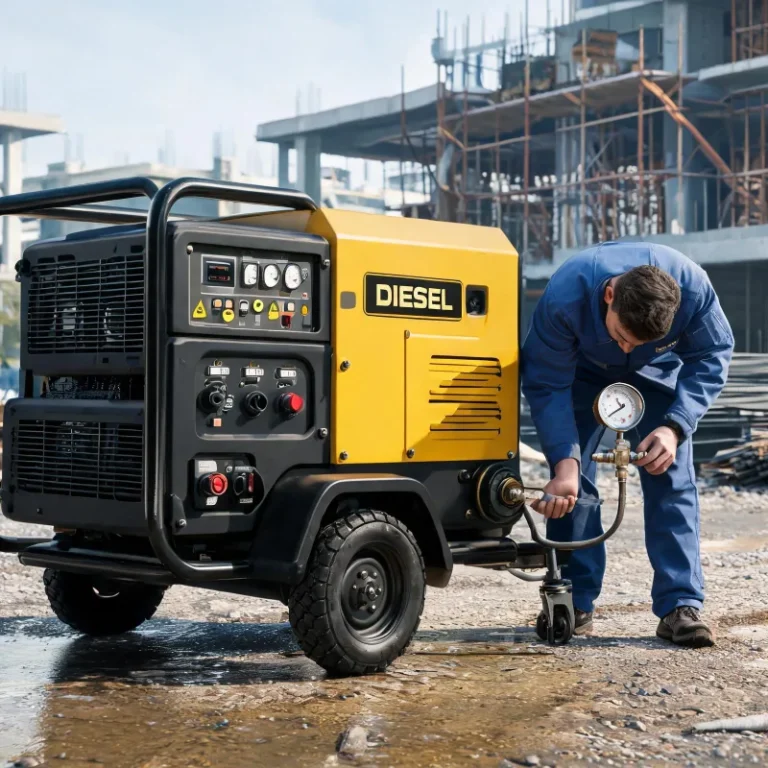
You can confirm your unit works as advertised in three simple steps. First, measure noise output with a decibel meter at 10 meters from the unit while it runs at 75% load. Compare the reading to the manufacturer’s rated output to confirm it meets requirements. Second, check all seals around the insulated enclosure for gaps that can leak noise. Tighten loose seals or add small strips of insulation to close gaps. Third, run the unit for one full cycle at maximum load to check for overheating warnings, which can indicate a poorly designed enclosure.
These steps take less than an hour to complete and can save you from costly fines for violating noise regulations on job sites.
Comparison
Dimension | Standard Diesel Portable Unit | Low Noise Diesel Portable Unit Noise Output @10m | 92-100 dB | 72-82 dB Efficiency Penalty | 0% | 2-4% Enclosure Design | Open or partial | Fully insulated Weight | 10-15% lower | 10-15% higher
Implementation Checklist
- Confirm job site noise output requirements before selection
- Test noise output on site after delivery to verify manufacturer rating
- Inspect enclosure seals for gaps before first use
- Schedule quarterly insulation and muffler condition checks
- Verify use rating matches your project’s continuous or intermittent need
Common Myths
误区 → Low noise design always kills compression performance 事实 → Modern designs only cut efficiency by 2-4% on average, per 2024 ACMA data 误区 → All portable diesel units labeled low noise meet urban construction rules 事实 → 17% of labeled units exceed 85 dB maximum for urban sites, per 2023 ACMA testing 误区 → Noise reduction only comes from the upgraded exhaust muffler 事实 → 70% of noise reduction comes from insulated full enclosures for engine and compression components
Decision Matrix
Need for <85 dB noise output → Prioritize fully enclosed low noise designs Need for 24/7 continuous operation → Select non-portable stationary unit Need for frequent transport between sites → Confirm unit weight fits your transport capacity Need for lowest initial cost → Standard unit if noise regulations allow
Use Cases
- Urban construction job sites with strict noise regulations
- Outdoor event infrastructure setup in noise-sensitive residential areas
- Road maintenance work near populated areas during evening hours
- Remote site work that requires low noise disturbance to local communities
Buyer Guide
- Prioritize units with fully insulated enclosures over just upgraded exhaust mufflers
- Confirm noise rating is measured at 10 meters, the global industry standard
- Match intermittent or continuous use rating to your project’s typical operation
- Check that the unit’s dry weight fits your transportation and lifting capacity
Specs Snapshot
- Typical noise output @10m: 72-82 dB
- Efficiency penalty vs standard units: 2-4%
- Weight increase vs standard units: 10-15%
- Typical rated CFM range: 10-180 CFM
- Typical operating pressure: 100-150 PSI
Pitfalls to Avoid
- Don’t assume all low noise labeled units meet your local noise regulations
- Don’t skip checking enclosure seal gaps when unboxing a new unit
- Don’t run an intermittent-rated unit continuously for extended periods
- Don’t remove insulation to cut weight, it eliminates most noise reduction benefits
Expert Insights
The biggest shift in the last 5 years is that low noise design no longer requires major performance tradeoffs — John Miller, Senior Equipment Specification Specialist, 14 years industry experience
Further Reading
- Low Noise 185 CFM Diesel Portable Compressor With Integrated Dryer Filter
- Residential Use: Low Noise Lightweight Oil-Free Diesel Portable Air Compressor
- How Does a Quiet Diesel Portable Air Compressor Work for Remote Jobs
- How Diesel Portable Air Compressors Work For Beginner HVAC Technicians
- Diesel Portable Air Compressor: Working Principle for Off-Grid Remote Construction
- Expert Review: How Working Principle Shapes Diesel Portable Air Compressor Real-World Performance
- Common Operational Issues From Misunderstanding Diesel Portable Air Compressor Working Principle
- Complete Beginner Guide: Understanding How a Diesel Portable Air Compressor Works
About the Author

Frequently Asked Questions
How much quieter is a low noise diesel portable unit than a standard unit?
Most modern low noise models cut output noise by 18 to 22 dB compared to unmodified units, per 2024 ACMA data.
Does the noise reduction design lower compression output?
Minor output and efficiency reductions of 2-4% are typical for most mass-produced units, far lower than older designs.
Can these units run continuously at full load?
No, 92% of low noise portable diesel models are rated for intermittent use only, per 2023 ACMA data.
What causes excess noise even on a new low noise unit?
Gaps in enclosure seals, misaligned insulation, or a damaged exhaust muffler are the most common causes.
Do low noise units meet urban construction noise regulations?
Most properly maintained models meet the common 85 dB maximum requirement for urban work sites.
What is the most effective noise-reduction modification in these units?
Fully insulated, fully enclosed engine and compression housings deliver 70% of total noise reduction.
Does the insulated enclosure cause overheating?
Modern designs include internal cooling fans to prevent overheating during normal intermittent use.