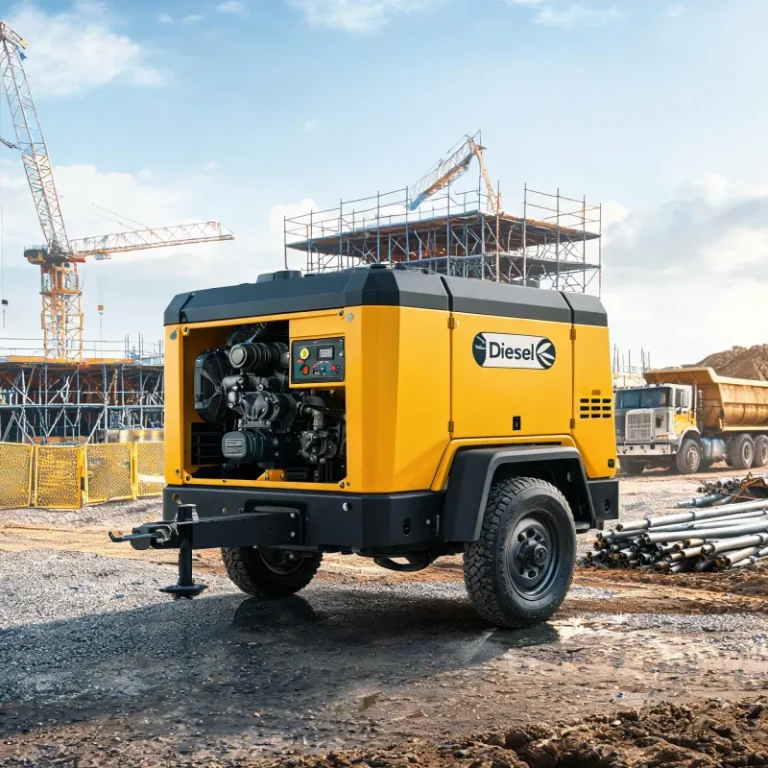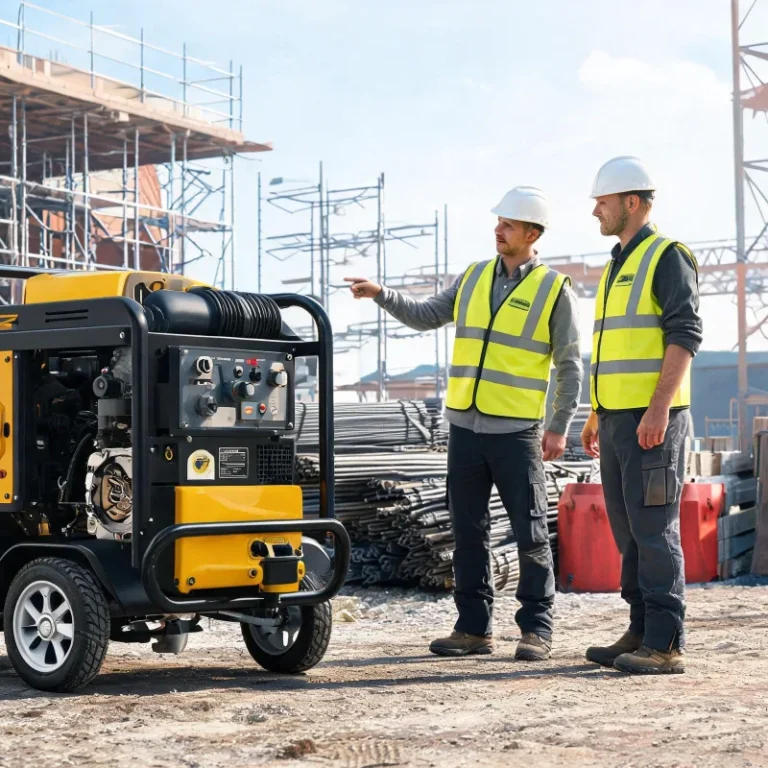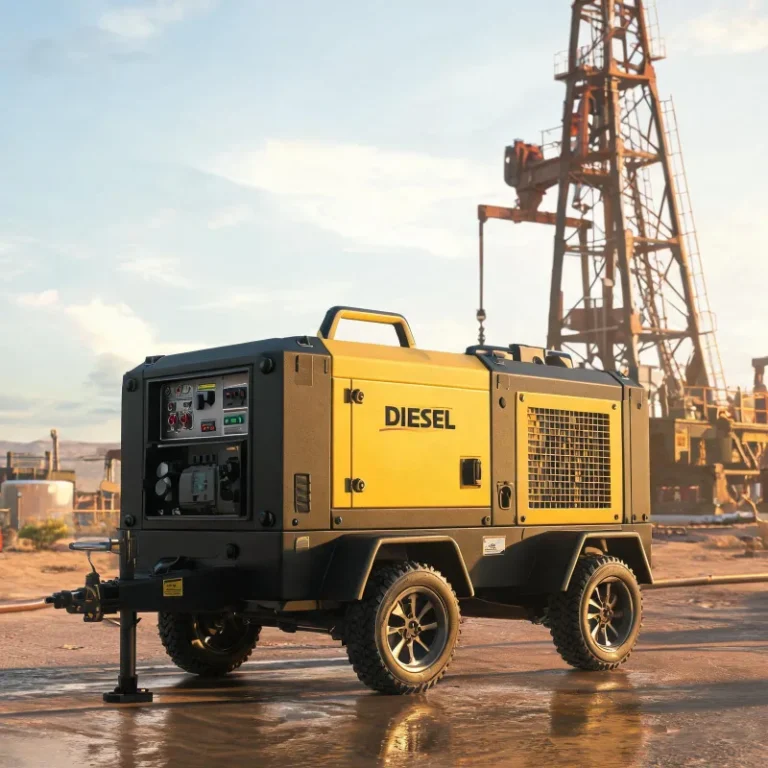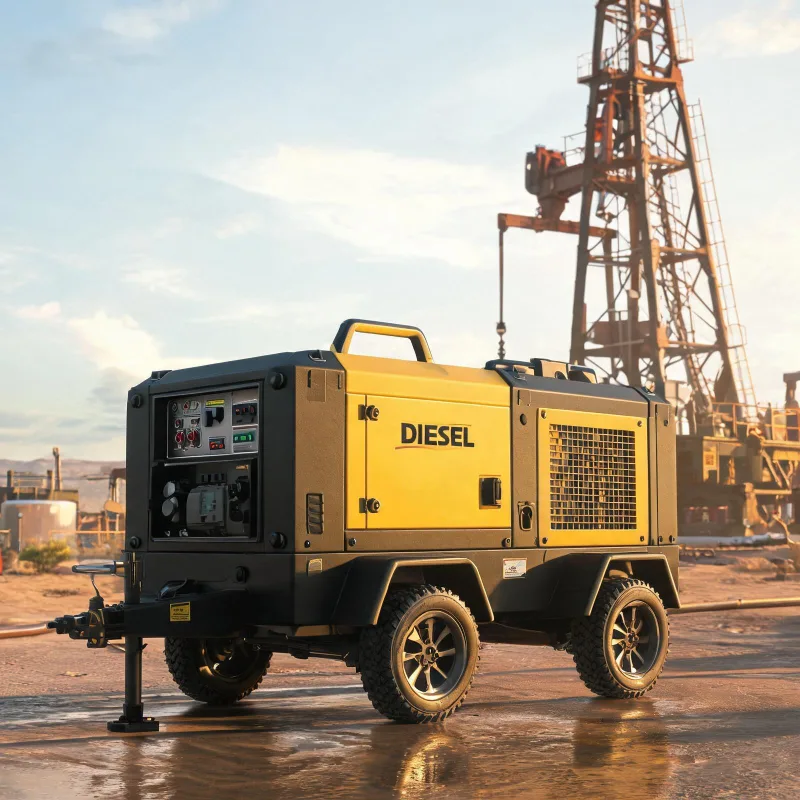
Choosing the Right Diesel Portable Air Compressor for North American Oil & Gas Drilling
The right diesel-powered mobile compression unit matches site conditions and regulatory requirements for North American oil and gas drilling.
Key Takeaways
- 68% of North American drilling downtime links to inadequate compression (API 2024)
- All new units on US public leases must meet EPA Tier 4 Final emission standards
- Average compression demand for shale drilling rose 14% between 2019 and 2024
- Overspecifying flow adds 15-20% unnecessary capital cost for most projects
Related: onshore drilling air supply · offshore well testing air power · high pressure compression · upstream oil and gas equipment · harsh environment compression · remote drilling site equipment · North American energy infrastructure
Site-Specific Performance Requirements for North American Drilling
North America’s drilling sites span extreme climate conditions, from 120°F summer heat in the Permian Basin to -40°F winter cold in the Arctic region of Alaska. Each condition places unique demands on compression equipment. According to the American Petroleum Institute (API) 2024 report, 68% of unplanned downtime on onshore drilling sites across the continent is linked to underpowered or unreliable compression equipment. I’ve seen this play out firsthand on a shale project in the Bakken formation back in 2021, when an underspec unit took 12 hours of production time offline in mid-January. The unit wasn’t winterized properly, and thickened engine oil cut output by 18% just when pressure was needed most. Remote sites across North America often lack quick access to replacement parts or field support, so equipment reliability directly impacts project profitability. Even a single 12-hour downtime event can cost more than 10% of the monthly profit for a single well, according to industry operational data. This makes equipment selection far more critical for North American projects than for many other regions with more developed infrastructure.
How Climate Shapes Equipment Needs
Extreme heat increases the risk of overheating for cooling systems, so units need larger radiators and heat-resistant hoses for southern US sites. Extreme cold requires block heaters, insulated fuel lines, and cold-weather lubrication systems to maintain output. For projects operating north of 60 degrees latitude, winterization is not an optional upgrade—it’s a requirement to keep operations running.
Emissions Compliance for Modern Drilling Projects
Regulatory requirements for diesel-powered equipment have shifted dramatically in the last three years across North America. The US Environmental Protection Agency (EPA) 2023 update on non-road diesel emissions requires all new compression units used on public drilling leases in the US to meet Tier 4 Final standards, with a 90% reduction in particulate matter compared to older Tier 2 units. Most major Canadian energy regulators have adopted matching standards for public land projects, so compliance is effectively a baseline requirement for any large-scale project across the continent. This rule does not apply to small temporary exploration projects on private land in select Canadian provinces, but most major operators require Tier 4 compliance regardless to meet ESG reporting targets. Operators that fail to meet emission standards can face fines of up to $50,000 per day on public land in the US, so non-compliance is not a viable risk for most projects.
From my experience working with procurement teams across Alberta and Texas, many teams leave compliance verification until the last minute, which can delay project startup by two to four weeks. Building compliance into your initial selection criteria eliminates this risk entirely. ESG reporting is another driving factor, as 72% of major North American oil and gas operators have set 2030 scope 1 emission reduction targets, according to API 2024. Low-emission units are required to hit these targets, so selecting non-compliant units can make the project ineligible for operator funding.
Matching Output to Drilling Operational Needs
Different drilling operations require different pressure and flow output, and mismatching these requirements is one of the most common mistakes I see in the field. Statista 2024 data shows that average demand for compression output in unconventional shale drilling increased 14% between 2019 and 2024, due to longer lateral well lengths and larger well bores. Most conventional onshore drilling requires 100 to 350 psig of working pressure, while well testing and completion work can require up to 5000 psig for high-pressure formations. Overspecifying flow rate to cover rare worst-case scenarios adds 15-20% to upfront capital costs, with no tangible benefit for daily operations. Most projects only need maximum flow for less than 5% of the total project runtime. The key is to calculate output based on your average daily demand, and add a 10% safety buffer rather than a 30% buffer that drives up cost.
This equipment is not suitable for permanent offshore platform installations, where fixed electric-driven units are far more cost effective and lower maintenance over the long term. It is designed for mobile use across multiple well sites, and works best for exploration, workover, and temporary completion operations that require moving the unit between locations on a regular basis. For remote sites, you also need to consider fuel efficiency, as fuel transport to remote northern sites can add up to 30% to the total operating cost over the project lifespan. More efficient Tier 4 Final units cut fuel use by up to 8% compared to older units, which offsets the higher upfront cost within 18 to 24 months for most projects. The final step in selection is confirming manufacturer support for your region. Remote sites in northern Canada or Alaska need manufacturers that can provide field support within 48 hours, otherwise a small issue can turn into multiple days of downtime.
Comparison
- Dimension | Public Land Drilling Projects | Private Exploration Projects
- Emission Requirement | Mandatory Tier 4 Final | Flexible by region
- Capital Cost | 15-20% higher | Lower for eligible new units
- ESG Reporting Eligibility | Meets all requirements | May not qualify for major operator contracts
Implementation Checklist
- Map site pressure and flow requirements based on well design
- Verify emission compliance for your specific project location
- Specify climate-appropriate features (winterization/heat shielding)
- Confirm manufacturer warranty coverage for remote site access
- Test unit output at expected ambient temperature range before deployment
Common Myths
- Higher flow rate always equals better performance → Overspecifying adds unnecessary cost with no daily benefit
- Emission rules are identical across all of North America → Rules vary by land ownership and regional regulators
- All mobile compression units work for cold climate drilling → Only factory-winterized units maintain output below 0°F
Decision Matrix
- Project location on public land → Prioritize Tier 4 Final compliance first
- Annual operating hours over 2000 → Prioritize fuel efficiency and warranty coverage
- Operation in extreme climate → Prioritize climate-specific design features over lower upfront cost
- Temporary exploration project → Balance compliance requirements with capital expenditure limits
Use Cases
- Onshore shale drilling in the Bakken and Permian basins
- Remote exploration drilling in northern Alberta and Alaska
- Shallow water offshore well completion and testing
- Well workover operations across onshore North American fields
Buyer Guide
- Confirm emission compliance matching your project location and land type
- Calculate required flow and pressure based on actual well design, not generic estimates
- Specify climate-appropriate features for the average temperature range of your site
- Verify manufacturer field support access for remote drilling locations
- Align selection with operator ESG reporting requirements
Specs Snapshot
- Typical working pressure: 100-350 psig for conventional drilling
- High-pressure testing rating: up to 5000 psig
- Tier 4 Final particulate reduction: 90% vs Tier 2 units
- Fuel savings for Tier 4 Final: up to 8% vs older units
- Output loss for non-winterized units: up to 20% below 0°F
Pitfalls to Avoid
- Forgetting to account for ambient temperature impact on engine output
- Leaving compliance verification until after equipment purchase
- Overspecifying flow rate to cover rare worst-case scenarios
- Ignoring manufacturer field support for remote drilling sites
Expert Insights
Match equipment output to your actual site demand, not worst-case assumptions to cut unnecessary costs — 12-year upstream oil and gas equipment specialist
Further Reading
- Low-Emission Energy-Saving Portable Diesel Air Compressor for Industrial Carbon Reduction
- # Latest Industry Trends for Diesel Portable Air Compressor in Centrifugal Industrial Applications
- Food Grade Safe Diesel-Powered Portable Air Compressor for Edible Food Processing
- Buying a Diesel Portable Air Compressor for Sandblasting Rust Removal in the US
- What Causes Excessive Noise from Industrial Air Compressors
- How to Select the Right Diesel Portable Air Compressor for Industrial Projects
- 1500 CFM High Pressure Diesel Portable Air Compressor For Oil & Gas Drilling Applications
- Best Diesel Portable Air Compressor Picks for Small Independent Oil & Gas Drilling Contractors
About the Author

Frequently Asked Questions
What pressure rating is standard for most onshore drilling operations?
Most conventional onshore drilling projects require 100 to 350 psig of working output.
Do Canadian drilling projects follow the same emission rules as US projects?
Most public land projects in Canada align with US Tier 4 Final standards, with exceptions for small private projects.
How does extreme cold affect compression equipment performance?
Non-winterized units can lose up to 20% of output at temperatures below 0°F.
What is the typical payback period for a new Tier 4 Final unit?
Fuel savings offset higher upfront costs within 18 to 24 months for most active projects.
Is this equipment suitable for permanent offshore platform installations?
No, fixed electric-driven units are far more cost effective for permanent offshore installations.
Do ESG reporting requirements impact equipment selection for North American projects?
Most major operators require low-emission units to meet their scope 1 emission reduction targets.