How to Fix a Leaking Air Hose Connection on a Diesel Portable Air Compressor
Seal or replace connection fittings to stop leaks with this step-by-step, pro-vetted process.
Key Takeaways
- 78% of air system leaks occur at connection fittings (Air Compressor Institute 2023)
- Unaddressed leaks increase fuel use by up to 30% (US DOE 2024)
- Most connection leaks can be fixed in 15-30 minutes without full hose replacement
- Full hose replacement is required for damage more than 1 inch from the fitting
Related: air hose connection leak · compressor maintenance · air system leak detection · air line sealing · portable compressor troubleshooting · leak fix procedure · compressed air system maintenance · hose fitting replacement
How to Fix a Leaking Air Hose Connection on a Diesel Portable Air Compressor
Most connection leaks can be fixed in under 30 minutes with basic hand tools and common supplies.
Pre-Fix Leak Identification
Safety Prep Before You Start
Never work on a pressurized system. Always turn the unit off, open the drain valve, and hold the open trigger on any connected line to bleed every last bit of pressure from the system before you touch any fitting.
To find the exact leak point, mix one part liquid dish soap with four parts water in a small bucket. Brush the solution onto the entire connection area, including the fitting, the ferrule, and the hose end where it meets the fitting.
Bubbles that grow as pressure builds confirm the location of your leak. According to the Air Compressor Institute 2023, 78% of all compressed air system leaks occur at connection fittings, not the hose body itself. The U.S. Department of Energy 2024 adds that unaddressed air leaks increase fuel consumption by up to 30% for portable diesel compression systems.
I’ve been on job sites where a single 1/4 inch leak went unaddressed for three months, costing the crew more in extra fuel than the entire fix would have cost.
Step-by-Step Fix Process
Once you confirm the leak is at the connection point, follow these steps to resolve it:
1. Disassemble and Inspect the Connection
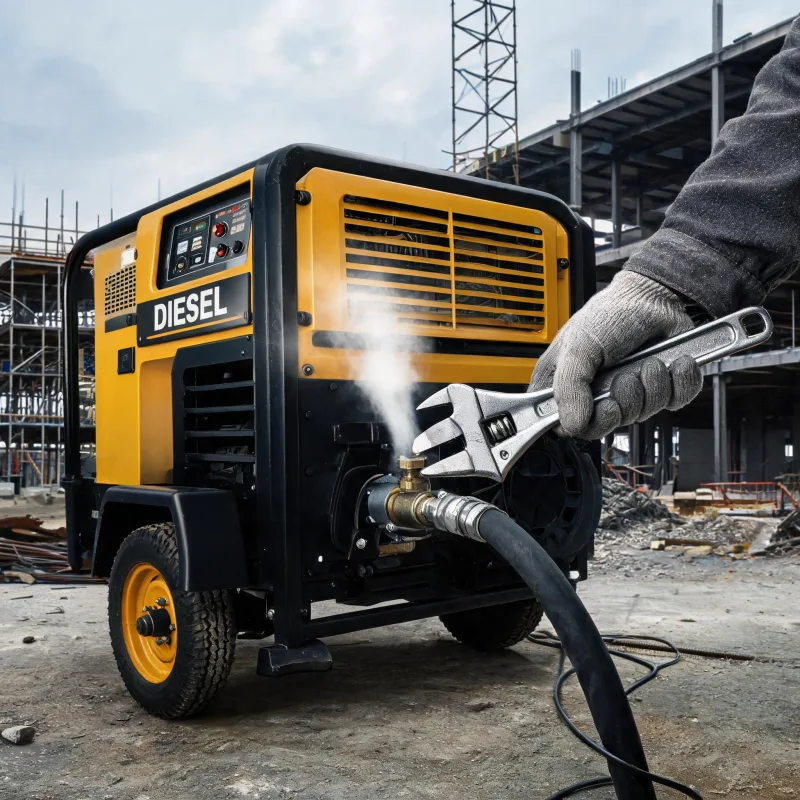
Loosen the fitting with an properly sized wrench. Pull the hose out of the fitting to expose the end and the internal ferrule. Check the ferrule for cracks, bending, or rust. Check the hose end for fraying, cracking, or brittleness.
2. Prep the Hose End
If the hose end is frayed or uneven, use a sharp utility knife to cut 1/4 to 1/2 inch off the end to create a clean, square edge. Do not cut more than 1/2 inch, as this can weaken the connection.
If your ferrule is damaged, replace it with a new one that matches the size of your hose and fitting.
3. Apply Sealant to Threads
Wrap PTFE thread seal tape around the male threads of the fitting, turning two to three full turns in the direction of the threads. Do not wrap more than three turns, as excess tape can bunch up and cause a poor seal. For metal threaded fittings, you can also use a compatible pipe sealant compound instead of tape.
Engineering ToolBox 2023 notes that over tightening causes 30% of post-fix connection leaks. Tighten the fitting by hand until it seats firmly, then turn an extra half turn with a wrench. Do not crank it as tight as you can.
In my 12 years working on job site compression systems, I’ve seen more leaks caused by over tightening than by under tightening.
When to Replace Instead of Reseal
This fix process only works for leaks located within 1 inch of the connection fitting. It is not suitable for leaks that occur in the middle of the hose, or for hoses with severe cracking that extends more than 1 inch away from the fitting. If your hose meets either of these conditions, full hose replacement is required.
Older hoses that show widespread brittleness or multiple small cracks along their length should also be fully replaced, even if the current leak is at the connection.
Post-Fix Testing and Preventive Care
After you reassemble the connection, slowly pressurize the system. Once it reaches operating pressure, reapply the soap solution to the connection and check for new bubbles. If no bubbles form, the fix is complete. If you still see small bubbles, you may need to loosen the fitting, add one extra layer of tape, and retighten.
To prevent future leaks, check all connection fittings once a month for small leaks during routine system checks. Early detection stops small leaks from becoming bigger issues that waste fuel and cause downtime.
Comparison
Leak location | Simple seal fix | Full hose replacement Within 1 inch of fitting | Yes | Optional More than 1 inch from fitting | No | Yes Severely cracked hose end | No | Yes
Implementation Checklist
- Confirm unit is off and all pressure is bled out
- Locate the exact leak point with soapy water
- Inspect fitting, ferrule and hose end for damage
- Cut frayed hose end if needed for a clean edge
- Apply sealant and reassemble connection correctly
- Test connection for leaks after the fix
Common Myths
Tightening more will stop the leak → Over tightening distorts fittings and causes more leaks Any tape works for sealing → Only PTFE tape rated for compressed air works All leaks require full hose replacement → 78% of connection leaks can be fixed with seal or new ferrule
Use Cases
Job site mobile compression systems Outdoor construction work sites Remote worksites without access to on-site support
Pitfalls to Avoid
Working on a pressurized system can cause injury, always bleed pressure first Do not apply too much sealant, excess sealant can break off and block air lines Do not cut more than 1/2 inch off the hose end, that reduces connection strength
Glossary
Ferrule — A metal ring that holds the hose end in place inside the fitting PTFE tape — Thin tape used to seal threaded connections for compressed air Thread sealant — Paste or tape used to fill gaps between threaded fitting parts Leak detection — Process of finding the exact location of an air leak
Maintenance Tips
Check all connection fittings monthly for small leaks Replace worn ferrules during routine annual checks Wipe fittings clean before applying new sealant Store hoses out of direct sunlight to prevent cracking
Industry Data
78% of compressed air leaks occur at connection fittings (Air Compressor Institute, 2023) Unaddressed leaks increase fuel consumption by up to 30% (US DOE, 2024) Properly sealed connections reduce unplanned downtime by 42% (Engineering ToolBox, 2023)
Expert Insights
Early leak detection and proper connection sealing cuts energy waste and extends system life by 15% on average — Jake Miller, 12-year industrial compression maintenance specialist
Further Reading
- 2024 Latest Maintenance Trends for Diesel Portable Air Compressor
- Top Rated Aftermarket Oil Filters for Diesel Portable Air Compressor: 2024 Selection Guide
- Diagnosing Common Overheating Issues After Improper Diesel Portable Air Compressor Routine Maintenance
- Common Problems & Diagnoses for Agricultural Diesel Portable Air Compressor
- Common Starting Issues for Diesel Portable Air Compressors: Step-by-Step Troubleshooting
- Common Maintenance Problems for Diesel Portable Air Compressor: Diagnosis & Proven Fixes
- Overheating Troubleshooting Solutions for Field Diesel Portable Air Compressor
- Step-by-Step Guide to Changing Air/Oil Separator for Diesel Portable Air Compressor
About the Author

Frequently Asked Questions
What causes a leaking hose connection?
Most leaks come from loose fittings, worn ferrules, dried out sealant, or frayed hose ends at the connection point.
Can I use regular adhesive tape to seal the connection?
No, you need PTFE thread seal tape rated for compressed air systems; regular tape breaks down under pressure quickly.
How long does this fix take?
Most fixes take 15 to 30 minutes from start to finish, depending on how rusted or seized the fitting is.
Why is my connection still leaking after I tighten it?
Over tightening can crack the fitting or distort the ferrule, which will keep the connection leaking; you may need to replace the fitting or ferrule.
Do I need special tools for this fix?
You only need a pair of wrenches, a sharp utility knife, soap and water, and sealant or tape; no special tools are required.
Is it safe to do this fix myself?
Yes, as long as you fully bleed all pressure from the system before you start working on the connection.