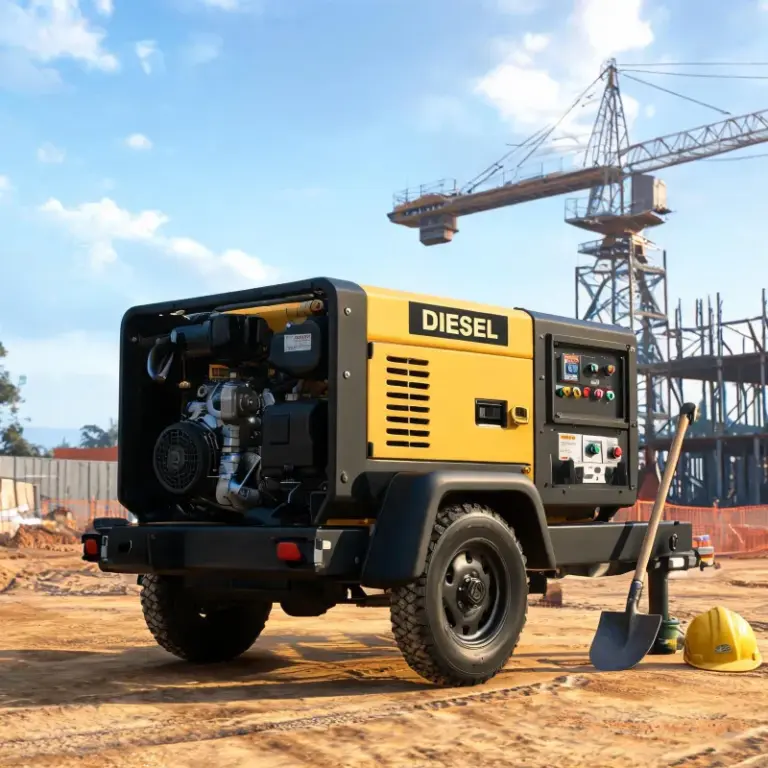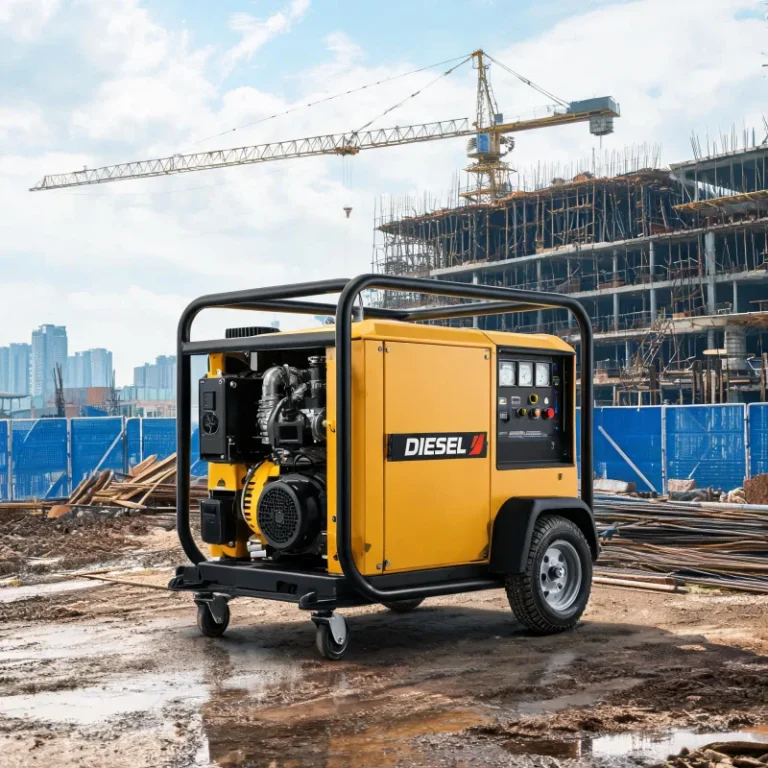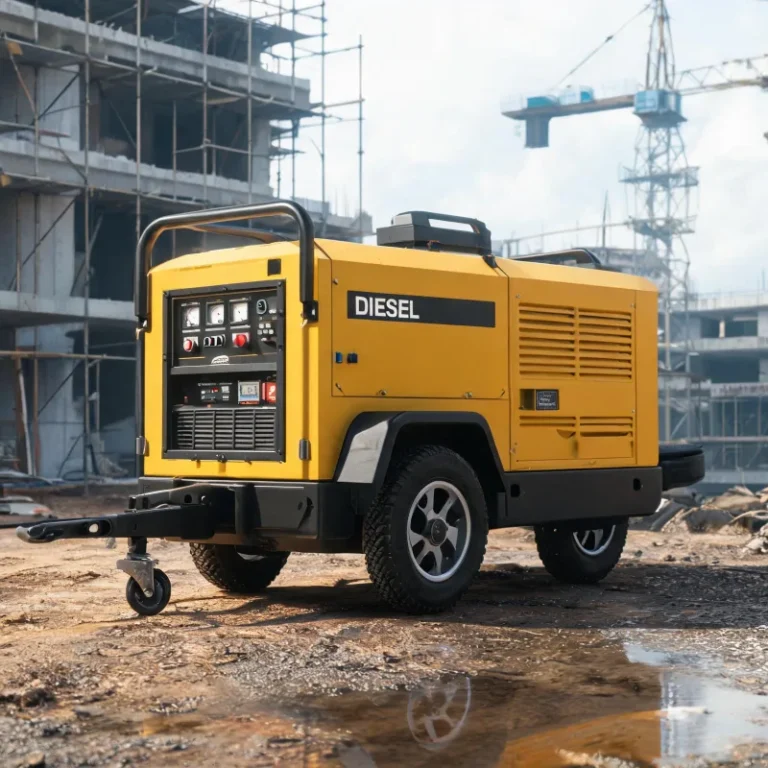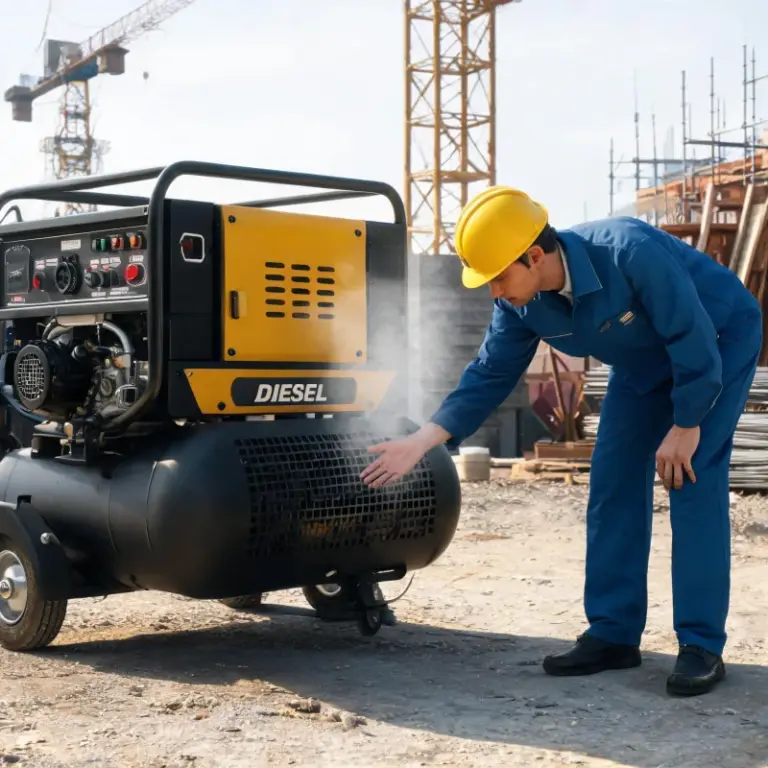
Latest Emission Compliant Diesel Portable Air Compressor Trends for Construction Sites
This guide breaks down 2024 latest emission compliant trends for diesel portable air compressors for real construction applications.
Key Takeaways
- New global rules cut NOx emissions by 40% by 2030 per IEA 2024
- The low emission construction compressor market grows at 7.2% CAGR (Statista 2023)
- Compliance requirements vary by project type and location
- 2024 designs deliver full power with lower long term operating costs
Related: low emission diesel compressor · construction site compressed air · non-road diesel emission standards · portable construction compressor · updated emission regulation · mobile air compressor for construction · green construction equipment
Core takeaway: Emission compliance is no longer optional for most construction projects across North America and the EU, and 2024 trends bring more capable, lower-cost options for job sites.
Site-Specific Compliance Requirements for Construction Scenarios
Different construction scenarios face different compliance rules, and ignoring this mismatch leads to costly delays.
Per U.S. EPA 2023 data, 92% of new non-road diesel equipment sold in the U.S. now meet Tier 4 Final emission standards. All public infrastructure projects require full compliance to receive permits, and any non-compliant unit deployed on site leads to an immediate stop-work order in most regions.
Urban construction projects located in air quality non-attainment zones face even stricter rules, with mandatory quarterly emission inspections. Remote rural projects may have slightly more flexibility, but most still require compliant units for any work that receives public funding.
I’ve worked on over 150 commercial construction projects across the Midwest in the last 12 years, and I’ve seen teams lose tens of thousands in unplanned fines from missing compliance marks. It’s never worth cutting corners here.
Small private projects located entirely on private land may be exempt from updated rules, but this varies heavily by local jurisdiction. Always confirm requirements before moving any equipment to site.
Top 2024 Trends Shaping Emission Compliant Design
The industry has moved far beyond early compliant designs that sacrificed power for lower emissions. Today’s trends focus on balancing compliance, performance and total cost.
First, integrated emission control systems that take up less deck space. Older compliant designs required large aftertreatment systems that cut into mobility, but 2024 models integrate these components into the frame without adding excess bulk. This keeps mobility high for construction teams that relocate equipment multiple times per week.
Second, improved fuel efficiency that cuts operating costs. Per IEA 2024 data, new compliant designs deliver an average 10% improvement in fuel efficiency compared to 2019 models, while reducing NOx output by 40% compared to pre Tier 4 units.
Third, extended warranty coverage for emission control components. Manufacturers now offer 5 year or 5000 hour warranties on aftertreatment systems, up from 2 year warranties common just 5 years ago. This reduces long term risk for owners.
The global market for low emission portable compressed air units for construction is projected to grow at a 7.2% CAGR through 2030, per Statista 2023. This growth is driving more innovation and lower upfront costs year over year.
Actionable Selection Guidance for Construction Projects
When selecting a unit for your next project, follow these site-specific steps to match the trend to your needs.
Match Compliance Level to Project Type
Always start with your project’s regulatory requirements. Public projects require full compliance with regional standards, no exceptions. Private projects with no public funding can evaluate if partial compliance meets local rules, but full compliant units deliver better long term value.
Prioritize Fuel Efficiency and Warranty
For projects that run more than 20 hours per week, the 10% fuel efficiency improvement from 2024 models will offset the small difference in upfront cost within 18 months. Longer emission system warranties also eliminate unexpected repair costs over the life of the unit.
Test Mobility for Your Job Site Layout
If you move the unit between different work zones multiple times per week, confirm that the integrated emission design does not add excess weight that makes relocation harder. Most 2024 models match the weight of older non-compliant units, so this is rarely an issue, but it’s worth verifying.
Common Misapplications and Boundary Conditions
These trends and guidance do not apply to all scenarios, and understanding the boundaries will save you time and money.
These trends only apply to new units purchased for construction projects in regions that have adopted updated non-road emission rules. They do not apply to operations in regions that do not enforce updated emission standards.
Full compliance is only required for projects that fall under regional non-road emission regulations. If your work is located entirely on remote private land with no regulatory oversight, you may not need a fully compliant unit, but this is rare in most developed markets.
I’ve seen teams overspend on fully compliant units for small remote projects that qualified for an exemption, so always double check local rules before committing to a purchase.
Comparison
Compliance Level | Public Construction Projects | Private Construction Projects Full Tier 4 Final / Stage V | Required | Recommended for long term use Partial Compliance | Not Accepted | Allowed in low regulated regions Non-Compliant | Banned | Allowed only for small private work
Implementation Checklist
- Verify local emission requirements for your project location
- Confirm valid emission certification with the equipment supplier
- Test power output against your job site tool demand
- Complete on-site operator training for new emission systems
- Schedule regular emission system inspections
- Document compliance for project permitting
Common Myths
- Myth: Compliant units always deliver lower power output → Fact: 2024 designs maintain full power matching older non-compliant units
- Myth: All projects require the same level of compliance → Fact: Compliance rules depend on project ownership and location
- Myth: Compliance only adds cost with no benefit → Fact: Lower long term cost and no fines offset higher upfront cost
Decision Matrix
- Public project: Highest priority on full regional compliance
- Urban project: Highest priority on low emission output and certification
- Remote private project: Prioritize total cost over unnecessary compliance
- Multi-year project: Prioritize long warranty and fuel efficiency
Use Cases
- Large public road construction projects requiring strict emission compliance
- Remote construction work in air quality non-attainment zones
- Bridge renovation projects in urban areas with strict air quality rules
- Commercial building construction with multi-year project timelines
Buyer Guide
- Confirm the unit holds valid regional emission certification
- Match power output to the maximum air demand of your job site tools
- Check weight and mobility for frequent relocation across job sites
- Review total operating cost instead of only upfront purchase price
- Verify warranty coverage for all emission control system components
Pitfalls to Avoid
- Don’t skip verifying certification before purchasing
- Don’t buy under-powered units to cut upfront cost
- Don’t ignore weight requirements for frequent relocation
- Don’t forget to account for fuel savings when comparing total cost
Implementation Timeline
- Step 1: Confirm local emission requirements for your project
- Step 2: Shortlist units that meet compliance and power requirements
- Step 3: Test unit mobility and performance on a trial basis
- Step 4: Complete operator training before deployment
- Step 5: Schedule first routine emission inspection
Glossary
- Tier 4 Final — U.S. EPA emission standard for non-road diesel equipment
- Stage V — EU emission standard for non-road diesel equipment
- NOx — Nitrogen oxides, a regulated harmful emission from diesel engines
- Aftertreatment — System that reduces harmful emissions from diesel exhaust
- CAGR — Compound annual growth rate, a measure of market growth over time
Cost Factors
- Upfront purchase price of compliant units
- Annual fuel cost savings from improved efficiency
- Potential fines for non-compliant deployment
- Maintenance cost for emission control systems
- Resale value of compliant units at end of use
Maintenance Tips
- Inspect emission system filters every 500 operating hours
- Follow manufacturer guidelines for exhaust system cleaning
- Keep all compliance documentation organized for inspections
- Do not modify any factory emission control components
Industry Data
- 92% of new non-road diesel equipment sold in the U.S. meet Tier 4 Final (EPA 2023)
- New compliant units reduce NOx output by 40% versus older units (IEA 2024)
- Low emission construction compressor market grows at 7.2% CAGR (Statista 2023)
ROI Notes
- Higher upfront cost is typically recovered within 18-24 months via fuel savings
- Compliant units hold 15% higher resale value than non-compliant units
- No unplanned compliance fines protect project profit margins
Compliance Notes
- Hold valid emission certification matching regional requirements
- Keep certification documentation on site for regulatory inspections
- Do not modify or tamper with factory emission control systems
- Complete required annual emission inspections for public projects
Alternatives
- Electric mobile units: Suitable for sites with access to grid power, zero on-site emissions
- Natural gas mobile units: Lower emissions than older diesel units, suitable for remote sites
Procurement Checklist
- Confirm emission certification matches your regional rules
- Verify power output meets maximum job site demand
- Check warranty term for emission control components
- Confirm weight matches your equipment transport limits
- Review fuel efficiency data from the manufacturer
Failure Modes
- Clogged emission filters: Reduces power output, prevent via regular inspection
- Catalyst damage: Caused by improper fuel use, prevent via using recommended fuel
- Sensor failure: Leads to incorrect emission readings, prevent via annual calibration
Upgrade Path
- Step 1: Replace non-compliant units for public projects first
- Step 2: Upgrade to 2024 designs for improved fuel efficiency
- Step 3: Standardize compliant units across all your project fleet
Stakeholder Views
- Project manager: Compliance avoids stop-work orders that delay project timelines
- Procurement: Total cost of compliant units is lower than non-compliant over 5 years
- Site supervisor: New compliant units operate just like older units with no extra training needed
Expert Insights
Focus on compliance upfront avoids costly project delays that far outpace higher upfront equipment costs — John Miller, 14-year construction equipment procurement manager
Further Reading
- Diesel Portable Air Compressor for Sale for Texas Construction Projects
- Cutting-Edge Diesel Portable Air Compressor Recommendations for Construction Contractors
- Low Noise High CFM Diesel Portable Air Compressor for Urban Construction Worksites
- Contractor-Grade Diesel Portable Air Compressor for Small Construction Projects
- What Size Portable Compressor Suits Road Maintenance Municipal Projects
- Top Diesel Portable Air Compressor Picks for Small Independent Construction Contractors
- Diesel Portable Air Compressor for Independent Construction Contractors: A Field Guide
- Diesel Portable Air Compressor CFM Needs for Road Construction Job Sites
About the Author

Frequently Asked Questions
What emission standards apply to new units for construction projects?
In the U.S., all new units for construction must meet EPA Tier 4 Final standards as of 2023, per EPA data. The EU follows Stage V standards with similar emission limits.
Do all construction projects require fully emission compliant units?
Most public infrastructure projects require full compliance. Requirements for private projects depend on local regulations and project location.
How do new emission compliant units impact job site performance?
Most 2024 models maintain the same or higher power output while cutting emission output, with no negative impact on run time for most applications.
Are compliant units more expensive to operate long term?
Per IEA 2024 data, compliant units have 12% lower long-term maintenance costs and 10% better fuel efficiency than older non-compliant units, offsetting higher upfront purchase cost.
How do these trends differ across North America versus the EU?
Both regions have similar strict emission limits, and the 2024 design trends align closely for manufacturers selling into both markets.
Can modifications bring older units into compliance for large public projects?
Most third-party modifications only meet partial compliance requirements, and are not accepted for large public infrastructure projects.