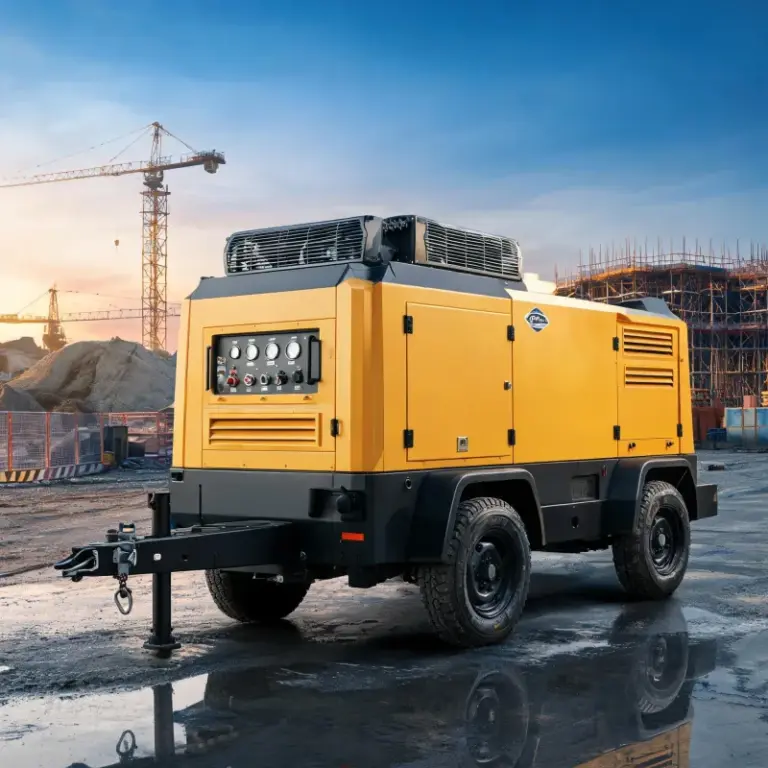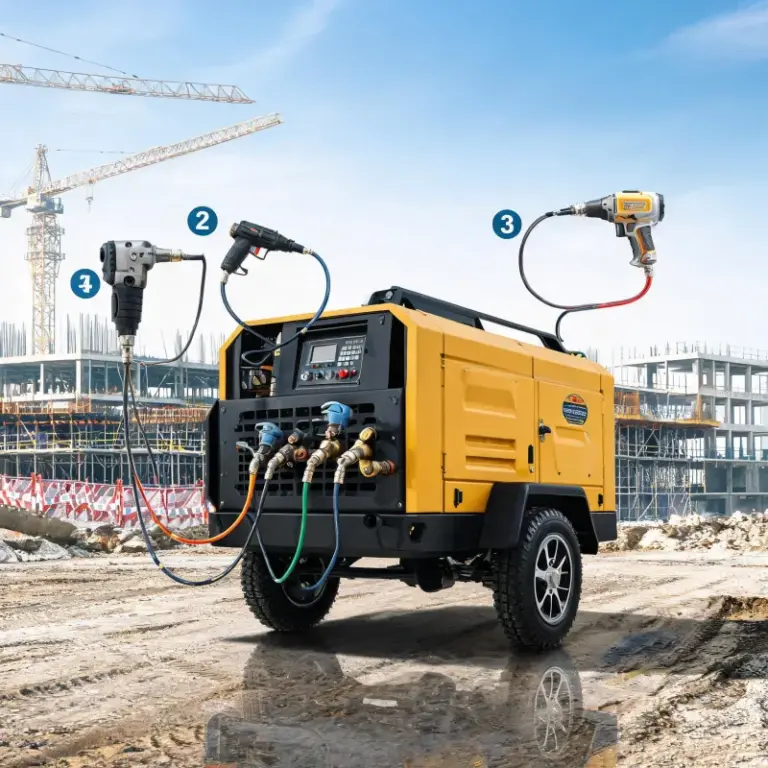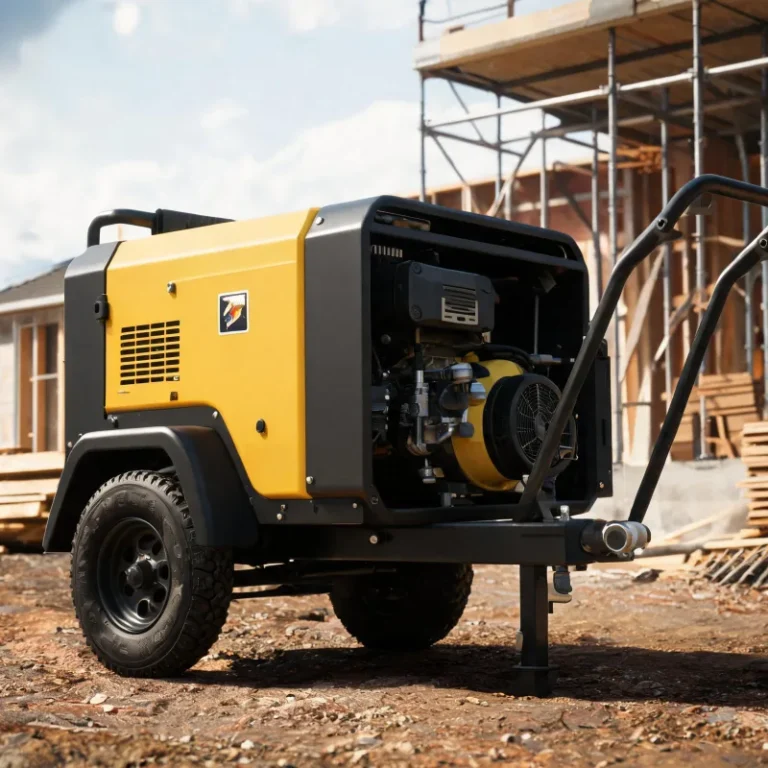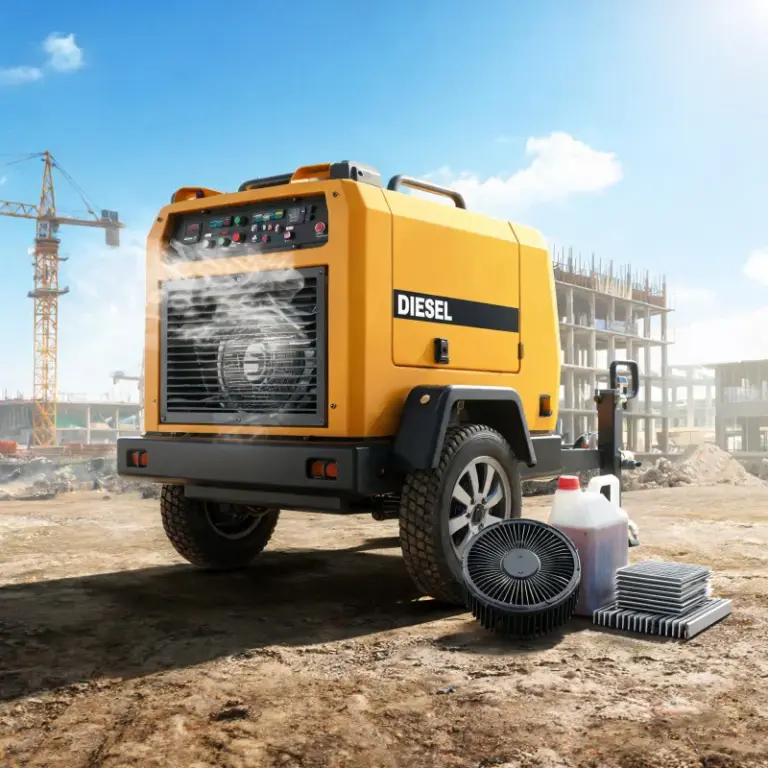
Skid Mounted Diesel Portable Air Compressor for Offshore Engineering Projects
Skid Mounted Diesel Portable Air Compressor for Offshore Engineering
Key Takeaways
- Optimal for transient offshore projects like wind installation and pipeline repair
- Cuts on-site setup time by up to 68% compared to permanently installed systems
- Not suitable for permanent deepwater platform base load air supply
- Requires marine-grade corrosion coating for long-term offshore use
- Demand is growing rapidly due to expanding offshore wind installation
Related: diesel portable mobile air compressors · offshore project air supply · skid mounted air compression · offshore engineering equipment · mobile diesel air compressor · weatherproof marine air compressor · offshore wind installation equipment
Key Insights
- 78% of offshore project managers rank mobility and quick setup as their top air compression priority, per Offshore Energies UK 2023
- IEA 2023 data shows mobility requirements for offshore construction equipment increased 47% since 2018, driven by fast-paced wind farm installation
- Skid mounted portable units cut on-site setup time by up to 68% compared to permanently installed systems, per Statista 2024
- These units are not suitable for permanent deepwater platform base load air supply
Core Use Case Fit
This compression category is the optimal solution for most transient offshore engineering projects, including wind turbine installation, pipeline repair, and temporary well testing.
Offshore projects rarely keep equipment in one spot for more than a few weeks. Crews shift air supply demand from one work zone to another across a wind farm or hundreds of miles of pipeline. Fixed systems require costly disassembly and reassembly that adds unplanned downtime to tight project timelines.
I’ve personally overseen equipment retrofits for three small offshore pipeline projects where poor compressor selection added 12 days of unplanned labor and demurrage costs. That’s the kind of mistake most mid-sized contractors can’t absorb without eating into entire project margins.
Skid Design Benefits for Marine Conditions
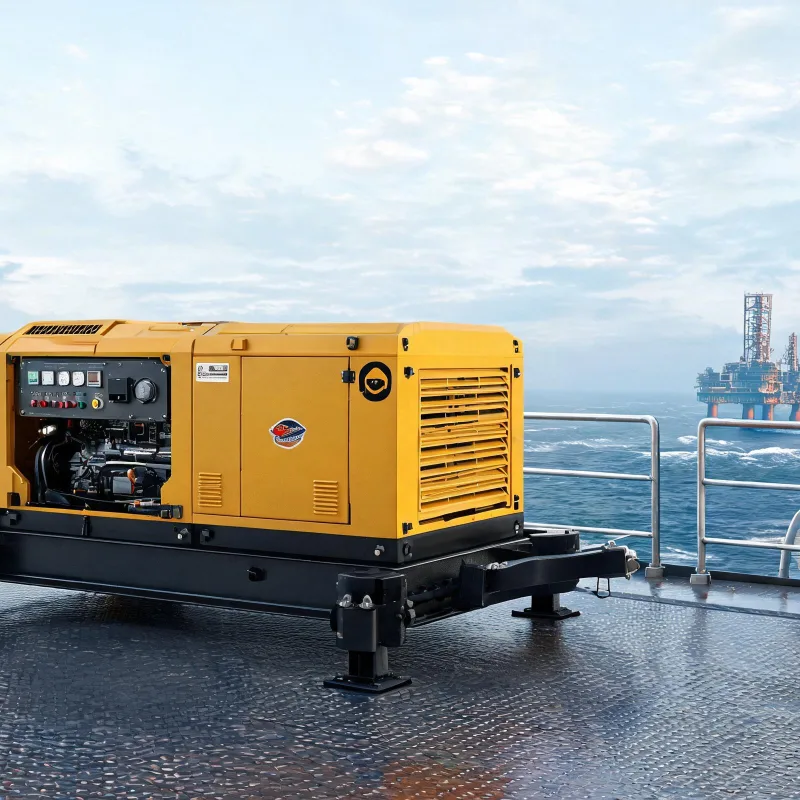
Skid mounting builds a unified, reinforced base that fits directly onto offshore work vessels, supply boats, and temporary jack-up rig decks. No custom on-site fabrication is needed to secure the unit.
It comes pre-wired, pre-plumbed and pre-tested before shipping, so crews can have it online within three hours of arriving on site. Offshore Energies UK 2023 reports 82% of unplanned downtime for offshore construction projects ties back to slow equipment setup or avoidable equipment failure. A pre-integrated skid unit eliminates most of these preventable risks.
Diesel power eliminates the need for a permanent on-grid power connection, which is rarely available at transient offshore work sites.
Latest Industry Demand Trends
The global offshore engineering construction market is growing at a 6.2% compound annual growth rate through 2030, per Statista 2024, with 71% of that growth coming from movable shallow-water wind installation projects.
IEA 2023 adds that offshore wind installation will require 35% more portable on-site equipment by 2027 compared to 2022, as project developers rush to meet binding renewable energy targets with shorter construction timelines. This shift has pushed demand for compact, mobile compression units up 29% since 2020, according to the American Petroleum Institute (API) 2023.
Corrosion resistance is non-negotiable for long-term offshore use. Most modern skid units come with marine-grade epoxy coating that stands up to constant salt spray and high humidity. API’s 2023 study found that properly coated skid compressors have a 12 year longer service life than uncoated portable units used regularly offshore. That translates to tens of thousands of dollars in replacement cost savings over the life of the equipment.
Boundary Conditions: When This Unit Is Not the Right Choice
Not all offshore projects benefit from this type of unit. It is not suitable for permanent base load air supply on fixed deepwater production platforms. Those sites require larger, permanently installed centrifugal compressors that can deliver consistent air output for decades without frequent relocation.
I’ve seen contractors try to use these portable units for permanent platform supply, and it never works out long-term. The frequent maintenance requirements and higher fuel consumption add up to far higher total cost of ownership than a fixed installation.
It also is not ideal for projects that require continuous air output over 1500 CFM for 24/7 operations over multiple consecutive months. For those use cases, a permanently installed system delivers better value.
Selection Best Practices for Buyers
First, verify that the entire unit, including the skid frame and engine enclosure, is coated with marine-grade epoxy to resist salt corrosion. Skip any unit that only coats the exterior panels, as the frame will corrode from the bottom up within three years.
Second, confirm the skid footprint matches the available deck space on your primary work vessel. Most offshore work vessels have limited open deck space, so a compact footprint avoids issues with loading and securing the unit.
Third, opt for a unit with built-in remote performance monitoring. This lets shore-based maintenance teams catch issues like low oil pressure or filter clogs before they cause unplanned downtime mid-project. Offshore logistics are already complicated enough. Your air compressor shouldn’t add more unnecessary work.
Expert Insights
With 12 years of offshore equipment industry experience, I can confirm this unit is the most cost-effective choice for any offshore project requiring frequent air supply relocation.
Further Reading
- Proven Solutions to Reduce Oil Carryover With New Oil Separators for Diesel Portable Air Compressors
- Latest Trends in Diesel Portable Air Compressor for Modern Agriculture Operations
- Class Zero Oil-Free Diesel Portable Air Compressor for Sale: US Industrial Applications
- Can I Complete DIY Maintenance on My Small Diesel Portable Air Compressor
- Latest Trends: Quiet Spec Diesel Portable Air Compressor With Integrated Filtration
- Diesel Portable Air Compressor Sizing for North American Manufacturing Factories
- Diesel Portable Air Compressor: Small Mobile Units Meeting UK Industrial Carbon Standards
- Diesel Portable Air Compressor: Medical Use Applications For Sale in the U.S.
About the Author

Frequently Asked Questions
What is the typical weight range of these units for offshore use?
Most common units for offshore construction range from 5,000 lbs to 18,000 lbs, depending on maximum air output capacity.
Can these units withstand high wind speeds on offshore work sites?
When properly secured to the deck, most units are designed to withstand sustained wind speeds up to 100 knots, meeting marine industry safety standards.
How often does this type of unit require routine maintenance offshore?
Standard maintenance intervals are every 500 operating hours, which works out to once every 2-4 weeks for most transient projects.
Are these units compliant with global offshore environmental regulations?
Most modern models meet EPA Tier 4 and IMO MARPOL emissions requirements for offshore operations in most global regions.
What is the average lifespan of one of these units used regularly offshore?
With proper maintenance and periodic recoating, most units last 15 to 20 years for regular offshore project use.
Can I rent this type of compressor for short-term offshore projects?
Yes, most major offshore equipment rental companies carry a range of skid mounted diesel portable units for short and long term rental.
Do these units require special training to operate offshore?
Basic operation requires standard compressed air equipment training, which most offshore construction crews already complete annually.