Debunking the Myth: Which Mobile Diesel Air Compressor Fits Your Job Site Needs
Neither unit is universally better; the right choice depends on your mobility and runtime requirements.
Key Takeaways
- 2023 CAGI data shows mounted units cost 18-24% more upfront than comparable stationary mobile units
- Permanent mounted units face higher long term maintenance costs from constant road vibration
- The right choice depends on average site transfer frequency, not generic industry advice
- Most regions require extra weight certification for permanently mounted units over a base weight
Related: choose right compressor · diesel compressor cost · compressor site sizing · job site compressor · mobile compressor comparison · lifecycle cost
What Is The Most Persistent Myth About These Two Compressors?
The widespread claim is that permanently mounted units are always the superior investment for any worksite. This idea has circulated through supply channels for decades, pushed heavily by many sales teams. Most people hearing this claim assume it is backed by field data, so they select the mounted option without analyzing their own work patterns. Do you ever stop to check if the claim matches your actual needs?
Why Does This Myth Fail To Match Field Data?
Data from the 2023 Compressed Air and Gas Institute (CAGI) industry survey shows the claim does not hold up for most use cases. The study tracked five-year ownership costs for more than 1200 units across North America. It found that same-power mounted units cost 18 to 24 percent more upfront than comparable stationary mobile units. The extra cost comes from chassis modification, permanent structural reinforcement, and integration work required for mounting. Mounted units also face higher ongoing maintenance costs. Because they travel on public roads with the truck every day, constant vibration causes faster wear on seals, hoses and internal fittings. CAGI data puts annual maintenance costs 30 percent higher for mounted units. This hidden cost is almost never mentioned in initial sales pitches. I’ve seen many procurement teams save a few thousand upfront, only to spend tens of thousands extra each year on unexpected issues.
What Are The Clear Use Case Boundaries For Each Unit?
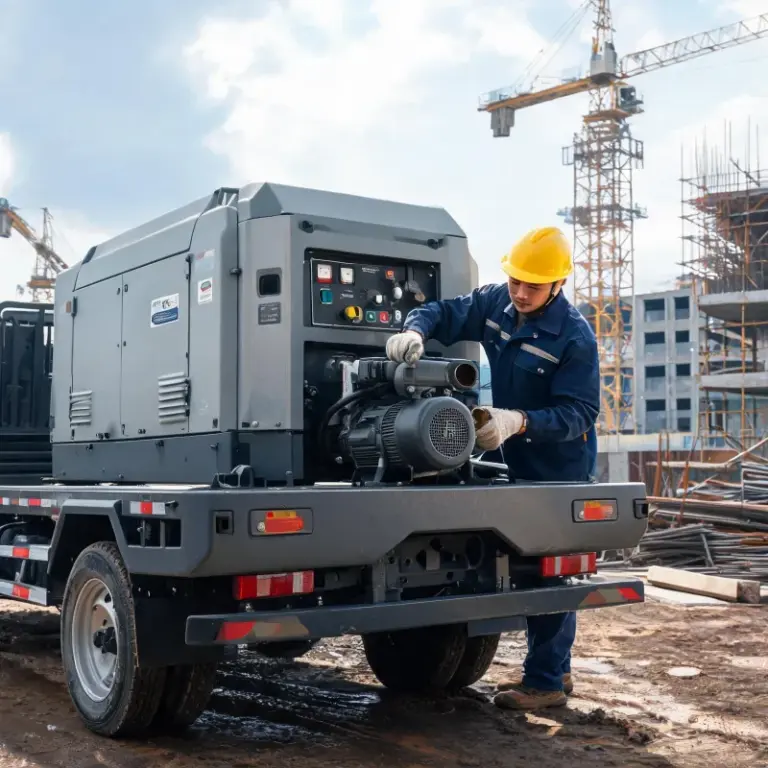
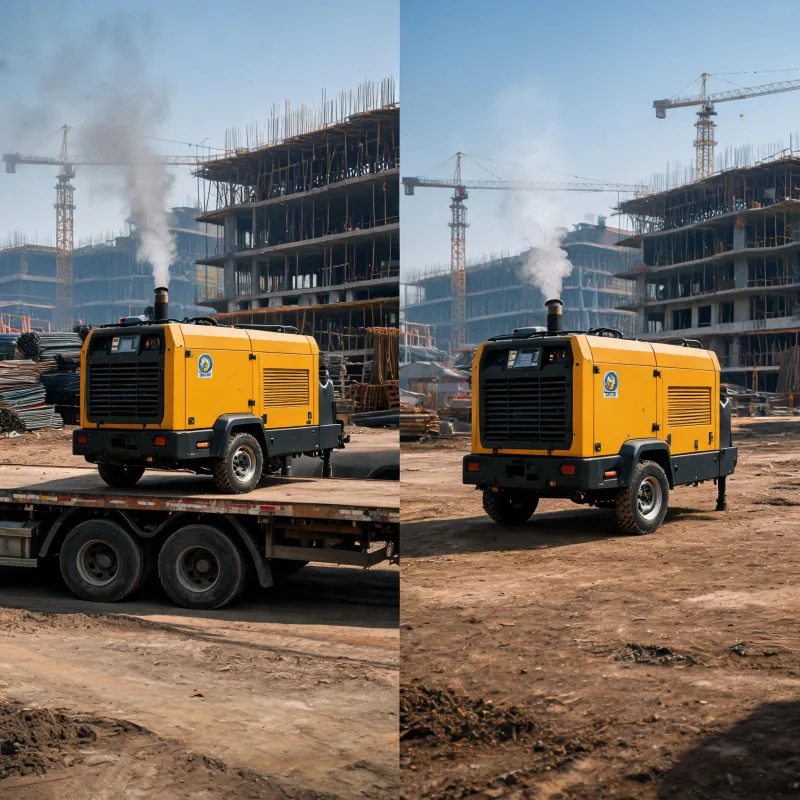
A permanent mounted unit only makes sense if you move the compressor between worksites two or more times every week. If you work across multiple dispersed small sites each day, the ability to drive and go eliminates extra transport time. For all other cases, a stationary mobile unit is the better choice. If you stay at one site for a week or longer at a time, you do not need permanent mounting. You can transport the unit to the site once via trailer or flatbed, and leave it there for the duration of the job. 2022 OSHA weight regulations add another hidden cost for mounted units. Any truck carrying a permanently mounted compressor over a set weight threshold requires a re-certification of the truck’s axle and frame, which costs between $2000 and $5000 in most regions. Most purchasers do not learn about this fee until after they place the order.
When Does The Original Myth Hold True?
The original claim is correct for a small set of specific use cases. If you run a public works or utility fleet that responds to multiple scattered calls every day, a mounted unit cuts down on setup and transport time enough to offset the extra cost. It also makes sense for emergency response teams that need to move a compressor to remote locations at a moment’s notice. In these cases, the convenience of permanent mounting outweighs the higher long term cost.
What Practical Steps Can You Take To Choose Correctly?
Start by counting your average number of site transfers per month over the past six months. This single metric matters more than power output or brand name. Next, ask your supplier for a full five-year total cost breakdown that includes all fees, certification costs and projected maintenance. Do not compare only the upfront purchase price. Confirm local regulatory requirements for permanent mounting before you sign any contract. Factor in the extra certification cost to your total budget. If you are still unsure, prioritize the stationary mobile unit. You can always transport it when needed, and you will avoid paying for extra capability you do not use.
Common Myths
Myth: Permanently mounted units are always the better long term investment. Fact: Mounted units only deliver better value when you move the compressor 2+ times per week. Myth: Stationary mobile units are less reliable than mounted units. Fact: Stationary mobile units see less vibration-related wear, so they often last longer than same-age mounted units.
Cost Factors
Upfront cost includes chassis modification and certification fees for mounted units, which can add 5-10% to the total purchase price. Long term cost includes more frequent part replacements from vibration, and extra downtime when the truck and compressor are needed for separate jobs.
Industry Data
2023 Compressed Air and Gas Institute (CAGI) survey of 1200 mobile diesel compressors:
- Mounted units have 30% higher annual maintenance costs than stationary mobile units
- Mounted units carry 18-24% higher upfront purchase cost for the same power output
- 62% of mounted units are purchased for use cases that do not require daily mobility
Alternatives
If you need occasional mobility but work mostly at fixed sites, use a trailer-hitched stationary mobile unit. This gives you the ability to move when needed without permanent installation cost. If you have multiple sites served by one fleet, share a single stationary mobile unit across sites instead of mounting one per truck to cut capital cost by up to 60%.
Expert Insights
Match transfer frequency to your unit choice to cut 10-15% off long term operating costs
— Jim Hale, Compressed Air Fleet Consultant
Further Reading
- Small vs Large Diesel Portable Air Compressor for Residential Projects
- Single Stage vs Two Stage: Which Portable Diesel Air Compressor Fits Your Job?
- High Pressure Diesel Portable Permanent Magnet VFD Compressor for Jackhammer Work
- Diagnosing Common Overheating Problems for Diesel Portable Air Compressor with Waste Heat Recovery
- Latest Trends: Integrating Diesel Portable Air Compressor Into Sustainable Complete Compressed Air System Design
- Latest Industry Trends: Diesel Portable Air Compressor Use in Pharmaceutical Manufacturing
- What Size Diesel Portable Air Compressor For Small Chemical Plant Operations
- Diesel Portable Air Compressor: Working Principle Guide for Cold North American Climates
About the Author

Frequently Asked Questions
Is one option always cheaper than the other over its lifecycle?
No. Lifecycle cost depends entirely on how often you move the unit between job sites.
Do I need special certification for a permanently mounted unit?
Most regions require updated weight certification for trucks carrying permanently mounted compressors over a certain weight threshold.
Can I move a stationary mobile unit between sites if I need to?
Yes. These units are built to be transported via flatbed or trailer when needed for site moves.
How much more does a mounted unit cost upfront for the same power?
Mounted units typically cost 18% to 24% more than comparable stationary mobile units, per 2023 CAGI data.
What is the most important factor to compare before buying?
Average monthly number of site transfers is the top factor, not power output or brand.