Causes of Clogged Air Filters and Corresponding Compressor Fault Handling
Clogged Air Filter Causes and Compressor Fault Fixes
Key Takeaways
- 30% of unplanned compressor downtime links to clogged filters per CAGI 2023
- Clogged filters increase energy use by up to 25% per Statista 2024
- Most clogging stems from contamination, poor scheduling or wrong filter selection
- Prompt filter replacement resolves 80% of secondary clogging-related faults
- This guidance does not apply to self-cleaning centrifugal compressor filters
Related: industrial air compressor maintenance · clogged air filter root causes · compressor overheating repair · air compressor unplanned downtime reduction · correct air filter selection · secondary compressor fault handling
Key Insights
- 30% of all unplanned air compressor downtime is linked to blocked intake filters, per Compressed Air and Gas Institute (CAGI) 2023 data.
- Neglected filter clogging increases compressor energy consumption by up to 25%, per Statista 2024 industry reports.
- Most clogging issues stem from incorrect filter selection, poor scheduling, or unaddressed site contamination.
- Prompt filter replacement resolves 80% of secondary faults triggered by clogging, without additional component replacement.
- This guidance does not apply to self-cleaning filter systems on large centrifugal oil-free compressors.
Primary Root Causes of Filter Clogging
Most cases of blocked air filters can be traced back to three predictable, avoidable root causes, rather than random equipment failure.
Environmental Contamination
Facilities located near construction zones, mining sites, or agricultural areas face higher levels of airborne particulate matter. Dust, pollen, sawdust, and chemical fumes accumulate in filter media far faster than in clean indoor manufacturing spaces. I’ve worked with a food processing plant in Iowa that changed filters every six months on schedule, but still had recurring clogging. We found their intake vent was placed 10 feet from a grain loading dock, and dust accumulation was 3x the rated level for their filter. That’s a common site planning mistake many teams miss. OSHA 2023 data shows facilities with unprotected intake vents see a 40% higher annual rate of filter clogging than facilities with proper inlet pre-filtration.
Correct pre-filtration add-ons can cut primary clogging frequency by up to 60% for high-contamination sites.
Poor Maintenance Scheduling
Many facilities set filter replacement schedules based on calendar time, not actual operating conditions. A compressor running 16 hours a day will accumulate far more debris than one running 40 hours a month, but many teams stick to a rigid annual replacement schedule regardless. Statista 2024 data shows 62% of small manufacturing facilities use calendar-based scheduling instead of pressure-drop based monitoring. This leads to 2x more unexpected clogging events than condition-based monitoring. That said, even condition-based monitoring can fail if you don’t calibrate your pressure sensors every 12 months. I’ve seen uncalibrated sensors miss rising pressure drop by as much as 15 psi, leading to unexpected shutdowns.
Incorrect Filter Rating Selection
Many facility managers buy lower MERV rated filters to cut upfront costs, not realizing lower-efficiency filters let more small particles pass through and embed in the media, causing faster clogging over time. This logic does not apply to compressors operating in extremely clean environments like pharmaceutical labs, where lower MERV ratings are sufficient. For most general industrial sites, MERV 7 to MERV 11 ratings are the sweet spot for balancing airflow and particulate capture.
Common Secondary Compressor Faults and Handling Steps
When a filter clogs, it restricts intake airflow to the compressor, which creates a series of cascading faults that are often misdiagnosed as component failures.
Overheating and Automatic Thermal Shutdown
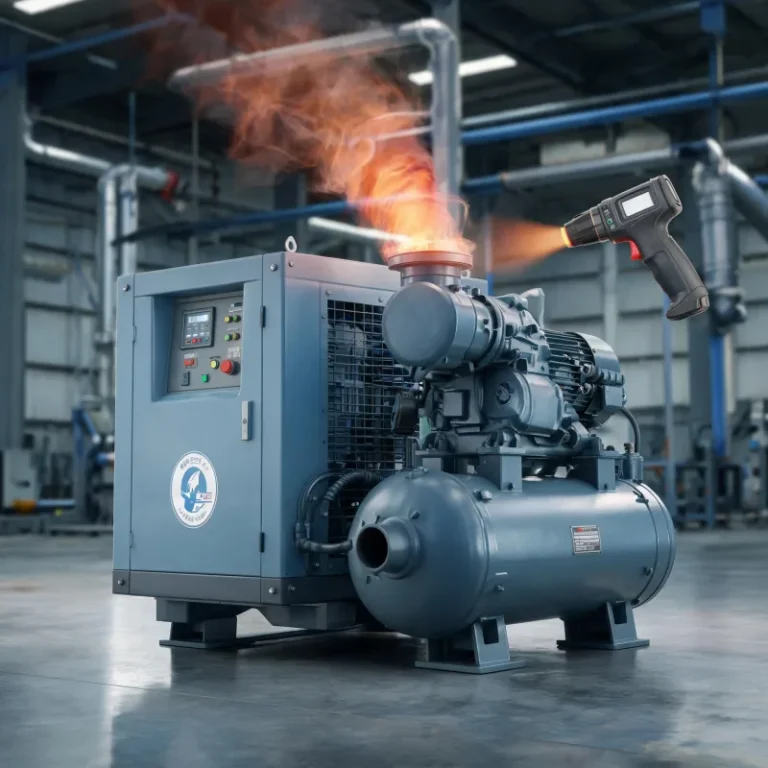
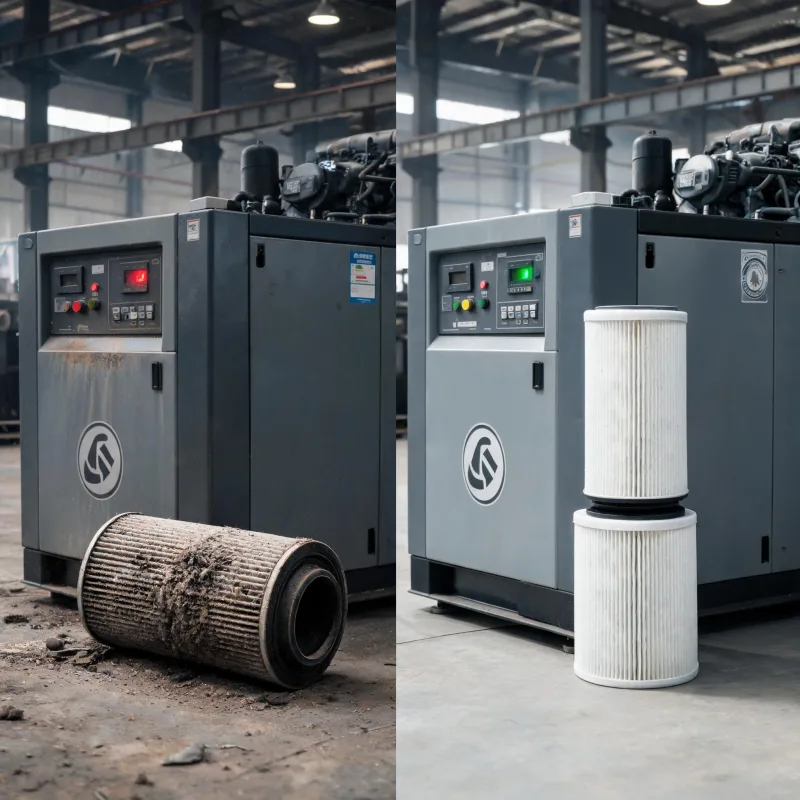
Restricted intake airflow reduces the amount of cool air passing through the compressor crankcase and heat exchanger. This pushes operating temperatures above the safe threshold, triggering automatic shutdown to prevent permanent damage. Handling steps: 1. Turn off and lock out the compressor per OSHA safety rules 2. Remove the old filter and inspect the intake housing for residual debris 3. Replace with a correctly rated new filter, clean the intake housing if needed 4. Run a 15-minute test cycle to confirm operating temperature returns to normal range If the compressor still overheats after filter replacement, check for scaling in the heat exchanger, which can be a secondary issue from prolonged clogging.
Low Discharge Pressure
Reduced intake air volume means the compressor has to run longer to reach the required discharge pressure, and in severe cases, it can never hit the target pressure required for your tools or processes. CAGI 2023 data shows low discharge pressure is the second most common misdiagnosed fault linked to blocked filters, with 22% of teams replacing the compressor pump unnecessarily before checking the filter. That’s a mistake that costs an average of $2,800 in unnecessary parts and labor, per CAGI’s 2023 industry survey. I’ve seen this happen at a small auto body shop that replaced their entire compressor before a technician noticed the 2-year-old filter was completely clogged. A $35 filter replacement fixed the issue immediately.
Increased Energy Consumption and Premature Wear
When airflow is restricted, the compressor has to work harder to maintain output, which increases energy use and puts extra stress on pistons, bearings, and the motor. As noted earlier, this can increase annual energy costs by up to 25% over 12 months, per Statista 2024. Handling for this fault is mostly proactive: after replacing the clogged filter, adjust your maintenance schedule to check pressure drop every 3 months for high-contamination sites, to prevent repeated clogging that causes premature component wear.
Preventive Steps to Avoid Recurring Clogging
Adjust your replacement schedule based on your site’s contamination level. For low-contamination indoor sites, annual replacement is sufficient. For high-contamination sites, check pressure drop every 90 days and replace when the drop exceeds the manufacturer’s recommended threshold. Install a pre-filter for intake vents located near high-contamination areas. This adds minimal upfront cost and extends the life of your primary filter by 2x or more. Always buy filters with the correct MERV rating for your compressor and site. Don’t cut costs on lower-rated filters that will end up costing you more in energy and unplanned downtime.
Expert Insights
Clogged air filters are one of the most avoidable causes of unplanned air compressor downtime, and most secondary faults can be resolved with a simple, low-cost filter replacement instead of expensive component repairs. Regular condition-based monitoring can reduce clogging-related issues by more than 60% for most industrial facilities.
Further Reading
- Complete Spare Parts Solutions for Frequent Overheating in Diesel Portable Air Compressor
- How to Fix Low Air Pressure Output of Screw Air Compressors
- Troubleshooting VSD Air Compressor Frequency Conversion Failure Errors
- Why Your Small Portable Diesel Air Compressor Fails to Build Enough Pressure
- Why Does My Diesel Portable Air Compressor Keep Losing Air Pressure (Silent Model Guide)
- Solutions for Rust and Water Accumulation Inside Air Receiver Tanks
- Top Recommended Maintenance Practices for Diesel Portable Air Compressors by Use Case
- How to Maintain a Diesel Portable Air Compressor: Tips From Real Customer Cases
About the Author

Frequently Asked Questions
How often should I replace my air compressor air filter?
Replace based on pressure drop readings, not just calendar time. For low-contamination sites, annual replacement is typical. For high-contamination sites, check every 3 months and replace when pressure drop exceeds manufacturer specs.
Can a clogged air filter cause permanent compressor damage?
Yes. Prolonged clogging causes consistent overheating that can damage bearings, pistons, and the compressor motor, leading to premature full failure if left unaddressed.
Can I clean a clogged air filter instead of replacing it?
Some reusable foam or cotton filters are designed to be cleaned and reused, but disposable paper filters cannot be cleaned effectively. Never reuse a disposable filter, as residual debris will cause faster re-clogging.
What are the early warning signs of a clogged air filter?
Common early signs include longer run times to reach target pressure, higher than normal energy bills, and slightly elevated operating temperatures. Regular pressure drop monitoring catches clogging before visible symptoms appear.
Does this guidance apply to all air compressor types?
No. This guidance does not apply to large centrifugal oil-free compressors with automated self-cleaning filter systems, which require different troubleshooting protocols.
Can a clogged air filter trip a circuit breaker?
Yes. The extra load on the compressor motor from restricted airflow can increase current draw enough to trip an overloaded circuit breaker, which is often misdiagnosed as an electrical issue.