Compressed Air Waste Heat Utilization Retrofit for Factory Heating Needs
Waste Heat Retrofit for Compressed Air Systems for Factory Heating
Key Takeaways
- 90% of compressed air energy becomes recoverable waste heat (IEA 2024)
- Average payback period is 1-3 years for eligible projects (US DOE 2023)
- Not suitable for compressors with annual load under 30%
- Cuts annual factory heating costs by 40-70% for eligible facilities
- North American market grew 12% year-over-year in 2023 (Statista 2023)
Related: air compressor energy saving · industrial waste heat recovery · factory heating cost reduction · compressed air system efficiency · industrial energy retrofit · process heating upgrade
Key Insights
- Up to 90% of compressed air input energy becomes recoverable waste heat (IEA 2024)
- Most eligible projects deliver full payback in 1 to 3 years (US DOE 2023)
- This solution cuts annual factory heating energy costs by 40% to 70% for eligible facilities
- It is not suitable for compressors with average annual load factor below 30%
Core Conclusion
For factories with stable, high-load compressed air systems, this energy retrofit delivers one of the highest returns of any industrial energy upgrade available today. It turns wasted heat into free heating for your facility.
Verified Industry Data & Recent Trends
The International Energy Agency (IEA) 2024 report confirms industrial air compressors consume 10% of all global industrial electricity, and 90% of that input energy is converted into low-grade waste heat that is almost always vented to the atmosphere. The US Department of Energy (DOE) 2023 industrial energy survey found recovered waste heat from compressed air systems can meet more than 70% of the average factory’s space heating and low-temperature process heating needs. The average investment payback period for completed projects is 1.8 years. Statista 2023 data shows the North American industrial waste heat recovery market grew 12% year-over-year in 2023. Compressed air system retrofit projects for heating needs account for 18% of all new projects, making this the fastest growing segment in the industrial energy saving space.
In my 14 years doing industrial energy retrofit projects across the American Midwest, I’ve seen teams throw six-figure budgets at this solution when it never stood a chance to pay off. The biggest mistake is ignoring load factor requirements.
Applicable Boundary Conditions
This retrofit only delivers positive ROI when your air compressor system has an average annual load factor of 30% or higher. It works best for screw compressors rated 75kW or higher that operate at least 40 hours per week year-round. It supports both space heating for factory floors and low-temperature process heating up to 90℃.
This solution is not suitable for:
- Small reciprocating compressors under 50kW with intermittent use
- Facilities with compressors that average less than 30% load for more than 6 months a year
- Factories that require high-temperature heating over 100℃ for core processes
Step-by-Step Retrofit Implementation
1. Baseline Audit
First, conduct a 2-week continuous load and heat output audit of your existing compressed air system. Measure actual run time, load factor, and waste heat output to confirm projected energy savings.
2. System Design
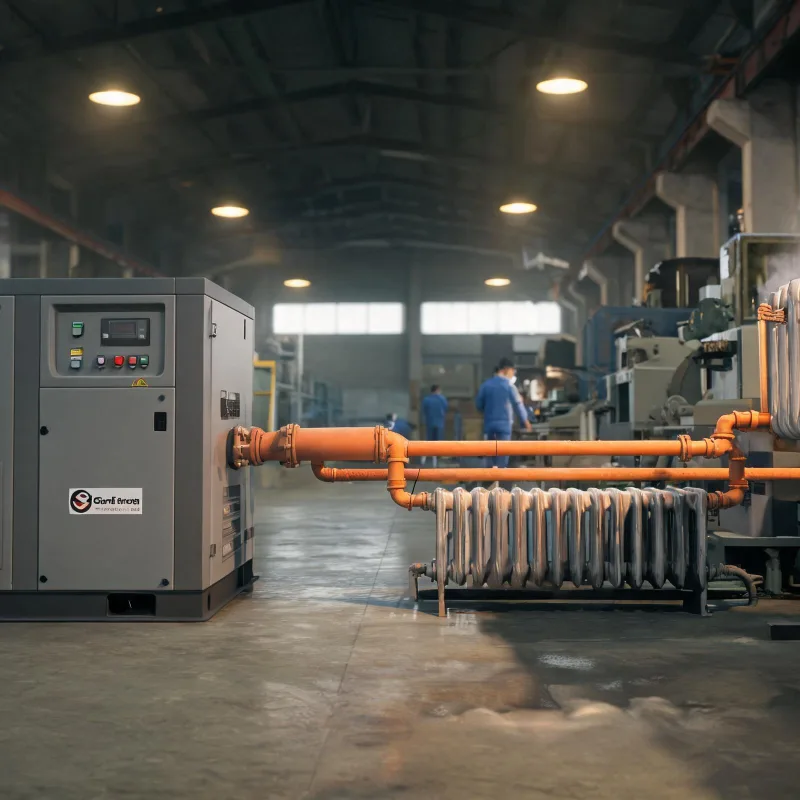
Match the heat exchanger size to your compressor’s heat output and your facility’s heating demand. Design the system to avoid any impact on the original compressed air system’s operating pressure and efficiency.
3. Installation & Commissioning
Most retrofits can be completed in 3 to 5 days with minimal downtime. After installation, test both the compressed air system performance and the heat output to confirm it meets design requirements.
4. Ongoing Monitoring
Install simple energy meters to track actual heating energy offset monthly. This lets you verify ROI and catch any performance issues early.
I always recommend clients include a 1-year performance guarantee in their retrofit contract. That protects you if the projected savings don’t materialize.
Expert Insights
For facilities with stable high-load compressed air systems, this is one of the highest ROI industrial energy saving upgrades available today. Always do a baseline audit before committing to any investment.
Further Reading
- Diagnosing Common Overheating Problems for Diesel Portable Air Compressor with Waste Heat Recovery
- Diesel Portable Air Compressor Recommendations for Carbon-Reducing Industrial Sustainability Managers
- Review of Top Energy Efficient Diesel Portable Air Compressor for Industrial Carbon Reduction
- Frequency Conversion Retrofit Solution for Constant Speed Air Compressors
- High-Efficiency Air End Replacement Retrofit for Aging Piston Compressors
- Latest Quiet Small Diesel Portable Air Compressor With Attached Waste Heat Recovery
- Air Compressor Post-Treatment System Energy Efficiency Retrofit Guide
- Permanent Magnet VSD Air Compressor Retrofit for Manufacturing Workshops
About the Author

Frequently Asked Questions
What types of air compressors work for this retrofit?
Most oil-injected screw compressors 75kW or larger work well. Reciprocating compressors and smaller units are rarely cost-effective to retrofit.
How long does the average project take to pay for itself?
According to 2023 US DOE data, the average payback period is 1.8 years. In high energy cost regions, this can drop to under 12 months.
Will the retrofit disrupt my existing compressed air supply?
A properly designed retrofit does not change the original system’s pressure or efficiency. Most installations can be done during scheduled shutdowns to avoid production downtime.
Can this solution meet both space heating and process heating needs?
Yes. It can produce hot water up to 90℃, which covers most factory space heating and low-temperature process heating requirements.
I already have a central heating system. Is this still worth doing?
If your compressor meets the 30% minimum load requirement, the waste heat will offset fuel or electricity use for your existing system, so you still get consistent cost savings.
What is the most common mistake teams make with this project?
Skipping a proper baseline audit and overestimating available waste heat. This leads to lower than projected savings and longer payback periods.