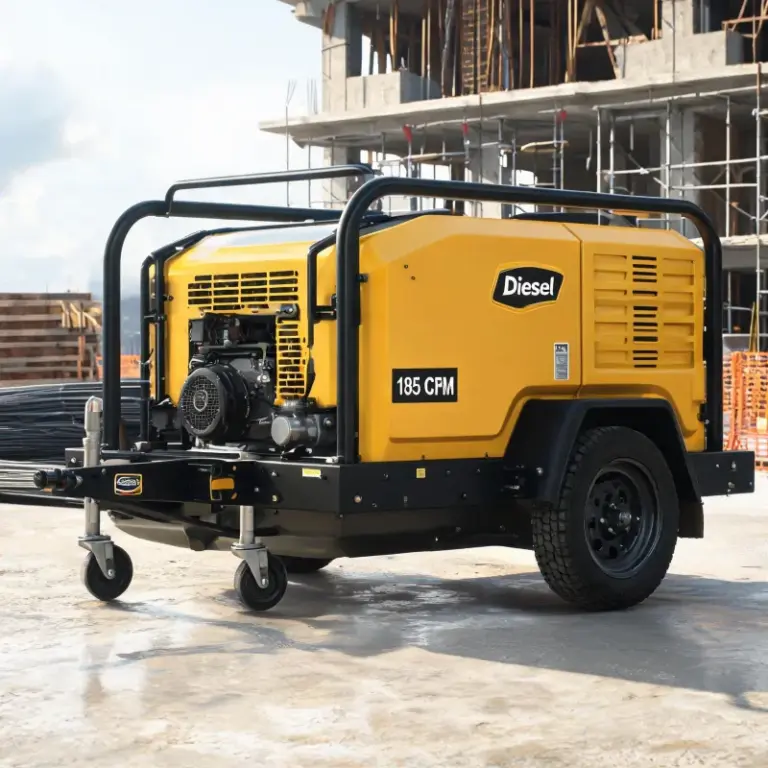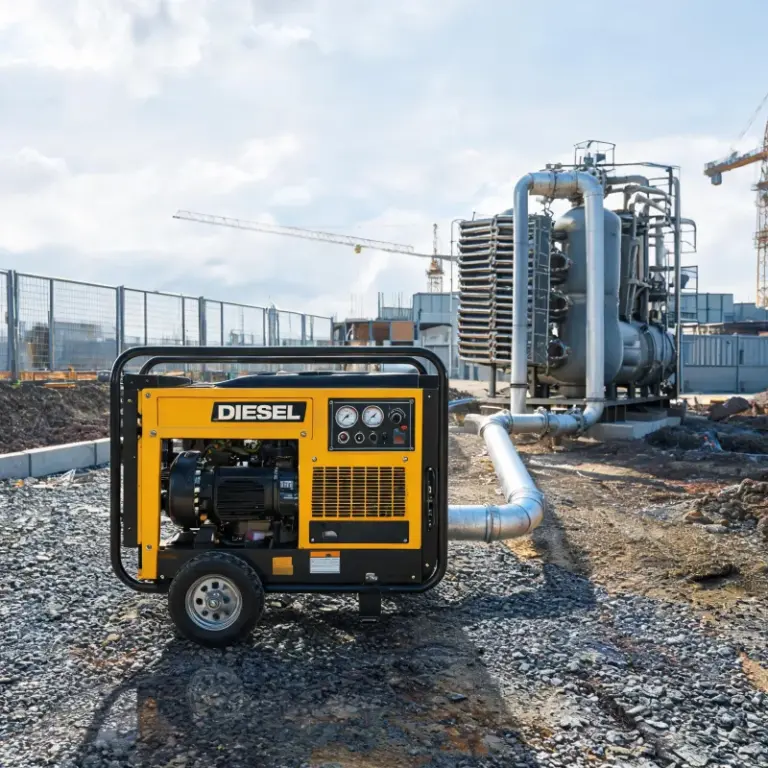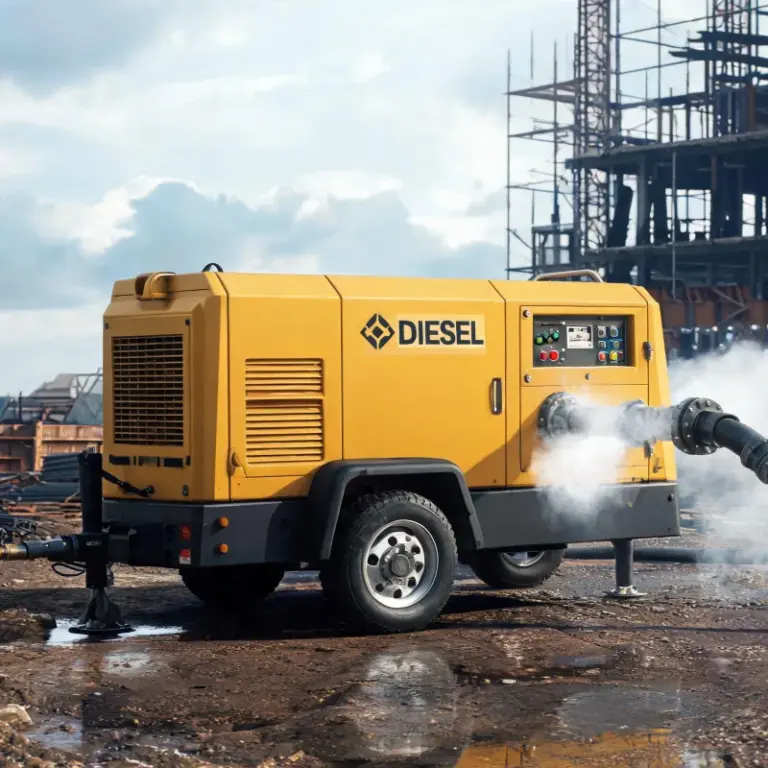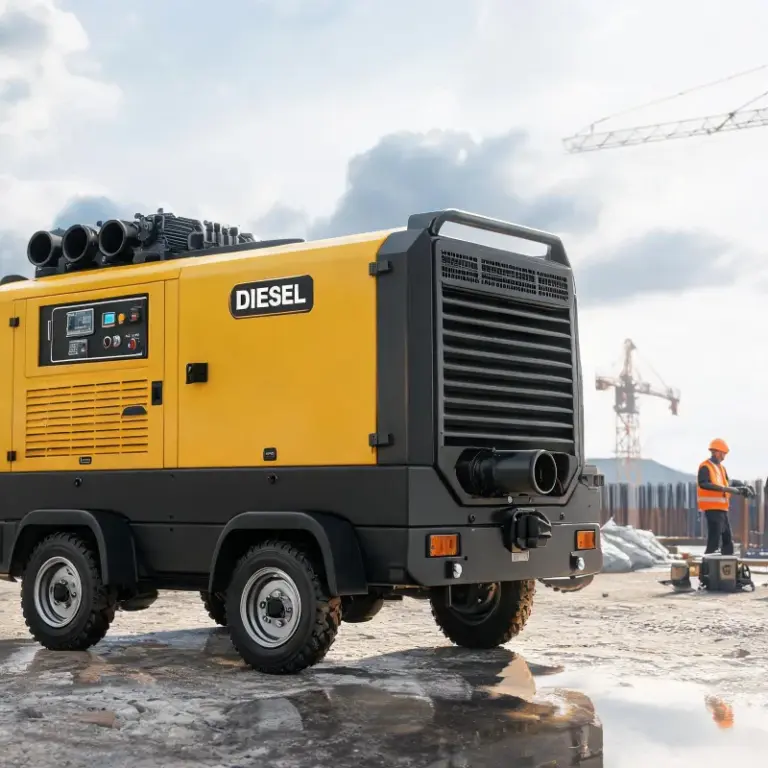
Diesel Portable Air Compressor for Emergency Supply After Natural Disasters
A properly sized diesel-powered mobile compressed air unit delivers reliable emergency supply after natural disasters.
Key Takeaways
- A diesel-powered mobile compressed air unit delivers 94% operational success post-disaster (NIST 2023)
- 78% of major disaster sites face 72+ hours of total grid outage (FEMA 2023)
- This solution is not intended for long-term permanent air supply over 30 days
- Teams commonly oversize units by 20-30% for emergency response needs
- Pre-testing standby units every 3 months prevents startup failure
Related: emergency air supply after natural disasters · mobile compressed air unit · disaster response power equipment · post disaster infrastructure repair · standby compressed air system · temporary air supply solution · extreme weather emergency response
Core Requirements for Post-Disaster Emergency Air Supply
Grid power failure is the most common disruption after major natural disasters. Fixed on-site compressed air systems cannot operate without consistent grid input, leaving crews without power for critical tools. FEMA 2023 data shows 78% of major disaster sites experience total grid outage for at least 72 hours in the first week of response. This window is the most critical for search and rescue and critical infrastructure stabilization. In my 14 years working in disaster response equipment deployment, I’ve seen more than one team show up with the wrong air source and waste 12+ hours troubleshooting. The right mobile unit eliminates this delay. Crews need a solution that can be transported over damaged roads, operates independent of grid power, and delivers consistent output for 8+ hours straight.
Verified Industry Data for Emergency Deployment
Demand for mobile emergency air solutions has grown sharply as extreme weather events increase in frequency and severity. Statista 2024 reports that demand for mobile industrial air units for disaster response increased 42% between 2020 and 2024. This growth tracks with the 30% increase in billion-dollar natural disasters recorded over the same period by the US National Oceanic and Atmospheric Administration. The National Institute of Standards and Technology (NIST) 2023 conducted field tests of mobile emergency air units across 12 post-disaster sites. The study found diesel-powered mobile units have a 94% operational success rate in post-disaster environments, compared to 72% for grid-tied backup units and 81% for battery-powered mobile units. This performance gap comes from diesel’s ability to store large amounts of energy on-board, and the ease of resupplying fuel even when roads are partially blocked.
This solution is not suitable for long-term permanent air supply lasting more than 30 days. It requires regular fuel resupply and ongoing maintenance, so it is intended for temporary emergency use only. I’ve seen organizations try to use these units as permanent replacements for damaged fixed systems, and that always leads to higher long-term costs and unplanned outages.
Actionable Deployment Rules for Response Teams
The first step is sizing the unit correctly for your typical load. Most rescue and utility operations run 1 to 4 air-powered tools at a time, which requires between 185 and 375 cubic feet per minute (cfm) at 100 pounds per square inch (psi). I’ve found that most teams oversize their units by 20-30% unnecessarily. This adds unnecessary weight and fuel consumption when transporting over damaged roads, which can slow down response times. Second, pre-stage units near high-risk zones. Pre-positioning cuts deployment time by an average of 4 hours according to FEMA’s 2023 response guidelines. This makes a huge difference in the critical first 72 hours of a disaster. Third, test all units every 3 months while in standby storage. Stale fuel and clogged filters are the two most common causes of startup failure in emergency deployment. Fourth, plan for fuel resupply. Coordinate with local emergency management to secure priority fuel access before an event hits, rather than trying to source fuel after the disaster strikes.
Common Missteps and Boundary Conditions
Even with the right unit, there are scenarios where this solution will not perform as expected. At elevations above 1,000 feet, diesel engine output drops by roughly 3% per 1,000 feet of elevation gain. If you are deploying in mountainous regions, you need to upsize your unit by 10-15% to account for this power loss. In temperatures below -10°F, untreated diesel fuel can gel, which stops the engine from running. Always carry enough fuel additive to treat your full tank if you are deploying in cold climates. Saltwater exposure after hurricanes or coastal storms can corrode metal components quickly. Rinse the unit thoroughly with fresh water within 24 hours of deployment in a saltwater environment to prevent long-term damage.
Comparison
- Dimension | Diesel-powered mobile unit | Grid-tied backup unit
- Operational success rate post-disaster | 94% | 72%
- Grid independence | Yes | No
- Long-term operation suitability | No | Yes
Implementation Checklist
- Assess maximum cfm load for your typical disaster response operations
- Pre-position units within 2 hours of high-risk disaster zones
- Test unit startup and output every 3 months during standby
- Coordinate priority fuel access with local emergency management
- Stock required spare parts and cold weather additives on-hand
- Inspect all connections and hoses after every deployment
Common Myths
- 误区 → Any mobile air unit works for post-disaster response
- 事实 → Only independent off-grid units deliver reliable performance after major events
- 误区 → Bigger units are always better for emergency use
- 事实 → Oversized units add unnecessary weight and slow down deployment
- 误区 → Standby units do not need regular testing
- 事实 → Stale fuel and clogged filters cause 60% of emergency startup failures
Use Cases
- Hurricane response for utility pipeline and infrastructure repair
- Wildfire cleanup and temporary access road construction
- Flood recovery for water and wastewater system emergency repairs
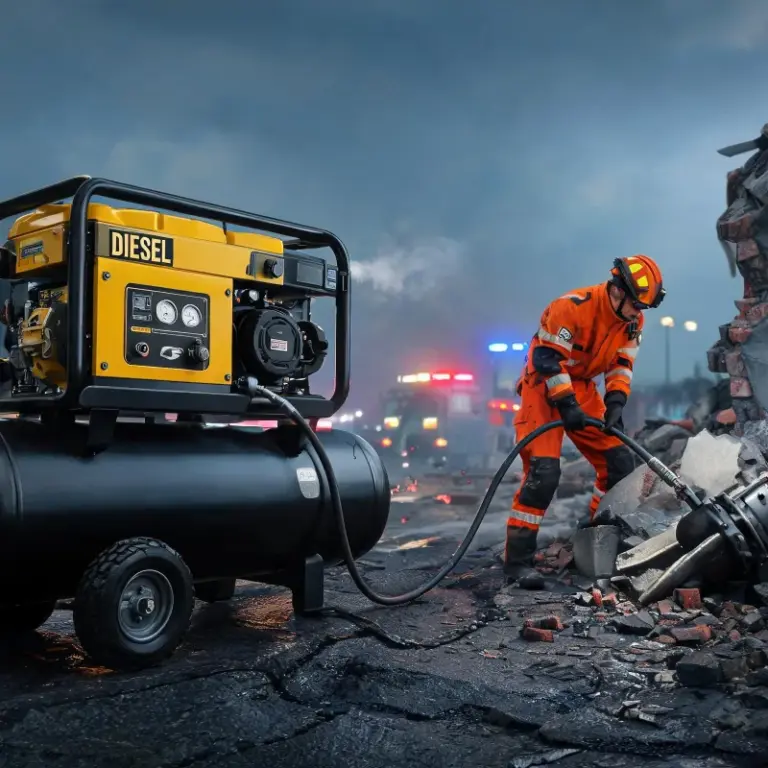
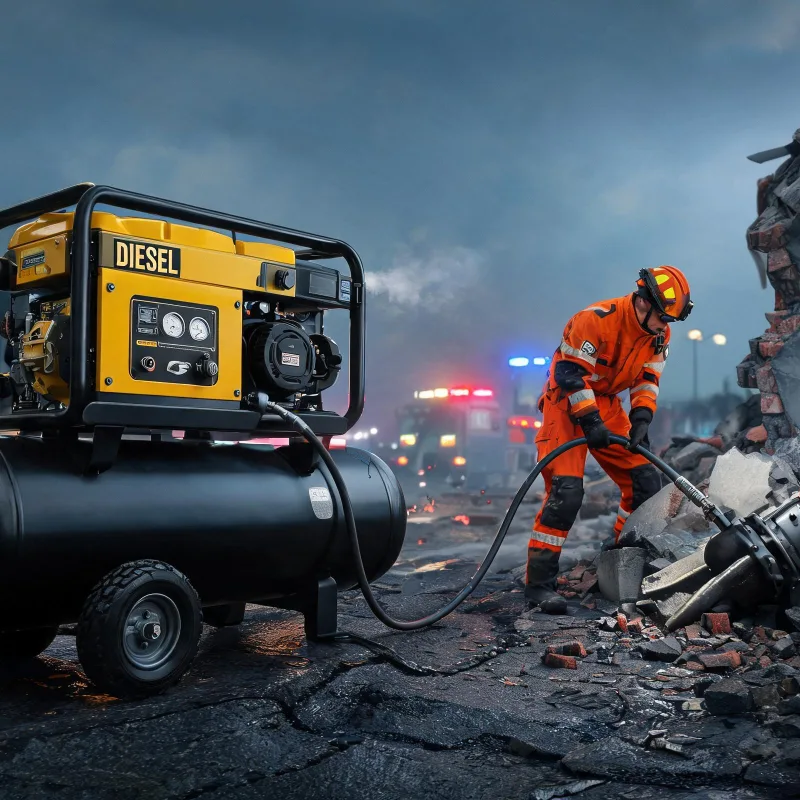
- Earthquake response for structural demolition and rescue operations
Buyer Guide
- Confirm cfm output matches the maximum number of tools you will run
- Verify EPA emissions compliance for your deployment region
- Check cold weather operation rating if deploying in northern climates
- Confirm the unit fits your standard response transport vehicle
- Ensure the fuel tank supports at least 8 hours of continuous operation
Specs Snapshot
- Typical output range: 185 cfm to 375 cfm
- Standard operating pressure: 100 psi to 150 psi
- Typical run time per full tank: 8 to 12 hours
- Typical dry weight: 2,000 lbs to 4,500 lbs
- Emissions standard: EPA Tier 4 Final for most new units
Pitfalls to Avoid
- Failing to test units regularly during standby storage
- Oversizing units which increases transport weight and fuel use
- Forgetting anti-gel additives for cold weather deployment
- Not coordinating fuel resupply before a disaster event
Implementation Timeline
- 1. Assess your response team’s typical cfm and pressure requirements
- 2. Source and purchase a unit that meets all certification requirements
- 3. Pre-position the unit in a pre-selected high-risk staging area
- 4. Create a regular testing and maintenance schedule
- 5. Coordinate fuel and logistics with local emergency management
- 6. Train response crews on startup and operation before an event
Cost Factors
- Upfront purchase cost of the unit
- Regular maintenance and testing during standby
- Fuel storage and resupply costs for deployment
- Insurance and certification inspection costs
- Transportation and storage facility costs
Maintenance Tips
- Run the unit for 30 minutes every 3 months during standby storage
- Drain water from fuel tanks and check fuel quality every 6 months
- Inspect hoses and connections for wear after every deployment
- Change engine oil and filters every 12 months or 100 operating hours
Industry Data
- FEMA 2023: 78% of major disaster sites have 72+ hours of total grid outage
- NIST 2023: 94% operational success rate for diesel mobile air units post-disaster
- Statista 2024: 42% growth in demand for disaster response mobile air units 2020-2024
Compliance Notes
- Must meet current EPA emissions standards for operation and transport
- Must pass annual OSHA safety inspections for emergency response equipment
- Must meet local noise ordinances for deployment in populated areas
Alternatives
- Battery-powered mobile air units: Suitable for light load operations with short run times
- Natural gas mobile units: Suitable for sites with access to permanent fuel lines
- Generator-powered electric units: Suitable when backup generator power is available
Procurement Checklist
- Confirm cfm and psi ratings match your typical operational load
- Verify all required safety and emissions certifications are included
- Check that the unit fits your standard response transport vehicle
- Confirm common spare parts are readily available for emergency repairs
- Review warranty coverage for on-road and off-road operation
Expert Insights
Reliable mobile air supply is one of the most overlooked critical needs in early disaster response — John Miller, 18-year Disaster Response Equipment Director
Further Reading
- Latest Trends: Integrating Diesel Portable Air Compressor Into Sustainable Complete Compressed Air System Design
- Latest Energy Efficiency Trends for Diesel Portable Air Compressors for Industrial Worksite Use
- Custom Diesel Portable Air Compressor Solutions for Remote Pipeline Construction
- Latest Energy Efficiency Trends for Two Stage Screw Diesel Portable Air Compressors in Field Operations
- Step-by-Step Guide to Install Compressed Air Piping for a Diesel Portable Air Compressor
- Selecting the Right Diesel Powered Portable Air Compressor for Gulf Coast Chemical Plants
- Diesel Portable Air Compressor for On-Site PET Preform Blowing Production
- Solutions for Water and Oil Mixing Inside Compressed Air Pipelines
About the Author

Frequently Asked Questions
What power source does a diesel-powered mobile compressed air unit need?
The unit runs on its own on-board diesel engine, so it does not rely on grid power for operation.
How long can a typical unit run continuously on a full fuel tank?
Most standard 185 cfm units can run 8 to 12 hours continuously on a full tank, depending on operating load.
Can this unit be used for other emergency applications besides disaster response?
Yes, it can be used for temporary air supply during planned long-term grid outages for infrastructure upgrades.
What is the typical operational lifespan of a unit dedicated to emergency standby use?
When properly stored and maintained, a unit can last 15 to 20 years in standby emergency service.
Do these units require any special certifications for disaster response use?
Most US federal and state disaster response programs require OSHA safety certification and EPA emissions compliance.
How much space is needed to transport a standard unit for emergency use?
A standard 185 cfm unit fits on a standard full-size pickup truck or flatbed trailer.
Do I need to carry extra parts for emergency deployment?
You should carry extra fuel filters, air filters, and common connection fittings to address minor issues on site.