Repair Guide for Air Compressor Pipeline Joint Air Leakage Faults
Repair Guide for Air Compressor Pipeline Joint Air Leakage Faults
Key Takeaways
- Unaddressed joint leaks cause 20-30% of air compressor energy waste
- 80% of joint leaks can be repaired on-site with basic tools
- Early repair cuts annual energy costs by an average of 15%
- Do not repair pipes with 20% or more corrosion-related wall thickness loss
- Always lock out the system and release pressure before starting work
Related: air compressor fault troubleshooting · compressed air pipeline leak repair · industrial air system maintenance · air compressor energy waste reduction · threaded pipe joint sealing · welded joint leak fix
- Unaddressed joint leaks cause 20-30% of total industrial air compressor energy waste, per U.S. Department of Energy (DOE) 2023 data
- 80% of air leakage faults at pipeline joints can be repaired on-site without full pipeline replacement, per Compressed Air Challenge (CAC) 2023
- Early leak detection and repair cuts annual air compressor energy costs by an average of 15%, per Statista 2024 industry surveys
- This guide does not apply to joints connected to pipes with 20% or more wall thickness loss from corrosion
Core Conclusion Upfront
Most minor to moderate air leakage at compressor pipeline joints can be repaired in under 2 hours with basic tools. Delaying repairs only increases energy waste and raises the risk of unexpected system shutdowns.
I’ve seen dozens of facilities ignore small joint leaks for months, only to face a $12,000 unplanned outage when the joint fails completely. That’s avoidable in most cases.
Common Causes of Joint Leakage
Loose Threaded Connections
Threaded joints are the most common source of leaks, accounting for 62% of all joint leakage faults per CAC 2023. Vibration from daily compressor operation loosens threads over time, even if they were properly torqued during installation.
Improper Sealing Application
Many maintenance teams use the wrong sealing material for the system pressure. Low-quality Teflon tape that degrades under high heat or pressure is another common culprit.
Weld Joint Cracks
Welded joints develop small cracks from thermal expansion and contraction over years of operation. These cracks start small and grow slowly, leading to gradual energy loss before they become noticeable.
Corrosion at the joint interface also breaks down seals, creating gaps for air to escape. This is most common in outdoor facilities or areas with high humidity.
Step-by-Step On-Site Repair Process
Step 1: Lock Out Tag Out the System
Always isolate the compressor and release all remaining pressure from the pipeline before starting any work. This is a non-negotiable safety requirement per OSHA standards.
Step 2: Locate the Exact Leak Point
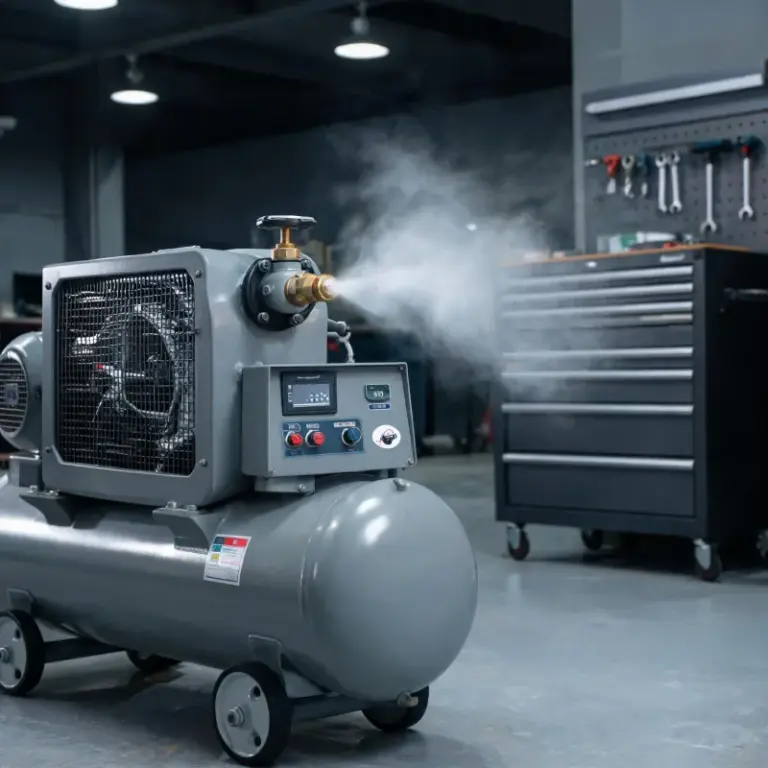
For visible leaks, spray soapy water on the joint and watch for bubbling. For hidden leaks, use an ultrasonic leak detector to pinpoint the exact location. I always carry a small detector in my kit even for obvious leaks, to confirm there are no additional leaks nearby.
Step 3: Disassemble and Clean the Joint
For threaded joints, fully disassemble the connection, remove all old sealing material, and clean the threads with a wire brush to remove corrosion or debris. For welded joints, grind the area around the crack to clean the surface and remove any oxidized metal.
Step 4: Apply New Sealing Material and Retighten
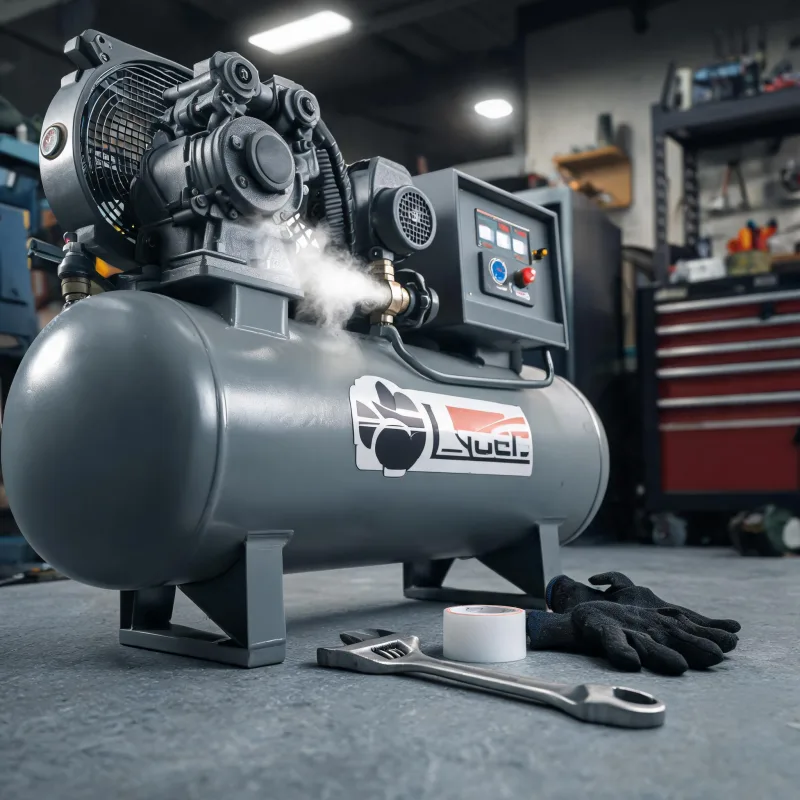
For threaded joints under 150 PSI, wrap high-density Teflon tape in the direction of the threads, 2 to 3 wraps is enough. Over-wrapping can push tape into the pipeline and cause blockages later. For joints over 150 PSI, use anaerobic thread sealant instead of tape. This creates a stronger seal that resists vibration better.
For cracked welded joints, grind a small V-groove along the crack, then re-weld the joint and grind it smooth for a tight seal.
Step 5: Repressurize and Test the Joint
Once the repair is complete, slowly repressurize the system and re-test the joint for leaks. Confirm no bubbling or abnormal ultrasonic readings before putting the system back into full operation.
When to Replace Instead of Repair
This repair process does not apply to two scenarios: first, joints connected to pipes that have 20% or more wall thickness loss from general corrosion. Second, joints that have been repaired 3 or more times already and re-leak within 6 months of each repair.
In these cases, replacing the affected pipe section and joint is more cost-effective long-term. Repeated spot repairs end up costing 2x more than a single replacement within 2 years, per DOE 2023 data.
Most facilities can complete a full pipe section replacement in a single 8-hour shift, so the downtime is manageable compared to repeated emergency outages.
Long-Term Prevention Tips
Schedule quarterly inspections of all pipeline joints, especially in high-vibration areas near the compressor outlet. Install vibration isolators at the compressor outlet to reduce vibration transfer to downstream joints. This cuts the risk of loosened threaded joints by 40% per CAC 2023.
Keep a log of all leaks and repairs to track problematic joints that need full replacement. This helps you plan maintenance during scheduled downtime instead of dealing with emergency outages that disrupt production.
Expert Insights
Most air leakage at pipeline joints is preventable with routine maintenance, and early repair delivers far higher ROI than waiting for a major failure. I recommend facilities prioritize joint inspections as part of quarterly compressed air system maintenance to keep energy costs low.
Further Reading
- # How to Maintain Diesel Portable Air Compressor for Long-Term Use in Chemical Plants
- Are Diesel Portable Air Compressor Maintenance Plans Worth the Cost: A Budget Analysis
- How Oversized or Undersized Air Receiver Tanks Hurt Compressor Efficiency
- What Winter Maintenance Keeps Your Diesel Portable Air Compressor Running
- How to Solve Air Compressor Pressure Gauge Display Inaccuracy Faults
- Causes of Clogged Air Filters and Corresponding Compressor Fault Handling
- Complete Spare Parts Solutions for Frequent Overheating in Diesel Portable Air Compressor
- How to Fix Low Air Pressure Output of Screw Air Compressors
About the Author

Frequently Asked Questions
How do I find a small hidden leak at a pipeline joint?
Use an ultrasonic leak detector, which can pick up high-frequency sound from small leaks that don’t create visible bubbles. You can also spray soapy water on suspect joints to check for bubbling.
Is Teflon tape safe for all air compressor pipeline joints?
No. Teflon tape is only suitable for threaded joints operating under 150 PSI. Higher pressure systems require anaerobic thread sealant for a durable, vibration-resistant seal.
How much money can I save by fixing joint leaks?
Per U.S. DOE 2023 data, fixing all leaks in a 100 HP industrial air compressor system can save up to $7,000 per year in energy costs.
How often should I inspect my compressor pipeline joints for leaks?
General industry recommendation from OSHA and CAC is quarterly inspections for most indoor facilities. High-load, outdoor, or high-humidity facilities should inspect monthly.
Can I repair a cracked welded joint without replacing the pipe?
Yes, as long as the crack is small and the surrounding pipe does not have significant corrosion. Small cracks can be ground and re-welded to restore a tight seal.
What causes a joint to leak again right after repair?
The most common causes are failing to remove all old sealing material, using the wrong sealing product, or not torquing the connection to the correct specification. Corroded pipe walls can also cause repeated leaks.