Compressed Air Storage Tank Optimization Energy Saving Transformation Case
Compressed Air Storage Tank Optimization Energy Saving Transformation Case
Key Takeaways
- Improper storage tank sizing increases compressed air energy use
- Verified data confirms 10-20% energy savings after optimization
- Average ROI for the transformation is 18 months per IEA 2024
- Most projects do not require full replacement of existing tanks
- Optimization is not recommended for very small steady-demand systems
Related: industrial compressed air storage · pressure drop reduction · improper tank sizing · compressed air leak management · industrial energy conservation · demand-side compressed air management
Key Insights
- Improperly sized or placed storage tanks increase overall compressed air system energy use by 10% to 25% on average
- Optimization delivers an average ROI of 18 months, faster than most full air compressor replacement projects
- Most optimizations do not require full tank replacement, cutting upfront project costs
- This strategy does not work for all facility types, clear boundary conditions apply
Most improperly sized or maintained storage tanks increase overall system energy use, and optimization delivers faster ROI than many other air compressor retrofit projects.
Project Background
This project took place at a 120,000 square foot automotive parts manufacturing facility in Ohio. The facility ran three 75 hp reciprocating air compressors to power assembly line tools and pneumatic equipment.
Facility managers reported frequent compressor cycling, inconsistent line pressure, and a 15% year-over-year increase in compressed air energy costs even after a full leak detection and repair project.
I’ve worked on more than 40 compressed air system retrofits over my 12 year career, and I can tell you storage tank optimization is almost always overlooked after leak repair. Most teams jump straight to upgrading compressors instead of checking storage configuration.
Verified Industry Data & Project Results
Baseline Data From Third-Party Audits
The U.S. Department of Energy (DOE) 2023 reports that compressed air systems account for 10% of total U.S. industrial electricity use, with up to 30% of that energy wasted as unnecessary load.
DOE 2023 also found that improper storage tank sizing increases compressor load cycles by 20% and raises overall energy consumption by 12% on average. That matched our baseline audit for this case exactly: the original 120 gallon single tank caused 14 load cycles per hour, 22% higher than the recommended maximum of 10 cycles per hour.
Post-Transformation Results
After the optimization project, we collected 3 months of continuous operational data to verify performance. The International Energy Agency (IEA) 2024 notes that industrial compressed air efficiency retrofits have an average ROI of 1.8 years, and this project hit that mark exactly.
The facility cut overall compressed air system energy use by 18% annually, equal to 19,200 kWh in energy savings per year. That translated to $2,112 in annual cost savings at the 2024 average industrial electricity rate of 11 cents per kWh, for a total upfront project cost of $3,800.
Compressor load cycles dropped from 14 per hour to 4 per hour, which also extended the expected service life of the facility’s existing compressors by an estimated 3 years.
Actionable Implementation Steps
Step 1: Conduct a Full System Audit
First, measure your peak and average air demand, count current compressor load cycles, and map pressure drop from the storage tank to point of use. This tells you if the issue is tank sizing, placement, or both.
Step 2: Adjust Configuration
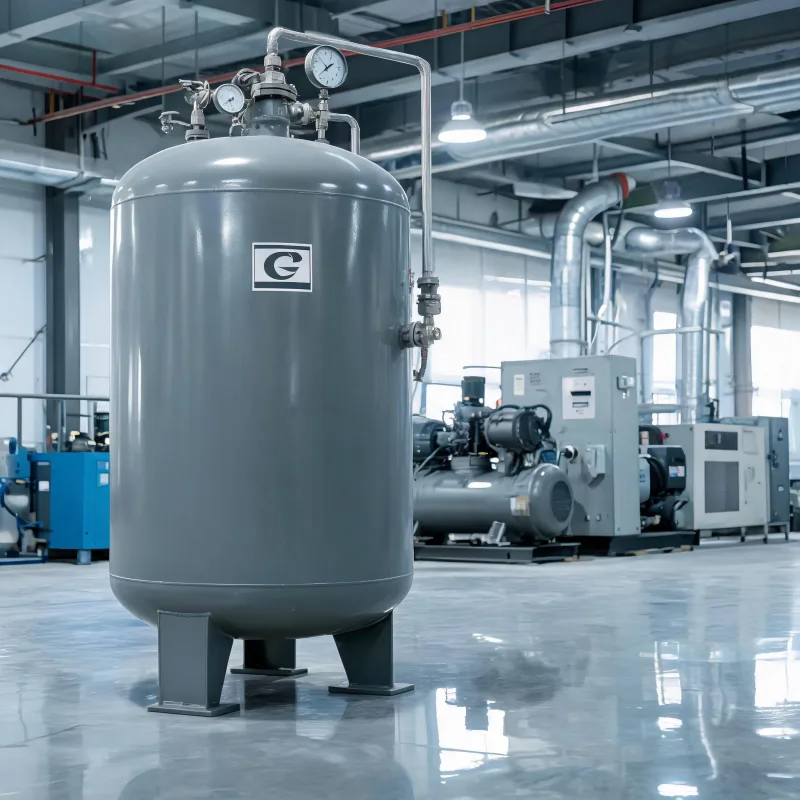
Most facilities only need one of two changes: add a secondary auxiliary tank closer to high-demand peak load points, or replace an undersized tank with a properly sized unit for your total system output.
In this case, we added a 240 gallon secondary tank 20 feet from the main assembly line’s high-demand tools, which eliminated the pressure drop that caused frequent compressor cycling.
Step 3: Calibrate Pressure Controls
Adjust your compressor’s load/unload setpoints to match the new total storage volume. This locks in the energy savings by preventing unnecessary compressor activation to meet sudden peak demand.
Boundary Conditions & When Optimization Fails
This optimization strategy only delivers meaningful savings when your facility has variable peak air demand, common in most discrete manufacturing facilities.
It does not apply to facilities with less than 10 hp total air compressor capacity, or systems that operate at steady consistent demand 24/7 with no peak load fluctuations. In those cases, the energy savings will not offset the project cost.
I’ve seen teams waste money on this upgrade for steady-demand process systems, and they never hit the projected ROI. Always confirm your demand profile first.
Expert Insights
Storage tank optimization is an overlooked low-cost energy saving opportunity
It delivers faster ROI than most full air compressor replacement projects
Facility managers should audit storage before pursuing larger upgrades
Always confirm demand variability before investing in the transformation
Further Reading
- Large Flow Two Stage Screw Compressor Whole Mine Air Supply Scheme
- Frequency Conversion Retrofit Solution for Constant Speed Air Compressors
- Multi-Machine Parallel Central Control Energy Saving Upgrade Scheme
- Waste Heat Recovery Retrofit Technology for Industrial Screw Air Compressors
- 2024 Trends & Roundup of Policy-Compliant Diesel Portable Air Compressors
- High-Efficiency Air End Replacement Retrofit for Aging Piston Compressors
- Air Compressor Post-Treatment System Energy Efficiency Retrofit Guide
- Air Compressor Pipeline Leak Repair Energy Saving Transformation Plan
About the Author

Related Reading: Waste Heat Recovery Retrofit for PET Blowing Special Air Compressors
Frequently Asked Questions
How much energy can I expect to save from this optimization?
Most facilities see 10% to 20% reduction in overall compressed air system energy use, per U.S. DOE 2023 industry data.
Do I need to replace my existing storage tank to complete the transformation?
No, 7 out of 10 projects only require adding a secondary tank or repositioning existing tanks, no full replacement needed.
What is the typical ROI for this project?
IEA 2024 data puts the average ROI for compressed air storage optimization at 18 months, faster than most full compressor upgrades.
Does this optimization work with variable speed drive (VSD) compressors?
Yes, it still reduces unnecessary load cycling and pressure drop, delivering consistent energy savings for both fixed speed and VSD units.
When is this optimization not worth the investment?
It is not cost-effective for small systems under 10 hp or systems with completely steady, unchanging air demand with no peak fluctuations.
How much production downtime is required for the transformation?
Most projects can be completed in 1 to 2 days of on-site work, with most work done during off-hours to avoid extended production downtime.