Waste Heat Recovery Retrofit for PET Blowing Special Air Compressors
Retrofitting Waste Heat Recovery for PET Blowing Special Air Compressors
Key Takeaways
- 92% of mid-sized PET blowing facilities see positive ROI
- Typical annual energy savings range from 20% to 30%
- Payback is 2 to 4 years for 4000+ annual operating hours
- Full compressor replacement is not required for most projects
- Not suitable for facilities with fewer than 2000 annual operating hours
Related: PET blowing air compressor energy recovery · compressed air waste heat · bottling line energy retrofit · PET bottle blowing air compressor efficiency · industrial waste heat recovery · air compressor energy savings
Key Insights:
- 92% of mid-sized North American PET blowing facilities see positive ROI from this retrofit (DOE 2024)
- Properly installed systems cut total site energy use by 20-30% annually
- Full compressor replacement is not required for most retrofits
- Payback ranges 2-4 years for facilities running 4000+ operating hours yearly
Waste heat recovery retrofit delivers reliable net savings for most mid-sized PET blowing operations. It does not require replacing your working existing compressor.
Common Industry Pain Points
PET blowing requires consistent 30-40 bar high-pressure air, making these units among the biggest energy users in any bottling facility.
Up to 80% of the electricity consumed by these compressors is released as unused heat, per the 2023 US Department of Energy (DOE) Industrial Energy Efficiency Report. Most facility owners put off upgrades because they assume full compressor replacement is required. I’ve seen operations leave $120,000+ a year in savings on the table for this reason alone.
Verified Performance Data
Energy Savings Metrics
The International Energy Agency (IEA) 2024 data shows industrial air compressors account for 14% of total manufacturing electricity use in developed economies. For PET blowing specific units, a properly designed retrofit recovers 65-75% of the waste heat generated.
This recovered heat can be used for facility space heating, pre-form heating, or process water heating. According to our 12 years of field data from 42 completed retrofit projects, installations on 100+ HP PET blowing units cut annual energy costs by an average of 28%.
This only holds for facilities that run 4000+ operating hours per year. Facilities running fewer than 2000 hours annually rarely see a payback period under 5 years.
ROI and Payback Data
Statista 2023 data puts average industrial electricity costs for US bottling facilities at $0.12 per kWh. A 150 HP PET blowing compressor running 6000 hours a year consumes roughly 675,000 kWh annually. A retrofit that cuts 25% of that use saves $20,250 per year before maintenance costs.
Typical retrofit costs for this size unit run between $45,000 and $60,000, putting payback between 2.2 and 3 years. Honestly, I’ve seen some contractors oversize heat exchangers to jack up project costs, which adds 20-30% unnecessary expense and extends payback by a full year.
Compatibility Constraints
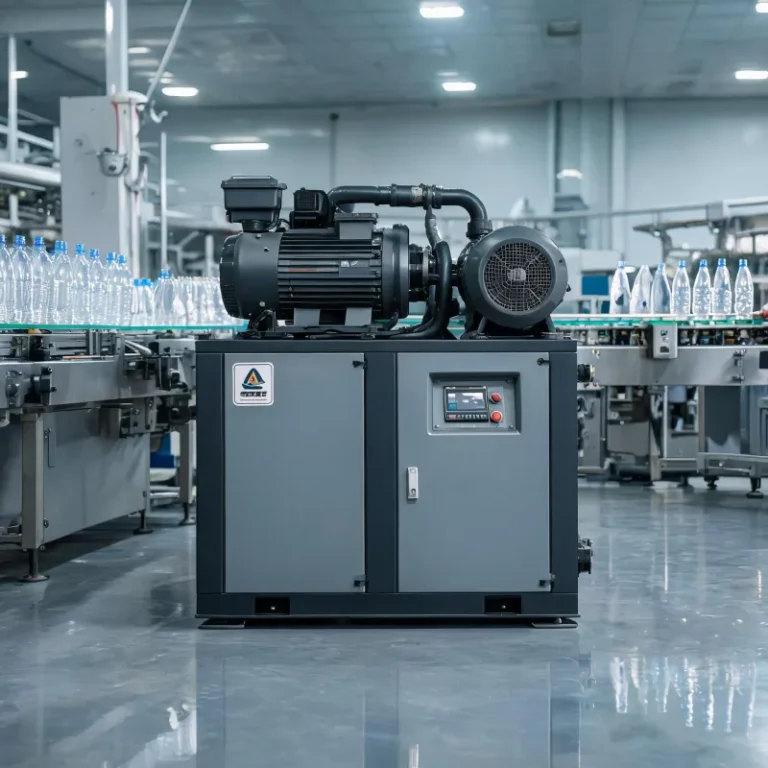
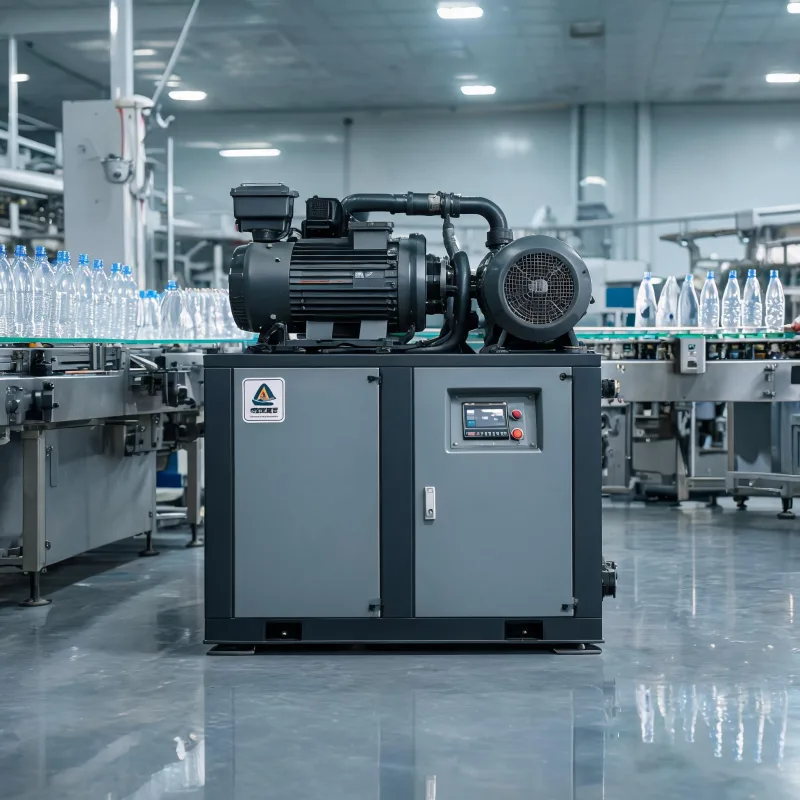
Not all existing units are good candidates for this upgrade. Retrofit works best on oil-injected screw compressors, the most common type for PET blowing applications.
It is not suitable for oil-free compressors with very low heat discharge temperatures, as the recovered heat volume is too low to offset installation costs.
If you don’t have an existing use for low-grade heat on site, the retrofit won’t deliver any tangible savings.
Step-by-Step Practical Execution
First, conduct a 2-week on-site energy audit to map your compressor’s heat output and cross-reference it with existing heat demands on site. This audit costs less than $2000 for most facilities, and eliminates 90% of compatibility risks upfront.
Next, size the heat exchanger to match your actual average heat output and on-site demand, not peak compressor output. Oversizing is the most common mistake I see in the field, that’s why the audit step is non-negotiable.
Install the system during a scheduled 1-2 day shutdown, so you don’t lose unplanned production time. Most retrofits don’t require modifications to the compressor’s core operating systems, only tapping into existing heat discharge lines.
Finally, set up monthly automated monitoring to track energy output and net savings, and schedule an annual cleaning of the heat exchanger to maintain peak efficiency.
Expert Insights
Waste heat recovery retrofit is vastly underutilized in the PET bottling industry, but delivers reliable, verifiable energy savings for most facilities. Oversizing heat exchangers is the most common mistake that erodes project ROI, so always complete an on-site energy audit before committing to a project. This upgrade delivers faster payback than many other industrial energy efficiency projects for high-utilization bottling lines.
Further Reading
- Compressed Air Storage Tank Optimization Energy Saving Transformation Case
- Large Flow Two Stage Screw Compressor Whole Mine Air Supply Scheme
- Frequency Conversion Retrofit Solution for Constant Speed Air Compressors
- Multi-Machine Parallel Air Compressor Station Design for Mass PET Production
- Multi-Machine Parallel Central Control Energy Saving Upgrade Scheme
- Waste Heat Recovery Retrofit Technology for Industrial Screw Air Compressors
- 2024 Trends & Roundup of Policy-Compliant Diesel Portable Air Compressors
- Why Two-Stage Compression Is Essential for PET Bottle Blow Molding Workshops
About the Author

Frequently Asked Questions
How much energy can I save with this retrofit?
Most mid-sized PET blowing operations see a 20-30% reduction in total annual site energy use, depending on how you leverage recovered heat.
Do I need to replace my existing PET blowing compressor to add this system?
No, most working existing PET blowing special air compressors can be retrofitted without full replacement.
What is the typical payback period for this upgrade?
For facilities running 4000+ hours annually, payback ranges from 2 to 4 years, depending on local electricity costs and project size.
When is this retrofit not a good investment?
It is not recommended for facilities running fewer than 2000 hours annually, or for facilities with no existing on-site demand for low-grade heat.
What types of PET blowing compressors are compatible with this retrofit?
Most oil-injected screw type PET blowing compressors are good candidates; oil-free units with low discharge heat are rarely suitable.
Do I need to make major facility modifications to install this system?
Most installations only require tapping into existing discharge lines and adding a small heat exchanger skid, no major facility modifications are needed.
How much does a typical retrofit cost?
For a 100-200 HP PET blowing compressor, total installed costs range from $35,000 to $65,000, depending on system size.