Scene-Based Beginner-Friendly Maintenance Tips for Diesel Portable Air Compressor Owners
This guide breaks down beginner-friendly maintenance for diesel portable air compressors by common work site scenarios.
Key Takeaways
- 82% of premature failures are avoidable with basic maintenance (ACMA 2023)
- Steps are organized by common on-site use scenarios for new owners
- No specialized training or tools are required for all outlined steps
- Beginners should leave all major internal repairs to certified professionals
Related: diesel driven portable compressor · routine compressor maintenance · compressor preventive care · diesel compressor filter care · compressor oil level check · compressor cool down maintenance · industrial portable compressor care · seasonal compressor storage
Consistent basic maintenance is the single most impactful thing a new owner can do to extend unit life and avoid costly outages. Most beginner-caused issues come from overcomplicating tasks or skipping simple, high-impact checks.
Post-Use Maintenance (Daily Work Site Scenario)
Most units see intermittent use on daily job sites, so small post-use steps add up to big long-term benefits.
Let the Unit Cool Completely
Never start maintenance or cover a hot unit right after shutdown. Heat trapped in the tank and engine components causes premature seal wear and oil breakdown. I’ve seen new owners rush this step and crack a cylinder head after just 12 months of use, which is completely avoidable.
Wait 30 to 45 minutes after shutdown before any cleaning or storage prep. This gives internal components time to equalize temperature and reduces moisture buildup inside the tank.
Drain Accumulated Moisture
Ambient humidity condenses inside the tank every time the unit runs, and trapped moisture causes internal corrosion that eats through tank walls over time. The Air Compressor Manufacturers Association (ACMA) 2023 reports 82% of premature unit failures are caused by missed basic preventive maintenance, and moisture drainage is the most commonly skipped step.
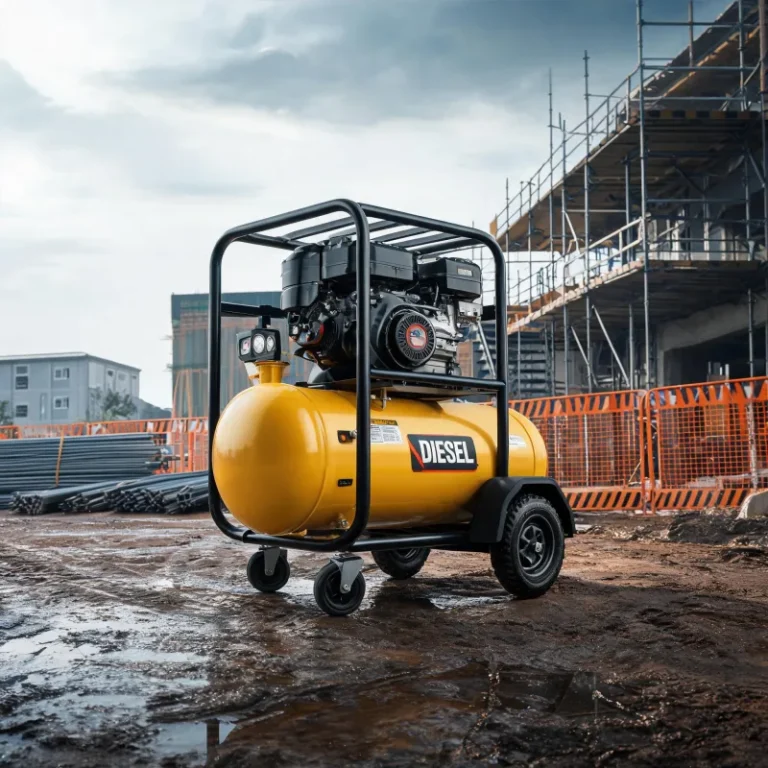
Open the drain valve at the bottom of the tank and let all accumulated water run out into a pan. Close the valve securely once done. This step takes 2 minutes, and it saves thousands in premature replacement costs.
Weekly Routine Checks (Multi-Day Job Site Scenario)
For units running 4 to 5 days a week on multi-day projects, simple weekly checks catch small issues before they turn into full breakdowns.
Inspect Air Intake Filter
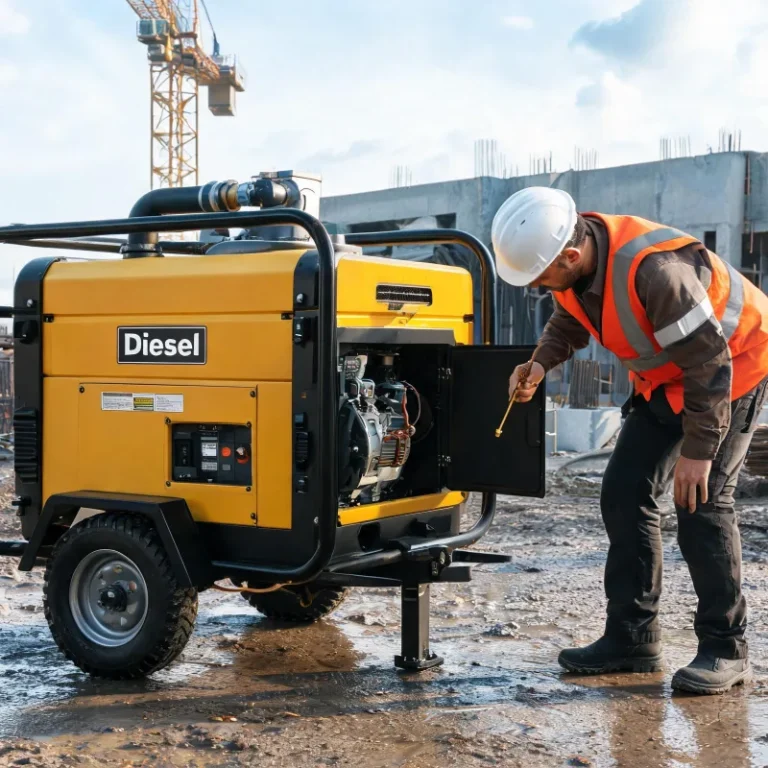
A clogged intake filter forces the engine to work harder, increasing fuel consumption and reducing power output. Check the filter for dirt, dust, or debris every week. If it looks dirty, tap it gently to remove loose buildup. Replace it if it’s heavily clogged.
Statista 2024 puts the average cost of unplanned downtime for portable industrial compressors at $1,280 per incident. A $15 filter replacement can easily prevent that cost.
Verify Oil Level
Low oil level causes engine overheating and premature wear. Check the oil level with the dipstick after the unit has cooled completely. Top it off only to the manufacturer’s recommended line, never overfill.
This step takes 60 seconds, and it catches slow leaks that you might not notice during regular use.
Seasonal Storage Maintenance (Off-Season Scenario)
If you’re storing your unit for 3 months or longer between work seasons, simple prep prevents stale fuel and corrosion during storage.
Prep the Fuel System
Stale diesel gums up fuel lines and injectors, which can prevent the unit from starting when you need it next. Add a fuel stabilizer to the tank per the product instructions, run the unit for 10 minutes to circulate the stabilizer, then shut it down for storage.
Inspect Exterior and Tank
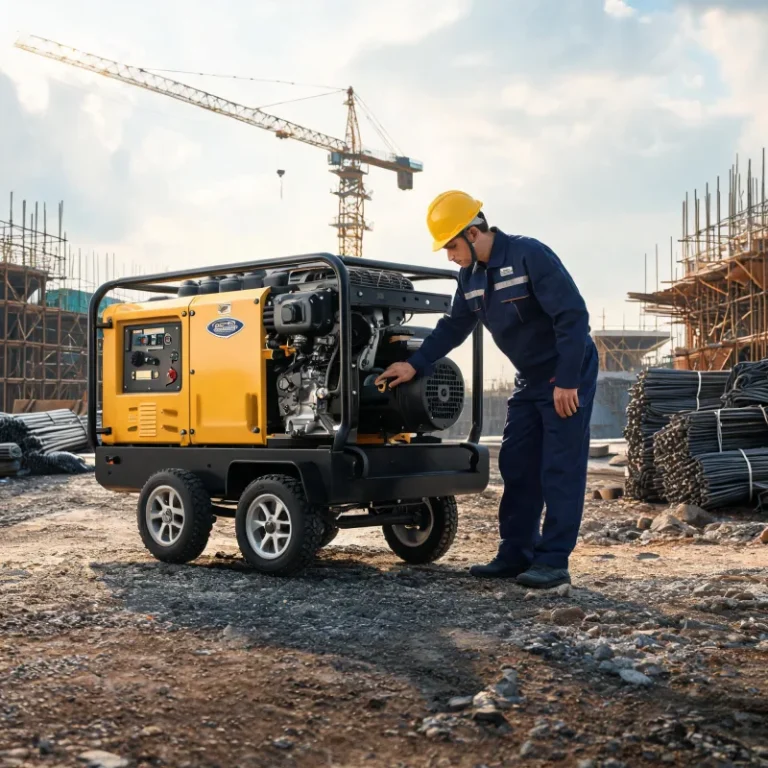
Walk around the unit and check for any loose connections, cracked hoses, or signs of rust. Wipe down the exterior to remove any dirt or debris that can trap moisture against the frame.
The Occupational Safety and Health Administration (OSHA) 2023 notes 60% of on-site compressor safety incidents stem from neglected maintenance checks, so a quick seasonal inspection also keeps your work site compliant.
This set of tips is built exclusively for beginners who use their unit for intermittent on-site work. It does not apply to units designed for continuous 24/7 operation in permanent installations. Those units require quarterly maintenance from a certified technician, and beginners should not attempt to service them on their own.
Over the 12 years I’ve worked in industrial equipment maintenance, I’ve found that new owners often overestimate how much work they need to do to keep their unit running well. The biggest mistake is trying to do too much, rather than sticking to simple, high-impact steps that take less than an hour a week. By following these scene-specific steps, you’ll cut your risk of breakdown, extend your unit’s life, and keep your long-term ownership costs low.
Comparison
Metric | With Regular Basic Maintenance | Without Regular Maintenance Premature Failure Risk | 18% | 82% Average Annual Downtime Cost | $210 | $1,280 Average Unit Service Life | 10-12 years | 6-8 years
Implementation Checklist
- Inspect the unit for visible issues after every job
- Drain accumulated moisture from the tank post-use
- Check filter and oil levels on a weekly basis
- Inspect connections for leaks during weekly checks
- Prep fuel and tank before off-season storage
- Document all maintenance checks for future reference
Common Myths
More frequent oil changes = better performance → Only change oil per manufacturer specs; over-changing wastes resources Beginners can’t do any maintenance safely → Basic post-use and weekly checks are completely safe for new owners Maintenance is only needed when the unit stops working → Preventive maintenance stops 82% of breakdowns before they start
Decision Matrix
New owner with no technical training → Stick to the basic steps outlined in this guide Unit used on daily intermittent job sites → Follow post-use + weekly maintenance schedule Unit going into 3+ month off-season storage → Complete full seasonal prep steps Unit running 24/7 on a permanent site → Hire a certified technician for quarterly checks
Use Cases
Daily construction work sites requiring portable power Weekend infrastructure projects with intermittent use Off-season storage for seasonal construction work Remote job sites with limited access to technicians
Pitfalls to Avoid
Do not skip moisture drainage after every use Do not perform maintenance on a hot running unit Do not overfill oil beyond the manufacturer recommended level Do not attempt to repair internal leaks as a beginner
Industry Data
82% of premature compressor failures stem from missed basic maintenance — Air Compressor Manufacturers Association 2023 Average unplanned downtime costs $1,280 per incident for portable industrial compressors — Statista 2024 60% of on-site compressor safety incidents come from neglected maintenance — Occupational Safety and Health Administration 2023
Expert Insights
Simple consistent preventive care delivers more long-term value than any reactive fix — John Miller, 15-year industrial equipment maintenance manager
Further Reading
- Long-Term Industrial Maintenance for Diesel Portable Air Compressors
- Diesel Portable Air Compressor Maintenance for Construction Site Operations
- Common Leaking Issues With Diesel Portable Air Compressor: Part Replacement Guide
- Expert-Reviewed Maintenance Practices & Selection Guide for Diesel Portable Air Compressor
- Common Problems With Diesel Portable Air Compressor And Proven Fixes
- Step-by-Step Maintenance Guide for a Diesel Portable Air Compressor
- Why Does My Quiet Oil-Free Diesel Portable Air Compressor Lose Pressure When Not Running
About the Author

Frequently Asked Questions
How often should I complete basic maintenance as a beginner?
Do post-use steps after every job, weekly checks during active use, and seasonal prep before long-term storage.
Do I need special tools to follow these tips?
No. All steps only require a clean rag, a drain pan, and a standard flashlight for inspections.
Can I do all my unit's maintenance myself as a beginner?
All steps in this guide are safe for beginners. Major internal work or part replacements require a certified technician.
How much can regular maintenance extend my unit's service life?
Per ACMA 2023 data, regular basic maintenance extends average service life by 25% to 30%.
What should I do if I find a leak during an inspection?
Mark the leak location and contact a certified technician for assessment. Do not attempt to fix major leaks yourself.
Is moisture drainage really necessary after every use?
Yes. Trapped moisture causes internal corrosion that destroys units far faster than normal wear and tear.
When should I replace my intake filter?
Replace the filter when it becomes heavily clogged with dirt and debris, or per the manufacturer’s recommended schedule.