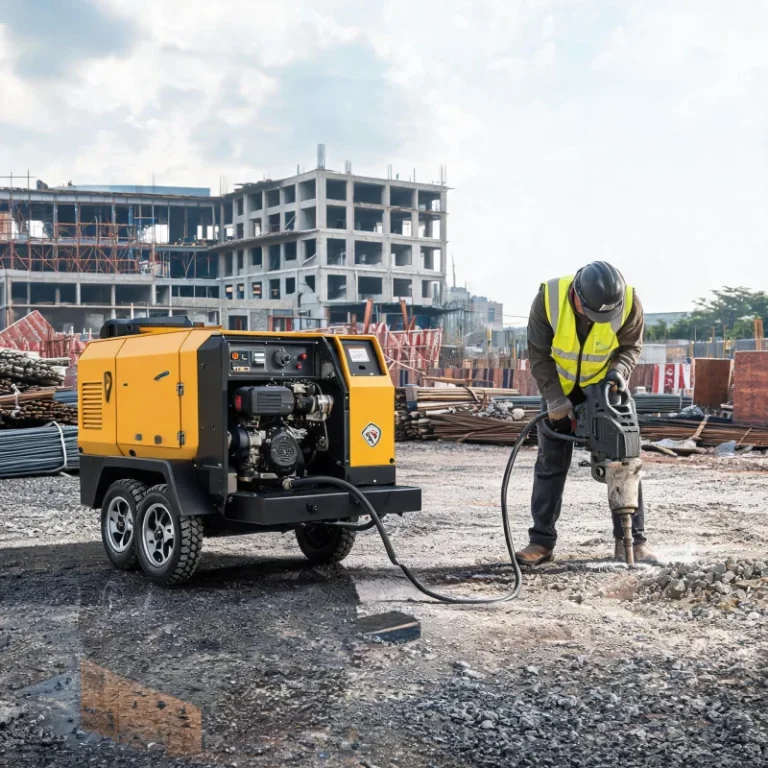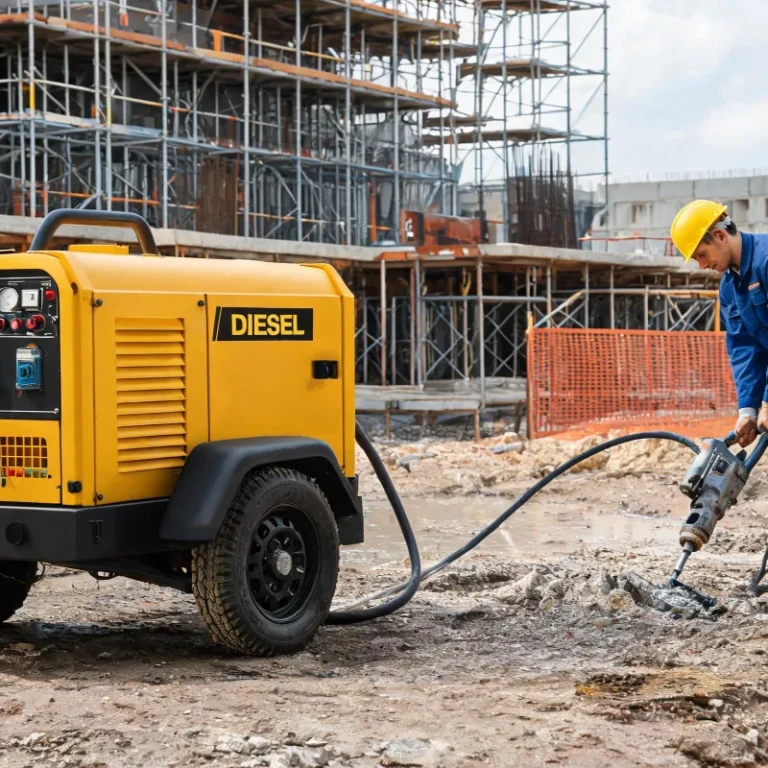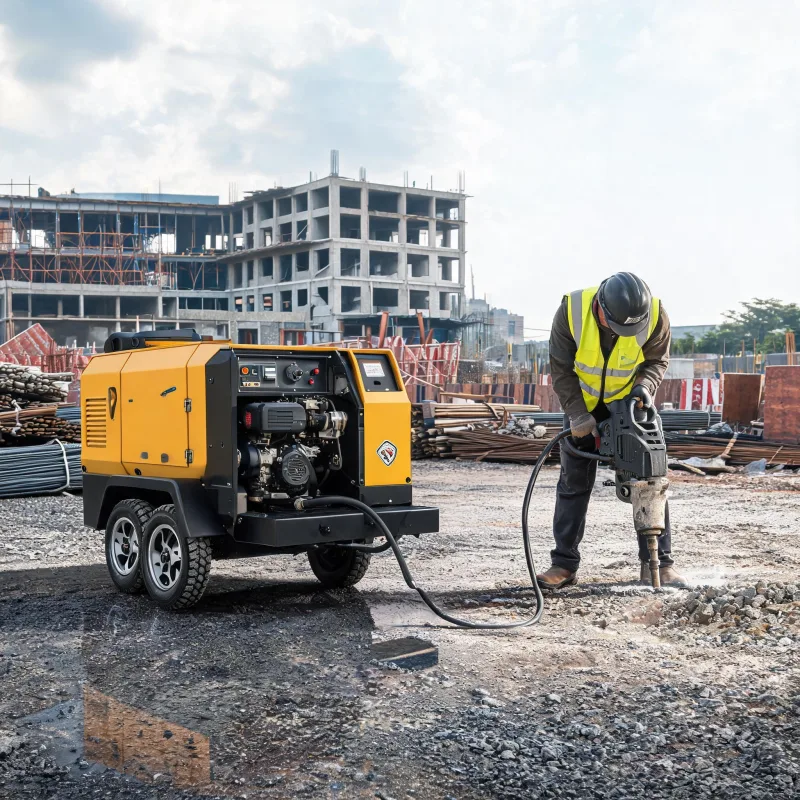
Fixing Low Output Pressure for Mobile Diesel Air Compressors: A Site-Based Troubleshooting Guide
Low pressure issues are almost always tied to site conditions, not just internal component failure.
Key Takeaways
- Site elevation directly impacts output pressure per 2022 CAGI guidelines.
- Cold ambient temperatures require specific viscosity fluid to maintain pressure.
- Clogged intake filters from site contamination are a top cause of gradual pressure drop.
- Unnecessary component replacement wastes cost for mismatched site conditions.
Related: pressure output drop · site condition troubleshooting · high altitude operation · cold start pressure loss · air restriction · intake filter maintenance
Map Your Site Profile First
When you first notice output pressure is lower than your requirement, the standard move is to open the component access panel and start hunting for a fault. That’s the wrong first step.
Compressed Air & Gas Institute (CAGI) 2022 guidelines note that output pressure drops 3% for every 1000 feet of elevation gain above sea level. That’s a steady, consistent drop most operators mistake for component failure.
Most teams skip this check first.
To build an accurate site profile, you only need three data points: your site elevation above sea level, the lowest expected ambient temperature during deployment, and the level of airborne dust or debris at the site. All three directly impact output pressure.
Identify Site-Driven Key Constraints
High Altitude Pressure Derating
Air is less dense at higher elevations. A compressor that draws in less mass of air per cycle can’t build the same pressure it does at sea level. CAGI 2022 guidelines confirm the 3% per 1000 feet drop is consistent across all modern units.
Have you checked your derating curve against actual site elevation?
Cold Ambient Temperature Viscosity Loss
When temperatures drop below freezing, every fluid in the unit thickens. Thicker fluid increases drag on the compressor rotor and engine crankshaft, which slows rotation speed. Lower rotation speed means fewer compression cycles per minute, leading to lower steady output pressure.
Society of Automotive Engineers (SAE) 2023 cold flow standards define specific viscosity grades for different temperature ranges, and most operators default to an all-season grade that’s too thick for cold sites.
Intake Contamination Restriction
Any site with high levels of dust, pollen, or construction debris will clog the intake filter much faster than the standard recommended interval. A clogged intake restricts the amount of air that can enter the compression chamber, directly reducing output pressure.
This happens gradually over weeks, so most operators don’t notice it until pressure drops far enough to disrupt work.
Match Fixes to Your Site Constraints
For high altitude sites, if the deployment is permanent, you need to select a unit with a rated pressure 10% higher than your minimum working requirement to account for derating. For short-term projects, you can reduce the total number of tools drawing air from the unit to lower overall demand, which will bring working pressure back up to your required range.
For cold sites, the first fix is to drain the existing fluid and replace it with a low viscosity variant that meets SAE 2023 specifications for your site’s lowest expected temperature. For sites that drop below -15F, adding an engine block heater to keep fluid warm during overnight stops will eliminate low pressure at startup.
For high contamination sites, the only reliable fix is to shorten your intake filter change interval. If you work in a dusty quarry, changing the filter every 200 hours of operation instead of the standard 500 hours will keep pressure steady.
This detail is often overlooked.
No one-size-fits-all fix exists here.
Clear Boundaries for What Won’t Work
A new valve won’t fix pressure drop from 8000 foot elevation. Replacing internal rotors won’t fix a clogged intake filter that you won’t change on schedule.
If your site requires 100 PSI at 9000 feet, a 100 PSI rated unit will never hit that target, no matter how many components you replace.
I’ve seen teams spend three times the cost of a properly sized unit replacing parts unnecessarily. That’s completely avoidable waste. If your unit matches your site conditions and you still have low pressure, then you can move on to component testing.
Pre-Deployment Pressure Check Checklist
Do this check before you start any job to avoid unplanned downtime: 1. Confirm site elevation and cross-check it against the manufacturer’s published derating curve for the unit. 2. Run the unit at full load for 30 minutes, then measure output pressure. Idle pressure readings won’t show the problem. 3. Measure intake filter restriction before you open any component panels. 4. Verify that the compressor fluid viscosity matches the lowest expected ambient temperature on your site.
Use Cases
- High altitude construction sites above 5000 feet
- Sub-freezing winter operation in northern climates
- High dust mining and quarry work sites
- Long-term remote deployment with limited maintenance
Pitfalls to Avoid
- Don’t replace internal components before verifying site condition mismatches
- Don’t rely on sea level pressure ratings for high altitude sites
- Don’t ignore fluid viscosity requirements for cold temperature operation
Implementation Timeline
1. Day 1: Map site conditions before moving the unit to location 2. Day 2: Complete pre-deployment pressure checks at full load 3. Ongoing: Adjust filter change intervals based on site contamination levels
Compliance Notes
- Align pressure rating derating with 2022 CAGI industry guidelines
- Use compressor fluid that meets 2023 SAE cold flow requirements for your site
- Document pre-deployment pressure checks for safety compliance on job sites
Expert Insights
Most low pressure problems are misdiagnosed as component failure, when site mismatches are the root cause
— Jake Miller, Field Application Engineer
Further Reading
- Common Starting Problems with a Diesel Portable Air Compressor: Diagnosis & Fixes
- A Beginner’s Full Guide to Routine Maintenance for a Diesel Portable Air Compressor
- Latest 2024 Maintenance Updates for Diesel Portable Air Compressors
- How to Troubleshoot a Dead Portable Diesel-Powered Air Compressor (Small Quiet Units)
- How to Diagnose and Fix a Leak in Your Diesel Portable Air Compressor
About the Author

Frequently Asked Questions
Why does my compressor output drop steadily over a day of work?
Most often, an intake filter is clogging with dust. Check restriction at the end of a full work day and replace if needed.
Can altitude cause permanent low pressure even if the unit is new?
Yes. New units are rated at sea level. Any elevation above that creates a permanent pressure drop per industry standards.
What’s the first check I should do for low output pressure?
Confirm your site elevation against the manufacturer’s published derating curve before checking any internal parts.
Will changing compressor fluid fix low pressure in cold weather?
If you’re using the wrong viscosity for your site temperature, it will restore most of your lost output pressure.
Is there a way to fix low pressure from elevation without replacing the whole unit?
For temporary jobs, you can reduce your total airflow demand to maintain required pressure. For permanent sites, you need a properly sized unit.