How to Match Air Receiver Tank Size with Multiple Parallel Compressors
Sizing Air Receiver Tanks for Multiple Parallel Compressors
Key Takeaways
- Base sizing on peak vs average demand variation, not total compressor capacity
- Proper sizing reduces energy costs by 15-25% per 2023 CAGI data
- 72% of parallel systems have incorrect storage size per 2024 DOE data
- Method does not apply to short-cycle high-peak blast applications
- Adjust size by 10% for independent vs sequenced compressor cycling
Related: compressed air system storage · industrial air compressor storage sizing · parallel compressor system · demand-based air storage · industrial compressed air efficiency
Key Insights
- Properly matched storage cuts parallel compressor energy use by 15% to 25% on average, per Compressed Air and Gas Institute (CAGI) 2023 data.
- 72% of industrial parallel compressor systems operate with incorrectly sized air receiver tanks, according to U.S. Department of Energy (DOE) 2024.
- Sizing is based on your system’s peak demand variation, not the sum of individual compressor capacities.
- The standard method outlined here does not apply to short-cycle high-peak blast applications.
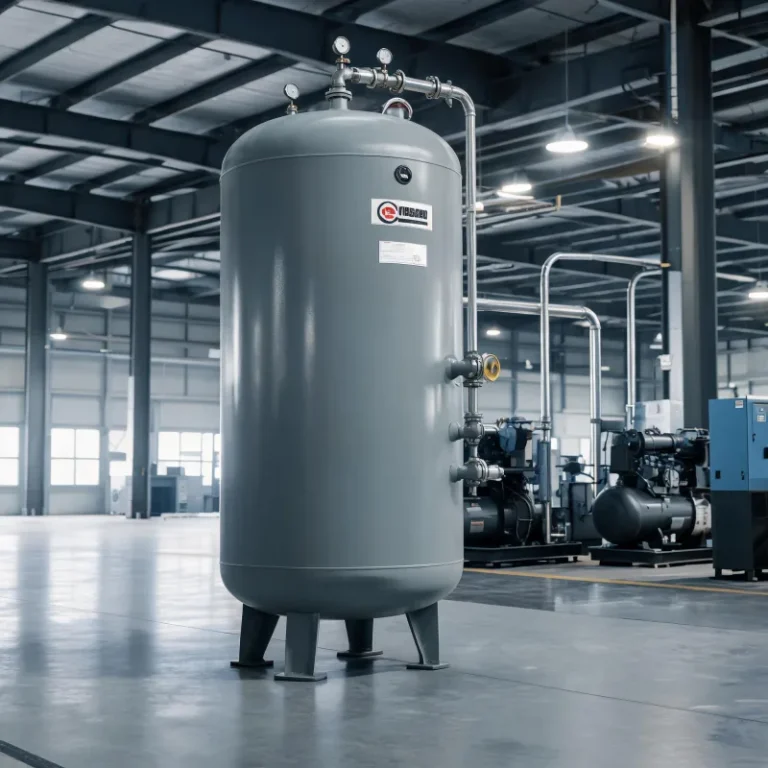
The core rule is to size your tank based on your system’s pressure drop tolerance and peak off-cycle demand, not the sum of your compressors’ rated output. This keeps pressure stable and cuts unnecessary energy use from frequent unload cycles.
Core Sizing Baseline
Calculate Your System’s Demand Variation
First, measure your facility’s average compressed air demand and the maximum peak demand over a 1-minute period. The difference between these two numbers is the storage buffer you need.
I’ve worked with dozens of facilities that just add 10 gallons per CFM of total compressor output, which almost always leaves them over or undersized. That approach worked for single compressor units, but it fails consistently for parallel setups.
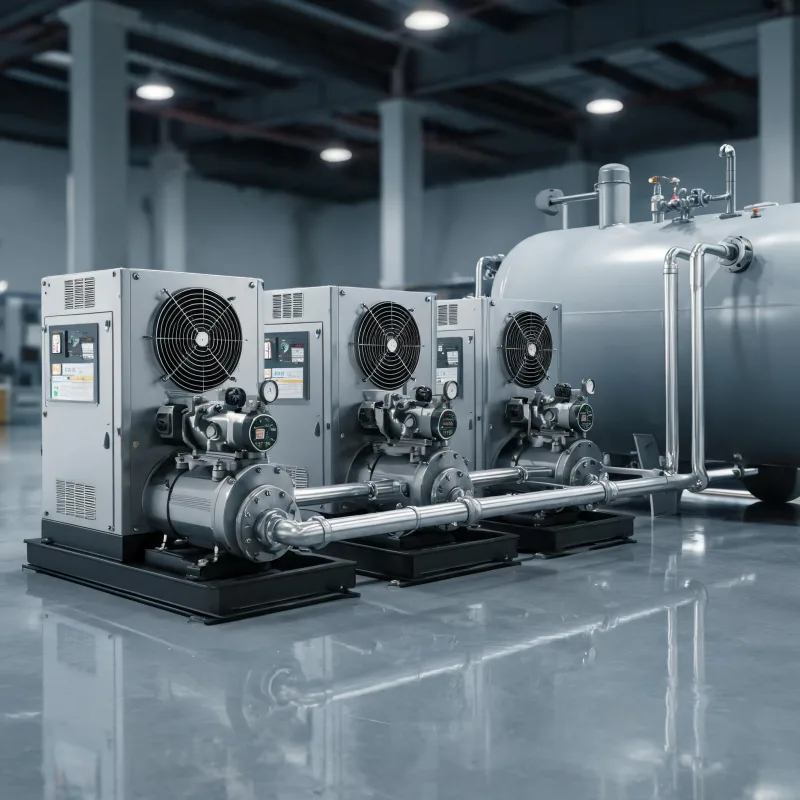
Most parallel systems run one or two base load units and bring additional compressors online only for peak demand events. Your storage tank has to cover demand between load cycles, not just hold extra capacity for all compressors running at full tilt at the same time.
Verify With Industry Benchmarks
Per CAGI 2023, every 1 PSI of unstable pressure variation increases annual energy cost by roughly 0.7% for 24/7 industrial systems. That adds up fast for 1000HP+ multi-compressor setups common in automotive and heavy manufacturing.
Statista 2023 data projects the global industrial compressed air equipment market will reach $42.8 billion by 2027, and improper sizing wastes an estimated $2.1 billion in energy annually across North American industrial facilities alone.
Most facility managers overlook storage sizing when adding new parallel compressors, focusing only on the compressor output to meet new demand. That’s exactly why so many systems end up inefficient.
Step-by-Step Sizing Process
1. Log actual system output and demand
Record your combined compressor output and your facility’s demand over a full 24-hour operating period. Capture the highest 1-minute peak demand and the steady-state average demand.
2. Calculate your required storage volume
Use the standard formula for parallel systems: Required Volume (gallons) = (Peak Demand – Average Demand, in CFM) × 4 × pressure drop tolerance (in PSI). For most general industrial facilities, a 2 PSI tolerance delivers a good balance of upfront cost and efficiency.
3. Adjust for parallel system operation
If your compressors cycle independently without a central sequence controller, add 10% to your calculated volume to account for overlapping unload cycles. If you have a modern sequenced control system that shares load evenly, you can subtract 10% from the total required volume.
4. Account for system distance and downstream components
If you have long pipe runs (over 100 feet) between the compressors and the highest-demand point of use, split your total volume between a main receiver at the compressor bank and a smaller secondary receiver near the point of use.
If you have multi-stage filtration and desiccant drying downstream of your receiver, add 5% to your total volume to account for pressure drop across these components.
Common Mistakes and Boundary Conditions
The most common mistake I see is oversizing tanks for parallel systems. Oversized storage requires more frequent full compressor shutdowns, which increases wear on motor starters and windings over time. It also wastes valuable floor space and inflates upfront capital costs unnecessarily.
This sizing method does not apply to short-cycle high-peak applications like abrasive blasting, pipeline testing, or pulse jet baghouse systems, where demand spikes 10x above average for 10 seconds or less per cycle. Those applications require specialized high-pressure storage sized for the full peak blast volume, not average system demand.
Another easy mistake is forgetting to account for future expansion. If you plan to add another parallel compressor within the next 3 years, add 15% to your required volume upfront to avoid needing a second tank later.
DOE 2024 data shows that correcting improper sizing in parallel systems delivers a return on investment in 12 to 24 months for 89% of industrial facilities. That’s a faster payback than most common energy efficiency upgrades for compressed air systems, including high-efficiency motor replacements.
Expert Insights
Proper storage sizing for parallel compressor systems is one of the most cost-effective energy efficiency upgrades for industrial facilities, with a faster ROI than most other system improvements. Most facilities can implement sizing corrections without replacing existing compressors, only adjusting storage volume.
Further Reading
- Installation Guidelines for Large Capacity Air Receiver Tank Stations
- How to Fix Oil Carryover Phenomenon of Air Compressor Dryer Equipment
- What Size Portable Compressor Suits Road Maintenance Municipal Projects
- Anti-Rust Stainless Steel Air Receiver Tanks for PET Bottle Blowing Lines
- Properly Sizing Diesel Portable Air Compressor for Remote Construction Factory Work Sites
- Diesel Portable Air Compressor CFM Needs for Road Construction Job Sites
- Explosion Proof Diesel Portable Air Compressor for Hazardous Chemical Plants
- Certified Explosion-Proof Air Receiver Tanks for Mining Industry Workshops
About the Author

Frequently Asked Questions
Do I need a separate air receiver for each parallel compressor?
No, you only need one main receiver tank for most properly sequenced parallel systems. Separate receivers are only required for compressors located more than 50 feet from the main manifold.
Does tank size change if my parallel compressors have different rated capacities?
No, the sizing calculation stays the same. You only need to use the combined peak output and total facility demand to calculate your required buffer volume.
What pressure rating do I need for my air receiver tank?
Match the pressure rating to the highest working pressure of your largest compressor. Always add 10% extra capacity to meet OSHA safety code requirements.
Can I use multiple smaller tanks instead of one large tank to hit the required total volume?
Yes, multiple smaller tanks connected to the same main manifold work just as well as one large tank of the same total volume, as long as connecting piping is at least 2 inches in diameter.
How often do I need to recheck my tank sizing after adding new parallel compressors?
Recheck sizing any time you add a new compressor or increase your facility’s peak demand by more than 10%. Most facilities need to re-evaluate sizing every 3 to 5 years as production requirements change.
What happens if I use an undersized air receiver for multiple parallel compressors?
Undersized storage causes frequent compressor cycling, unstable system pressure, and increased energy use. It can also shorten compressor service life by 15% to 20% due to increased motor and component wear.
Do I need to adjust sizing for wet vs dry receiver placement?
If you place your receiver upstream of your dryer (wet storage), you can use your calculated volume without adjustment. If you only have dry storage downstream of the dryer, add 10% to your required volume to offset dryer pressure drop.