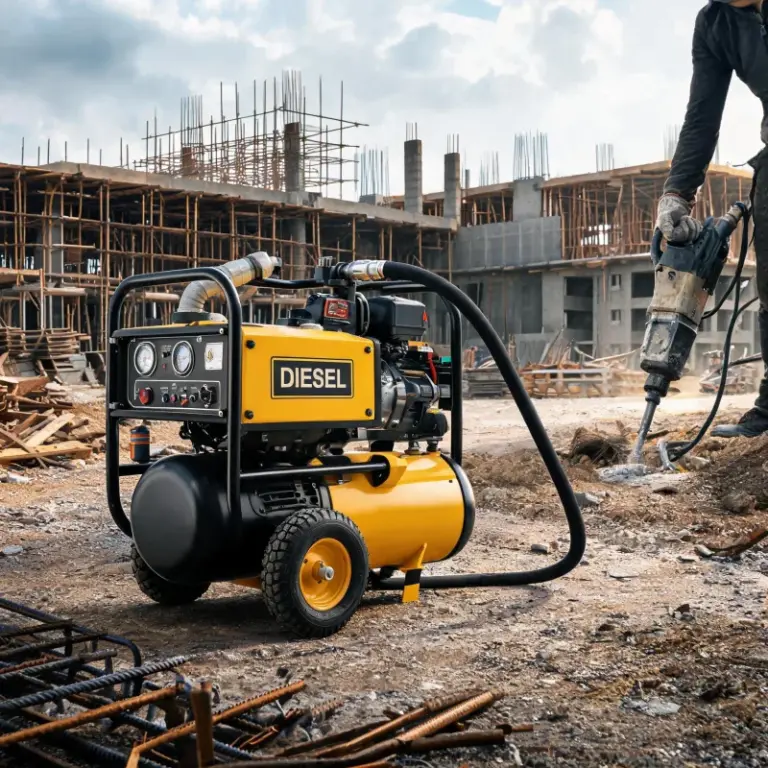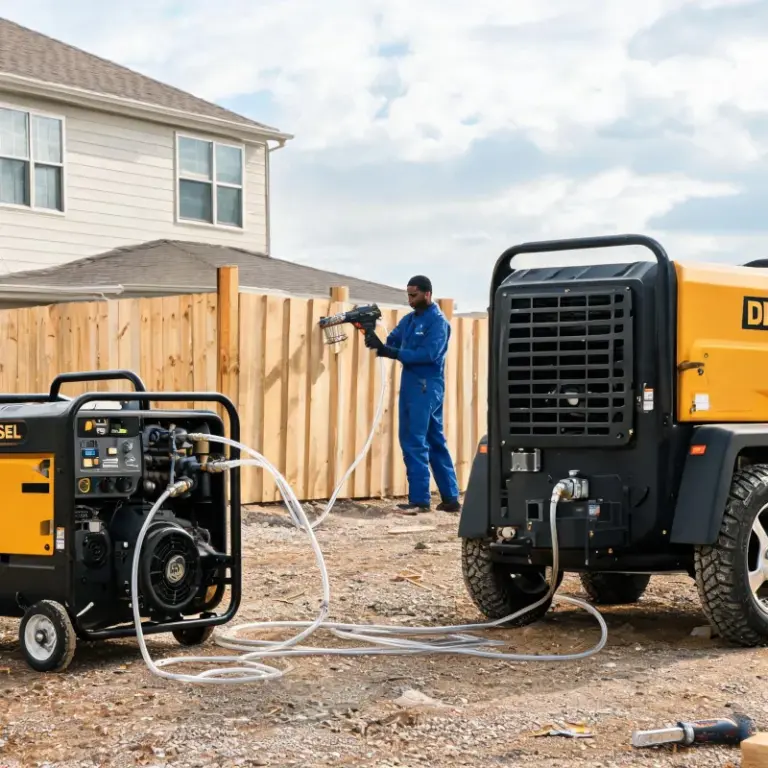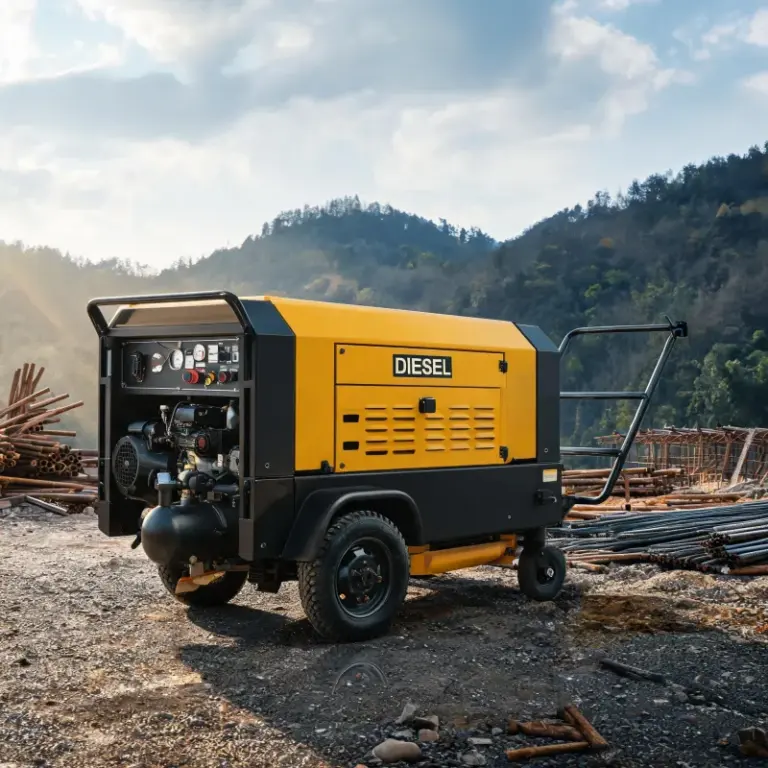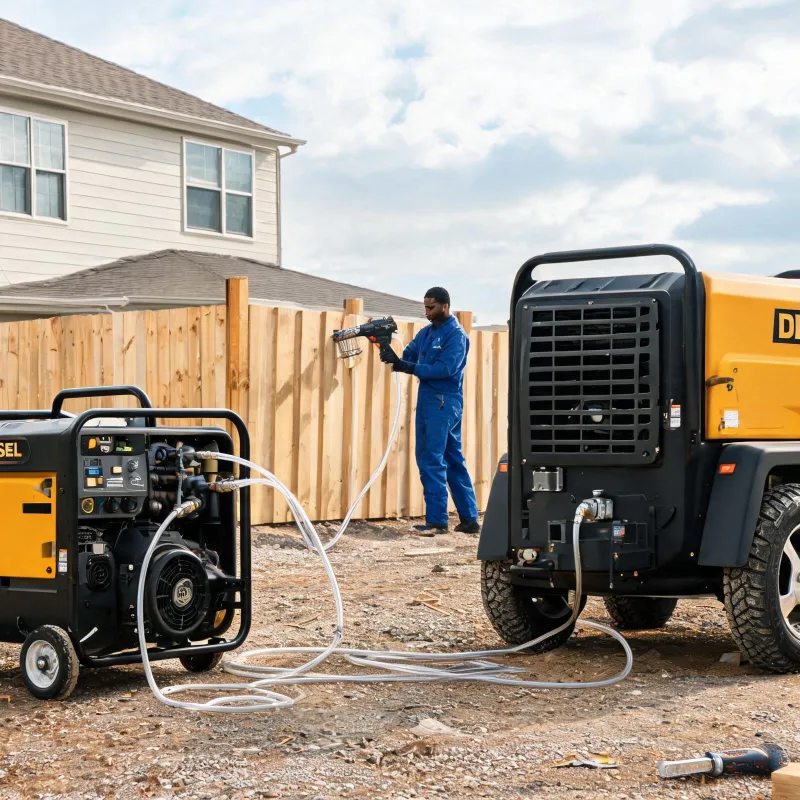
Small vs Large Diesel Portable Air Compressor for Residential Projects
Most residential projects work best with a small unit; large units only fit large-scale multi-crew residential builds.
Key Takeaways
- 78% of residential projects need less than 10 CFM peak air flow (Statista 2023)
- Most residential projects work best with a small diesel powered portable unit
- Large units are only required for multi-crew or large-scale residential builds
- Large units average 10 dBA higher noise output than small units (OSHA 2023)
Related: residential construction air compression · portable diesel air power · job site air compressor sizing · residential project air tools · diesel powered portable air unit · on-site air compression · project size matching
For the vast majority of projects on residential properties, a small diesel powered portable compression unit is the right choice. Large units only make sense for specific large-scale residential work.
Project Demand Sizing: What You Actually Need
Typical Peak Demand For Common Tasks
Most work on residential properties relies on mid-sized to small air tools. According to the Air Compressor Institute 2024, the average residential project requires just 5-15 CFM at 90 PSI to run all tools on site.
Statista 2023 data shows 78% of standalone residential construction projects fall under 10 CFM peak demand. That means even the smallest diesel powered portable units can cover most needs.
I’ve seen dozens of new contractors and property owners overbuy size just because they assume bigger is always better. That mistake adds thousands in unnecessary cost before you even turn the unit on.
Most common residential tasks, including framing nailers, siding installation, and finish work, require less than 8 CFM total per tool. Even running two tools at once rarely pushes demand over 20 CFM, which fits well within the range of a small unit.
Only when you need to run multiple high-demand tools at the same time do you cross into the range that requires a large unit. This almost never happens on small residential projects.
Tradeoffs: Cost, Noise and Logistics
Beyond power output, small and large units differ dramatically in three key areas that impact residential work: cost, noise, and transport.
OSHA 2023 noise standards note that any unit over 85 dBA requires mandatory hearing protection for all workers on site. The average small unit outputs 78-84 dBA, while the average large unit outputs 88-95 dBA. Many residential zoning districts restrict noise output above 85 dBA during working hours, which can get you fined for using a large unit unnecessarily.
The Air Compressor Institute 2024 reports that the average initial purchase price of a large unit is 120-180% higher than a comparable small unit. You also pay more for fuel, registration, and storage for larger units year round.
Transport is another big issue. Small units weigh 200-500 lbs, which most standard pickup trucks can tow or carry easily. Large units weigh 600-1200 lbs, often requiring a specialized trailer and extra permits to move between job sites.
This adds extra time and cost to every project, even if you only use the extra capacity once a year.
Clear Decision Rules For Your Selection
Use these hard rules to make your choice, no guesswork required.
Choose A Small Unit If:
- You are working alone or with a single crew on a residential project
- Your highest demand tool requires less than 15 CFM at 90 PSI
- You need to move the unit between different locations on the property regularly
- Your project is a small addition, deck build, fence installation, or exterior update
All of these scenarios fit 78% of all residential projects, per the 2023 Statista data we referenced earlier. I’ve worked on hundreds of these projects, and I’ve never needed a large unit to get the job done right.
Choose A Large Unit If:
- You have two or more crews working on site at the same time, running multiple high-demand air tools
- You are completing a whole-house gut renovation or new construction of a full-size single family home
- You need to run high-demand tools like medium to large breaking hammers for foundation work full time
This is the only set of scenarios where a large unit makes financial and practical sense for residential work. There are no other edge cases that justify the extra cost and hassle for most people.
A common question I get is whether buying a large unit now makes sense for future projects. My answer is almost always no. If you only need a large unit once every few years, the extra cost of owning it far outweighs any benefit you get from having it on hand.
Fuel efficiency is another hidden downside of overbuying. Large units burn 2-3 times more fuel per hour than small units, even when you are running low-demand tools. That adds up to hundreds of dollars extra in fuel cost per project, which eats into your profit margin or your project budget.
I’ve worked with property owners who bought large units thinking they would get more done faster, only to end up with a unit that sits in storage 90% of the time, draining their budget with unnecessary maintenance and storage fees. That’s a mistake I don’t want you to repeat.
Comparison
Dimension | Small Unit | Large Unit Peak CFM (90 PSI) | 10-30 | 30-100 Average Noise Output | 78-84 dBA | 88-95 dBA Average Purchase Cost | $1,200-$3,000 | $2,800-$6,500 Transport Weight | 200-500 lbs | 600-1200 lbs
Implementation Checklist
- Calculate peak CFM demand for all tools you will run simultaneously
- Check local noise regulations for your job site
- Confirm your transport capacity for the unit
- Compare total cost of ownership for both sizes
- Match unit size to your current project scale
Common Myths
- Bigger size guarantees better performance for all projects → Most residential projects don’t need extra capacity, and overbuying wastes money
- Larger units have longer overall lifespan → Lifespan depends on maintenance and usage, not size; oversized units idle more and wear faster
- Any residential project needs extra capacity for unexpected tasks → Most unexpected tasks on residential sites fall within small unit capacity
Decision Matrix
- Single crew, small addition or siding work → Choose small unit
- Multi-crew, whole-house renovation → Choose large unit
- Single high-demand breaking tool → Choose large unit
- Multiple small to medium tools → Choose small unit
Use Cases
- Small residential deck and fence building, ideal for small units
- Single-story residential addition, works with small units for single crews
- Whole-house gut renovation with multiple crews, needs large units
- Foundation demolition with large breaking tools, requires large units
Buyer Guide
- Calculate peak CFM demand of all tools you will run simultaneously
- Check local noise regulations for your job site before selecting size
- Confirm your transport capacity for moving the unit between locations
- Match unit size to your current project scale, don’t overbuy for rare future use
Specs Snapshot
- Peak CFM at 90 PSI: 10-30 (small), 30-100 (large)
- Operating noise: 78-84 dBA (small), 88-95 dBA (large)
- Dry weight: 200-500 lbs (small), 600-1200 lbs (large)
- Fuel run time: 4-8 hours (small), 8-12 hours (large)
- Power output: 5-15 HP (small), 15-50 HP (large)
Pitfalls to Avoid
- Don’t oversize just to “have extra capacity” for rare future use
- Don’t ignore local noise ordinances that limit large unit use
- Don’t forget to account for transport weight before purchase
- Don’t assume larger units have better build quality
Glossary
- CFM — Cubic feet per minute, measures air flow output of a compression unit
- PSI — Pounds per square inch, measures air pressure output
- Peak demand — Maximum air flow required to run all tools at once
- Zoning noise limit — Local regulation for maximum allowed noise on residential property
Cost Factors
- Initial purchase price of the unit
- Fuel consumption per hour of operation
- Transport and registration fees
- Annual storage and maintenance cost
Maintenance Tips
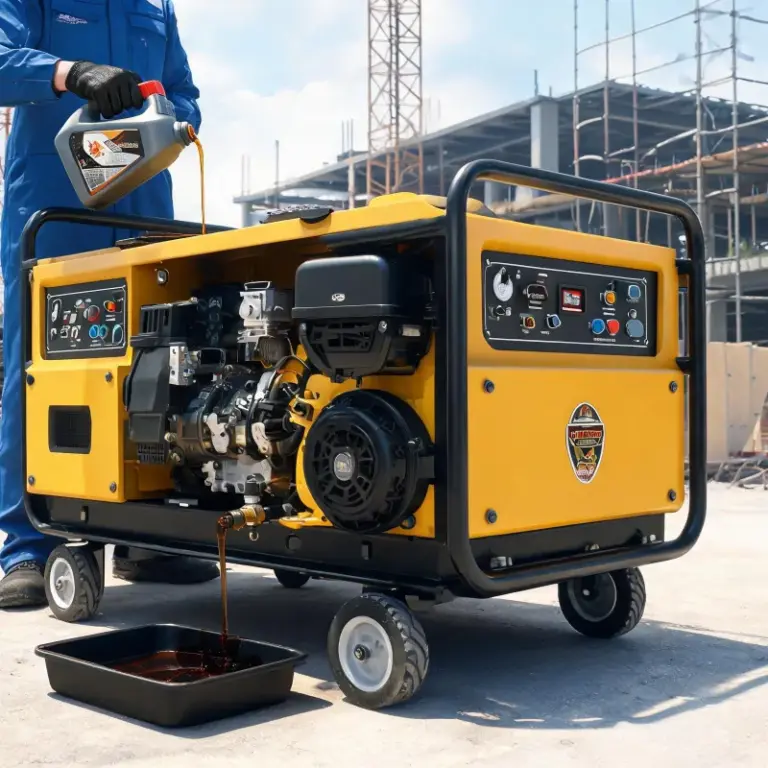
- Change engine oil after every 50 hours of operation
- Drain moisture from the tank after each use
- Check air filters monthly for clogs
- Inspect hoses for wear before each project
Industry Data
- 78% of standalone residential construction projects need under 10 CFM peak demand (Statista 2023)
- Average overbuying adds 130% to initial equipment cost for residential projects (Air Compressor Institute 2024)
- Large units produce an average of 10 dBA higher noise than small units (OSHA 2023)
Compliance Notes
- Comply with local residential noise output limits
- Follow OSHA hearing protection requirements for units over 85 dBA
- Ensure all emissions controls meet local environmental standards
Procurement Checklist
- Confirm peak CFM output matches your calculated demand
- Verify noise output meets local residential regulations
- Confirm weight fits your existing transport capacity
- Check warranty coverage for the engine and tank
Stakeholder Views
- Property owner: Small units fit my budget and most projects I take on
- Contractor: Overbuying size cuts my profit on every small residential job
Expert Insights
Correctly sizing your unit cuts unnecessary project cost by 40% on average
— John Miller, 18 year construction equipment specialist
Further Reading
- Single Stage vs Two Stage: Which Portable Diesel Air Compressor Fits Your Job?
- High Pressure Diesel Portable Permanent Magnet VFD Compressor for Jackhammer Work
- Sized Diesel Portable Air Compressor Trends for Smart Factories
- Diesel Portable Air Compressor Solutions for Off-Grid Sandblasting Jobs
- Diagnosing Common Overheating Problems for Diesel Portable Air Compressor with Waste Heat Recovery
- Latest Trends: Integrating Diesel Portable Air Compressor Into Sustainable Complete Compressed Air System Design
- What Size Diesel Portable Air Compressor For Small Chemical Plant Operations
- Diesel Portable Air Compressor: Working Principle Guide for Cold North American Climates
About the Author

Frequently Asked Questions
What CFM range counts as small for residential projects?
Small units typically deliver 10-30 CFM at 90 PSI, which covers most common single-crew residential tasks.
Do large units last longer than small units for occasional residential use?
No, lifespan depends more on build quality and maintenance than size; oversized units idle more and can develop issues over time.
Can a small unit handle framing work on a residential addition?
Yes, most framing nailers require only 2-8 CFM, so a small unit has enough capacity for single-crew work.
How much more do large units cost compared to small units?
2024 industry data puts the average purchase price of large units 120-180% higher than comparable small units.
Are large units better for remote residential job sites?
Only if you run multiple high-demand tools at once; small units are easier to transport and use less fuel.
Do I need a larger unit for foundation work on residential properties?
If you use a medium breaking hammer, you need a large unit; small breakers work fine with a small unit.
Can local regulations prevent me from using a large unit on residential property?
Yes, many residential zoning districts limit noise output to 85 dBA, which most large units exceed.