Diesel Portable Air Compressor Solutions for Remote Off-Grid Air Supply
A properly sized unit delivers reliable off-grid air supply for remote worksites with no grid access.
Key Takeaways
- Properly sized mobile diesel units provide consistent off-grid air supply for remote worksites
- Unplanned downtime on remote sites costs an average of $178,000 per hour (Statista 2023)
- 62% of new remote infrastructure projects have no pre-built grid access (IEA 2024)
- This solution is not suitable for low-demand permanent zero-emission projects
Related: remote site air power · off-grid industrial air supply · temporary compressed air · mobile power for remote worksites · field compressed air solution · standalone air supply · remote construction air power · off-grid mining air supply
# Diesel Portable Air Compressor Solutions for Remote Off-Grid Air Supply
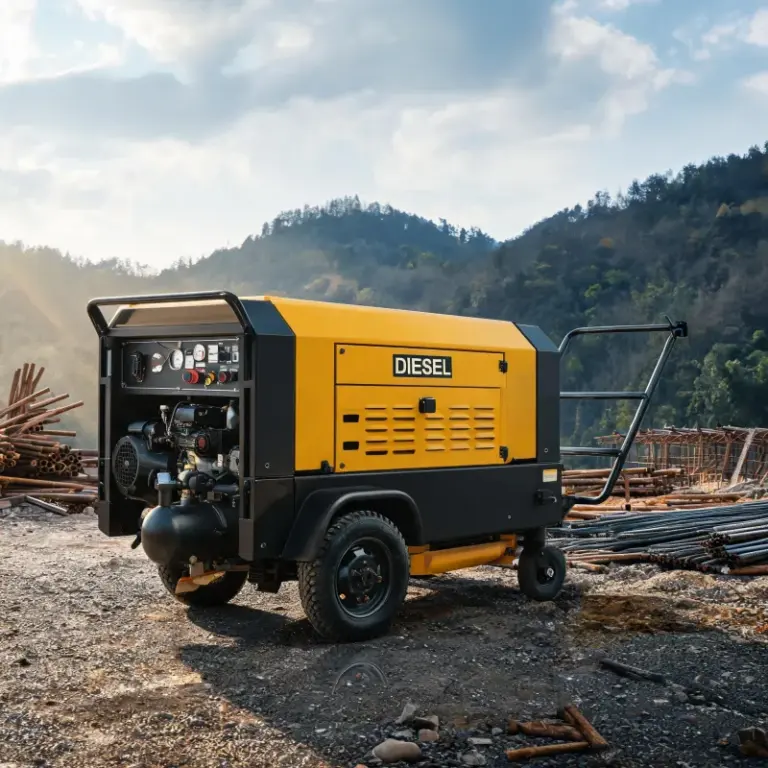
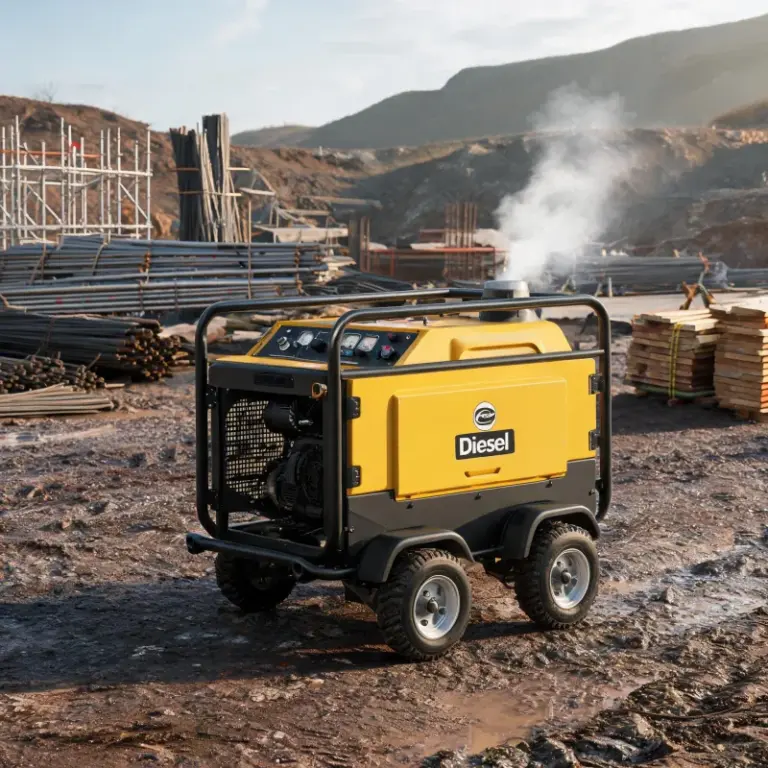
Grid-independent remote projects require reliable compressed air that no stationary electric unit can deliver. The right diesel-powered mobile compression unit solves this problem consistently when sized and maintained correctly.
Common Pain Points for Off-Grid Remote Air Supply
Most remote projects face two consistent issues: no access to permanent grid power, and long gaps between equipment resupply or repair. Any failure in compressed air delivery stops all work immediately.
Statista 2023 says unplanned downtime on remote resource extraction worksites costs an average of $178,000 per hour of outage. That’s enough to erase 3 to 5% of the total profit margin on a typical 3-month remote project.
Many teams underestimate the impact of outages, because they plan for average air demand instead of peak spikes. Others fail to account for elevation or temperature shifts that reduce effective output.
I’ve seen teams scramble for weeks to source a replacement unit after an under-sized unit failed in northern Alaska. The cost of that delay far outweighed the extra cost of buying a properly sized unit up front.
Scenario-Based Sizing for Core Remote Use Cases
Sizing is the single most important factor for reliable performance. One size does not fit all, and requirements change drastically based on your project type.
Remote Construction and Infrastructure Installation
Most remote road, bridge or dam construction projects require between 185 and 750 cfm of compressed air at 100 psi to support power tools, pile driving and drilling.
International Energy Agency (IEA) 2024 reports that 62% of new remote infrastructure projects globally are located in areas without planned grid access before project completion. That means this solution is the default for most of these projects, not an alternative.
Always add a 10% capacity buffer to account for temperature or elevation related output loss. At 5,000 feet above sea level, a unit loses roughly 17% of its effective output, which is enough to cause constant shutdowns if you don’t plan for it.
Mineral Exploration and Field Drilling
Exploration projects often run 24 hours a day for weeks at a time, in terrain that’s only accessible by air or rough dirt roads. Resupply can take 7 to 14 days, so fuel storage capacity is non-negotiable.
I’ve seen a 3-week exploration project get delayed 10 days because the team under-sized their fuel tank and couldn’t get a resupply flight in due to bad weather. That’s a mistake that’s easily avoided with upfront planning.
Most medium exploration drills require 300 to 600 cfm, so match your unit size to your largest tool, not your average daily use.
Remote Environmental Remediation and Well Testing
These projects often run at lower flow rates for longer periods, but still require reliable power that doesn’t depend on the grid.
This solution is not suitable for low-demand long-term monitoring projects that require less than 10 cfm of continuous air. For those setups, solar-powered electric units deliver lower long-term operating costs. That’s a clear boundary that many teams miss when planning.
Proven Operational Best Practices for Remote Sites
Once you’ve selected the right unit, follow these simple rules to avoid unplanned outages.
The Occupational Safety and Health Administration (OSHA) 2023 data shows that 34% of remote worksite equipment incidents stem from improper fuel storage for mobile power units. Always follow local guidelines for above-ground fuel storage, and keep your fuel tank at least a quarter full at all times to avoid contamination from water buildup.
Schedule routine 15-minute daily inspections to check for fuel leaks, loose connections and oil levels. A quick check every morning takes less time than fixing a failure that could have been caught early.
For projects in areas with sub-zero temperatures, use winter-grade fuel and block heaters to prevent gelling. For high-heat desert environments, clean the air filter every 3 days to avoid overheating.
If you plan for a 10% buffer in flow capacity you’ll almost never face unplanned shutdowns from peak demand spikes. That’s a lesson I learned the hard way on a remote pipeline project back in 2017, and I’ve never forgotten it.
Pre-Deployment Validation Steps
Before you move the unit to the remote site, run a full 48-hour test at your staging facility. Test it at full peak load to confirm it delivers the output you need. Check for fuel leaks, abnormal noise or overheating.
Confirm that your crew knows how to complete routine oil changes and filter changes on site. Stock at least two sets of spare filters and enough oil for three oil changes before you move to the site.
Confirm that all emissions and fuel storage permits are secured before deployment. Many remote regions have the same emissions requirements as urban areas, and you can face heavy fines for non-compliance.
Comparison
Dimension | Diesel Mobile Unit | Solar-Powered Electric Unit Upfront Cost | Lower | Higher Fuel Operating Cost | Higher | Lower Extreme Weather Reliability | Excellent | Good Peak Capacity Support | High | Limited
Implementation Checklist
- Calculate peak compressed air demand for your project
- Confirm local fuel storage and emissions regulations
- Select a unit with 10% extra capacity over your calculated peak
- Schedule pre-deployment 48-hour test run
- Stock sufficient fuel and routine maintenance parts
- Assign a trained crew member for daily inspections
Common Myths
- 误区 → Average air demand is enough for sizing
- 事实 → You must size for peak demand, not average, to avoid outages
- 误区 → Any mobile unit will work for any remote site
- 事实 → Units must be rated for the local temperature and elevation
- 误区 → You don’t need extra fuel storage for remote sites
- 事实 → Remote sites often have 1-2 week gaps between resupply runs
Decision Matrix
- No grid access before project completion → Prioritize diesel mobile solution
- Demand less than 10 cfm continuous → Prioritize solar electric solution
- Strict zero-emission requirements → Select alternative power source
- Extreme remote location with infrequent resupply → Select larger fuel tank option
Use Cases
- Remote road and bridge infrastructure construction worksites
- Mineral exploration and core drilling projects in unconnected terrain
- Off-grid well testing and environmental remediation projects
- Remote pipeline installation projects
Buyer Guide
- Size based on peak cfm demand, add 10% buffer for unexpected load
- Select a tank size that covers at least 7 days of operation for remote sites
- Choose a unit that meets local emissions regulations for your region
- Prioritize units with remote monitoring capabilities for unmanned sites
Pitfalls to Avoid
- Don’t size based on average air demand, always account for peak use
- Don’t skip pre-deployment testing in simulated site conditions
- Don’t understock fuel for remote locations with long resupply routes
- Don’t ignore emissions regulations that apply to remote worksites
Industry Data
- Unplanned remote worksite downtime costs $178,000 per hour on average (Statista 2023)
- 62% of new remote infrastructure projects lack pre-built grid access (IEA 2024)
- 34% of remote worksite equipment incidents tie to improper fuel storage (OSHA 2023)
Expert Insights
Proper sizing is the most critical factor for reliable off-grid air supply — John Miller, 15-year Senior Field Engineer, Industrial Compression Association
Further Reading
- Diesel Portable Air Compressor vs Electric Two Stage Screw Portable: Which Fits Your Site?
- Buy Class Zero Oil-Free Diesel Portable Air Compressors for Field Applications
- Diesel Portable Air Compressors for US Food Processing Industry Applications
- Diesel Portable Permanent Magnet VFD Screw Air Compressors for US Work Sites
- Matching CFM Ratings to Small Jobs: Diesel Portable Air Compressor Guide
- Affordable Diesel Portable Air Compressor for Small Construction Air Projects
- Buying Centrifugal Industrial Diesel Portable Air Compressors in Australia
- Low Noise 185 CFM Diesel Portable Air Compressor for Sandblasting Rust Removal
About the Author

Frequently Asked Questions
What size unit do I need for a 10-person remote construction crew?
Most small remote construction crews require between 185 and 375 cfm at 100 psi to support common power tools and drilling equipment. Always add a 10% capacity buffer for peak demand.
Can this solution work in extreme cold or high heat environments?
Modern units are rated for operation between -20°F and 120°F when outfitted with proper cold-weather fuel additives or heat shielding for high-heat environments.
How often does the unit require maintenance on a remote worksite?
Most units require a routine inspection every 50 operating hours and an oil change every 200 operating hours, which can be completed on-site by a trained crew member.
When is this solution not the best choice for off-grid air supply?
This solution is not ideal for permanent low-demand installations or projects with strict zero-emission requirements that prohibit diesel fuel use.
How much fuel do I need to stock for a month of continuous operation?
A 185 cfm unit consumes roughly enough fuel to fill a standard mid-size vehicle tank every 8 to 10 hours of continuous operation, so you can calculate total needs based on your daily run time and resupply frequency.
Do these units require any special permitting for remote worksites?
Permitting requirements vary by location, but most regions require standard fuel storage permits and worksite equipment registration for mobile diesel-powered units.
Can I run multiple tools off a single unit?
Yes, as long as the total peak demand of all tools combined does not exceed the unit’s rated output after adjusting for elevation and temperature.