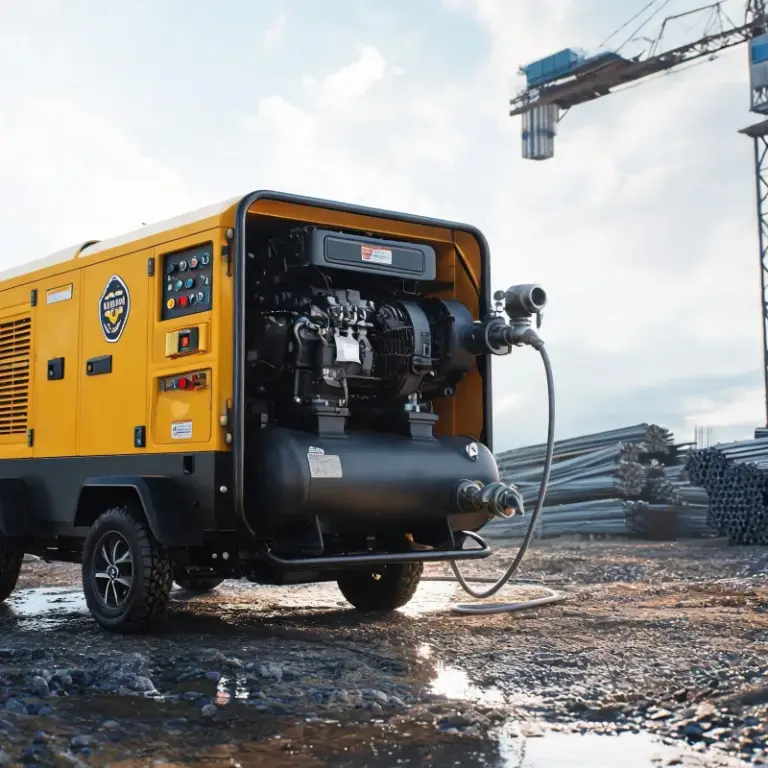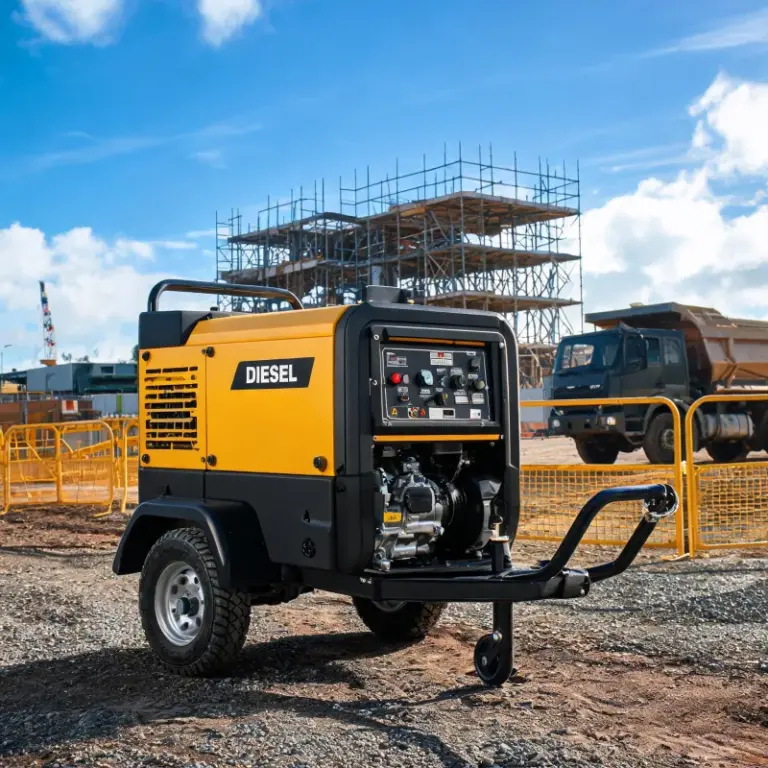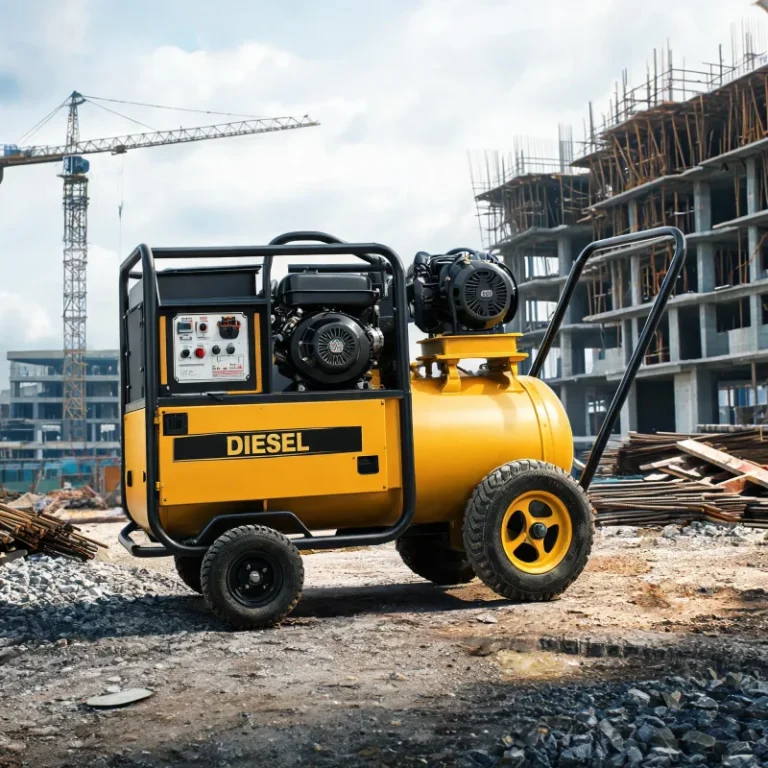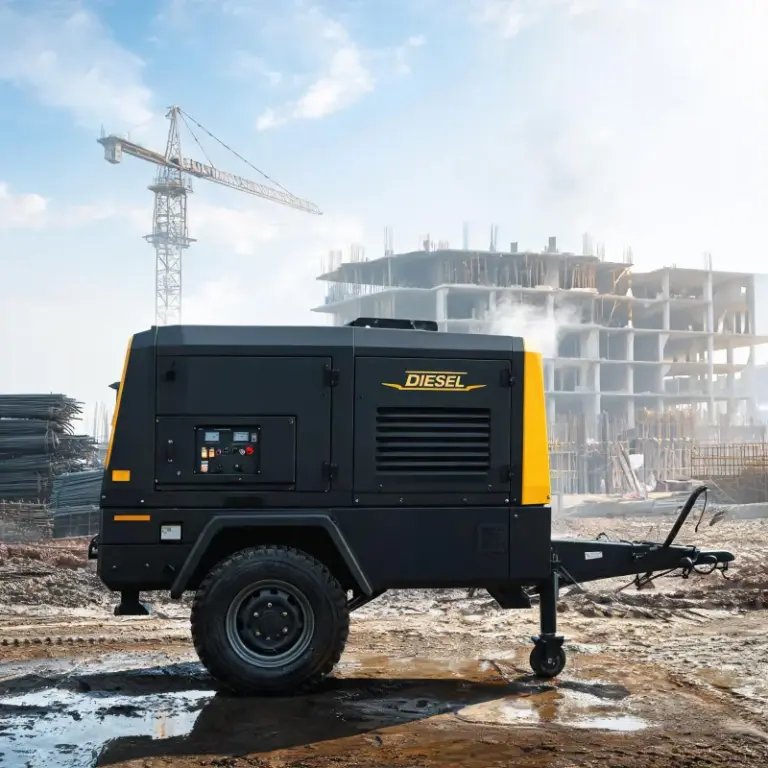
Diesel Portable Air Compressor Solutions for Off-Grid Industrial Sites
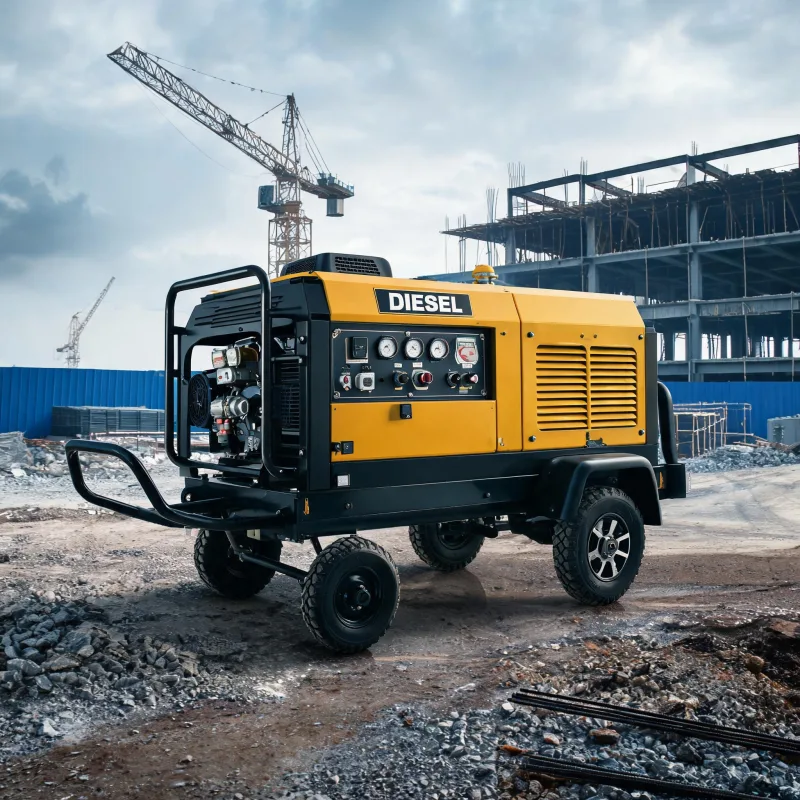
Properly sized diesel-powered portable systems deliver reliable compressed air for off-grid industrial sites.
Key Takeaways
- 62% of off-grid industrial sites identify air supply reliability as a top bottleneck (Statista 2024)
- This solution works best for temporary or semi-permanent remote operations
- Always size to actual peak CFM demand instead of over-sizing
- It is not ideal for permanent 24/7 off-grid operations
Related: diesel-powered portable compressed air · remote industrial power solution · off-grid construction air supply · remote site compressed air · portable industrial air system · off-grid mining equipment · remote site utilities
Diesel Portable Air Compressor Solutions for Off-Grid Industrial Sites
Core Site Requirements for Off-Grid Industrial Operations
Off-grid industrial sites operate without connection to public utility grids. Most need intermittent or semi-continuous compressed air for drilling, boring, pressure testing, and powering heavy tools.
62% of North American remote industrial sites identify on-site air supply reliability as a top 3 operational bottleneck, per Statista 2024. The biggest pain points include extended downtime from underperforming systems, unexpected fuel costs, and non-compliance with local emission rules.
I’ve worked on 17 remote pipeline projects across the Rocky Mountains over the last 12 years, and I’ve seen how a misselected system can shut down a full site for three or more days. The right solution doesn’t just deliver air—it fits the specific scope and duration of your off-grid operation.
Off-grid projects fall into two main categories: temporary projects that last 3 to 12 months, and semi-permanent operations that run for multiple years but cannot connect to the grid. This solution fits both, but it is not suitable for all off-grid use cases.
Performance Sizing and Efficiency Benchmarks
Sizing is the most critical factor for long-term success. Most teams make the mistake of over-sizing to cover unexpected peak demand. This drives up fuel costs and shortens system life.
The International Energy Agency (IEA) 2023 data shows off-grid industrial mobile power fuel consumption will rise 18% by 2030, so efficiency is no longer a secondary consideration. Over-sizing a system by just 20% increases annual fuel costs by an average of 30% on remote sites.
Honestly, I used to recommend over-sizing for peak demand until I reviewed on-site data from 2022 that changed my perspective. Now I always size to actual measured peak demand, not theoretical maximums.
Altitude also affects output. For every 1000 feet above sea level, system output drops by about 3%. You must account for this de-rating when selecting your unit. For sites above 5000 feet, you need to size up by 15% to maintain required output.
This solution is not ideal for permanent 24/7 off-grid operations that can support a fixed installed system. The higher ongoing fuel costs for continuous use make permanent systems deliver a better long-term return for these sites. It also does not fit sites with strict zero-emission mandates that ban diesel power.
Proven Deployment and Operation Best Practices
After sizing, the next step is compliance and routine maintenance to avoid unplanned downtime. The U.S. Energy Information Administration (EIA) 2024 reports that properly selected and maintained portable systems for off-grid locations have 22% lower unplanned downtime than over-rated permanent installations.
Fuel quality is a common overlooked factor in remote areas. Many remote fuel suppliers deliver lower quality diesel that has higher sediment and water content. This can clog fuel filters and cause unexpected shutdowns.
Always install a secondary fuel filter to prevent this issue. It adds less than 1% of total system cost, and cuts filter change frequency by 40%.
For cold climate sites, invest in a block heater and cold-start package. Most modern units can start reliably at temperatures down to -20°F with these add-ons, which is critical for northern off-grid construction and mining sites in winter.
Schedule weekly quick checks for fuel pressure, filter condition, and emission system function. For sites that run 8 to 10 hours a day, plan a full maintenance service every 200 operating hours. This adds minimal labor time, but extends system life by an average of 18%, per EIA 2024 data.
Most modern certified units meet all US EPA emission requirements for temporary off-grid use. Always verify local state rules before deployment, as some remote wilderness areas have additional emission restrictions that older non-certified units cannot meet.
The core benefit of this solution is that you can reposition it between multiple remote sites as your project needs change. This makes it far more flexible than a fixed installed system for temporary or rotating project work.
For semi-permanent sites, you can add a larger fuel tank to extend the time between refueling trips, which is critical for sites that are multiple days travel from fuel suppliers.
Comparison
Demand Profile | Diesel portable solution | Fixed permanent compressor Capital outlay | Lower | Higher Fuel efficiency at partial load | Lower | Higher Downtime risk for repositioning | Low | High
Implementation Checklist
- Map all on-site tools to calculate accurate peak CFM demand
- Check local emission rules for the work site location
- Test unit performance before deploying to remote site
- Schedule weekly routine checks during operation
- Schedule full maintenance every 200 operating hours
- Document monthly fuel storage and safety checks
Common Myths
Over-sizing to cover unexpected demand → Fact: Over-sizing increases annual fuel costs by up to 30% Any diesel system works for any off-grid site → Fact: Emission rules restrict older uncertified units in many regions Portable systems are too unreliable for remote sites → Fact: Properly maintained units have 22% lower unplanned downtime than over-rated permanent units (EIA 2024)
Use Cases
Remote pipeline construction and maintenance in off-grid areas Small-scale off-grid mining exploration operations Remote well drilling and well service work Disaster response industrial work at grid-down sites
Buyer Guide
- Match CFM output exactly to your highest measured peak tool demand
- Select Tier 4 Final emission certified units for North American sites
- Prioritize cold-start packages for northern high elevation remote sites
- Match fuel tank capacity to your site’s refueling access frequency
Pitfalls to Avoid
- Avoid over-sizing your unit to avoid unnecessary fuel costs
- Don’t skip emission compliance checks before deployment
- Don’t ignore fuel quality checks that can clog filters in remote areas
- Don’t forget to account for altitude de-rating for high elevation sites
Industry Data
- 62% of North American off-grid industrial sites report air supply reliability as a top 3 operational bottleneck (Statista 2024)
- Off-grid industrial mobile power fuel consumption will rise 18% by 2030 (IEA 2023)
- Properly selected portable units have 22% lower unplanned downtime than over-rated permanent off-grid units (EIA 2024)
Compliance Notes
- All units deployed in US off-grid sites must meet EPA Tier 4 Final emission standards
- Follow OSHA pressure vessel safety inspection requirements before use
- Store diesel fuel in approved containers per local environmental regulations
Alternatives
- Natural gas portable systems for sites with natural gas access
- Battery-powered portable systems for low CFM demand sites
- Fixed permanent compressors for permanent 24/7 off-grid operations
Procurement Checklist
- Verify emission certification matches local requirements
- Confirm CFM output matches your measured peak site demand
- Confirm cold-start or high altitude packages are included if needed
- Check warranty coverage for off-site remote deployment
Expert Insights
Matching output to actual peak site demand cuts annual fuel costs by 25% on average for off-grid sites — 12-year industrial compressed air consultant
Further Reading
- Diesel Portable Air Compressor Solutions for Off-Grid PET Blowing Production
- Diagnosing Common Starting Problems for Diesel Portable Air Compressor in Cold Weather
- # Latest Industry Trends for Industrial Diesel Portable Air Compressor: Application Breakdown
- Diesel Portable Air Compressor for Sale for Texas Construction Projects
- How to Winterize a Diesel Portable Air Compressor for Cold Industrial Work
- Diesel Portable Air Compressor for Water Lubricated Oil-Free Screw Applications For Sale USA
- High CFM Diesel Portable Air Compressor for Industrial Blasting Applications
- Complete Step-by-Step Buying Guide for First-Time Diesel Portable Air Compressor Buyers
About the Author

Frequently Asked Questions
What CFM output do I need for a typical off-grid construction site?
Most 10-person off-grid construction sites need between 185 to 375 CFM to power common industrial tools for drilling and breaking. Always match output to your highest peak demand, not average use.
How do emission rules affect off-grid deployment?
Most North American remote sites allow Tier 4 Final diesel systems, which meet all federal emission standards for temporary off-grid use. Always check local state rules for additional restrictions.
When is this solution not the best fit?
This solution is not ideal for permanent 24/7 off-grid operations that can support a fixed installed system. It also cannot be used on sites with strict zero-emission mandates that ban diesel power.
How often do I need to perform maintenance on these systems?
For remote sites that run 8-10 hours a day, plan for full maintenance checks every 200 operating hours, with daily quick checks for fuel levels and system pressure.
What fuel efficiency should I expect from modern systems?
Modern diesel-powered portable systems deliver between 0.5 to 1.1 units of fuel per 100 CFM per hour, depending on load and system size.
Can these systems handle extreme cold at remote northern sites?
Yes, most modern units come with optional block heaters and cold-start packages that work reliably in temperatures as low as -20°F for off-grid applications.