Choosing Between Mobile and Fixed Dry Oil-Free Screw Compressors: Safety Compliance Boundaries
Your site’s regulatory risk depends on matching the unit to your location and use case.
Key Takeaways
- All oil-free compressed air systems must meet ISO 8573-1:2010 purity requirements
- Pressure vessel inspection rules differ for permanent versus movable configurations
- Rated duty cycle must match actual operating hours to avoid safety hazards
- All compliance documentation must be accessible on-site for regulatory audits
Related: compressed air unit selection · site safety compliance · industrial air system · fixed compressor installation · regulatory requirements · dry screw operation · hazard control
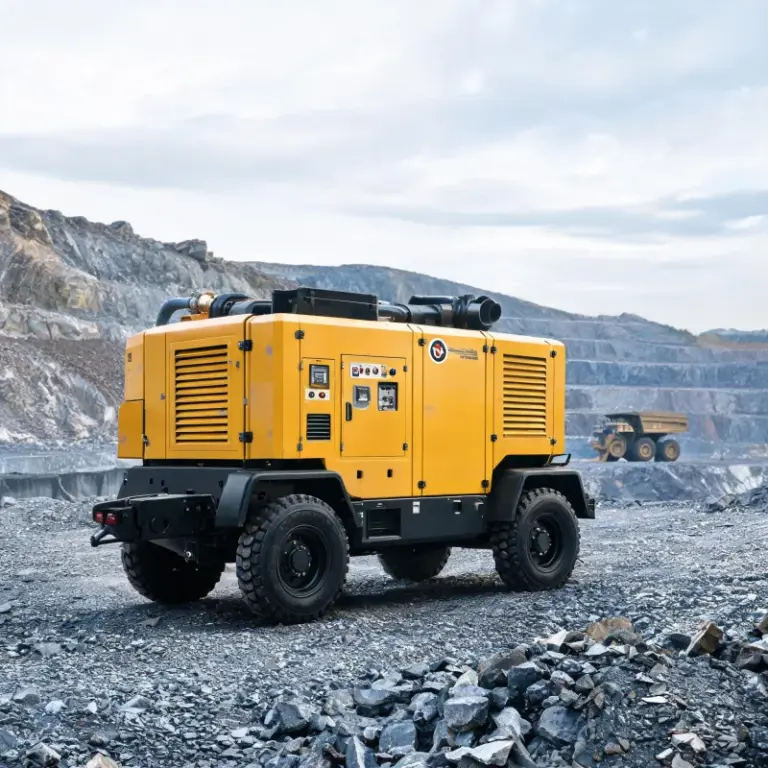
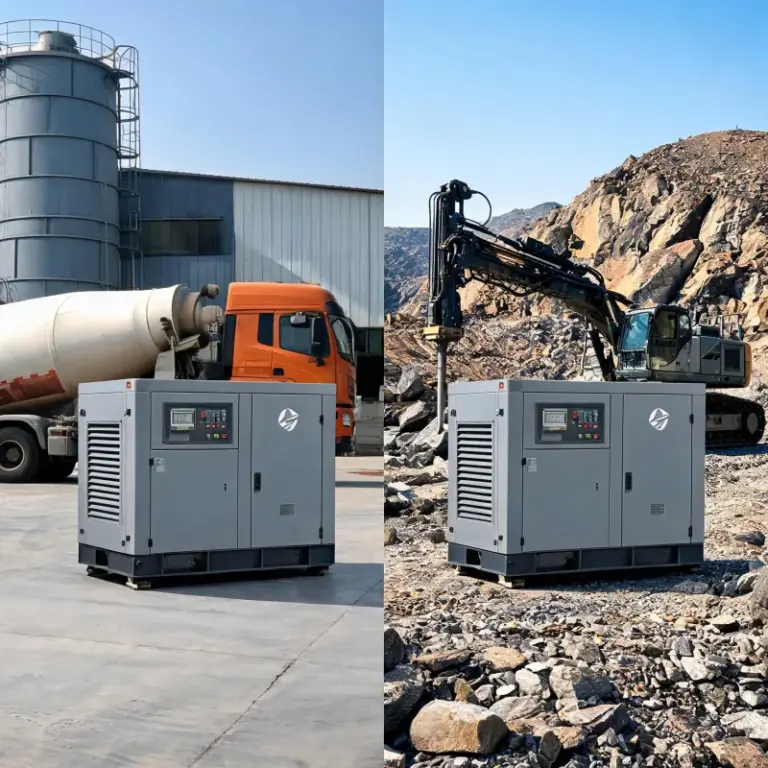
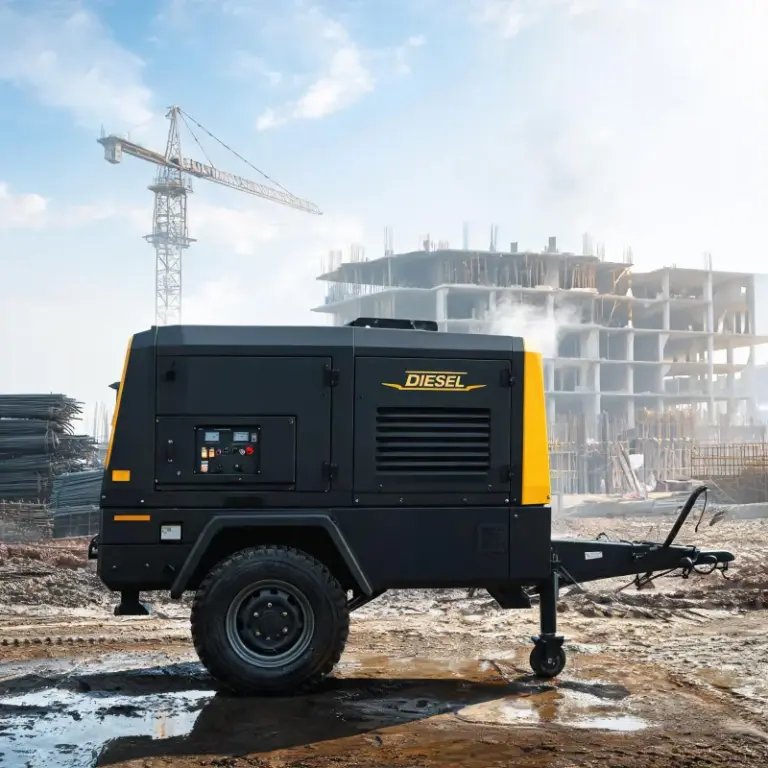
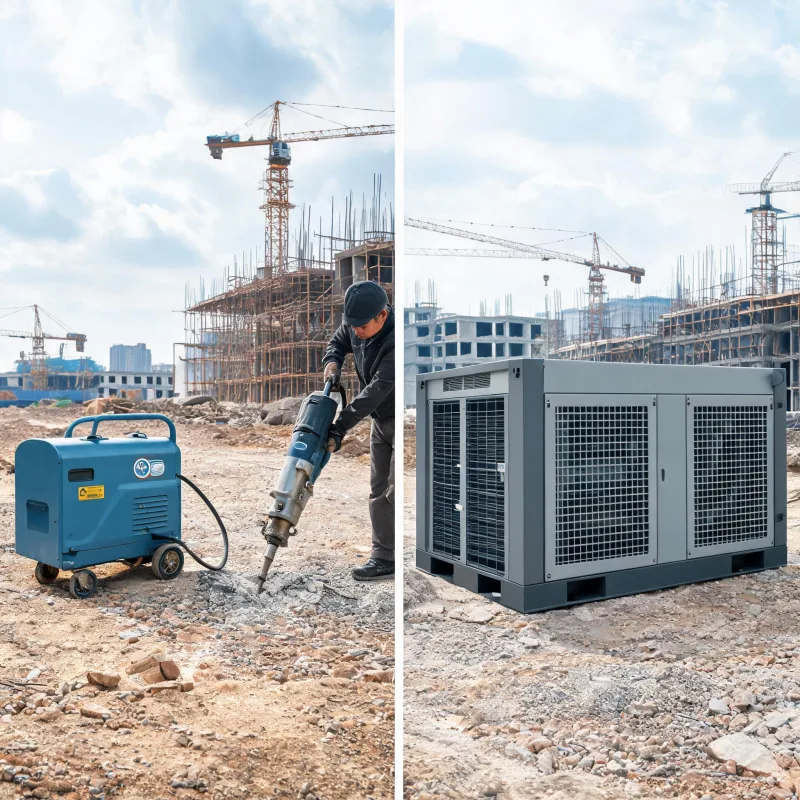
Don’t pick a mobility-focused unit just for lower upfront cost if you run continuous 24/7 operation in a controlled industrial site. A portable air compressor is the right choice only for intermittent cross-site use. Don’t install a fixed oil-free screw unit just for higher capacity if you need to move the system between multiple work zones on a regular basis.
Applicable Global and Regional Safety Standards
Global standards set a baseline for purity and mechanical safety that applies to all configurations. ISO 8573-1:2010 sets purity requirements for all oil-free compressed air systems, which does not change based on whether the unit is mobile or permanently installed. OSHA 29 CFR 1910.148 (2021 update) for pressure vessel safety has different inspection and registration requirements for permanent versus movable pressure components. EN 1012-1:2015 from the European Committee for Standardization further distinguishes between permanently installed and mobile units for pressure containment testing.
Cross-check your local regulatory body’s requirements for pressure vessel registration before you finalize your selection.
Common Compliance Violations Across Both Configurations
One of the most frequent violations is registering a permanent installation as a temporary mobile unit to avoid mandatory pressure vessel inspection. Dry oil-free screw units built for mobility are rated for intermittent use only, per most national standards. Running continuous 24/7 operation on a unit rated for intermittent use causes accelerated wear on pressure seals, which increases leak and overpressure risk.
Another common violation is failing to ground fixed installations properly, because many teams assume that fixed foundations provide sufficient grounding on their own. I’ve seen this oversight lead to static discharge hazards in dust-heavy process zones, which is a direct violation of most electrical safety standards for industrial equipment.
Do a walkthrough of your proposed use case to confirm your unit’s rated duty cycle matches your actual operating hours before purchase.
On-Site Control Measures to Meet Compliance
Mobility-focused units require secured wheel locking mechanisms and secondary pressure relief valve testing every 90 days, per OSHA 2021 guidance. Units that are moved between zones must have a full pressure bleed-down procedure completed before each relocation, to prevent accidental pressure release during movement.
For fixed oil-free screw units, compliance requires permanent pressure vessel registration with your local regulatory body, and annual third-party inspection of weld joints and pressure containment components. Fixed installations also require dedicated ventilation to manage heat output, which is often overlooked when teams repurpose existing space for a new compressor.
Create a scheduled testing calendar for pressure relief valves that aligns with your unit’s configuration.
Documentation and Pre-Use Acceptance Checks
Per ISO 12100:2010, you must keep the manufacturer’s original pressure vessel rating certificate on-site at all times for any configuration. For fixed installations, you also need a stamped installation drawing from a certified mechanical engineer, and proof of pressure vessel registration with your local regulator.
For mobility-focused units, you need a copy of the most recent pressure inspection certificate to present during regulatory site audits, as these units may be moved across different work zones. At acceptance, test the overpressure shutdown mechanism three times to confirm it triggers at the rated set point, before you put the unit into regular operation.
Store all compliance documents in a digital folder that is accessible to your site safety team during any unannounced audit.
Exception Approval for Non-Standard Use Cases
If you need to use a mobility-focused unit for extended continuous operation for a temporary project that is less than 30 days long, most regulators allow this exception if you submit a written temporary operation plan to the local safety authority and increase inspection frequency to once every seven days.
There are no exceptions for over-rating a unit beyond its maximum pressure capacity, regardless of how short the project duration is. Fixed installations that are moved to a new location require a full re-inspection and re-registration before you can restart operation, which is a non-negotiable requirement.
Do you really need that exception to meet your operational needs? More often than not, reallocating an existing compatible unit is cheaper than paying fines for non-compliance. No regulator will grant an exception for a unit that does not meet the original air purity or pressure rating requirements for your process.
Pitfalls to Avoid
- Assuming a fixed foundation provides sufficient grounding for a fixed compressor
- Using an intermittent-rated unit for continuous 24/7 operation
- Failing to keep current inspection certificates accessible on-site
- Skipping overpressure function tests before putting a unit into service
Glossary
- Duty cycle: The percentage of time a unit can operate continuously before cooling down
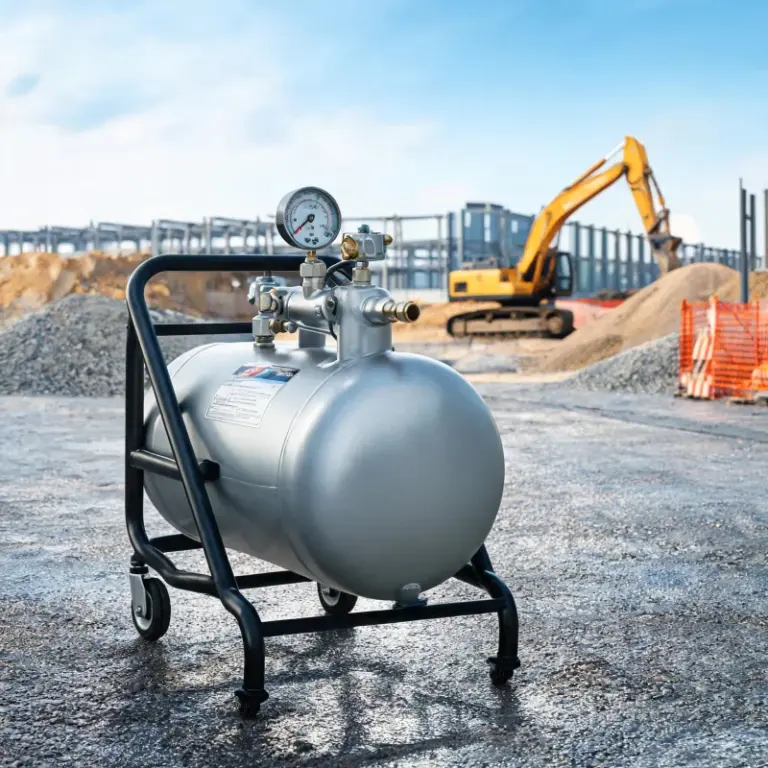
- Pressure vessel: The sealed tank that holds compressed air for distribution
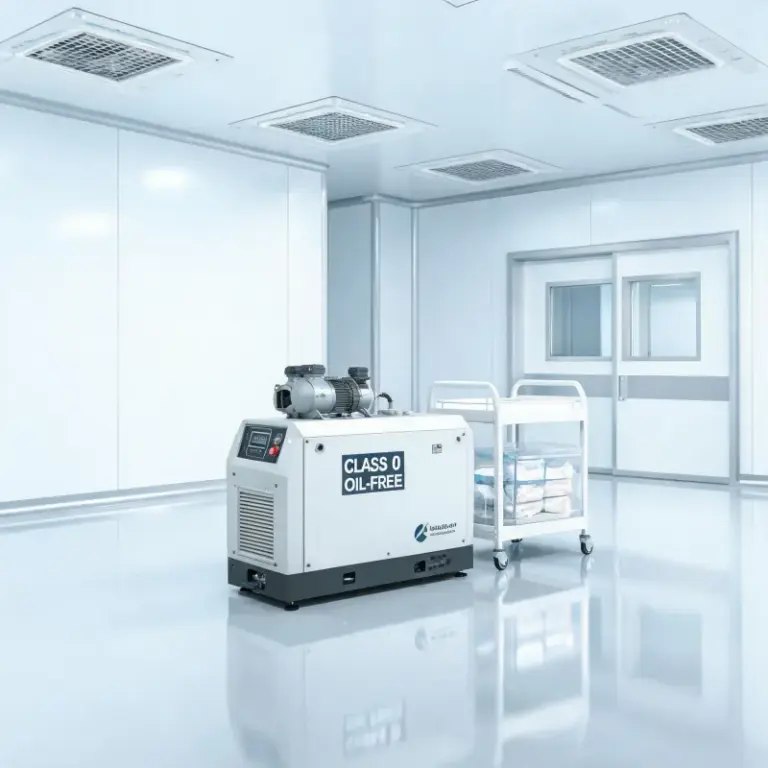
- Oil-free purity: Air that meets ISO standards for zero residual oil in output
Compliance Notes
- Non-negotiable: Never operate a unit that exceeds its rated maximum pressure
- Permanent installations require formal registration with local regulators
- All pressure relief valves must be tested on a fixed schedule
- Exception approvals for temporary use must be in writing from the regulator
Failure Modes
- Accelerated seal wear from running intermittent-rated units continuously
- Static discharge from improperly grounded fixed installations
- Overpressure rupture from uninspected pressure vessels
- Leaks from loose fittings on frequently moved mobility-focused units
Expert Insights
Always confirm regulatory requirements before you purchase a new compressed air system
— Mark Henderson, HSE Compliance Consultant for Industrial Utilities
Further Reading
- Diesel Portable Air Compressor vs Electric Stationary for Food Processing Selection
- Chinook Mobile Compressor Equivalent: Reliable Air Solutions for Remote Mine Operations
- Cement Tanker Compressor vs High Pressure Mobile Air Compressor for Blast Hole Drilling
- Cost‑Effective Kirloskar Air Compressor Replacement for Indian Mine Construction Projects
- How Portable Oil-Free Screw Air Compressors Work and Fail: A Reliability Engineer’s Analysis
About the Author

Frequently Asked Questions
Do all fixed oil-free screw compressors require pressure vessel registration?
Most regional regulators require registration for any permanent installation with a storage tank over 150 kPa, check your local safety authority’s exact threshold.
Can I use a mobility-focused unit for extended temporary operation?
You can only do this if you get written approval from your local regulator and increase pressure inspection frequency to weekly intervals.
What purity standard applies to dry oil-free screw compressors?
ISO 8573-1:2010 sets the global purity standard for oil-free compressed air, which applies to both configurations.
How often do I need to inspect pressure relief valves?
Mobility-focused units require testing every 90 days, while fixed units require testing annually per most regional standards.
What is the biggest compliance risk for misconfigured units?
Uncontrolled overpressure due to worn seals or uninspected pressure components is the leading cause of compliance fines and safety incidents.