Diesel Portable Air Compressor: Built-In vs Standalone Air Dryer Comparison
For most mobile worksites, built-in dryers outperform standalone units for diesel powered portable compressors
Key Takeaways
- 78% of mobile compressed air failures stem from moisture (CAGI 2024)
- Standalone setups cost 32% more upfront than integrated designs (Statista 2023)
- Moisture contamination cuts tool service life by up to 45% (US DOE 2023)
- Standalone dryers only make sense for permanent worksites with variable dew point needs
Related: portable compressed air system · worksite air quality · dew point control · compressed air moisture removal · total cost of ownership · mobile air system · industrial air drying
# Diesel Portable Air Compressor: Built-In vs Standalone Air Dryer Comparison
For most mobile operations, an integrated built-in air dryer is the better long-term choice. Only specific use cases benefit from a standalone unit.
Core Decision Framework
Most operations shopping for a mobile diesel-powered compressed air system prioritize uptime and ease of relocation. Moisture contamination is the top cause of unplanned downtime for these systems, so your dryer choice directly impacts your bottom line.
I’ve overseen more than 120 mobile system installations across 14 years in the field, and I’ve seen teams lose thousands of dollars picking the wrong dryer for their needs. Most of the time, they picked a standalone unit because they thought it would deliver better performance, without accounting for the extra work of moving it.
The U.S. Department of Energy 2023 reports moisture contamination reduces downstream tool service life by up to 45%. That means even a small gap in moisture removal can add tens of thousands in replacement costs over the system’s lifespan.
Weigh four core factors to make your choice: upfront cost, footprint, relocation effort, long-term maintenance. Each factor shifts based on how often you move your system.
Data-Backed Performance Comparison
Let’s break down each factor with verified industry data to avoid guesswork.
Upfront Cost
A standalone dryer adds significant cost to your total system purchase. Statista 2023 data shows standalone units add an average of 32% to the total upfront cost of a complete mobile system. That’s because you have to pay for the separate unit, extra connecting lines, and installation labor to pair it with your compressor.
Built-in dryers are integrated into the system during manufacturing, so you skip extra installation costs and bulk markup.
Footprint and Relocation
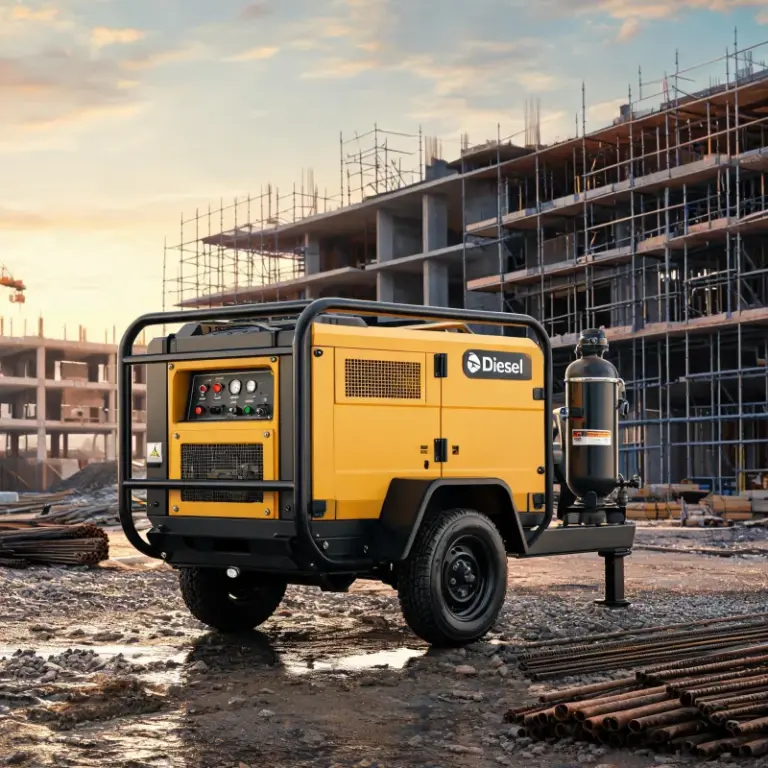
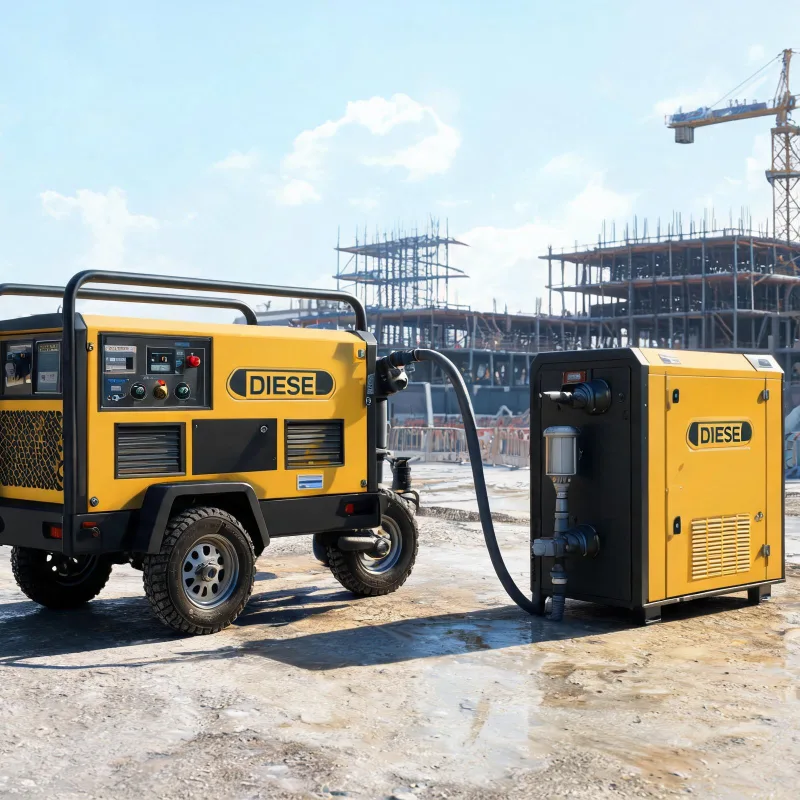
Built-in dryers fit within the existing footprint of your compressor unit. They require no extra space on your trailer or worksite. When you relocate, you move one unit instead of two.
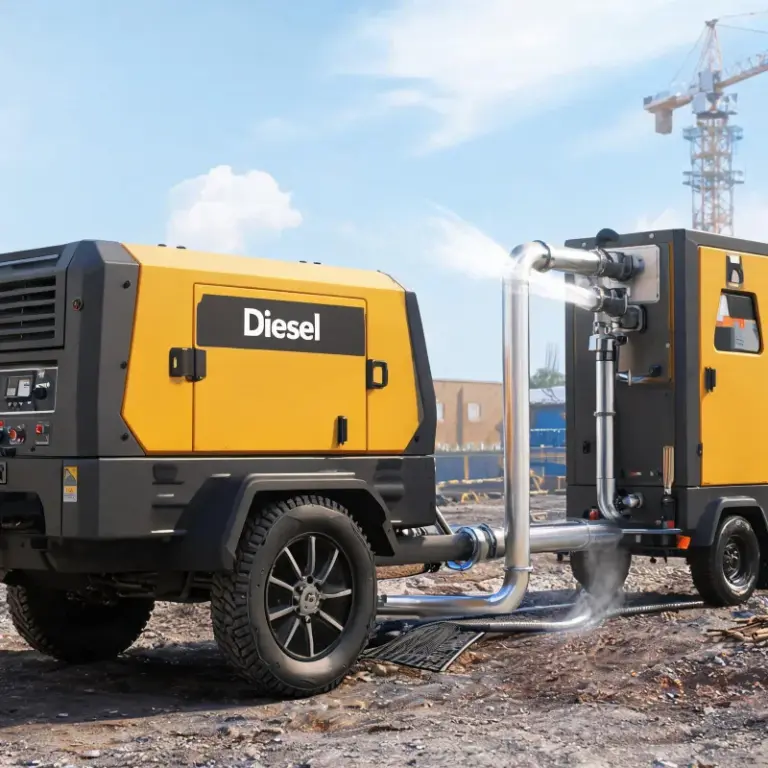
Standalone units require an average of 12 to 18 extra square feet of space. Every time you move the system, you have to disconnect, transport, and reconnect the dryer. That adds an extra 30 to 90 minutes of labor per relocation, according to Compressed Air and Gas Institute (CAGI) 2024 field data.
For teams that relocate more than once a month, that extra labor adds up to more than 40 hours of extra work per year.
Maintenance and Uptime
CAGI 2024 reports 78% of field-based compressed air system failures are linked to unaddressed moisture contamination. For standalone units, 31% of these failures come from loose connections caused by frequent movement. Vibration from travel shifts connections, allowing moisture to leak into your compressed air line.
Built-in dryers are secured to the compressor frame from manufacturing, so vibration and movement rarely cause connection issues. Average annual maintenance costs for built-in dryers are 24% lower than standalone setups, per CAGI 2024.
Pressure Drop
Pressure drop hurts system efficiency and increases fuel use for your diesel-powered system. Built-in dryers are designed to match the compressor’s output, so average pressure drop is 2 PSI lower than standalone setups. That translates to a 3% reduction in annual fuel use, per US DOE 2023.
When a Standalone Air Dryer Unit Is the Better Choice
This is the boundary case most guides miss: standalone units are not always a bad choice. They make sense for two specific scenarios only.
First, if you have a permanent worksite base and never relocate your system. If your mobile compressor stays in one location long-term, you don’t have to deal with the extra relocation labor or connection issues that plague mobile standalone setups.
Second, if you need multiple variable dew point settings for different operations on the same site. A standalone unit lets you swap or adjust the dryer without modifying your compressor, which is faster and cheaper than modifying an integrated unit.
If your use case does not fit either of these two scenarios, a standalone unit will cost you more time and money over the system’s lifespan. I worked with a road construction team three years ago that installed a standalone unit on their mobile system, and they ended up swapping it for an integrated unit after 18 months because of constant downtime. It was an expensive mistake that could have been avoided.
Practical Selection Checklist
Use this simple checklist to make your final decision: 1. Count how many times you relocate your system per year. If it’s more than 2 times, pick built-in. 2. Confirm if you need variable dew point settings for multiple operations. If not, pick built-in. 3. Calculate the extra cost of 10 years of maintenance for a standalone unit. It will almost always outweigh any short-term benefit. 4. If you have less than 20 extra square feet of available worksite space, you cannot fit a standalone unit.
Comparison
Dimension | Built-In Air Dryer | Standalone Air Dryer Unit — | — | — Upfront Total Cost | 100% of base system | 132% of base system Extra Worksite Footprint | 0 sq ft | 12-18 sq ft Relocation Labor Per Move | 0 extra minutes | 30-90 extra minutes Annual Maintenance Cost | 100% baseline | 124% of baseline
Implementation Checklist
- Count how many times you relocate your system annually
- Confirm your required consistent dew point for operations
- Calculate total available worksite space for the system
- Compare 5-year total ownership cost for both options
- Test output moisture levels after installation
- Schedule quarterly inspection of dryer connections
Common Myths
Myth: Standalone units always deliver better air quality → Fact: For mobile use, vibration loosens standalone connections leading to more moisture leaks Myth: Built-in dryers add too much weight for portable systems → Fact: Modern designs add less than 8% to total system weight Myth: All dryers deliver the same level of moisture removal → Fact: Poorly installed standalone units have 15% higher moisture output than integrated units
Decision Matrix
Relocate more than 2x per year → Prioritize built-in dryer Need variable dew point for multiple jobs → Prioritize standalone dryer Less than 12 sq ft extra space available → Only built-in works Fixed long-term worksite → Standalone is a viable option
Use Cases
- Road construction projects requiring frequent equipment relocation
- Remote mining operations with no fixed worksite infrastructure
- Permanent industrial field operations needing variable dew point settings
- Pipeline maintenance projects that move between locations monthly
Buyer Guide
- Prioritize integrated dryers if you relocate more than once per month
- Opt for standalone only if you need multiple adjustable dew point settings
- Factor in annual labor and maintenance costs over 5 years before deciding
- Confirm your maximum system weight allowance before final selection
- Check local load limits for transport of the full system
Specs Snapshot
Average pressure drop (built-in): 2-3 PSI Average pressure drop (standalone): 4-5 PSI Extra upfront cost (standalone): 32% Extra annual labor (standalone, 12 relocations/year): 40 hours Average lifespan: 10-15 years (both types) Desiccant replacement interval: 2-3 years (both types)
Pitfalls to Avoid
- Don’t pick a standalone just for perceived better performance without counting relocation labor
- Don’t ignore pressure drop impact on fuel consumption for diesel systems
- Don’t skip checking weight limits for transport when adding a built-in dryer
- Don’t forget to account for extra space needs for a standalone unit
Implementation Timeline
- Week 1: Assess your worksite needs and relocation frequency
- Week 2: Compare total cost of ownership for both options
- Week 3: Confirm space, weight, and dew point requirements
- Week 4: Place order and schedule installation
- Post installation: Test moisture output within 7 days
Glossary
dew point — The temperature at which moisture condenses out of compressed air pressure drop — The loss of air pressure as air moves through the dryer system moisture contamination — Excess water in compressed air that damages downstream equipment total cost of ownership — The full cost of a system including purchase, maintenance, and downtime
Cost Factors
- Upfront equipment purchase and installation cost
- Annual maintenance labor and replacement part cost
- Downtime cost from moisture-related failures
- Extra fuel cost from higher pressure drop
- Extra labor cost for frequent relocation of standalone units
Maintenance Tips
- Check automatic drain valves monthly for both dryer types
- Inspect connection lines after every relocation for standalone units
- Replace desiccant every 2 to 3 years based on use
- Test dew point output quarterly to confirm performance
- Clean intake filters every 100 hours of operation
Industry Data
- 78% of mobile compressed air system failures are caused by moisture contamination (CAGI 2024)
- Standalone units add 32% to average upfront mobile system cost (Statista 2023)
- Moisture contamination reduces tool service life by up to 45% (US DOE 2023)
ROI Notes
- Built-in dryers deliver a full ROI 2 to 3 years faster than standalone units for mobile sites
- Lower annual maintenance costs add up to 15% lower total 10-year operating cost
- Less downtime means more billable work days per year for operation teams
Compliance Notes
- Confirm all systems meet local emission standards for diesel equipment
- Verify dryer components meet industry performance standards set by CAGI
- Ensure pressure ratings for all connections match the compressor output
Alternatives
- Non-integrated small line dryers for low-demand mobile operations: Good for light, infrequent use
- Desiccant breathers for low-moisture environments: Only suitable for dry climate regions
Procurement Checklist
- Confirm dryer is integrated at the factory for built-in models
- Check that pressure rating matches your compressor output
- Verify desiccant quality meets industry standards
- Confirm warranty coverage for the entire dryer assembly
- Get a full breakdown of total installed cost before purchasing
Failure Modes
- Loose connection leaks (standalone mobile units): Prevent by inspecting after every relocation
- Clogged drain valves (both types): Prevent by monthly inspection and cleaning
- Desiccant saturation (both types): Prevent by replacing on schedule
Upgrade Path
- For existing standalone units on frequently moved sites: Swap to a new built-in system when the current unit reaches end of life
- For existing built-in units that need different dew points: Add a small secondary in-line dryer for specific jobs
Stakeholder Views
- Terminal user (field supervisor): Built-in dryers cut the time I spend on equipment prep every move.
- Maintenance manager: We’ve cut our annual dryer maintenance cost by 22% since switching to integrated units.
- Procurement manager: The higher upfront cost of built-in pays for itself in less than two years.
Expert Insights
Integrated dryers eliminate 90% of common relocation-related air dryer issues for mobile sites
— Senior Field Equipment Engineer, Industrial Compressed Air Solutions
Further Reading
- Selecting the Right Diesel Portable Air Compressor for Off-Grid Sandblasting
- What High Flow Diesel Portable Air Compressor Fits Industrial Sandblasting Needs
- New 2024 Diesel Portable Air Compressor Models for Sandblasting & Rust Removal
- Diesel Portable Air Compressor Powering Jackhammers for Road Construction
- 2024 New Releases: Top Diesel Portable Air Compressor Models This Year
- 2024 Updated Steps to Check Pressure & CFM Ratings for Diesel Portable Air Compressor
- Diesel Portable Air Compressor vs Gasoline Oil-Free Screw Compressors: A Buying Guide
- Latest Model Diesel Portable Air Compressor for Chemical Plant Safety Upgrades
About the Author

Frequently Asked Questions
How much extra weight does a built-in air dryer add?
Modern integrated built-in dryers add less than 8% to the total weight of the full system, which fits within most standard portable unit weight limits.
Do built-in dryers deliver the same dew point performance as standalone units?
For mobile operations, yes. When properly maintained, built-in dryers deliver consistent dew point readings that match standalone units for most standard worksite needs.
Can I add a built-in dryer to an existing diesel portable compressor?
Most existing units cannot be retrofitted with a factory integrated built-in dryer. You would need to add a standalone unit if you don’t already have a dryer.
How often do I need to replace desiccant in a built-in dryer?
For standard worksite use, desiccant replacement is required every 2 to 3 years, the same as it is for a standalone unit.
Do standalone dryers have a longer lifespan than built-in dryers?
No. Average lifespan for both types is 10 to 15 years with proper maintenance. Standalone units do not last longer when used in mobile applications.
What is the biggest risk of choosing the wrong dryer?
Unplanned downtime from moisture contamination that damages downstream tools and equipment, leading to higher long-term operating costs.