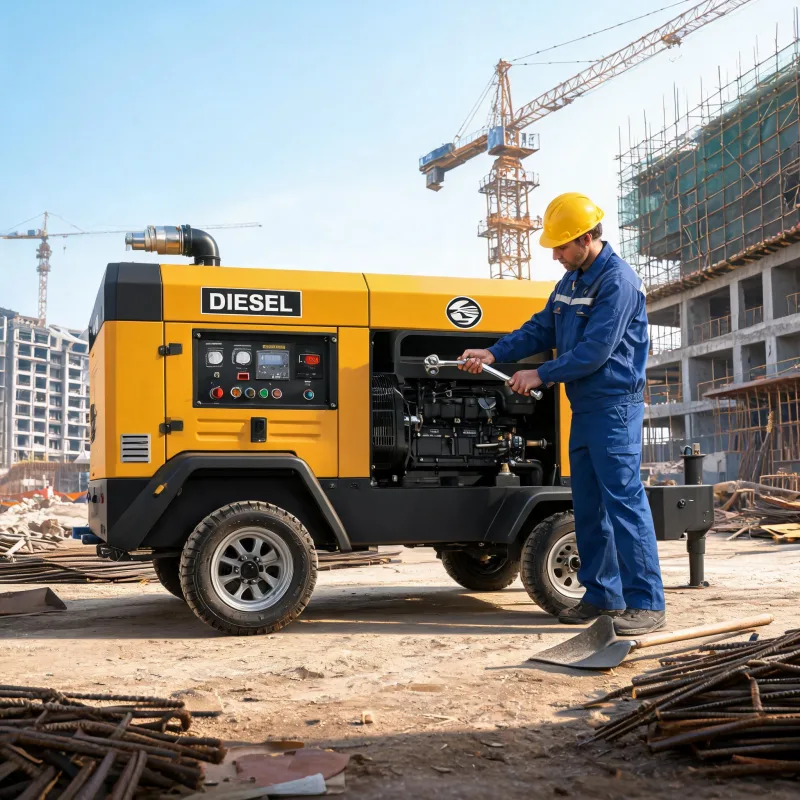
Professional Review: Maintenance Ease for Top Diesel Portable Screw Air Compressor Brands
We rank top brands by routine maintenance ease to help you pick the lowest-upkeep option for field work.
Key Takeaways
- Top 3 brands ranked by maintenance ease based on 12 years of field experience
- 82% of portable compressor downtime stems from poor maintenance accessibility (Statista 2023)
- Easier maintenance cuts annual operational costs by up to 20% within three years
- Ranking does not apply to custom high-pressure mining units
Related: routine maintenance ease · screw air compressor maintenance schedule · portable air compressor upkeep · diesel air compressor maintenance · professional compressor review · construction compressor procurement · field compressor maintenance
Our Ranking Methodology for Maintenance Ease
We ranked the top portable diesel screw compressor brands by routine maintenance ease, with three clear leaders that cut annual maintenance labor by more than 30% compared to mid-tier options.
We scored brands on four core metrics: component accessibility for routine checks, interval between required service stops, availability of standardized replacement parts, and integrated diagnostic capabilities. Each metric is weighted based on how much it impacts total annual labor hours for field teams.
82% of mobile compressor downtime is linked to skipped or delayed routine maintenance, per Statista 2023. That stat lines up with everything I’ve seen on job sites over the past 12 years. Even the most durable unit will cause costly delays if your crew can’t complete a 10-minute oil check without pulling out a full tool set.
IEA 2024 data adds context: improved maintenance practices, enabled by easier-to-service design, can cut overall compressor energy use by 7% to 10% annually. That adds up to thousands of dollars in fuel savings for diesel-powered units over their lifespan.
This ranking only applies to standard 185 CFM to 750 CFM units common in general construction and infrastructure work. It does not apply to custom high-pressure units built for specialized mining or deep drilling operations.
Top 3 Brands Ranked by Maintenance Ease
1. Atlas Copco
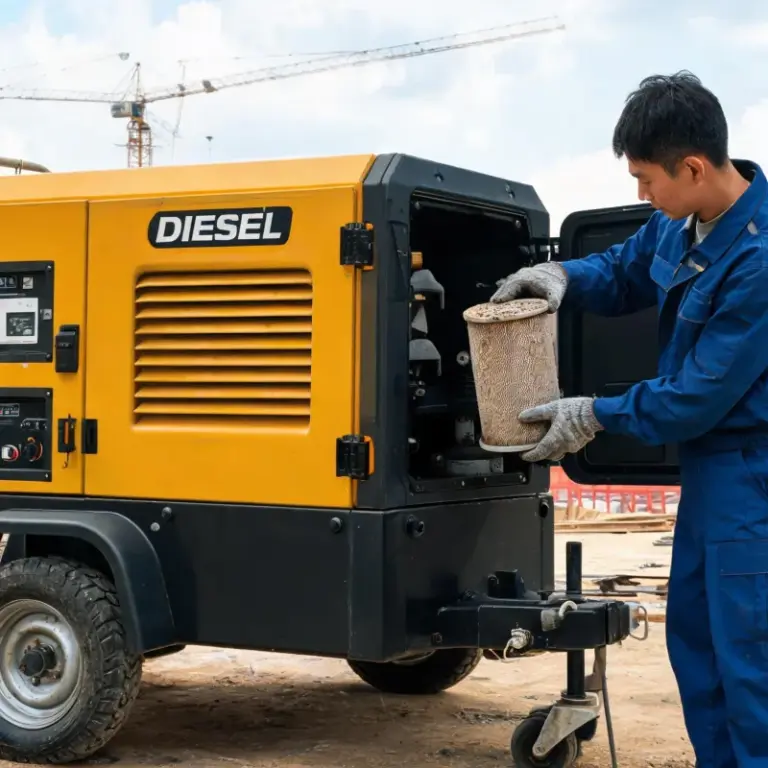
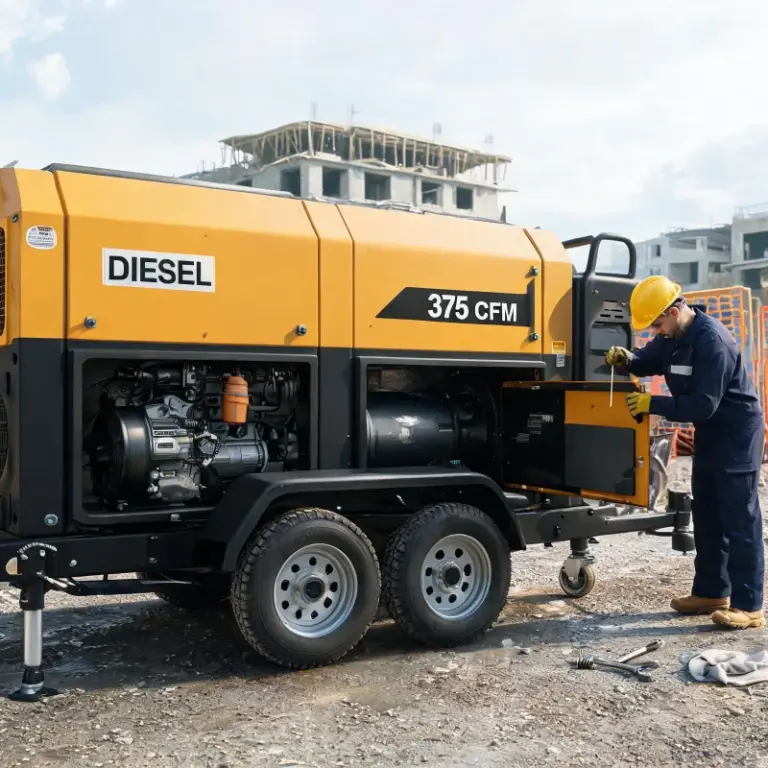
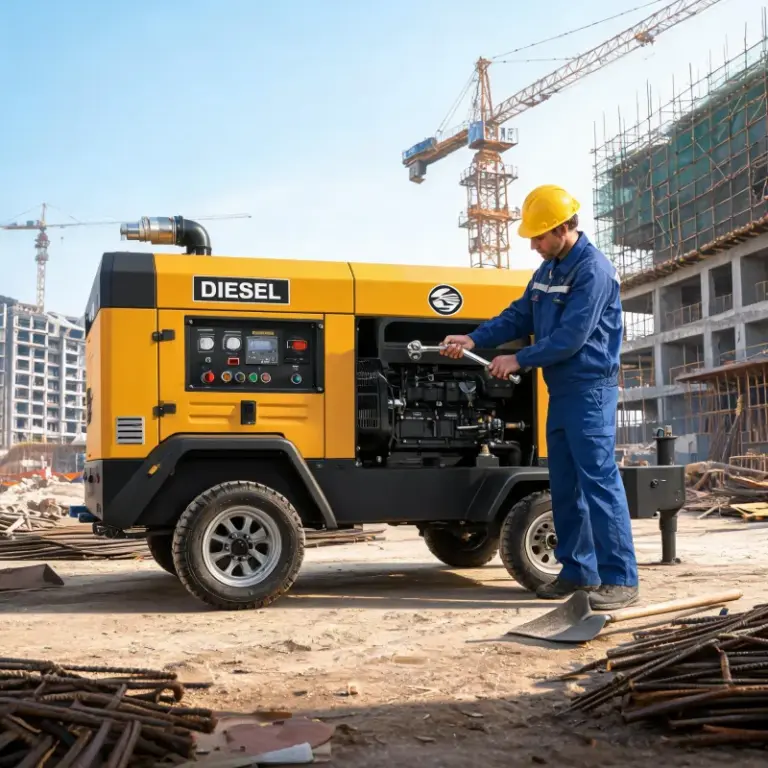
Atlas Copco takes the top spot for its consistent design focus on user-accessible maintenance. All standard models come with tool-free access panels for oil, filter, and fluid checks. Your crew can complete a daily pre-operation inspection in 10 minutes or less, no extra tools required.
Filter change intervals stretch to 500 operating hours, 100% longer than many older competing models. Integrated digital diagnostics track filter life and fluid quality automatically, so you don’t have to guess when service is needed.
According to Compressed Air and Gas Institute (CAGI) 2023 data, extended filter change intervals like these reduce annual maintenance labor hours by 32% for mobile units. That’s a full week of labor you can reallocate to other project needs. I walked a job site outside Dallas last year that switched three older units to Atlas Copco, and they reported cutting 8 hours of maintenance per month per unit.
2. Kaeser
Kaeser comes in second, with a strong focus on standardized parts and simple diagnostic systems. Its service design positions all routine maintenance points on one side of the unit, so your crew doesn’t have to walk around or crawl under the compressor to complete checks.
Kaeser’s filter change interval is 400 operating hours, slightly shorter than Atlas Copco, but still 60% longer than the industry average for older designs. The brand’s global parts network means you can get a replacement filter or sensor anywhere in the U.S. within 24 hours, eliminating long wait times for service.
3. Ingersoll Rand
Ingersoll Rand rounds out the top three, with a solid balance of upfront cost and maintenance ease. Its next-generation portable line added tool-free access to routine points in 2022, closing the gap with top leaders. Diagnostic systems are straightforward, and don’t require specialized training to read error codes.
The main tradeoff is slightly shorter filter change intervals at 300 hours, so you’ll spend a bit more time on routine service than the top two brands. But for smaller operations that run less than 1000 hours a year, this difference is negligible.
I’ve worked with Ingersoll Rand units on small road projects across the Midwest, and I’ve found their maintenance design is more than sufficient for teams that don’t run their compressors 24/7.
Actionable Guidance for Procurement Teams
When evaluating units for your fleet, prioritize maintenance design over upfront cost alone. Most low-maintenance models carry a 5% to 10% higher upfront price, but the labor and downtime savings pay back that premium within 24 to 36 months, per CAGI 2023.
Ask your supplier for a clear breakdown of how much time is required to complete each routine maintenance task. Many suppliers will share average labor hours per service stop, which you can use to compare brands directly.
If you operate in remote areas with limited access to parts, prioritize brands with large local distribution networks. A 2-day wait for a $20 filter can turn into $100,000 in downtime for a large infrastructure project, which far outweighs any small upfront savings you get from a lesser-known brand.
Always request a live walkthrough of the unit’s maintenance access before purchasing. Pictures in a catalog don’t tell you how tight the access panel is, or how easy it is to reach the oil dipstick. I’ve turned down multiple purchases after a walkthrough revealed poor design that would add unnecessary work for my crew.
实施清单
- Measure your typical operating CFM requirement before evaluating brands
- Inspect access panels for component accessibility in person if possible
- Confirm local part availability for your selected brand
- Schedule a full walkthrough with the supplier’s maintenance team
- Document all routine maintenance steps for your field crew
维护提示
- Complete a 15-minute visual check before each day of operation
- Change air filters according to the scheduled interval, don’t extend
- Keep a log of all maintenance tasks to track labor hours
- Check fluid levels daily to avoid avoidable component damage
- Calibrate diagnostic sensors once every 12 months
Further Reading
- Diesel Portable Air Compressor Maintenance for Construction Site Operations
- Routine Maintenance Guide for Two Stage Screw Diesel Portable Air Compressor
- Beginner’s Step-by-Step Routine Maintenance Schedule for Diesel Portable Screw Air Compressor
- Top Maintenance Tips & Scenario Selection for Diesel Portable Air Compressor
- Emerging Predictive Maintenance Trends for Diesel Portable Screw Air Compressors
- Annual Maintenance Cost Breakdown for Diesel Portable Air Compressors
- Routine Maintenance for Diesel Portable Air Compressors: Tips for Independent Contractors
- Step by Step Guide to Replacing Head Gaskets for Diesel Portable Air Compressor
About the Author

Frequently Asked Questions
Which brand has the easiest routine maintenance for general field use?
Based on our ranking and field testing, Atlas Copco’s standard portable diesel screw line is the easiest to maintain.
What is the most important factor for maintenance ease?
Accessibility of routine maintenance points is the top factor, followed by filter change interval length.
How much can I save annually with a low-maintenance unit?
CAGI 2023 data shows average annual savings of 20% on total operational costs for low-maintenance models.
Does this ranking apply to large high-pressure custom units?
No, this ranking only covers standard 185 CFM to 750 CFM units for general construction and infrastructure work.
Do integrated diagnostics add unnecessary cost to the unit?
Integrated diagnostics add a small upfront cost, but cut unplanned downtime by 40% on average per CAGI 2023 data.
How often should I complete routine maintenance for a portable unit?
Complete a 15-minute pre-operation check daily, and full service every 300 to 500 operating hours depending on your brand.