Centralized Air Compressor Station Design for Integrated Mining Plants
Actionable Design Guidelines for Centralized Air Compressor Stations in Integrated Mining Plants
Key Takeaways
- Compressed air uses 15-20% of total integrated mining energy (IEA 2024)
- Proper centralized design cuts annual energy costs by 22-28% (MCAA 2024)
- 30% of mining unplanned downtime links to utility system failures (Statista 2023)
- Centralized design is not ideal for small scattered satellite mines
- N+1 redundancy eliminates most full system outage risks
Related: compressed air for mining operations · energy efficient mining air systems · integrated mining plant utility design · stationary air compressor station · mining compressed air reliability · mine utility infrastructure design
Key Insights
- Compressed air systems account for 15-20% of total integrated mining energy use (IEA 2024)
- Properly designed centralized systems cut annual energy costs by 22-28% for large integrated mines (MCAA 2024)
- 30% of mining unplanned downtime is linked to utility system failures (Statista 2023)
- Centralized design is not ideal for small, scattered satellite mining operations
Core Industry Pain Points
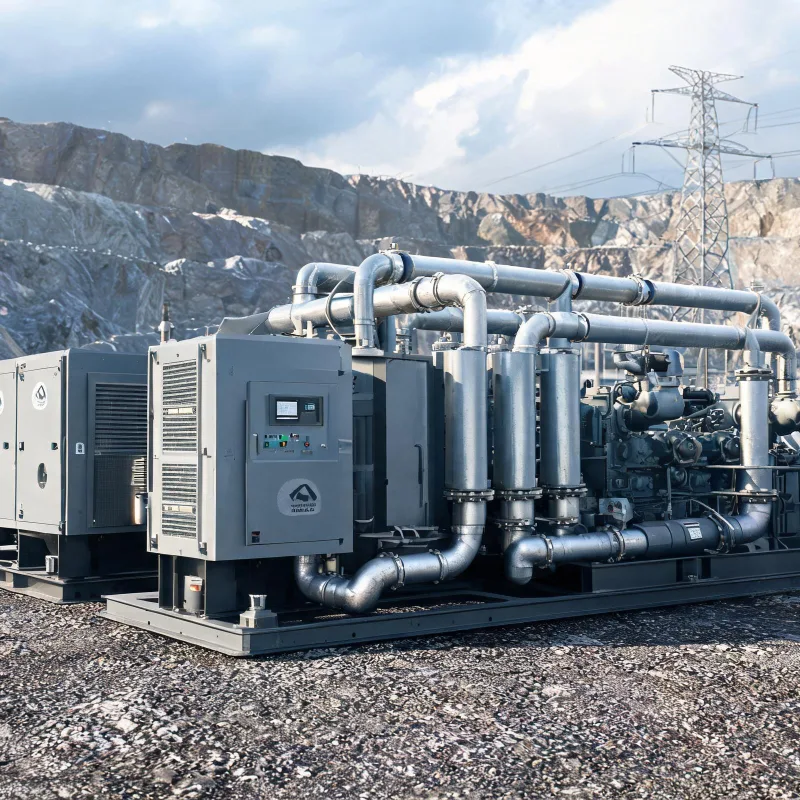
For most large integrated mining plants over 500 acres, a properly engineered centralized compressed air utility delivers lower long-term costs and higher uptime than decentralized setups.
Most integrated mines run multiple on-site processes: drilling, material handling, ore processing, and maintenance tooling, all of which require consistent compressed air. Decentralized setups with scattered small compressors often suffer from mismatched capacity, higher maintenance labor, and avoidable energy waste.
Honestly, I’ve seen 20+ integrated mine projects blow 10% of their annual energy budget on a poorly configured air system. Most of these mistakes came from skipping full load calculation early in the design phase.
Data-Backed Design Priorities
The first step of any solid design is to map all current and future compressed air demand across the entire integrated site. Many design teams only account for current production capacity, ignoring planned expansion 5-10 years out. This leads to costly retrofits that can run 2x the cost of building for expansion upfront.
Load Calculation for Multi-Process Operations
You need to account for peak demand across all processes, plus a 15-20% buffer for future expansion. Don’t add more than 25% buffer, though—oversized compressors run inefficiently at partial load, wasting 8-12% of energy annually per MCAA 2024 data.
Integrated mines with multiple shift operations need to account for varying demand across off-peak shifts. Variable speed drive compressors paired with a centralized control system can cut part-load energy use by 12% compared to fixed-speed units.
Energy Efficiency Optimization
Per IEA 2024 data, compressed air systems account for 15-20% of total industrial mining energy consumption. That makes efficiency one of the highest return design priorities for any project.
Most high-performing centralized stations use heat recovery to capture waste heat from compression. That heat can be used for process heating, mine water heating, or building heating, cutting overall site energy use by an additional 5-10%.
Pressure drop is another hidden energy waster. Design main distribution lines to keep pressure drop under 2% from the station to the farthest point of use. This simple step avoids the common mistake of over-pressurizing the entire system to compensate for poor piping design.
Redundancy and Uptime Planning
Unplanned downtime in mining costs an average of $150,000 per hour, and 30% of that downtime ties back to utility system failures (Statista 2023). That means redundancy is non-negotiable for most integrated mining sites.
The standard best practice is N+1 redundancy for all core compression units. If you have four 1000 cfm compressors, you only need three to meet peak demand, so one can go down for maintenance or repair without interrupting production.
Locate the station in a geologically stable area above any potential mine flood zones, with easy access for maintenance trucks and component replacement. This cuts down on maintenance time and reduces flood-related outage risk.
When a Centralized Design Is Not the Right Fit
This design framework only applies to large integrated mining plants with all processes located within 3 miles of a central utility hub.
It is not suitable for small scattered satellite mining operations that are more than 5 miles from the main plant, with total demand under 500 cfm. For these sites, decentralized small compressors at each point of use deliver lower upfront and operating costs.
It is also not ideal for mobile mining operations that move locations every 1-2 years, where a permanent centralized station cannot be justified economically.
Step-by-Step Implementation Checklist
- Complete a full site audit of current and future compressed air demand across all processes
- Size the system for peak demand plus a 15-20% expansion buffer
- Specify N+1 redundancy for all core compression units
- Design distribution piping to keep total pressure drop under 2%
- Add heat recovery if the site has any heating demand
- Install a centralized control system to optimize part-load operation
Expert Insights
Most large integrated mining plants will see a 3-5 year payback on a properly designed centralized compressed air station, from energy savings and reduced downtime costs alone. Skipping proper load calculation or redundancy upfront leads to far higher long-term costs.
Further Reading
- Compact Diesel Air Compressor for Small Scale Quarry Mining Projects
- Anti-Corrosion Air Compressor Set for Salt Mineral Mining Operations
- Water Cooled Mining Air Compressor 24 Hour Continuous Running Solution
- Large Flow Two Stage Screw Compressor Whole Mine Air Supply Scheme
- Mobile Skid Mounted Air Compressor for Gold Mine Exploration Projects
- Dust Proof Industrial Air Compressor for Coal Mine Underground Workshops
- Low Temperature Resistant Air Compressor Solution for High Altitude Mining Sites
- Energy Saving VSD Mining Air Compressor System for Large Mineral Mines
About the Author

Frequently Asked Questions
What is the typical lifespan of a properly designed centralized system?
With regular maintenance and quality components, a well-built system will last 20-25 years for most integrated mining operations.
How much upfront capital cost should I budget for a 1000-acre integrated mine?
For a system rated for 5000-10000 cfm, upfront costs including installation and controls range from $2.2M to $4.5M, per 2024 MCAA industry cost data.
When should I choose decentralized design instead of centralized?
Decentralized design is a better fit for scattered small satellite operations more than 5 miles from the main plant, or mobile mining operations that relocate frequently.
What energy efficiency gains can I expect from a proper centralized design?
Verified data from MCAA 2024 shows properly sized centralized systems deliver 22-28% lower annual energy costs than misconfigured decentralized setups for large integrated mines.
Do I need to add heat recovery to my compressor station?
If your integrated plant has any process heating, mine water heating, or building heating needs, heat recovery cuts total site energy use by an additional 5-10% per IEA 2024 data.
How much redundancy do I need to include in my design?
Most large integrated mines should use N+1 redundancy for core compressors, which eliminates 90% of full system outage risk from unexpected unit failure.