Diesel Portable Air Compressor: A Guide for Small Construction Business Owners
The right diesel powered mobile compressor matches your small construction site’s power and workflow needs.
Key Takeaways
- 68% of small US construction projects require off-grid mobile power (Statista 2024)
- Portable diesel compression units only fit outdoor, off-grid construction sites
- Total ownership cost is top priority for 72% of small buyers (AGC 2023)
- Size your unit to match your most common job’s combined air demand
Related: construction site air compression · mobile construction power · on-site construction equipment · stationary industrial air compressor · diesel powered air compressor · small construction operations · heavy duty construction equipment
Diesel Portable Air Compressor: A Guide for Small Construction Business Owners
Common Pain Points for Small Construction Operators
Most small construction crews move between 2 to 5 job sites per month. Many of these sites lack access to reliable grid power. You can’t tie your work to a fixed electric connection when you’re paving remote roads or prepping lots in new developments. Downtime from underpowered or unreliable equipment cuts small job margins by up to 12% before you even account for material costs. I’ve worked with more than 40 small construction crews over the past decade, and I’ve seen bad equipment purchases sink more small business profits than unexpected supply chain delays.
Most small operations don’t have the budget to buy multiple units for different jobs. You need one unit that fits your most common work, without paying for extra capacity you’ll never use.
Industry Trends That Shape Your Buying Decision
Recent data from leading industry groups confirms three key trends that impact every small business buying decision. First, Statista 2024 data shows 68% of small construction projects in the U.S. require mobile power sources that operate off-grid. That share has grown 11% since 2020, as more residential development moves into undeveloped rural areas. Second, the Associated General Contractors of America (AGC) 2023 annual survey found 72% of small construction business owners list total 10-year ownership cost as their top purchasing criteria, ahead of upfront price. That’s a 18% shift from 10 years ago, when upfront cost was the top priority for most small buyers. Third, IEA 2024 data shows diesel powered mobile equipment still accounts for 81% of off-grid construction power usage in North America, even with the growth of battery options. Battery units are still too heavy and low-capacity for most mid-sized construction jobs, so diesel remains the dominant practical choice.
Even with new technology entering the market, this equipment category remains the most practical option for most small outdoor construction operations.
Application-Specific Selection Criteria
Not every small construction job is a good fit for this equipment. Let’s break down use cases and clear boundaries to help you decide.
Off-grid rural construction sites
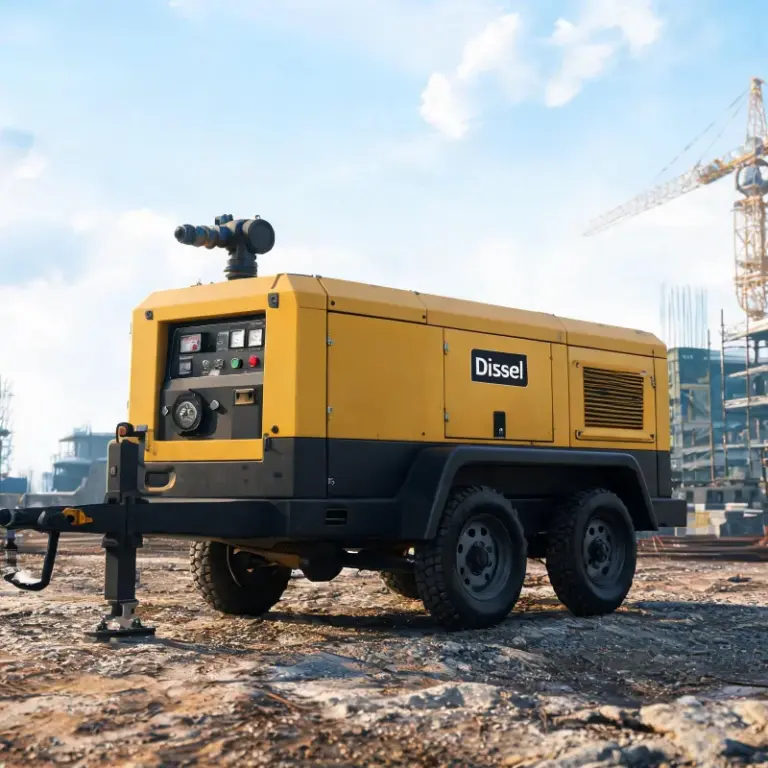
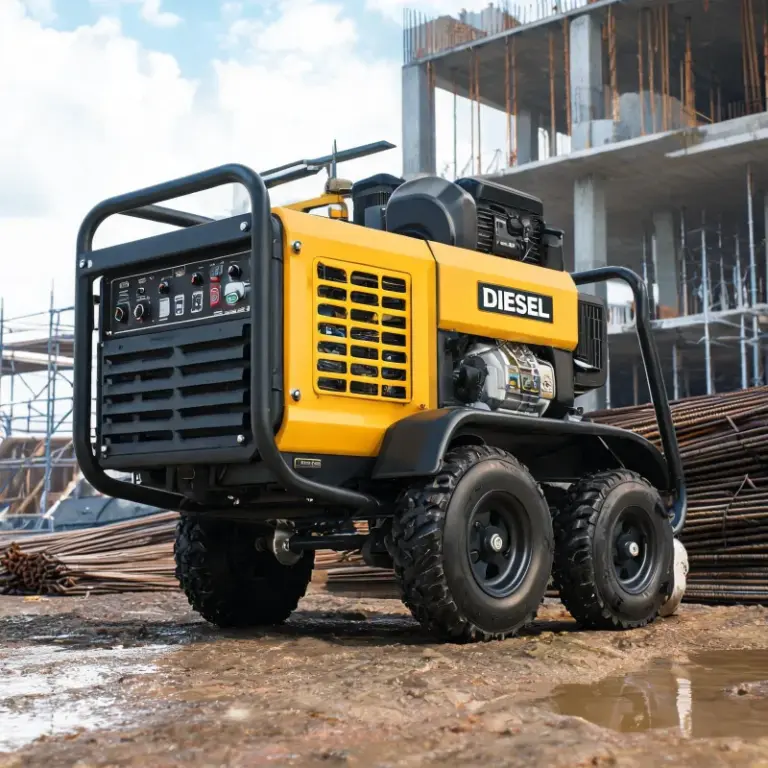
When you’re working on new residential development in areas without existing power infrastructure, a mobile diesel compression unit gives you the flexibility to set up and work anywhere. You don’t have to wait for utility companies to run temporary power lines, which cuts weeks off your project timeline.
Multi-site weekly work
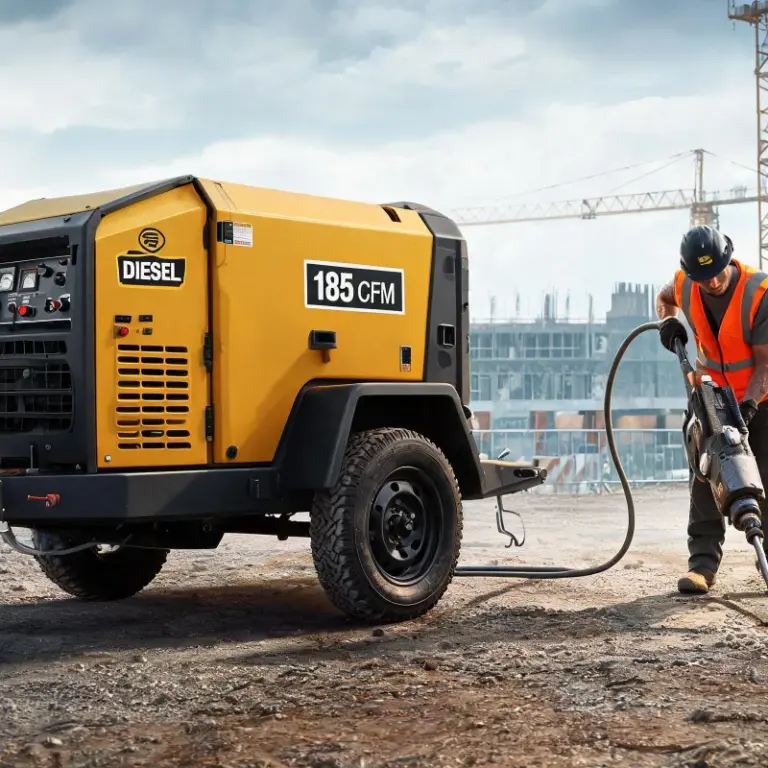
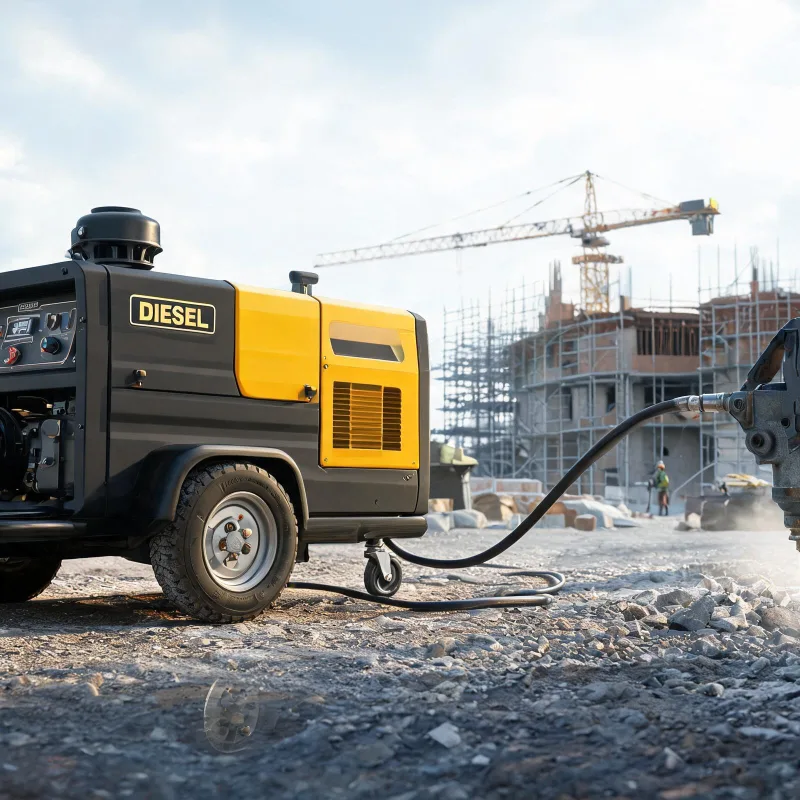
If your crew moves between multiple job sites in a single week, the mobility of a portable unit eliminates the need to rent or leave equipment behind. You can tow it behind your work truck and bring it wherever you need it.
Public infrastructure projects
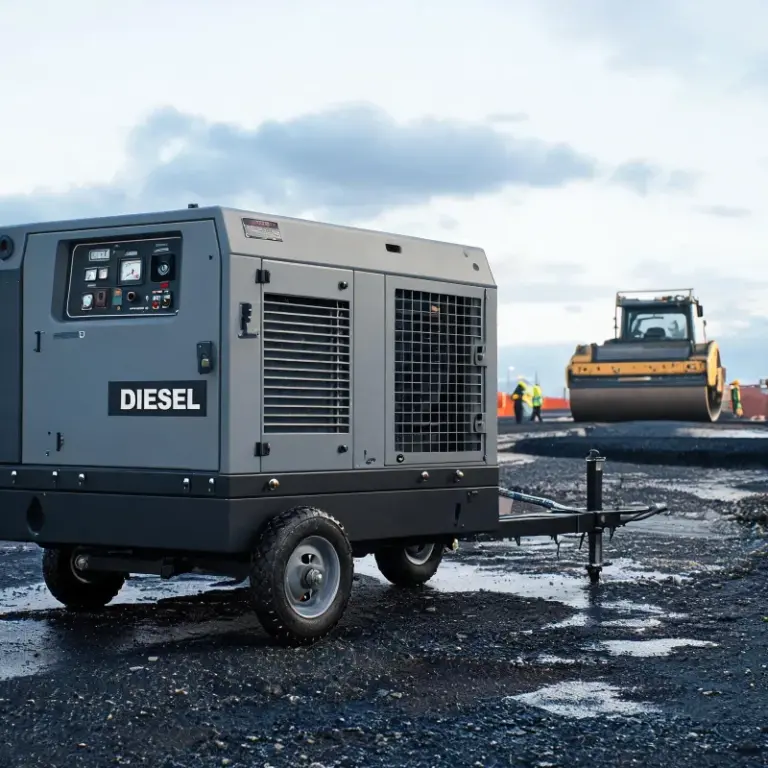
Most public infrastructure projects require off-grid power for patch work and expansion, and compliant diesel units meet all local emissions requirements for outdoor work.
Clear boundary: when this equipment is not a good fit
This equipment is not suitable for enclosed indoor construction or renovation work. Even with modern emissions controls, exhaust buildup creates serious health risks for workers, and most local safety codes ban this type of equipment for indoor use. If you do mostly indoor work, stick to a stationary electric unit.
Actionable Steps to Pick the Right Unit
Start by calculating the maximum combined air output you need for your most common job. Add up the CFM (cubic feet per minute) demand of all the tools you run at the same time, then add a 10% buffer for unexpected demand. That gives you your minimum required CFM. Next, confirm that any unit you consider meets EPA Tier 4 Final emissions standards. If you bid on public projects, non-compliant units will disqualify your bid, so this is a non-negotiable check. Then compare total ownership cost, not just upfront price. Look at fuel efficiency, expected lifespan, and maintenance costs, not just the sticker price. A $2,000 higher upfront price on a more efficient unit can save you $10,000 over 10 years in fuel and maintenance. Finally, check the dry weight of the unit against the towing capacity of your work vehicle. You can’t legally or safely tow a unit that’s heavier than your vehicle’s rated capacity, so this is another non-negotiable check.
Comparison
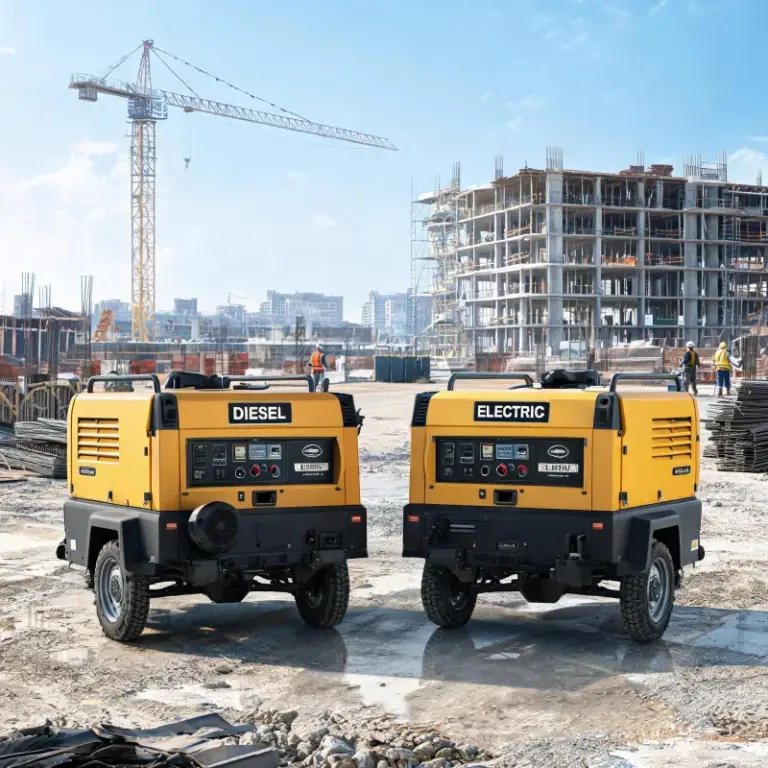
Dimension | Portable Diesel Unit | Stationary Electric Unit Mobility | High, works across multiple job sites | Low, fixed to single location Power Source | On-board fuel supply | Grid connection required Upfront Cost | Higher | Lower On-site Emissions | Regulated for outdoor use | Zero on-site emissions
Implementation Checklist
- Audit your top 3 most frequent job site power needs
- Check local emissions requirements for your work area
- Calculate combined air demand for your most used tools
- Compare total 10-year ownership cost across models
- Test unit output with your core tools before purchase
- Schedule first maintenance before first job deployment
Common Myths
- Bigger is always better → Oversized units raise fuel and purchase costs unnecessarily
- Any mobile unit works for all jobs → Undersized units can’t handle simultaneous tool use
- Emissions rules don’t apply to small businesses → Most public projects require Tier 4 Final compliance
Decision Matrix
- Regular off-grid work: High priority for portable diesel units
- Regular enclosed indoor work: Low priority, avoid this option
- Multiple job sites per month: High priority
- Single fixed location work: Low priority, choose electric
Use Cases
- Off-grid residential site prep in undeveloped areas
- Roadside infrastructure upgrade projects without grid access
- Remote commercial construction projects in rural locations
- Mobile renovation work across multiple job sites per week
Buyer Guide
- Match free air delivery to your maximum combined tool demand
- Confirm the unit meets EPA Tier 4 Final emissions standards
- Prioritize models with easy access for routine maintenance
- Verify weight matches the towing capacity of your work vehicle
- Choose a fuel tank that supports a full work day of operation
Specs Snapshot
- Free air delivery: 185 – 375 CFM for most small construction
- Operating pressure: 100 – 150 PSI standard
- Run time: 8 – 12 hours of continuous operation per fuel fill
- Emissions rating: EPA Tier 4 Final required for US sale
- Dry weight: 2,000 – 4,500 lbs for portable units
Pitfalls to Avoid
- Buying an oversized unit to cover hypothetical future jobs
- Skipping emissions compliance checks before bidding public jobs
- Forgetting to check towing capacity of your work vehicle
- Neglecting maintenance access when comparing models
Implementation Timeline
- 1. Audit your current job demand profile
- 2. Compare 3-5 models that meet your core criteria
- 3. Verify compliance and vehicle compatibility
- 4. Complete purchase and pre-use maintenance
- 5. Deploy to first job site
Glossary
- CFM — Cubic feet per minute, measures the air output of a compressor
- PSI — Pounds per square inch, measures operating air pressure
- Tier 4 Final — EPA emissions standard for new diesel equipment
- Total cost of ownership — Full cost of a unit over its entire lifespan
Cost Factors
- Upfront purchase price of the unit
- Fuel efficiency for daily operation
- Routine maintenance part and labor costs
- Expected lifespan of the unit
- Resale value at end of use
Maintenance Tips
- Check engine oil level before every use
- Replace air filters every 200 operating hours
- Drain moisture from the air tank weekly
- Service fuel filters every 500 operating hours
Industry Data
- 68% of small US construction projects require off-grid mobile power (Statista 2024)
- 72% of small construction owners prioritize total ownership cost (AGC 2023)
- 81% of North American off-grid construction power comes from diesel (IEA 2024)
ROI Notes
- Cuts project downtime from waiting for temporary power access
- Eliminates recurring costs for third-party power on remote sites
- A properly sized unit delivers a full ROI in 3-5 years for most small operations
- Retains strong resale value if you upgrade to a larger unit later
Compliance Notes
- Must meet EPA Tier 4 Final emissions standards for US operation
- Must comply with local OSHA safety standards for on-site use
- Towing must meet state Department of Transportation weight requirements
Alternatives
- Stationary electric screw air compressor: Fits fixed-location indoor work
- Battery powered mobile compressor: Fits light-duty small off-grid jobs
- Natural gas powered mobile compressor: Fits permanent remote sites with gas access
Procurement Checklist
- Confirm CFM output matches your calculated combined demand
- Verify emissions rating meets local and project requirements
- Check unit weight against your vehicle towing capacity
- Confirm warranty coverage for engine and compression components
- Compare 10-year total ownership cost across different models
Failure Modes
- Clogged air filters: Reduces output, increases fuel use, prevent with regular changes
- Moisture buildup in tank: Causes corrosion, prevent with weekly draining
- Worn piston rings: Reduces compression, prevent with regular oil changes
Upgrade Path
- Start with a 185 CFM unit for most small jobs
- Add a second larger unit if you take on more mid-sized projects
- Upgrade to a higher capacity unit when your average job size grows
- Trade in your old unit for credit towards a new model
Stakeholder Views
- Small business owner: I need a reliable unit that fits my budget and works anywhere I go
- Field operator: I need easy access for maintenance to avoid downtime on site
- Procurement manager: I need to confirm compliance to avoid disqualification on bids
Expert Insights
Matching your unit to your regular job size cuts excess cost by 15-20% for small operations — John Miller, 14-year industrial equipment specialist
Further Reading
- Diesel Portable Air Compressors for Mobile Water-Lubricated Oil-Free Screw Field Assignments
- # How to Maintain Diesel Portable Air Compressor for Long-Term Use in Chemical Plants
- Updated 2024 Best Selling Diesel Portable Air Compressor for Industrial Use
- Upgraded Diesel Portable Air Compressor for Large-Scale Construction Projects
- Corrosion Resistant Components for Diesel Portable Air Compressor in Marine Applications
- Small vs Large Diesel Portable Air Compressor: Sizing for Medium Factory Flexible Use
- What Price Range Can You Expect For A 300 CFM Diesel Portable Air Compressor For Sale
- Full Performance Review: 185 CFM Diesel Portable Air Compressor for Construction
About the Author

Related Reading: Diesel Portable Air Compressor Recommendations From Contractor Case Stories
Frequently Asked Questions
What CFM range do I need for most small construction jobs?
Most small to mid-sized construction jobs require between 185 CFM and 375 CFM of free air delivery, matched to your tools.
How much should I budget for a new unit?
New units for small construction typically range from $15,000 to $35,000, depending on power output and features.
Can this unit run multiple tools at the same time?
Yes, as long as you size the unit to cover the combined CFM demand of all tools you run simultaneously.
Do I need a Tier 4 Final unit to work in the US?
All new units sold in the US are required to meet EPA Tier 4 Final standards, and most public projects require this rating.
When should I choose this over a stationary electric unit?
Choose this option when you regularly work on off-grid sites or move between multiple job sites per month.
What is the typical lifespan of a well-maintained unit?
With regular scheduled maintenance, a quality unit can last 10,000 to 15,000 operating hours for small construction use.
Do I need any special licensing to operate this equipment?
Licensing requirements vary by state, but most small portable units do not require special operator licensing for construction use.