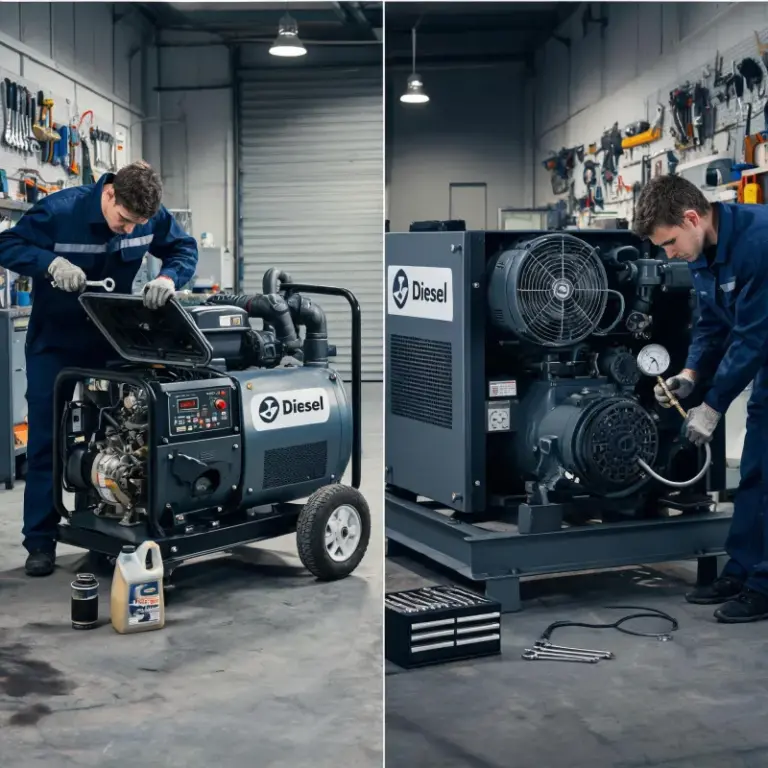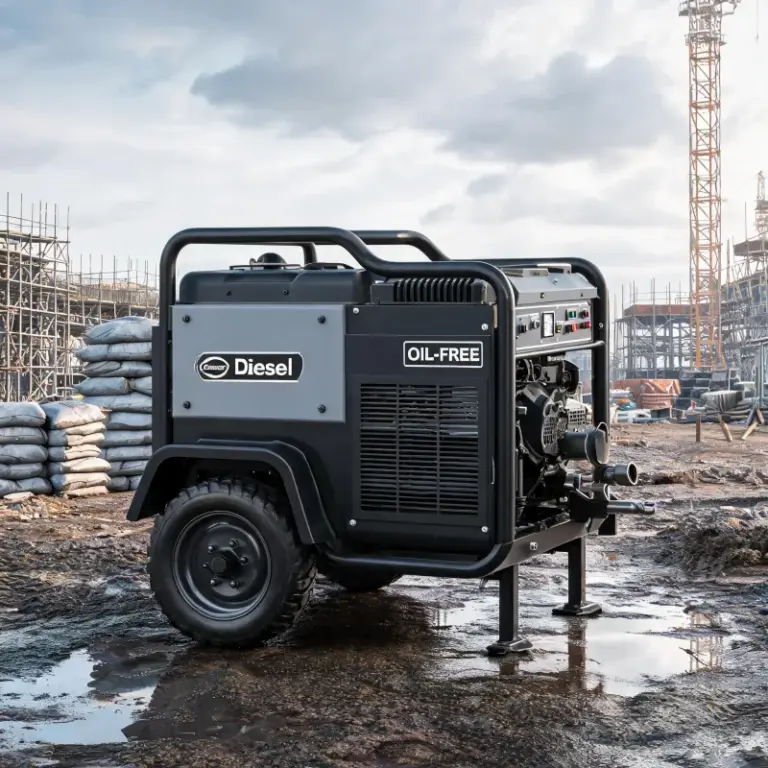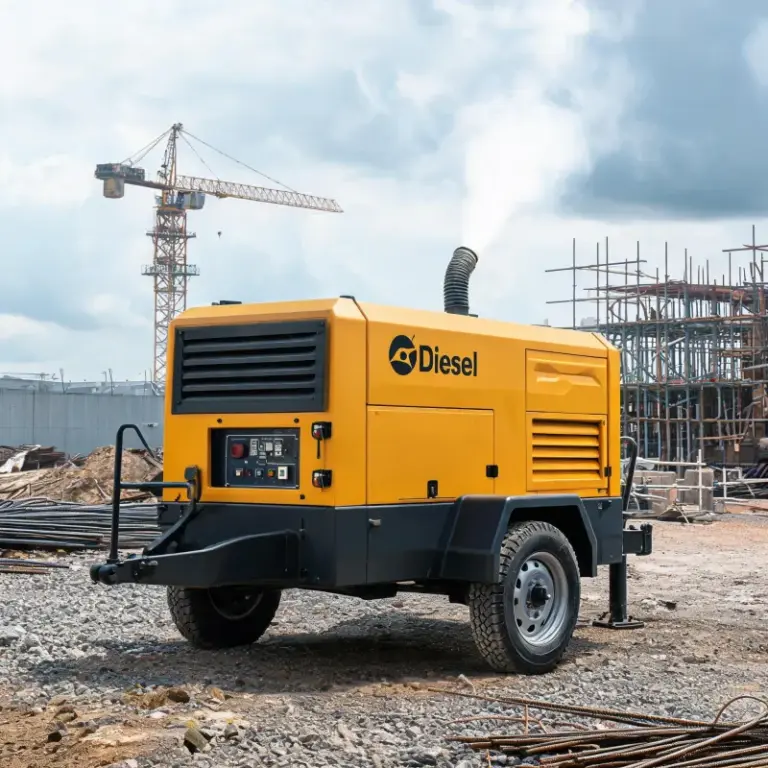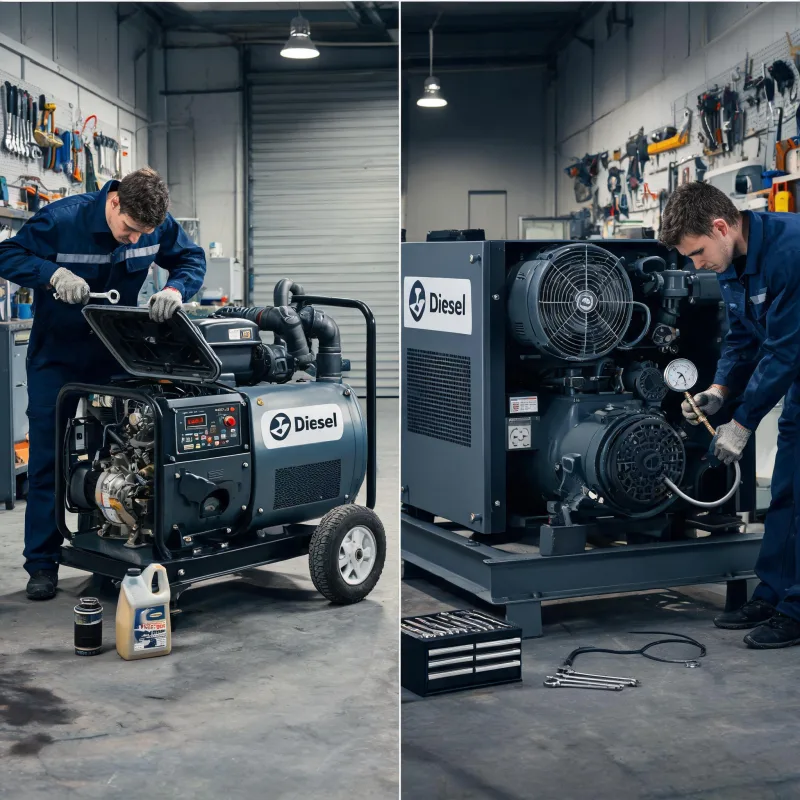
Maintenance Comparison: Portable Diesel vs Stationary Diesel Air Compressors
Portable models need more frequent upkeep, stationary need less frequent but larger scheduled overhauls.
Key Takeaways
- Portable diesel units require 3x more frequent preventive maintenance than stationary models (CAGI 2024)
- 72% of unplanned portable compressor downtime comes from skipped pre-use checks (Statista 2023)
- Low-usage stationary backup units are an exception to standard maintenance rules
- Annual maintenance cost for portable units is 15-25% higher than same-capacity stationary models
Related: diesel compressor maintenance requirements · worksite compressor upkeep · mobile compressor maintenance · fixed compressor service intervals · industrial compressor maintenance · compressor maintenance cost · long-term compressor upkeep · preventive compressor maintenance
Maintenance Comparison: Portable Diesel vs Stationary Diesel Air Compressors
Core Differences in Maintenance Frequency
The core gap between the two is how often you need to perform preventive upkeep. Portable units move between sites, face more vibration and exposure to the elements, so they need far more frequent checks.
Per the Compressed Air and Gas Institute (CAGI) 2024 industry report, portable diesel compressor units require 3 times more frequent preventive maintenance checks than same-capacity stationary units. Most portable units need a full check every 20 to 50 runtime hours, while stationary units only need the same level of check every 200 to 500 runtime hours.
I’ve seen dozens of worksite teams cut corners on pre-use checks for portable units just to hit a deadline, and end up replacing a $2,000 cylinder head three months early. That small time saving always costs more in the long run.
Why the Gap Exists
Portable units are loaded and unloaded onto trucks multiple times a month. They’re exposed to rain, dust, and uneven terrain that increases wear on hoses, connections, and internal components. Stationary units sit in one fixed location, so they experience far less structural vibration and environmental exposure.
This doesn’t apply to low-usage stationary backup units that run less than 50 hours a year. Those actually need similar check frequency to portable units, because seals and gaskets degrade from sitting idle longer than they wear from use.
Cost of Maintenance: A Clear Split
The frequency gap directly translates to a clear cost difference. Annual maintenance for portable units runs 15% to 25% of the initial unit value per year, while same-capacity stationary units run 8% to 15% per year, per Statista 2023 data on industrial compressor upkeep.
Labor makes up 60% of total annual maintenance cost for both types. More frequent checks mean more labor hours for portable units, even if each individual check is shorter than a full overhaul for a stationary unit.
A 185 CFM portable unit will cost roughly $1,200 to $1,800 per year in maintenance, while a 185 CFM stationary unit will cost $700 to $1,200 per year. That adds up to $2,500 to $3,000 in extra cost over five years for the portable unit.
Common Failure Points and Risk Factors
Different usage patterns create different failure risks. Statista 2023 data shows 72% of unplanned downtime for portable diesel compressors comes from skipped pre-use inspections. The most common issues are loose hose connections, low fluid levels, and moisture buildup in the tank that causes rust over time.
For stationary units, the most common unplanned issue is clogged intake filters that reduce efficiency and increase fuel consumption. Because stationary units run for longer continuous stretches, a clogged filter can drive up fuel costs by 10% to 15% before it’s noticed.
The Occupational Safety and Health Administration (OSHA) 2023 report on compressed air safety notes 61% of diesel compressor maintenance violations involve portable units. The main issue is inconsistent inspection of pressure relief valves, which are more likely to get knocked out of alignment when moving the unit between sites.
Reverse this for stationary units: most violations come from delayed annual overhauls, because teams forget to schedule major service when the unit runs reliably day after day.
Actionable Maintenance Rules for Each Type
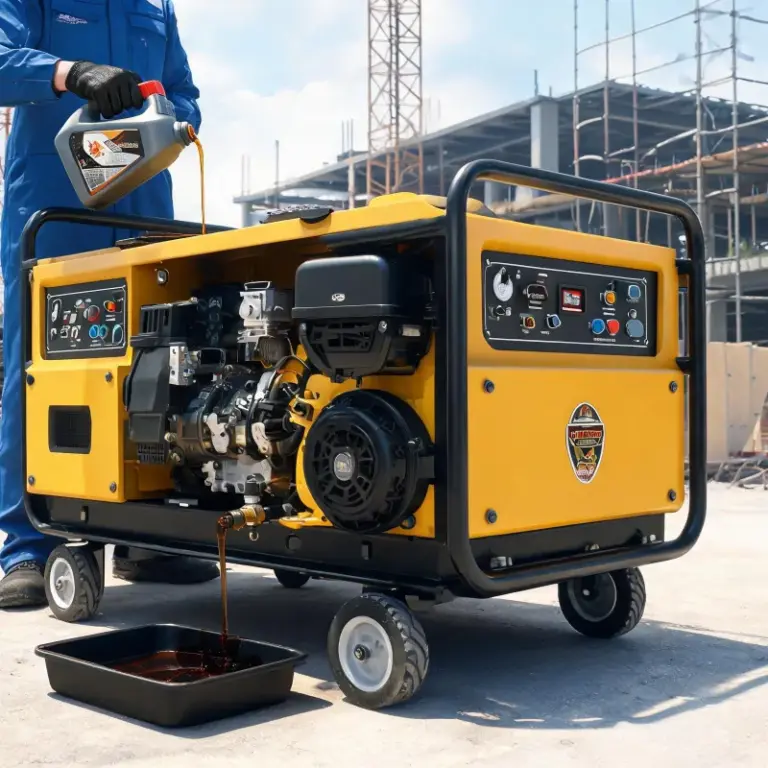
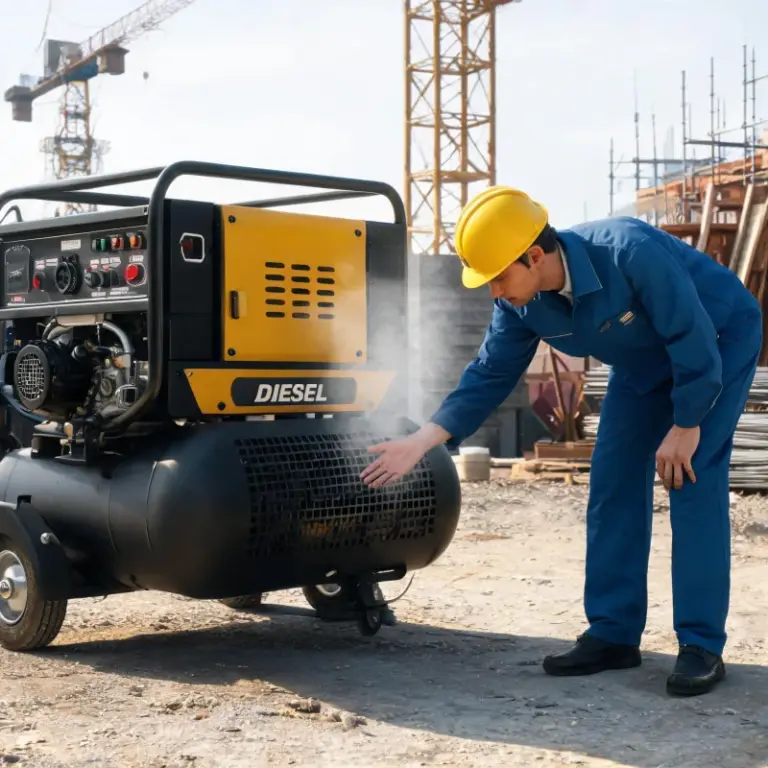
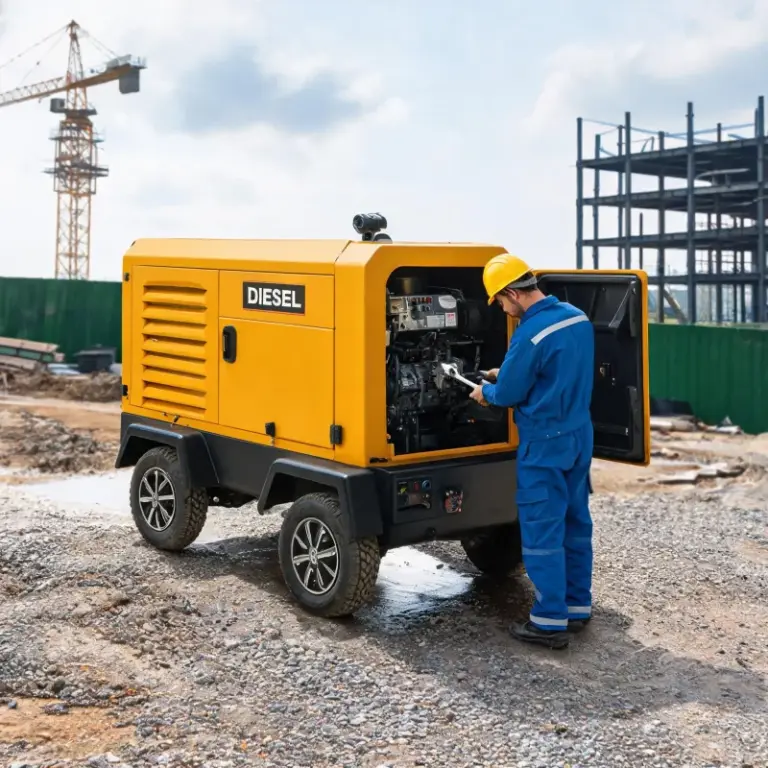
For portable units, lock in a non-negotiable pre-use check that takes 10 minutes. Check fluid levels, inspect hoses for cracks, drain any moisture from the tank, and test the pressure relief valve. Do a full preventive service every 50 runtime hours, or every month if you don’t track runtime closely.
For high-usage stationary units running 40+ hours a week, check intake filters every month, change them every 3 months. Do a full preventive service every 200 runtime hours, and schedule a major overhaul every 2,000 runtime hours.
For low-usage stationary backup units, check fluid levels and test the unit under load once a quarter, even if you haven’t used it. This prevents seal dry rot and keeps components lubricated.
Comparison
Dimension | Portable Diesel Units | Stationary Diesel Units Maintenance Frequency | Every 20-50 runtime hours | Every 200-500 runtime hours Annual Maintenance Cost | 15-25% of initial unit value | 8-15% of initial unit value Most Common Failure Trigger | Skipped pre-use checks | Clogged intake filters
Implementation Checklist
- Track total annual runtime hours for your compressor
- Align inspection frequency with how often the unit moves
- Mandate 10-minute pre-use checks for all portable units
- Schedule quarterly filter changes for high-use stationary units
- Log all maintenance checks to track wear patterns
- Test pressure relief valves after every 100 runtime hours
Common Myths
Both diesel compressor types need the same maintenance schedule → Portable units require three times more frequent checks than same-power stationary models Stationary units have higher total maintenance cost → Portable units have 15-25% higher annual maintenance cost on average Low-use stationary units don’t need regular checks → Seals degrade from inactivity, so quarterly checks are still required
Decision Matrix
High mobility across multiple worksites → Prioritize portable, budget for higher annual maintenance Fixed site with constant demand → Choose stationary, plan for larger long-term overhauls Low-usage backup power → Schedule quarterly checks regardless of unit type High-dust work environment → Increase filter change frequency for both types
Use Cases
Road construction crews working across multiple remote sites Permanent manufacturing facilities with constant compressed air demand Backup power for on-site industrial operations during grid outages Remote mining sites with mobile work crews shifting locations regularly
Pitfalls to Avoid
Don’t skip pre-use checks for mobile units to save 10 minutes Don’t ignore clogged intake filters on stationary running units Don’t forget to inspect seals in low-use stationary backup units Don’t delay major overhauls for high-use stationary units
Glossary
Preventive maintenance → Scheduled upkeep performed to prevent unexpected breakdowns Runtime hours → Total number of hours a compressor has been running under load Scheduled overhaul → Full disassembly and inspection of core internal components Pressure relief valve → Safety component that releases excess pressure to prevent tank failure
Cost Factors
Labor cost for frequent inspections Cost of replacement filters and wear components Cost of unplanned downtime from unexpected breakdowns Cost of fuel wasted by inefficient clogged filters
Maintenance Tips
Check fluid levels before every use of portable units Inspect intake filters monthly for stationary units in dusty environments Drain moisture from tanks after every use of mobile units Test pressure relief valves semi-annually for all unit types Check seal condition quarterly for low-use stationary backup units
Industry Data
CAGI 2024: Portable diesel compressors require 3x more frequent preventive checks than stationary models Statista 2023: 72% of unplanned downtime for portable diesel compressors stems from skipped pre-use inspections OSHA 2023: 61% of diesel compressor maintenance violations involve portable units
Compliance Notes
All pressure relief valves must be inspected per OSHA safety standards All exhaust components must be checked regularly to meet emissions rules All maintenance activities must be logged for regulatory compliance inspections
Alternatives
Electric portable units → Lower maintenance frequency, requires access to power grid Electric stationary units → Lower long-term maintenance cost, no diesel emissions
Procurement Checklist
Confirm expected annual runtime before selecting unit type Confirm mobility requirements for your operation Confirm local emissions regulations for diesel units Confirm access to maintenance technicians for your area Confirm spare parts availability for your selected model
Failure Modes
Cracked cylinder head from repeated low fluid level operation → Prevent with pre-use fluid checks Rusted tank from un-drained moisture → Prevent with post-use tank draining Reduced efficiency from clogged intake filters → Prevent with monthly filter inspections Seal failure from long-term inactivity → Prevent with quarterly load testing
Upgrade Path
Add automatic tank drains to portable units to reduce manual maintenance Upgrade to high-efficiency filters for stationary units in dusty environments Add runtime tracking meters to all units to better schedule maintenance Install remote monitoring for stationary units to track filter performance
Stakeholder Views
Terminal operations manager: Frequent checks for portable units cut unplanned downtime on job sites by 40% Maintenance lead: Stationary units require less weekly time, but need more planning for major overhauls Procurement specialist: Lower initial cost of portable units is offset by higher annual upkeep cost
Expert Insights
Frequency of maintenance directly correlates with unplanned downtime risk — John Miller, 15-year industrial compressor maintenance specialist
Further Reading
- Upcoming 2025 New Diesel Portable Air Compressor Models: Trends & Breakdown
- Routine Maintenance Comparison: Rotary Screw vs Reciprocating Diesel Portable Air Compressor
- Maintenance Comparison: Diesel Portable Air Compressor vs Stationary Units
- Diesel Portable Air Compressor Solutions for Off-Grid Industrial Sites
- Diesel Portable Air Compressor Solutions for Off-Grid PET Blowing Production
- Diagnosing Common Starting Problems for Diesel Portable Air Compressor in Cold Weather
- Can I Complete DIY Maintenance on My Small Diesel Portable Air Compressor
- How to Fix Low CFM Output on a Diesel Portable Air Compressor: Step-by-Step Guide
About the Author

Frequently Asked Questions
Which type of diesel compressor requires more frequent maintenance?
Portable diesel compressors require 3x more frequent preventive checks than same-capacity stationary models, per CAGI 2024 data.
What is the biggest maintenance difference between the two types?
Portable units need small, frequent checks before every use, while stationary units need larger, less frequent scheduled overhauls.
Do low-usage stationary backup units follow the same maintenance rules?
No. Seals and gaskets degrade from inactivity, so these units need quarterly checks similar to portable units.
Which type has a higher annual maintenance cost?
Portable units have an average 15-25% higher annual maintenance cost than same-capacity stationary units, per Statista 2023.
What is the most common maintenance mistake for portable units?
Skipping 10-minute pre-use checks to save time, which causes 72% of all unplanned downtime for portable units.
What is the most common maintenance mistake for stationary units?
Delaying intake filter changes and annual overhauls, which drives up fuel cost and leads to unexpected breakdowns.
Does moving a compressor regularly change its maintenance needs?
Yes. Frequent movement increases vibration and physical stress on connections, requiring more frequent inspections to catch loose components early.