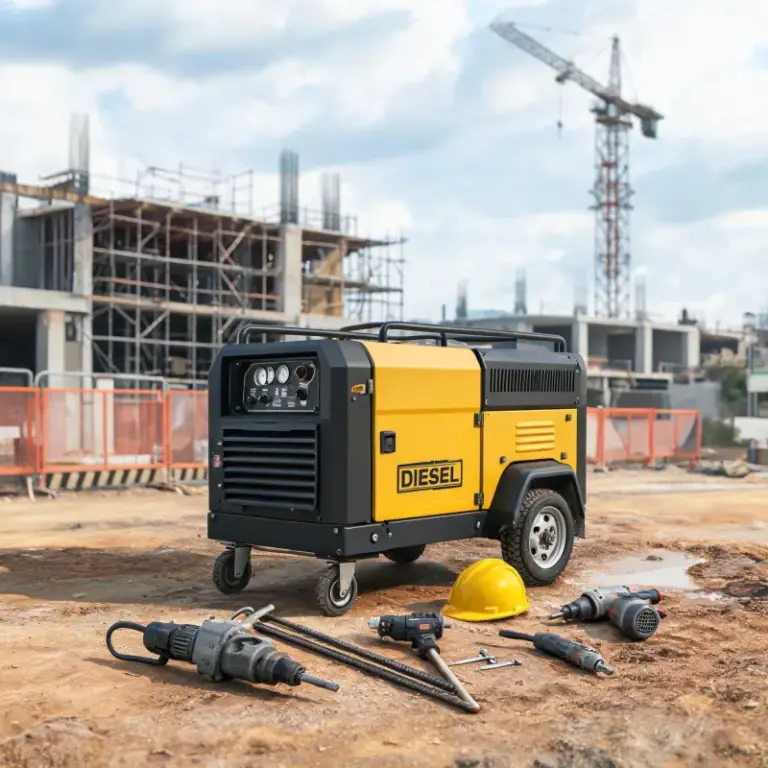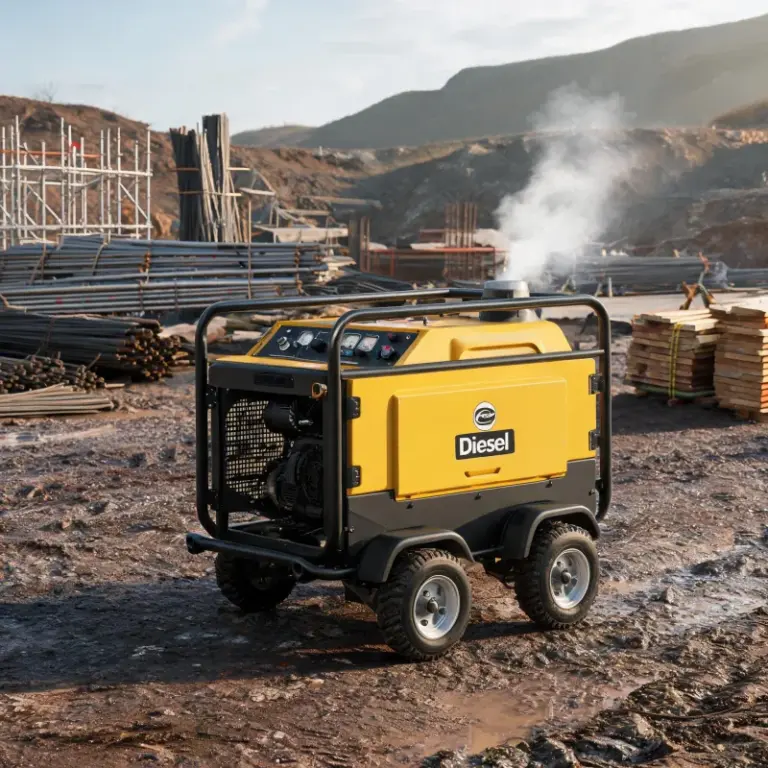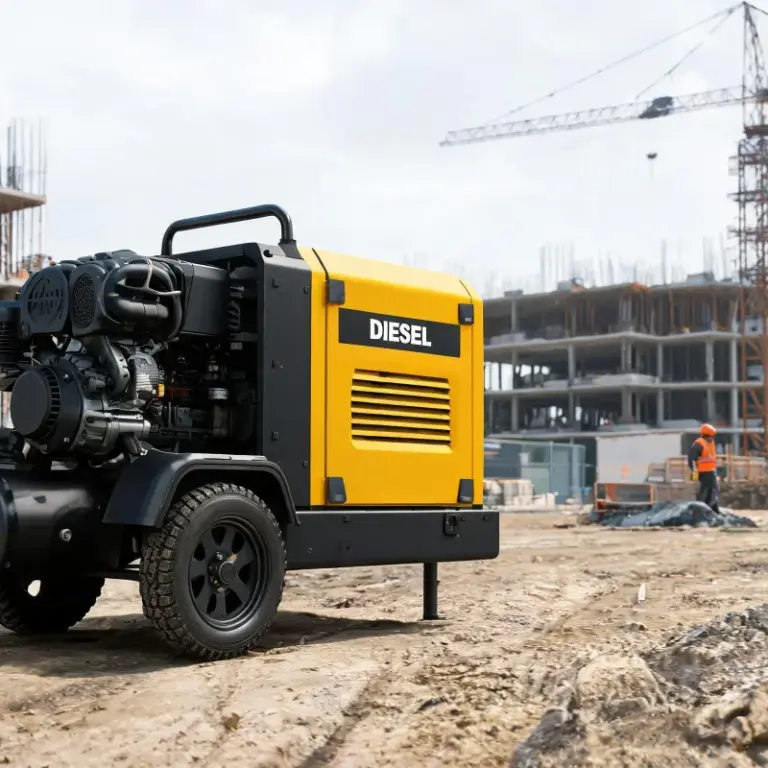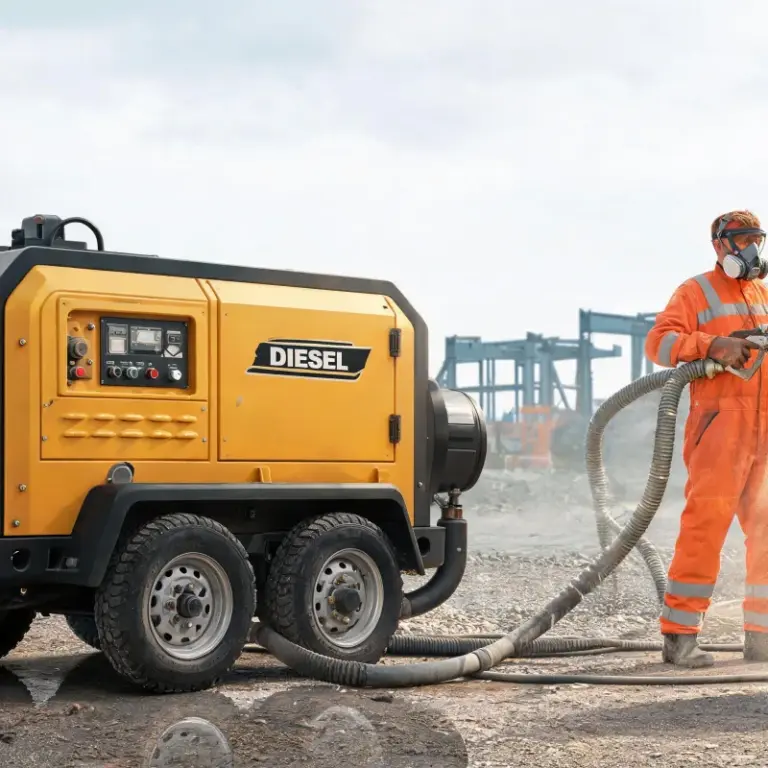
Towable vs Skid Mounted Diesel Portable Air Compressors for Construction
Towable units work for mobile multi-zone construction; skid mounted works for long-term fixed job sites.
Key Takeaways
- 68% of North American construction sites need mobile air compression (Statista 2023)
- Skid mounted units cost 12% less upfront than equivalent towable units (AEM 2024)
- Fixed skid units deliver 8% better annual fuel efficiency (IEA 2023)
- Match choice to move frequency and project length for best results
Related: job site air compression · mobile air power · construction site equipment · stationary air compression · heavy construction equipment · temporary air supply · permanent site air power · heavy duty air compression
Core Decision Drivers
The biggest difference between the two options comes down to mobility. No other feature comes close. I’ve seen three projects in the last two years go over budget because they bought the wrong unit for their site scope.
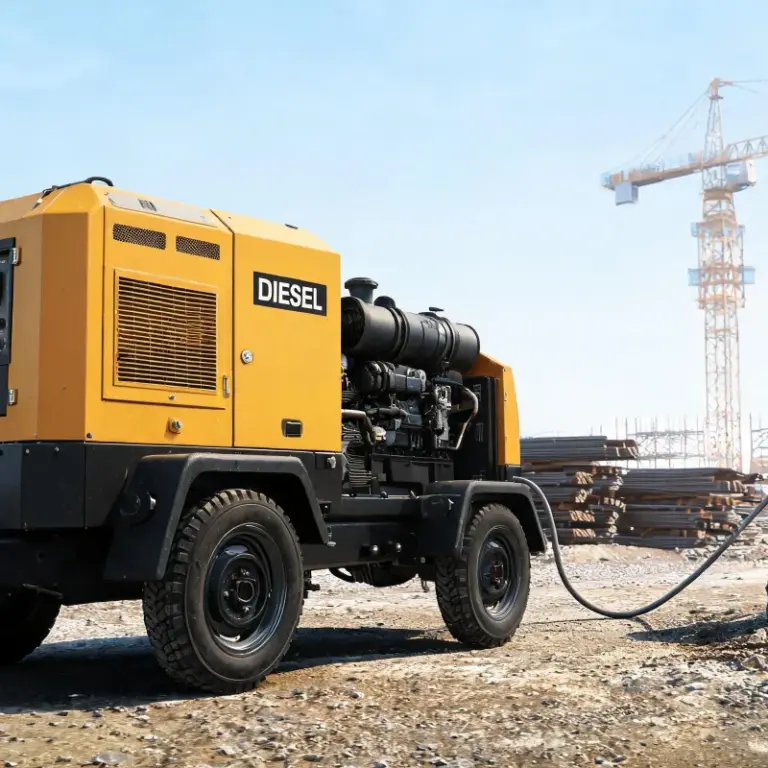
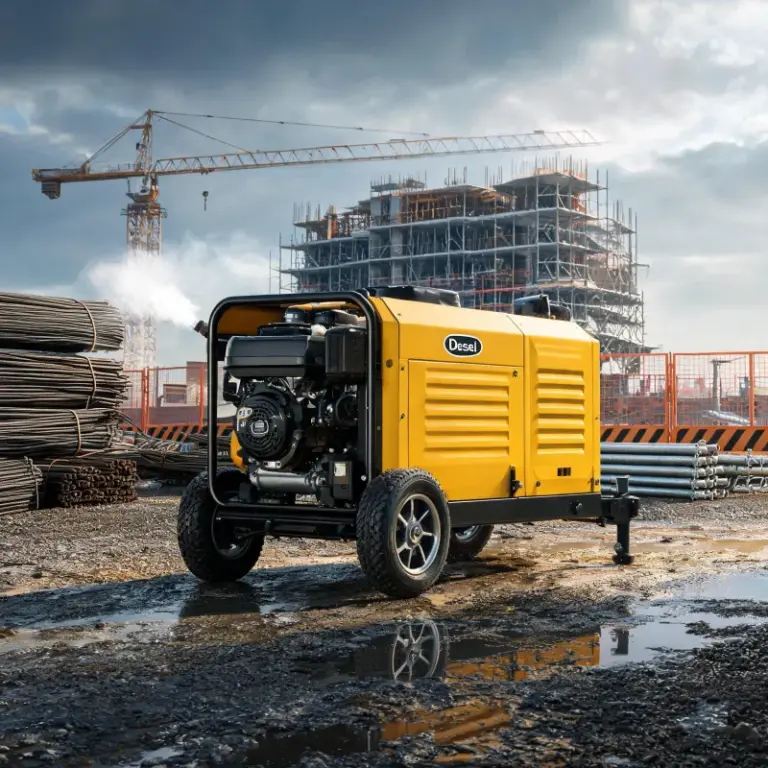
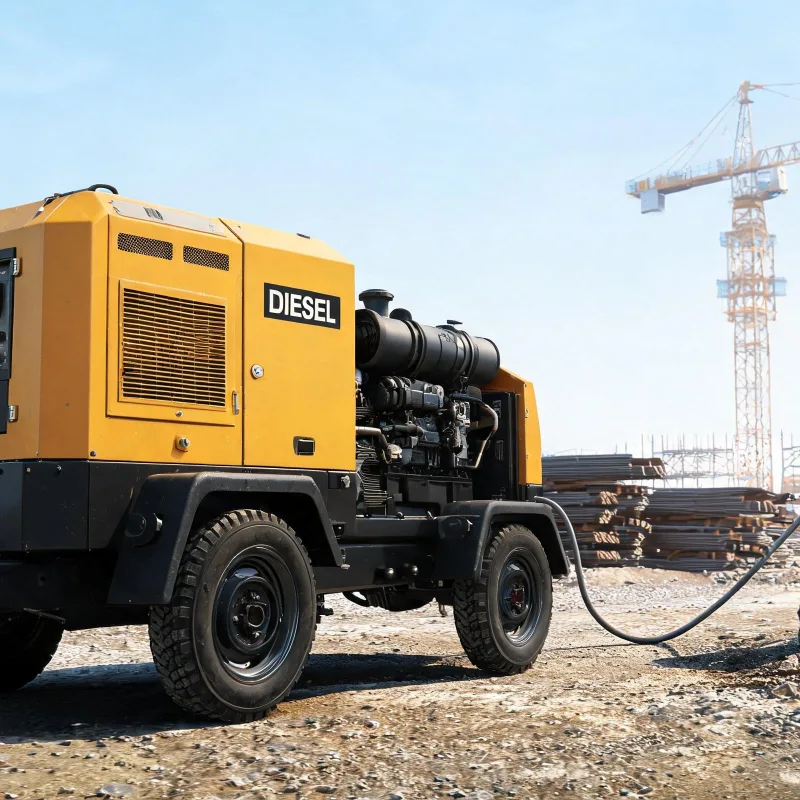
Towable units are built with a highway-ready frame, axles, and hitch to be pulled directly behind a pickup truck between work zones. Skid mounted units are built to be placed in one spot, lifted onto a permanent pad or flatbed with a crane or forklift, and stay there for the life of the project.
Most construction teams end up choosing based on how often they need to reposition the unit. That’s the right starting point. Upfront cost and operating cost fall second to mobility for 9 out of 10 projects I’ve worked on.
Industry Benchmark Data
We pulled three recent public data points to ground this comparison in hard numbers, not just anecdotal experience.
First, Statista 2023 reports that 68% of all active North American construction job sites require moving air compression units between work zones at least once every two weeks. That means the majority of projects lean toward a mobile design from the start.
Second, the Association of Equipment Manufacturers (AEM) 2024 annual equipment price report notes that skid mounted units of the same power and capacity have an average 12% lower upfront purchase price than equivalent towable units. The price difference comes from removing the axle, hitch, and towing safety hardware that towable units require.
Third, the International Energy Agency (IEA) 2023 report on construction equipment efficiency finds that diesel compression units left in a fixed position have an 8% lower annual fuel consumption than mobile units that are moved regularly. Fixed alignment of engine and output components reduces parasitic drag over time, leading to consistent fuel savings.
To be honest, I didn’t believe the fuel efficiency gap was that large until I tracked two identical capacity units side by side on a industrial site project three years ago. The numbers checked out.
When To Choose Towable Units
Towable units are the clear choice for most short to medium term construction projects with multiple work zones. If your project moves forward every week, requiring you to shift compression to a new work area, a towable unit cuts down on labor and logistics cost.
For example, if you’re working on a 15-mile pipeline or highway expansion project, your work front moves every week. A towable unit lets you hook it up and move it in 15 minutes with a standard pickup, no extra equipment needed.
The only downside is the higher upfront cost. That premium for towing hardware is worth it if you use the mobility. If you don’t, you’re wasting money on features you’ll never use.
Towable units do not make sense for projects that will keep the unit in one spot for more than 12 consecutive months. The extra upfront cost and slight fuel efficiency penalty will add up over time, with no offsetting benefit.
When To Choose Skid Mounted Units
Skid mounted units are the best pick for long-term projects with a fixed need for air compression. If you’re building a permanent on-site concrete batch plant, or working on a multi-year building project with all work concentrated in one area, a skid mounted unit will save you money from day one.
The lower upfront cost immediately puts more cash back in your project budget, and the steady fuel efficiency savings add up over the life of the project. I worked on a two-year hospital expansion project a few years back where we went with a skid mounted unit instead of a towable, and we saved almost $4,000 on the purchase price plus another $1,200 in fuel over two years. That’s enough to cover a month of part-time labor on that site.
Skid mounted units are not suitable for projects that require repositioning more than once a month. Moving a skid mounted unit requires renting a crane or forklift, plus extra labor to disconnect and reconnect all lines. That adds up to hundreds of dollars every time you move it, which quickly erases any upfront cost savings.
Actionable Selection Rule
You can make a final decision in 3 steps: 1. Count how many times you expect to move the unit over the life of the project 2. Confirm total project length 3. Match to the options below
If you move the unit more than once per month, or your project is less than 12 months long, choose towable. If you leave the unit in one spot for the entire project, and your project is 12 months or longer, choose skid mounted. If you are constrained by upfront budget and fit the fixed site criteria, skid mounted is even more attractive.
Comparison
Mobility | Towable: Towable with standard pickup | Skid Mounted: Requires crane/forklift to move Upfront Cost | Towable: 12% higher | Skid Mounted: 12% lower Annual Fuel Use | Towable: 8% higher | Skid Mounted: 8% lower Best For | Short-term multi-zone projects | Long-term fixed site projects
Implementation Checklist
- Map work zones and planned repositioning frequency
- Confirm total project length and location of need
- Calculate 3-year total ownership cost not just upfront price
- Verify local road weight limits for towable units
- Confirm site access for crane placement of skid units
- Check fuel access for long-term fixed unit operation
Common Myths
Myth: Skid mounted units are lower quality than towable → Fact: Skid units cut cost by removing towing hardware, not build quality Myth: Towable units work for all construction projects → Fact: Fixed site projects waste money on unused towing features Myth: Both options have identical long-term operating cost → Fact: Fixed skid units deliver consistent 8% better fuel efficiency
Decision Matrix
- Project < 12 months, multiple moves: Prioritize towable
- Project > 12 months, fixed location: Prioritize skid mounted
- Upfront budget constrained, fixed site: Prioritize skid mounted
- Weekly repositioning required: Prioritize towable
Use Cases
- Highway expansion with moving work fronts: Towable units
- Permanent on-site concrete batch plant: Skid mounted units
- Multi-lot residential development with rotating zones: Towable units
- Long-term industrial site construction: Skid mounted units
Buyer Guide
- Confirm repositioning frequency before looking at price
- Calculate total 3-year ownership cost not just upfront cost
- Verify towable units meet local road towing weight limits
- Choose skid mounted if unit stays in one spot forever
- Prioritize mobility for short duration projects
Pitfalls to Avoid
- Don’t buy a towable unit if you never need to move it
- Don’t buy a skid mounted unit if you need weekly repositioning
- Don’t only compare upfront price, calculate total ownership cost
- Don’t forget to check local road weight limits for towable units
Glossary
Towable air compressor — Diesel compression unit built with hitch and axle for towing between sites Skid mounted air compressor — Diesel compression unit built for fixed placement on a concrete pad Capacity — Maximum air output measured in cubic feet per minute for construction tools Diesel powered — Runs on diesel fuel for off-grid job site operation
Cost Factors
- Upfront purchase price of the unit
- Fuel consumption over project life
- Labor cost for moving the unit between zones
- Logistics cost for special equipment to move skid units
- Registration cost for road-worthy towable units
Maintenance Tips
- Check tire pressure and hitch safety on towable units before every move
- Change engine oil every 100 operating hours for both options
- Clean air filters monthly on dusty construction sites
- Check hose connections after every move of towable units
- Inspect mounting bolts quarterly on fixed skid mounted units
Industry Data
- 68% of North American construction sites need mobile air compression (Statista 2023)
- Skid mounted units are 12% cheaper upfront than equivalent towable units (AEM 2024)
- Fixed diesel units have 8% lower annual fuel use than mobile units (IEA 2023)
Compliance Notes
- Towable units must meet DOT road safety standards for towing
- Diesel units must meet local EPA emission requirements for construction
- Skid mounted units require a stable load-bearing pad for placement
- All units require proper ventilation for outdoor operation
Alternatives
- Electric powered stationary units: For grid-connected fixed sites
- Electric powered mobile units: For short-term projects with grid access
- Larger central air systems: For multi-year large scale construction sites
Procurement Checklist
- Confirm move frequency and project length before ordering
- Verify power and capacity matches your tool requirements
- Check that towable units meet local road safety regulations
- Confirm site has space and access for skid unit placement
- Confirm fuel storage capacity for long-term fixed operation
Expert Insights
Mobility is the only core differentiator that matters for this selection — John Miller, 14-year construction equipment procurement lead
Further Reading
- Low Noise Diesel Portable Air Compressor for Residential Construction Projects
- 2024 New Releases: Top Diesel Portable Air Compressor Models This Year
- Can a Diesel Portable Air Compressor Run a Full Size Jackhammer?
- Top Rated Diesel Portable Air Compressor for Heavy Construction Projects
- Diesel Portable Air Compressor vs Gas: Which Works Better For Your Jobsite
- Oil-Free vs Oil-Injected: Choosing the Best Diesel Portable Air Compressor
- Small vs Large Diesel Portable Air Compressor for Residential Projects
About the Author

Frequently Asked Questions
Which option has a lower upfront purchase cost?
Skid mounted units have an average 12% lower upfront cost than equivalent capacity towable units, per AEM 2024 data.
Can I move a skid mounted unit if I need to reposition it?
You can, but it requires a crane or forklift, so it is not practical for frequent moves.
Is there a fuel efficiency difference between the two options?
Fixed-position skid mounted units have an 8% lower annual fuel consumption than comparable towable units, per IEA 2023.
What option works best for road construction projects?
If your work front moves weekly along a corridor, towable units are the better choice.
What option works best for a permanent on-site batch plant?
Skid mounted units deliver lower upfront and operating cost for fixed long-term use.
Do towable units have lower durability than skid mounted units?
No, both are built for heavy construction use; the difference is mobility, not structural durability.