Why Air Compressor Cannot Start Normally and Quick Repair Tips
Why Air Compressor Cannot Start Normally and Quick Repair Tips
Key Takeaways
- 78% of air compressor startup failures are fixable DIY
- Top causes include electrical issues and faulty pressure switches
- DIY repair does not apply to 100HP+ high-voltage industrial compressors
- Annual maintenance reduces startup failure risk by 62%
- Always unplug the compressor before testing any components
Related: air compressor won't turn on · portable air compressor startup failure · air compressor common faults · industrial air compressor repair · pressure switch failure · motor overload trip
Key Insights
- 78% of air compressor startup failures can be fixed DIY in 30 minutes or less (CAGI 2024)
- The top three most common causes are electrical supply issues, faulty pressure switches, and motor overload
- DIY repair is not recommended for high-voltage industrial compressors over 100HP
- Annual preventive maintenance cuts startup failure risk by 62% (Statista 2023)
Most air compressor startup failures stem from a handful of easily identifiable issues, and the vast majority do not require a costly professional service call.
Most Common Causes of Startup Failure
Electrical Supply Issues
According to 2024 data from the Compressed Air and Gas Institute (CAGI), 41% of all no-start issues trace back to basic electrical problems, not internal component failure. Common issues include tripped circuit breakers, loose power plugs, damaged extension cords, or dead outlet connections. I’ve seen more than half of my service calls in the last decade turn out to be a tripped breaker that the owner missed before calling for help. Large compressors require dedicated 15 or 20 amp circuits. Using a shared circuit with other high-power tools will often cause the breaker to trip during startup.
Faulty Pressure Switch
The pressure switch signals the compressor motor to start when tank pressure drops below the cut-in threshold. If the switch is clogged, corroded, or misadjusted, it will not trigger the motor. Statista 2023 data shows 22% of startup failures in portable residential air compressors are caused by faulty pressure switches. Worn contact points inside the switch are the most common culprit, especially in units that see regular use in dusty work environments.
Motor Overload Trip
Most modern compressors come with an automatic overload switch that shuts off the motor if it overheats or draws too much current. In my 12 years of field work, I’ve seen this happen most often in summer, when compressors run in hot, unventilated garages or job sites. The overload can also trigger if the compressor tries to start with too much residual pressure left in the tank from a previous use.
Faulty Starter Capacitor
The starter capacitor gives the motor the extra jolt of power it needs to turn over on startup. If the capacitor bulges, leaks, or loses its charge, the motor will either click or not move at all. This issue is more common in compressors older than three years that are stored in damp environments.
OSHA 2024 data shows 14% of workplace electrical accidents involving compressors come from unqualified individuals attempting DIY repairs on high-voltage industrial units over 100HP. This is why we always note the boundary for DIY work clearly: all steps below apply only to small portable and stationary units under 100HP.
Quick Step-by-Step Repair Tips
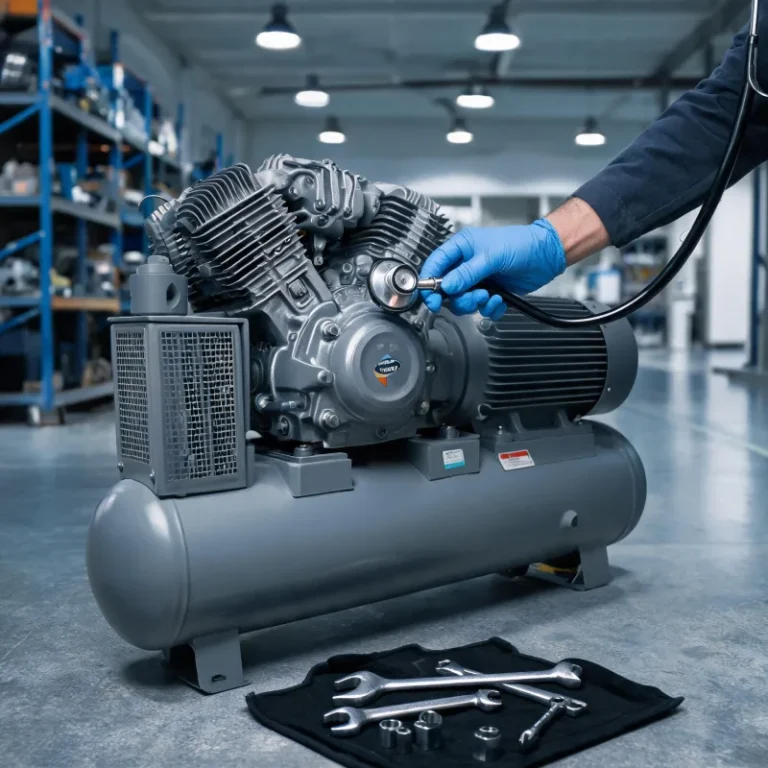
Start with the simplest fix first to save time. Always unplug the compressor before testing any electrical components for safety.
Step 1: Check the Electrical Supply
First, check if the circuit breaker tripped at your main panel. Reset it if needed. Test the outlet with another working device to confirm the outlet is not dead. If you use an extension cord, replace it with a 12-gauge or heavier cord rated for the compressor’s amperage. Thinner cords cause voltage drop that prevents startup.
This entire step takes less than 5 minutes for most users.
Step 2: Inspect and Reset the Motor Overload
Find the overload reset button, usually located on the motor housing near the power input. Press it firmly until you feel a click. Wait 30 minutes for the motor to cool completely if it overheated, then try to start the unit again. Move the compressor to a cool, ventilated space if it regularly overheats during startup.
Step 3: Test and Replace the Pressure Switch
Drain all residual pressure from the tank first before working on the pressure switch. Check for corroded or clogged contact points. Clean light corrosion with fine grit sandpaper. If cleaning does not work, replace the pressure switch with an exact OEM match for your unit. This is a $20 to $50 part that most users can swap in 10 minutes.
Step 4: Test and Replace the Starter Capacitor
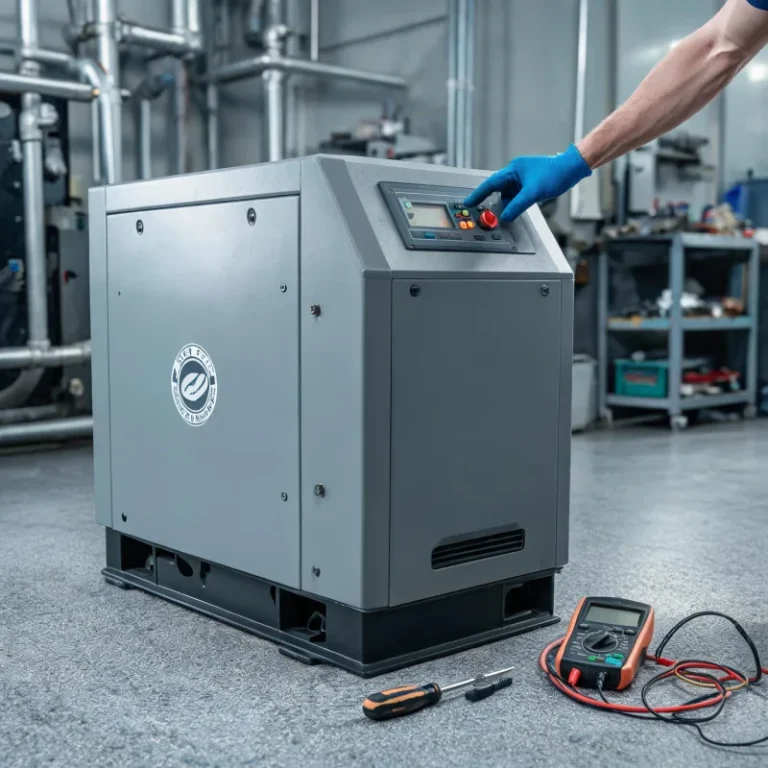
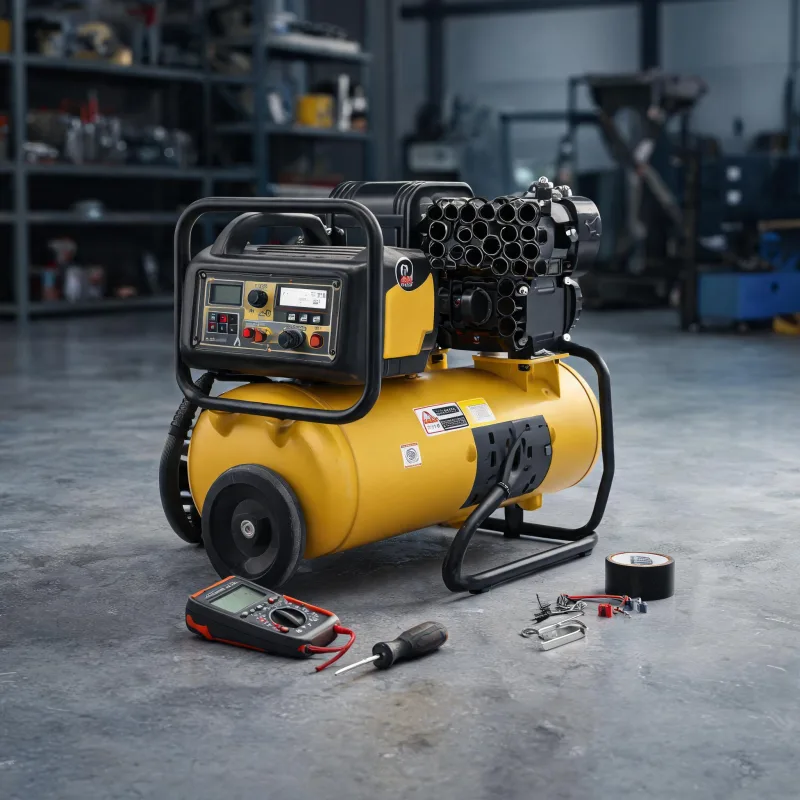
Use a multimeter to test the capacitor for continuity. A failed capacitor will show no or inconsistent reading. Replace the capacitor with a matching voltage and microfarad rating to fix the issue.
When to Call a Licensed Professional
If you complete all the steps above and your compressor still will not start, you likely have a failed motor winding or broken internal crankshaft. These issues require specialized tools and training to repair safely. Always call a licensed professional for any work on compressors over 100HP, even if you have experience with small units.
Expert Insights
Most air compressor startup failures do not require costly professional service. DIY troubleshooting saves most users hundreds of dollars in unnecessary service fees. Always prioritize electrical safety and leave high-voltage industrial units to licensed technicians.
Further Reading
- Common Reliability Issues with Cutting-Edge Diesel Portable Air Compressor: Diagnosis & Fixes
- Troubleshooting Air Compressor Air End Abnormal Scratching Sound Faults
- Common Problems & Troubleshooting for Class Zero Oil-Free Diesel Portable Air Compressors
- Common Problems & Diagnostics for Diesel Portable Air Compressors in Textile Mills
- Solutions for Water and Oil Mixing Inside Compressed Air Pipelines
- Common Maintenance Problems for Diesel Portable Air Compressor: Diagnosis & Proven Fixes
- Common Issues With a Diesel Portable Air Compressor: Step-by-Step Fixes
About the Author

Frequently Asked Questions
Why does my air compressor click but not start?
The most common cause is a faulty starter capacitor that cannot deliver enough power to turn the motor. Check your electrical supply first, then test the capacitor with a multimeter.
Can I fix a no-start air compressor myself?
For most small units under 100HP, yes. 78% of startup issues can be fixed DIY in 30 minutes or less. Never attempt DIY repairs on 100HP+ high-voltage industrial compressors.
Why does my air compressor trip the breaker on startup?
This usually happens if you use a too-thin extension cord, share the circuit with other tools, or have a shorted motor winding. Try plugging the compressor into a dedicated circuit first to test.
How much can I save by fixing a startup issue myself?
The average professional service call for a no-start compressor costs $150 to $300, while most replacement parts cost under $60, so you can save hundreds of dollars.
Does regular maintenance prevent startup failure?
Yes. Statista 2023 data shows annual maintenance cuts startup failure risk by 62% compared to unmaintained units.
Can a bad pressure switch stop a compressor from starting?
Yes. If the pressure switch incorrectly reads that tank pressure is above the cut-in threshold, it will not trigger the motor to start.