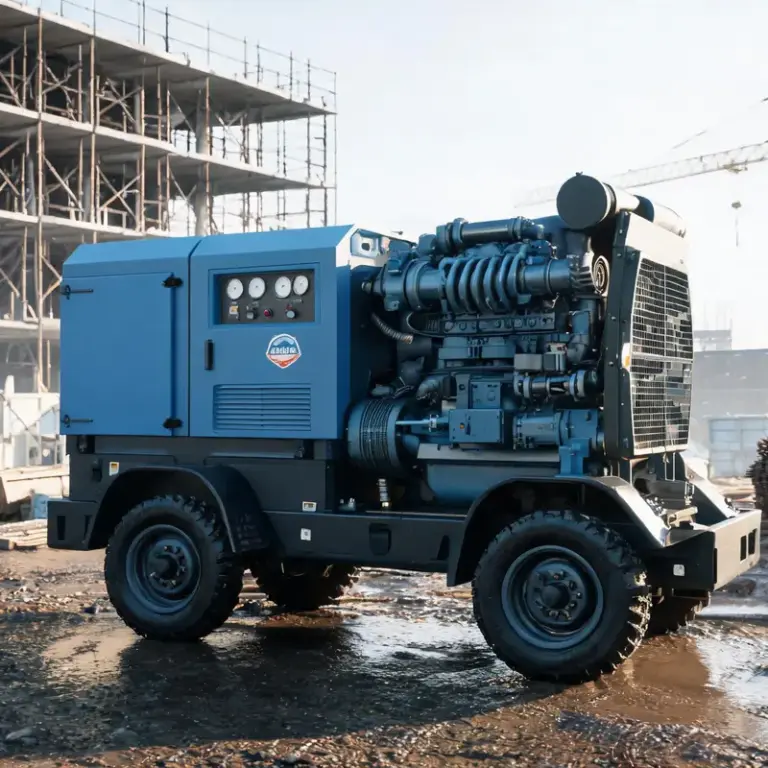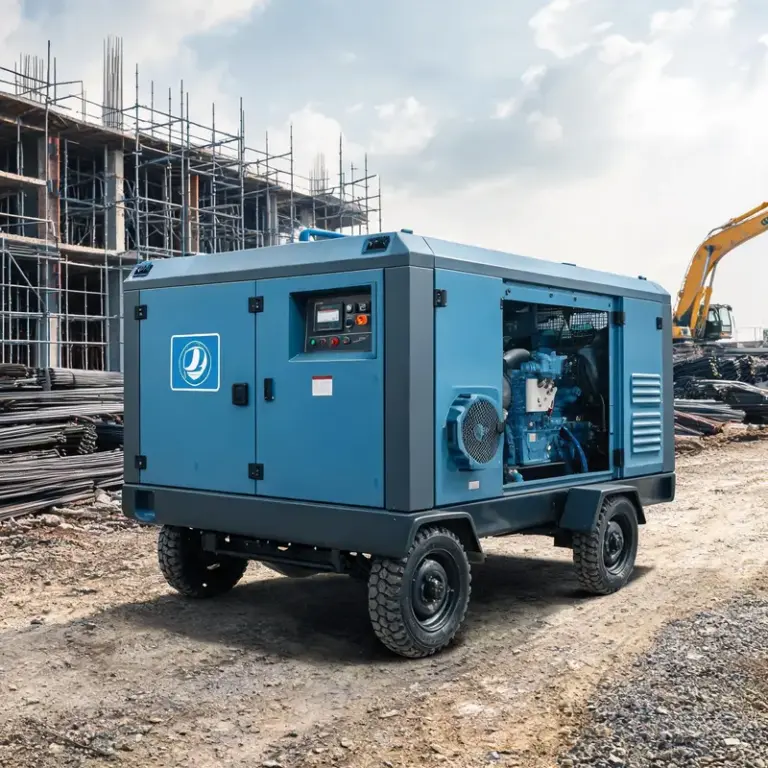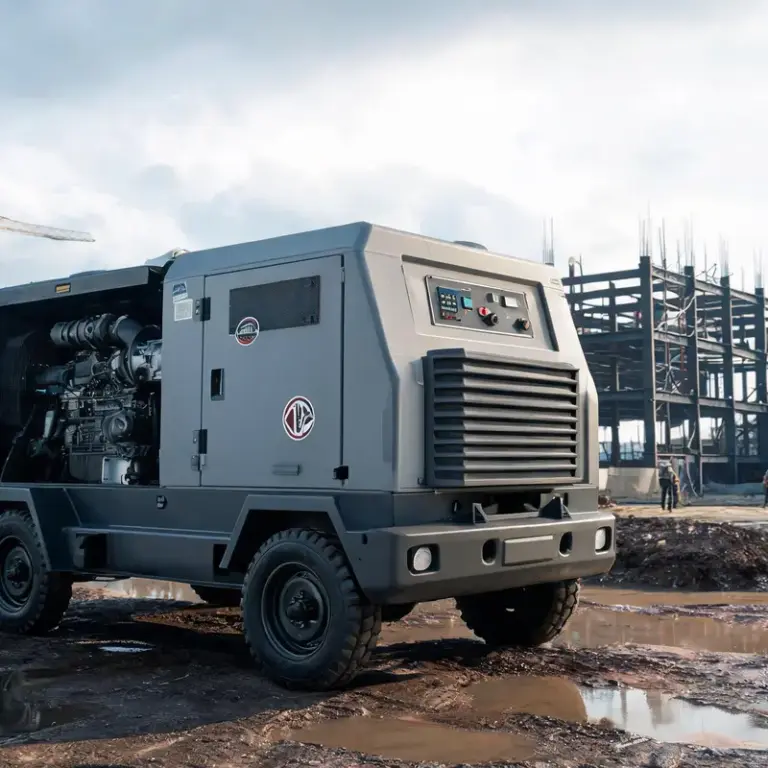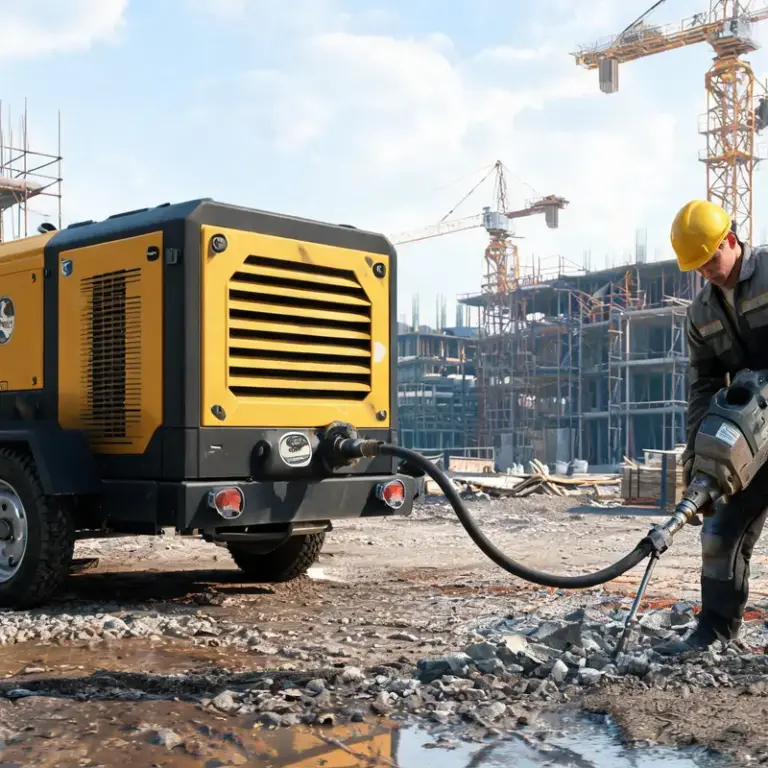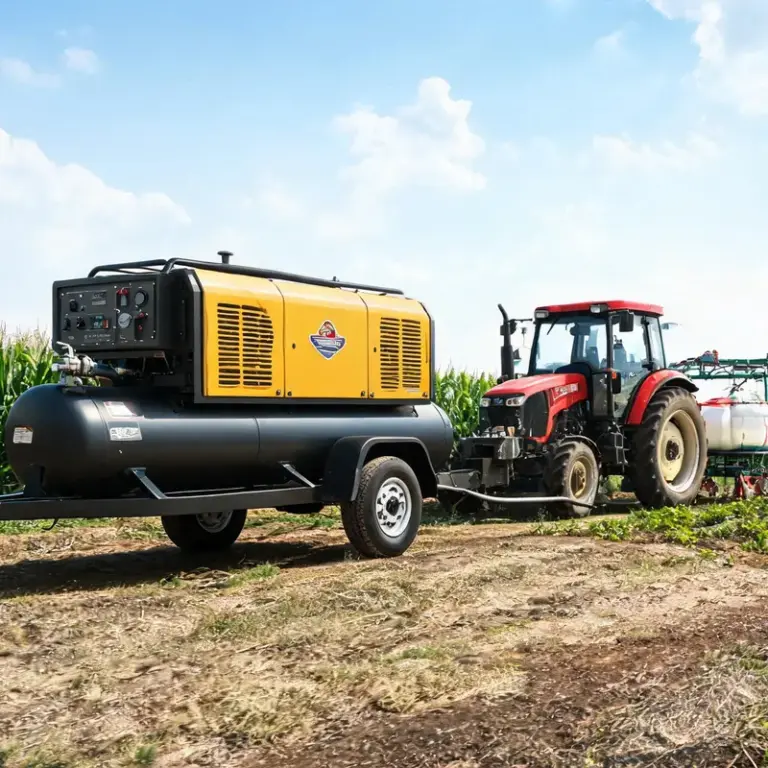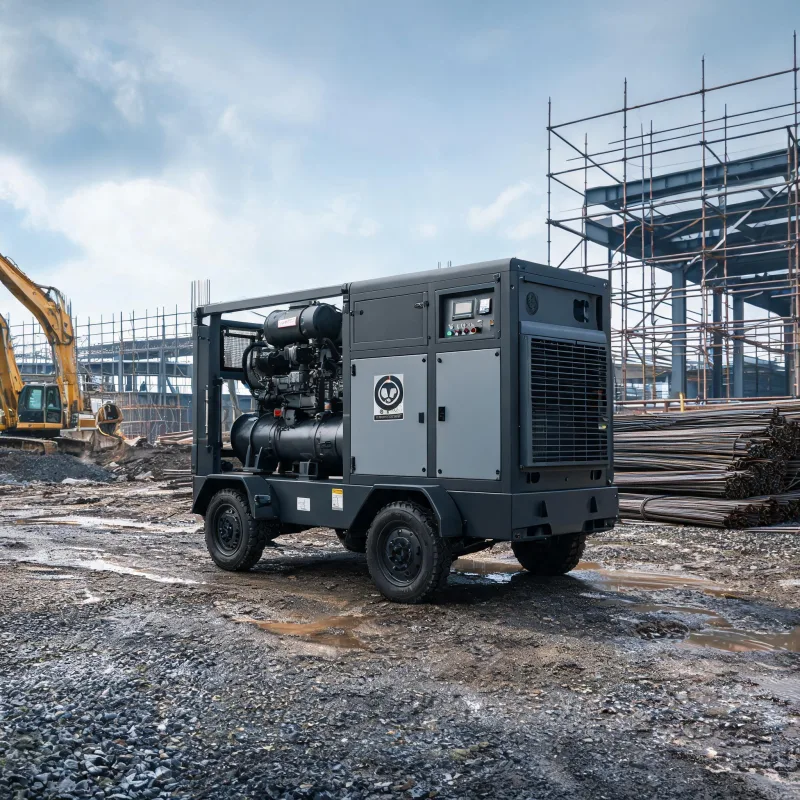
Aligning Cross-Team Requirements for Diesel-Powered Water-Lubricated Oil-Free Compressors
Aligning cross-team non-negotiables avoids costly misselection of your new compression system.
Key Takeaways
- ISO 8573-1:2010 Class 0 certification is non-negotiable for purity-critical applications
- Diesel-powered units are only suitable for sites without stable grid access
- Each core team has unique non-negotiable requirements that must be documented upfront
- Shared acceptance criteria prevent post-installation disputes between teams
Related: cross team requirement alignment · industrial plant air supply · oil-free compression standards · water lubricated screw compression · diesel powered air system · energy efficiency checks · compliance verification
Why do cross-team disagreements derail compressor projects?
We’ve seen three separate Midwest manufacturing projects drag on for more than three months purely because teams never aligned on requirements upfront. Water-lubricated oil-free screw units are specified for purity-critical production, and diesel power is chosen for sites with limited or unstable grid access. Each team measures success against their own KPIs, so disagreements are not a sign of bad faith—they are inevitable without upfront alignment.
What are each team’s non-negotiable hard requirements?
Procurement’s hard limits
Procurement’s top constraint is upfront capital budget. Any selected unit must come with full third-party certification to avoid costly reworks later. Delivery lead time must match the plant’s construction or upgrade timeline, with no hidden fees for installation or documentation. All compliance certificates must be provided before delivery, not after.
Production operations’ hard limits
Production needs consistent 8 to 10 bar working pressure for connected processes, with pressure fluctuations no larger than ±0.2 bar. Excess temperature triggers unplanned shutdowns, so steady-state exhaust temperature must not rise more than 15°C above ambient temperature. All units must meet ISO 8573-1:2010 Class 0 zero oil content standards for purity. Diesel-powered units must meet current EPA non-road diesel emission standards (2024) to avoid site shutdowns for non-compliance.
Maintenance’s hard limits
Maintenance teams need accessible core components to reduce downtime during service. Filter replacement intervals must be no shorter than 6,000 operating hours to keep long-term labor and material costs low. The water lubrication system must resist fouling even with moderately hard site water, to avoid unplanned cleanings every few months.
Where can teams compromise to keep the project moving?
Not every requirement needs to be a hard line. Compliance and purity requirements are non-negotiable—any compromise here creates risk of product contamination or fines. If the production team only faces peak load over-capacity a few times a year, you can compromise on a slightly lower peak power rating to cut upfront cost. Procurement can agree to a small 2-3% CAPEX increase to get longer warranty coverage, which cuts long-term maintenance costs. Maintenance can agree to use OEM filters instead of cheaper third-party options, which extends core component life even if per-service cost is higher.
If your site has a consistent, reliable grid connection, you do not need a diesel-powered unit. Diesel-powered systems carry higher upfront and operating costs than electric equivalents, so only commit to this power route when you have no other viable power option.
What shared acceptance criteria works for all teams?
Shared验收哦不对,acceptance criteria removes post-installation disputes. Require a 12-hour continuous full-load test before sign-off. Test 1: Verify outlet oil content meets ISO 8573-1:2010 Class 0 requirements. Test 2: Verify exhaust temperature and pressure stability match the contractual specifications. Test 3: Verify full-load energy consumption is within 5% of the vendor’s published rating. Test 4: Verify diesel emissions meet local regulatory requirements. All three teams must sign off on test results before final payment is released.
What simple routine avoids last-minute blocks?
Hold a 15-minute weekly check-in with one representative from each team. Each representative only shares changes to their requirements, no general discussion. Document all non-negotiable requirements in a shared document before you send out requests for proposal. This avoids last-minute new requirements being added after vendors have submitted bids, which adds weeks of delay to the project.
Expert Insights
Early alignment of non-negotiable requirements cuts project delay risk by 70% | Mark Hale, Senior Compression Project Coordinator
Further Reading
- How Diesel-Powered Air Compression Drives Water-Lubricated Oil-Free Screw Systems: Spec Selection
- High Pressure Diesel Portable Unit for Industrial Water Lubricated Oil-Free Screw Air Compressors
- Buy Class Zero Oil-Free Compliant Diesel Portable Air Compressors for Industrial Use
- How Remote Drilling Operations Are Shifting to Water-Lubricated Oil-Free Diesel Compressors
- Most Reliable Diesel Portable Air Compressor for Industrial Use Cases
- Comparing Diesel Portable Air Compressor and Gasoline Portable Centrifugal for Industrial Use
- Can You Run a Silent Oil-Free Diesel Portable Air Compressor Indoors With Ventilation
- Diesel-Powered Portable Air Compressor for Off-Grid Mobile Medical Clinic Air Supply
About the Editorial Team
Frequently Asked Questions
Why choose water-lubricated instead of other oil-free designs?
Water-lubricated screws have lower friction, higher energy efficiency, and deliver consistent Class 0 purity without oil carryover risks.
What purity standard should I require for industrial use?
All food, pharmaceutical, and electronics manufacturing require ISO 8573-1:2010 Class 0 certification for zero oil content.
When is a diesel-powered unit the right choice?
Only select diesel-powered units when your site lacks a stable grid connection or needs backup for critical production.
How do I handle conflicting budget vs reliability requirements?
Start by flagging non-negotiable compliance and uptime requirements first, then cut costs on optional add-ons that don’t impact performance.
What is the typical service interval for water-lubricated screws?
Core screw components do not need replacement for over 40,000 hours, with filter changes every 6,000 to 8,000 operating hours.