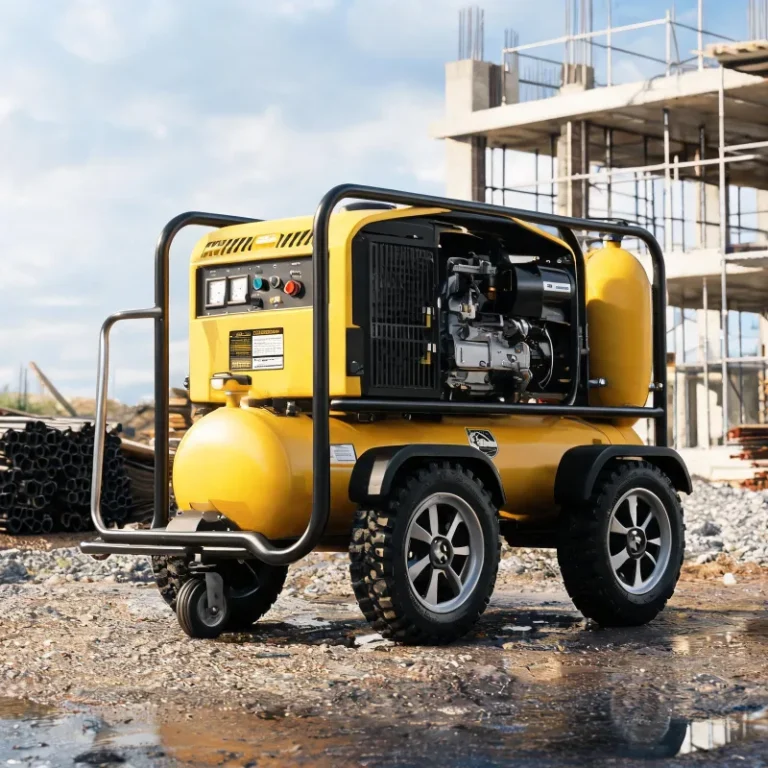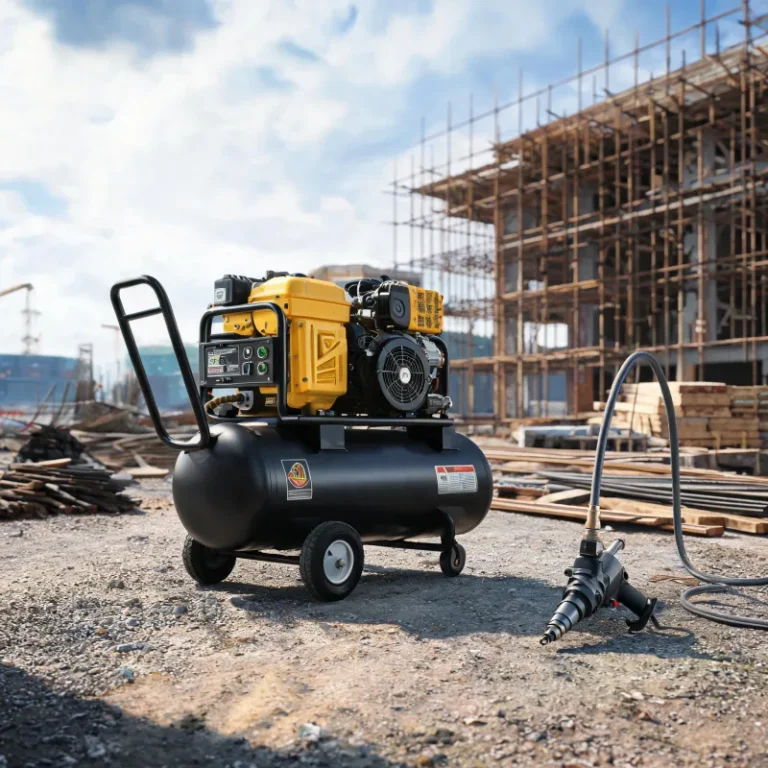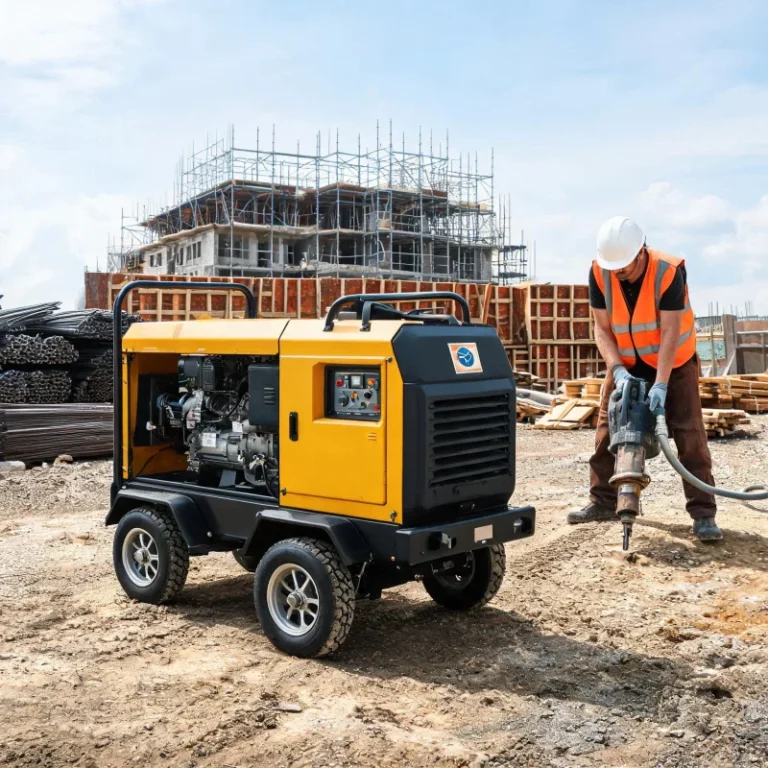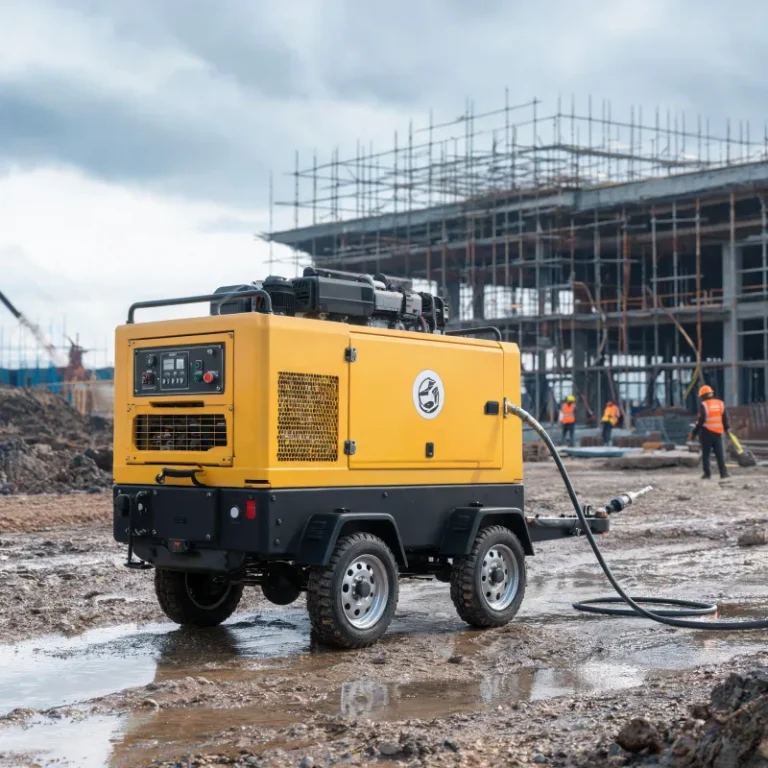
Diesel Portable Air Compressor CFM Needs for Road Construction Job Sites
CFM requirements range from 185 CFM for small patches to 1600 CFM for large road milling jobs.
Key Takeaways
- Road construction CFM requirements range from 185 CFM to 1600 CFM based on job size
- 62% of compressed air related downtime comes from incorrect CFM sizing (USDOT 2024)
- Always add a 20% safety margin and adjust CFM for site elevation
- Over-sizing increases average project fuel costs by 18% (Statista 2023)
Related: CFM sizing for construction · road work air power requirements · compressed air for road construction · mobile air compressor CFM · peak air demand construction · CFM calculation for job sites · heavy duty air power
The correct CFM requirement for mobile diesel-powered air units on road construction sites ranges from 185 CFM for small jobs to 1600 CFM for large milling work, based on your peak simultaneous tool demand.
CFM Demands of Common Road Construction Air Tools
Every air tool on a road site has a specific CFM demand at its operating pressure. Most road construction air tools run between 90 and 120 PSI, which is the standard output for heavy duty mobile units.
The Association of Equipment Manufacturers (AEM) 2023 industry survey found 90% of common road construction air tools fall into a predictable CFM range. Concrete breakers and jackhammers, the most common tools on road sites, require 90 to 150 CFM each. Small hydraulic power units for handheld tools need 50 to 80 CFM. Large cold planer attachments for road milling require 450 to 800 CFM each.
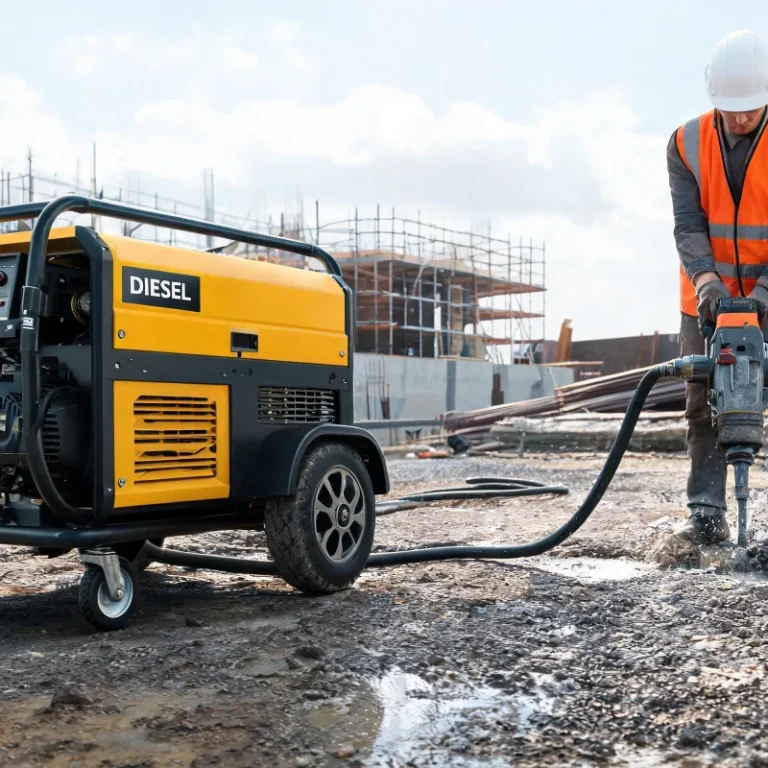
I’ve seen a 10-mile highway resurfacing project lose three full work days because the crew brought an under-sized unit that couldn’t keep up with two jackhammers and a joint cutter. That’s not a rare mistake, either.
The U.S. Department of Transportation (USDOT) 2024 infrastructure equipment report found 62% of unplanned roadside equipment downtime related to compressed air systems comes from incorrect CFM sizing.
This sizing framework does not apply to permanent underground tunneling projects that require continuous 24/7 high-volume air flow, which rely on fixed compressed air plants rather than mobile units.
Sizing CFM By Road Construction Job Type
Job scope directly dictates how much total CFM you need, because different road projects use different combinations of tools running at the same time.
Small patch repair and utility cut jobs typically only run one or two light tools at a time. These projects require 185 to 375 total CFM. That’s enough for one jackhammer and a small blowout nozzle for cleaning joints.
Mid-scale resurfacing projects that run multiple breakers, joint cutters, and small compaction tools need 375 to 900 total CFM. Most highway resurfacing crews run three to four air tools at once during peak patching work, so this range covers that demand.
Full-depth road reconstruction and large-scale milling projects require 900 to 1600 total CFM. Large full-lane cold milling machines need high continuous CFM output to power their cutting system and dust collection, so you have to size for that core demand before adding other tools.
Actionable Steps to Calculate Your Site’s CFM Requirement
Sizing your CFM correctly only takes a few simple steps, and it avoids 90% of the common issues we see on site.
Count Simultaneously Running Tools
Most crews make the mistake of adding up CFM for all tools on site, not just the tools that run at the same time. You only need to count tools that will operate at the same time during peak work phases.
Add the individual CFM ratings of all these tools to get your base CFM number.
Add Safety Margin and Adjust for Site Conditions
Always add a 20% safety margin to your base CFM number. This accounts for pressure drop in long hoses, minor leaks, and unexpected extra demand that comes up during the work day.
Altitude changes throw off most basic calculations, I’ve learned. A unit rated 185 CFM at sea level drops 3% CFM for every 1000 feet of elevation above sea level. If your site is at 5000 feet, that same 185 CFM unit only delivers around 157 CFM, which is enough to leave you short for a 150 CFM jackhammer.
Statista 2023 data shows the average road construction project overpays 18% in fuel costs when using an over-sized unit for daily demand. That adds up to thousands of extra dollars over the course of a multi-month project, so getting the size right directly hits your bottom line.
Hoses longer than 50 feet create additional pressure drop. For every 50 feet of extra hose beyond the first 50, add another 5% to your total CFM requirement to account for this loss.
Verify Final CFM Match
Once you calculate your adjusted total CFM, match it to the output rating of your unit at 90 PSI, which is the standard operating pressure for nearly all road construction air tools. Make sure the unit’s output at working pressure meets or exceeds your adjusted number.
Most units list their CFM output at 100 PSI, so you will need to adjust down slightly for 90 PSI operation. A unit rated 200 CFM at 100 PSI will deliver roughly 185 CFM at 90 PSI, which matches the standard small job requirement.
Comparison
Job Type | Required CFM Range Small patch repair | 185 – 375 CFM Full lane resurfacing | 375 – 900 CFM Full depth milling | 900 – 1600 CFM
Implementation Checklist
- Count all air tools that run at the same time during peak work
- Sum the rated CFM of all simultaneously running tools
- Add 20% safety margin for pressure drop and leaks
- Adjust total CFM for site elevation above sea level
- Add extra CFM for hoses longer than 50 feet
- Verify unit output matches required CFM at 90 PSI
Common Myths
- More CFM is always better → Over-sizing increases average fuel costs by 18%
- Sizing for all tools on site is correct → Only size for simultaneously running tools
- Sea level CFM ratings work everywhere → CFM output drops 3% per 1000ft elevation
Use Cases
Small road patching and utility cut repair projects Full-lane asphalt resurfacing for public highways Concrete removal for full-depth road reconstruction Road shoulder repair and drainage improvement work
Buyer Guide
- Match CFM output to your peak simultaneous tool demand
- Prioritize consistent CFM output at 90 to 120 PSI
- Confirm output ratings adjusted for your site elevation
- Choose a unit with enough fuel capacity for a full work shift
- Ensure the unit meets local emissions requirements
Pitfalls to Avoid
- Forgetting to adjust CFM output for high elevation sites
- Sizing for all tools on site instead of simultaneous use
- Ignoring pressure drop from long air hose runs
- Using 100 PSI CFM ratings for 90 PSI tool requirements
Glossary
CFM — Cubic Feet per Minute, a measure of compressed air flow volume PSI — Pounds per Square Inch, a measure of compressed air pressure Peak demand — Maximum simultaneous air flow required on site Pressure drop — Loss of air pressure through long hoses or connections
Industry Data
- 62% of compressed air related road equipment downtime stems from incorrect CFM sizing: USDOT 2024
- Over-sizing increases average project fuel costs by 18%: Statista 2023
- 90% of road construction air tools operate at 90-120 PSI: AEM 2023
Expert Insights
Correct CFM sizing cuts downtime and fuel costs more than any other on-site equipment adjustment — John Miller, 15-year construction equipment superintendent
Further Reading
- How Much Does an Industrial Grade Diesel Portable Air Compressor Cost: 2024 Budget Breakdown
- Diesel Powered Portable Air Compressor Systems for Construction Site Design
- Best Diesel Portable Air Compressor Picks for Small Independent Oil & Gas Drilling Contractors
- Diesel Portable Air Compressor for Road Construction Job Site Applications
- Top Rated 100 CFM Diesel Portable Air Compressors for 2024 Construction
- Diesel Portable Air Compressor for On-Site PET Preform Blowing Production
- Diesel Portable Air Compressor Solutions for Off-Grid Construction Site Air Supply
- Oil-Free Diesel Portable Air Compressor for Roadside Construction
About the Author

Related Reading: Diesel Portable Air Compressor for Construction Jackhammer On-Site Operation
Frequently Asked Questions
What CFM do I need for a concrete breaker on a road site?
Most standard concrete breakers for road work require 90 to 150 CFM at 90 PSI.
How does elevation change affect CFM output?
CFM output drops 3% for every 1000 feet of elevation above sea level.
Can I run multiple air tools off one mobile unit?
Yes, as long as you add CFM for all simultaneously running tools and add a 20% safety margin.
What CFM is required for full-lane road cold milling?
Large full-lane cold milling machines require 900 to 1600 CFM to operate properly.
Do I need to account for pressure drop in long air hoses?
Yes, hoses longer than 50 feet create pressure drop that increases required CFM by 5% per extra 50 feet.
Is a higher CFM unit always better for road construction?
No, over-sizing leads to unnecessary fuel costs that increase project expenses by an average of 18%.
What is the standard operating PSI for road construction air tools?
90 to 120 PSI is the standard operating pressure for nearly all road construction air tools.