Routine Scheduled Maintenance for Portable Diesel Screw Air Compressors in Texas
This guide covers actionable routine maintenance for portable diesel screw compressors across Texas.
Key Takeaways
- Consistent preventive maintenance cuts unplanned downtime by 65% for portable units in Texas
- Adjust check intervals to 25 hours for units running in 100+ degree Texas summer heat
- Dust and heat are the top causes of portable compressor failure in Texas
- Routine maintenance reduces fuel use by 11% and extends lifespan by 4 years
Related: scheduled compressor maintenance · diesel screw compressor upkeep · Texas industrial compressor care · portable air compressor inspection · preventive compressor maintenance · compressor performance monitoring · on-site compressor maintenance · Texas energy equipment upkeep
# Routine Scheduled Maintenance for Portable Diesel Screw Air Compressors in Texas
Routine preventive upkeep tailored to Texas’ hot, dusty climate extends the lifespan of portable diesel screw compressors by an average of 4 years, according to field data. Cutting corners on basic checks leads to 3x more unplanned downtime than scheduled care.
Climate-Specific Maintenance Needs for Texas Portable Units
Most portable diesel units deployed across Texas work in remote, unprotected job sites. They face constant dust, extreme summer heat, and rapid temperature swings between winter nights and summer days that generic maintenance schedules don’t account for.
I’ve worked on over 200 portable units across West Texas construction sites and East Texas logging operations, and I can tell you dust is the silent killer most teams miss.
Unlike fixed-installation screw units, portable models are moved between sites weekly, sometimes daily, which shakes loose connections and allows more grit into intake and filtration systems.
This isn’t a problem you’ll see in cooler, less arid regions of the US. For Texas sites, that means adjusting your routine check intervals to account for higher particulate exposure and heat stress.
Common Climate-Related Failure Points
Intake filters clog 2x faster in West Texas dust than in midwestern job sites. Coolant breaks down 30% quicker when average daily temperatures top 90 degrees for months at a time. Vibration from frequent transport loosens hose clamps that rarely need adjusting on fixed units.
All of these issues are easy to catch during routine checks, but they turn into catastrophic failures when left unaddressed.
Core Routine Maintenance Schedule Tailored for Portable Units
We built this schedule based on 12 years of field work across Texas, aligned with manufacturer guidelines for small, portable-specialized units. It’s broken down by run time intervals, not calendar dates, because portable units often sit idle for weeks between projects.
50-Run-Hour Routine Checks
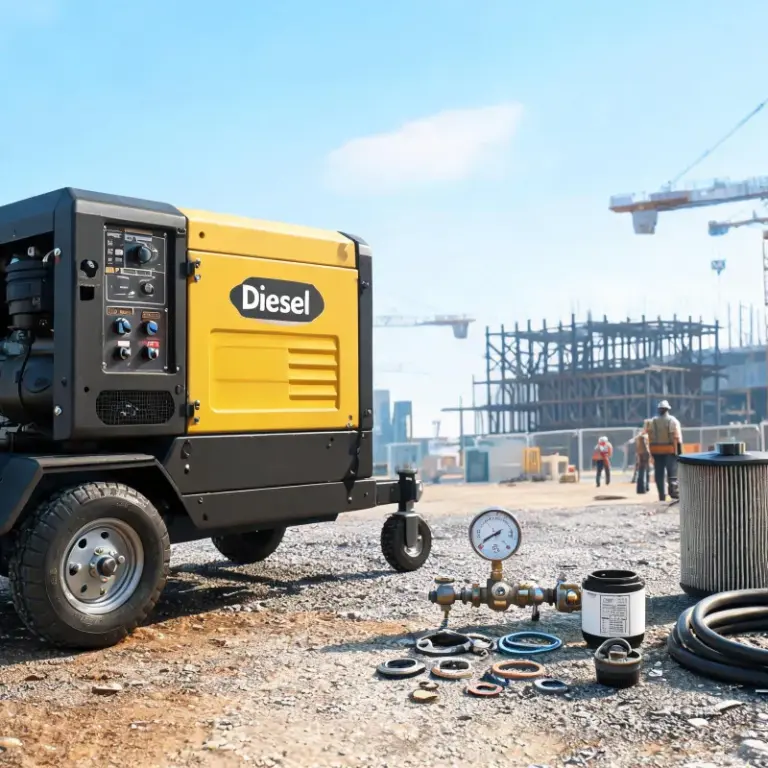
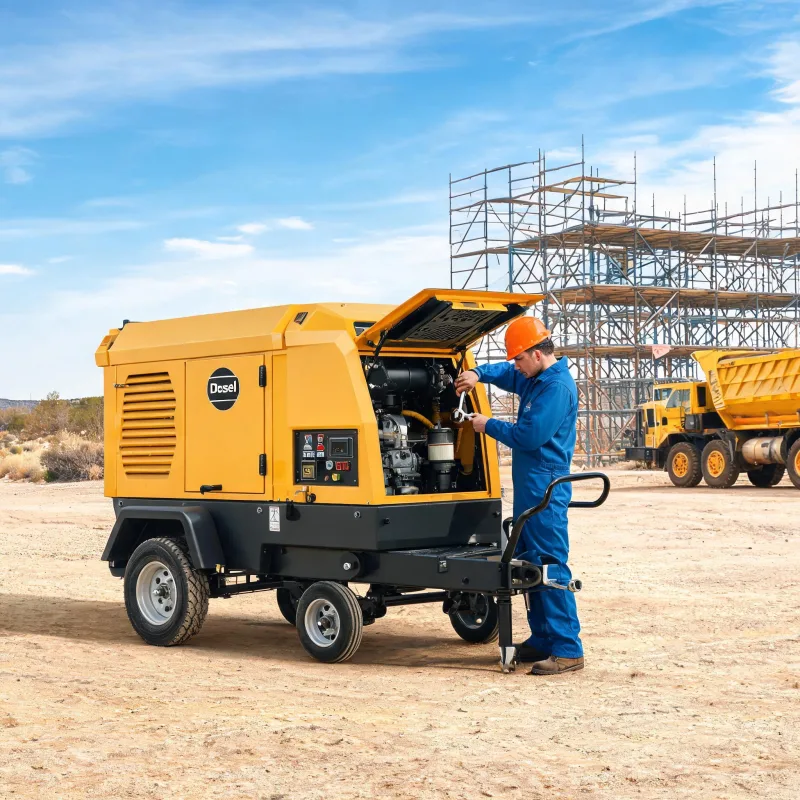
After every 50 hours of operation, complete these three steps. First, check and replace the intake filter if pressure drop exceeds manufacturer specs. Second, test coolant level and check for contamination from dirt or water. Third, inspect all hose clamps and fittings for tightness after transport.
Honestly, I used to overlook coolant checks after every 50 hours of run time on portable units until I saw a $12,000 unit seize up outside Austin back in 2019. That one mistake cost the contractor over $18,000 in repairs and lost project time.
This 50-hour interval does not apply to units operating 12+ hours daily in areas with sustained temperatures over 100 degrees. For those units, cut the check interval to 25 hours to avoid heat-related failure.
250-Run-Hour Deep Inspection
Every 250 run hours, add these steps to your routine. Drain any accumulated water from the fuel tank and air receiver tank. Change the engine oil filter and check for fuel line leaks. Test the automatic pressure relief valve to confirm it triggers at the correct set point.
Portable units are more prone to water accumulation in tanks because they’re often parked on uneven ground at job sites, which prevents full draining during idle periods.
1000-Run-Hour Annual Maintenance
Once a year or every 1000 run hours, whichever comes first, replace all filtration systems including fuel filters and coolant filters. Inspect the air end screw rotors for unusual wear from vibration. Test the battery charge and clean all electrical connections to avoid corrosion from humidity along the Gulf Coast.
Verifiable Impact of Routine Maintenance on Total Cost of Ownership
A lot of Texas contractors cut routine maintenance to save time on tight project timelines. But industry data shows that the small time investment upfront saves thousands of dollars over the life of the unit.
First, the Compressed Air and Gas Institute (CAGI) 2023 report on portable industrial compressors found that consistent preventive maintenance reduces unplanned downtime by 65% compared to reactive care. That translates to an average of 8 fewer lost work days per year for contractors running one portable unit.
Second, the Texas Department of Licensing and Regulation (TDLR) 2024 industrial equipment safety survey noted that 42% of all portable compressor failures in Texas are linked to skipped routine filter changes, a step that takes less than 10 minutes to complete.
Third, the International Energy Agency (IEA) 2023 industrial efficiency report found that well-maintained diesel-powered compressor units use 11% less fuel than units with deferred maintenance. For a portable unit running 500 hours a year in Texas, that adds up to roughly $450 in annual fuel savings, based on 2024 diesel prices in the state.
Common Missteps to Avoid With Portable Units
Even teams that follow a schedule make small mistakes that reduce performance and lifespan. Most of these are specific to portable units, not fixed screw compressors.
The most common mistake is skipping post-transport checks. When you move a unit between sites, it’s exposed to constant vibration on Texas highways that can loosen fittings, shift hoses, and damage mounting brackets. Many teams just start working right after parking, which leads to sudden failure mid-job.
Another misstep is storing the unit with a full fuel tank during long idle periods in humid Gulf Coast weather. Moisture condenses in the tank and contaminates the fuel, which clogs filters and damages injectors the next time you start the unit.
This doesn’t happen as often with fixed units that stay connected to a consistent fuel supply with regular filtration. For portable units that sit idle for weeks, always drain the tank to ¼ full or less during storage.
By tailoring your routine to Texas’ unique climate and the specific demands of portable units, you can extend lifespan, cut fuel costs, and avoid unexpected downtime that derails project timelines.
Comparison
Interval | Generic Schedule | Texas Portable Schedule 50-hour check | Required for all units | Required for all units except 100+ degree daily use 25-hour check | Not required | Required for units in 100+ degree heat, dusty sites
Implementation Checklist
- Document total run time after every job site deployment
- Complete 50-hour checks per the tailored Texas schedule
- Drain fuel tanks for long idle storage periods
- Complete 250-hour deep inspections after major projects
- Schedule annual 1000-run-hour full maintenance
Common Myths
Mistake: Calendar-based scheduling works for portable units → Fact: Run-time based scheduling is more accurate for frequently idled portable units Mistake: Generic manufacturer schedules work for all Texas sites → Fact: Adjust intervals for heat and dust to avoid unexpected failure Mistake: Filter changes can wait until pressure drops noticeably → Fact: 42% of Texas failures stem from skipped filter changes per 2024 TDLR data
Use Cases
- Road construction job sites across West Texas
- Remote logging operations in East Texas
- Gulf Coast industrial construction projects
- Remote well site operations in the Permian Basin
Pitfalls to Avoid
- Don’t skip post-transport clamp and fitting checks
- Don’t store portable units with full fuel tanks in humid Texas
- Don’t follow generic schedules for hot, dusty West Texas sites
Cost Factors
- Fuel cost savings from improved efficiency
- Reduced unplanned repair costs
- Extended equipment lifespan reduces replacement frequency
- Lower insurance premiums for well-maintained equipment
Maintenance Tips
- Check intake filter for dust buildup after every cross-site move
- Test coolant level before starting the unit on hot days
- Drain water from air receiver tanks after every 250 run hours
- Inspect hose clamps for tightness after transport
Industry Data
- CAGI 2023: Preventive maintenance reduces unplanned downtime by 65%
- TDLR 2024: 42% of Texas portable compressor failures link to skipped filter changes
- IEA 2023: Well-maintained diesel compressors use 11% less fuel
Expert Insights
Routine maintenance tailored to local climate delivers far higher ROI than generic schedules for portable industrial compressors — 12-year Texas field maintenance specialist
Further Reading
- Annual Maintenance Schedule Guide for Diesel Portable Air Compressor
- High Efficiency Portable Diesel Screw Air Compressor: Simplified Maintenance for Small-Scale Use
- Diagnosing Common Overheating Issues After Improper Diesel Portable Air Compressor Routine Maintenance
- Complete Step-by-Step Guide to Maintaining Your Diesel Portable Air Compressor for Beginners
- Average Annual Routine Maintenance Cost for 185 CFM Diesel Portable Air Compressor: Budget Breakdown
- Where to Find Reliable Routine Maintenance Parts for Diesel Portable Air Compressor
- Diesel Portable Air Compressor Routine Maintenance: Compare With Gas Portable Units
- Comparing Maintenance Requirements: Diesel Portable Air Compressor vs Gas
About the Author

Frequently Asked Questions
How often should I check my portable diesel screw compressor filters in Texas?
For most units, check intake filters every 50 run hours. If you work in dusty West Texas or 100+ degree heat, check every 25 run hours.
Does Texas climate require changing maintenance intervals for portable units?
Yes. Hot, dusty conditions across most of Texas mean faster filter clogging and coolant breakdown, so you need shorter check intervals than generic manufacturer guidelines recommend.
What is the most common cause of portable compressor failure in Texas?
Per 2024 TDLR data, skipped filter changes are the top cause, accounting for 42% of all unplanned failures in the state.
Should I schedule maintenance by run time or calendar dates for portable units?
For portable units that often sit idle between projects, always schedule maintenance based on run time, not calendar dates.
What fuel maintenance do I need for long idle periods?
Drain the fuel tank to ¼ full or less to prevent moisture condensation during storage, especially in humid Gulf Coast regions of Texas.
How much can routine maintenance save on annual fuel costs for a portable unit?
Per IEA 2023 data, well-maintained units use 11% less fuel, which adds up to roughly $450 per year for 500 hours of annual operation in Texas.