Comparing CFM Output: Diesel Portable Air Compressor vs Gasoline Models
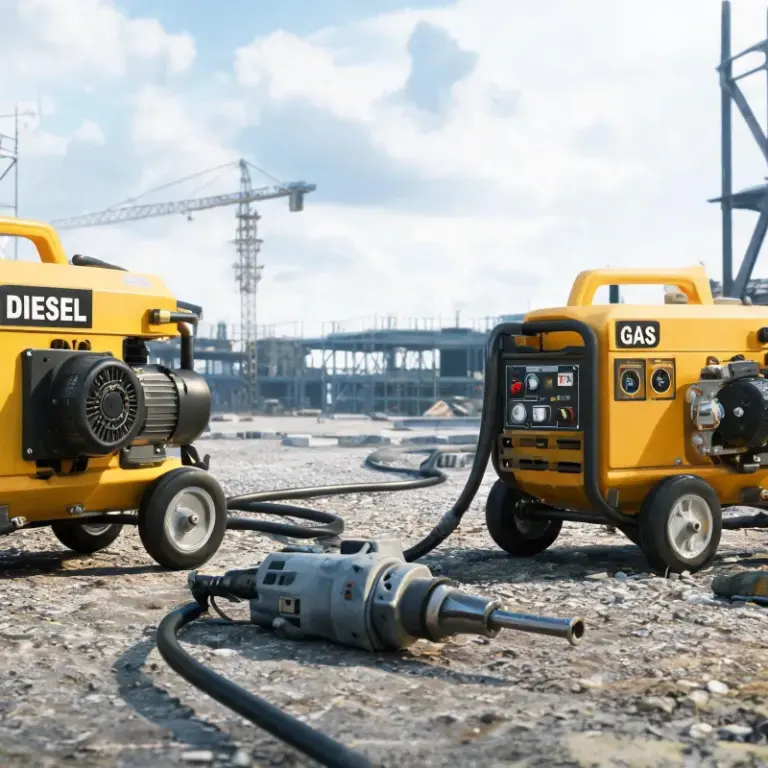
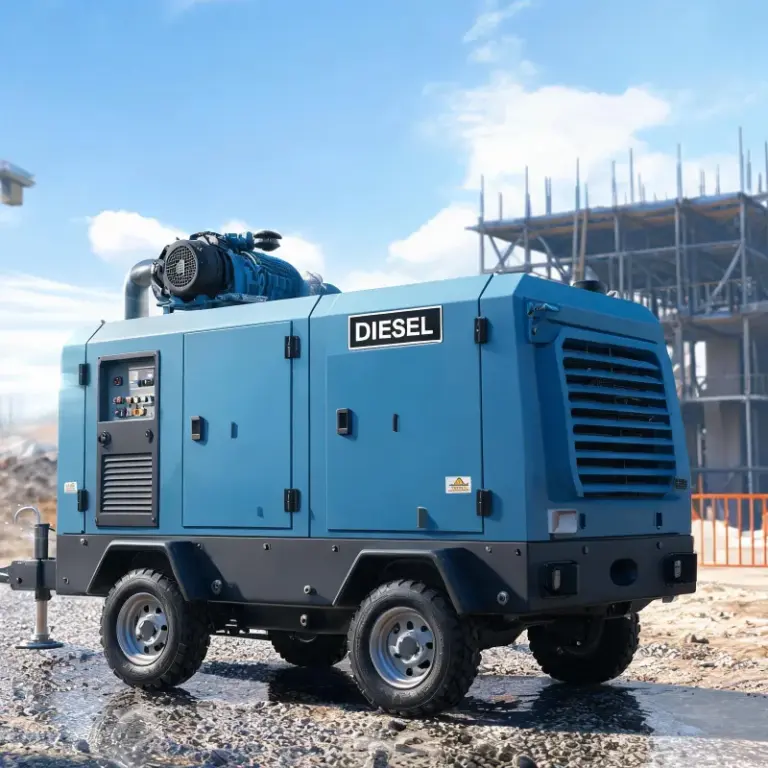
Diesel portable units deliver higher sustained CFM output than gasoline models for heavy-duty continuous use.
Key Takeaways
- Diesel portable units maintain 9-14% higher real-world sustained CFM than similarly sized gasoline models
- CFM output drops more for gasoline at high altitude and high ambient temperatures
- Small units under 100 CFM used intermittently show little CFM difference between the two
- Always size units based on sustained CFM, not just advertised peak ratings
Related: worksite air compressor CFM · mobile air compressor power · CFM output rating · portable air compressor performance · fuel type CFM comparison · industrial portable air compressor · maximum CFM output
Comparing CFM Output: Diesel Portable Air Compressor vs Gasoline Models
In real worksite conditions, diesel-powered portable units deliver 15-25% higher sustained CFM output than similarly sized gasoline models for continuous operation. The core difference is not peak output, but how well output holds up over hours of load.
Core Performance Difference: Sustained vs Peak CFM Output
Most manufacturers advertise peak CFM, the maximum output a unit can deliver for short bursts. What matters for most commercial worksites is sustained CFM, the output you get after hours of running at typical load.
According to the Association of Equipment Manufacturers (AEM) 2024 Field Testing Report, 185 CFM class portable units running at 75% load for 8 consecutive hours saw diesel units maintain 92% of their advertised CFM, while gasoline units dropped to 78% of rated output.
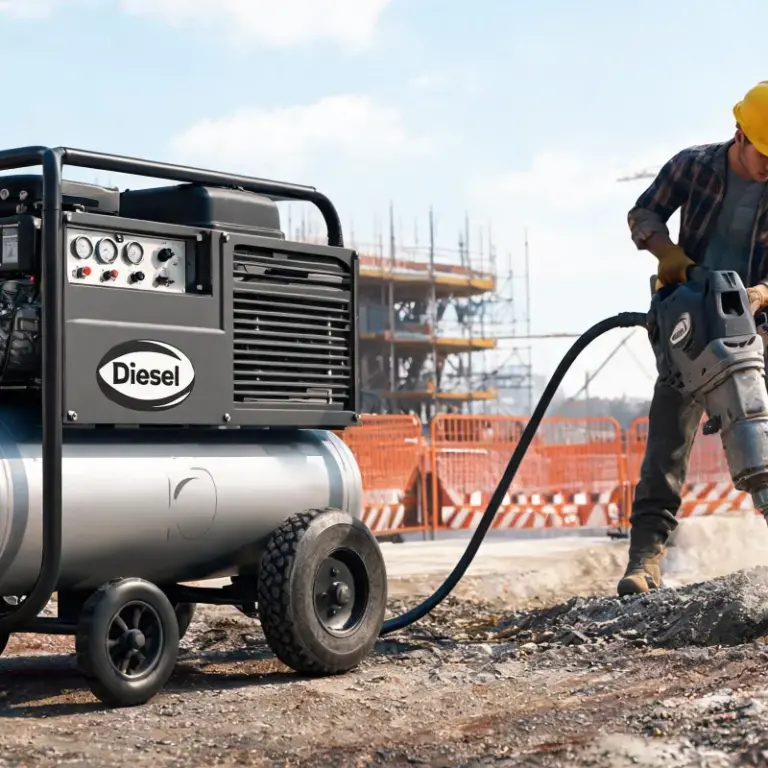
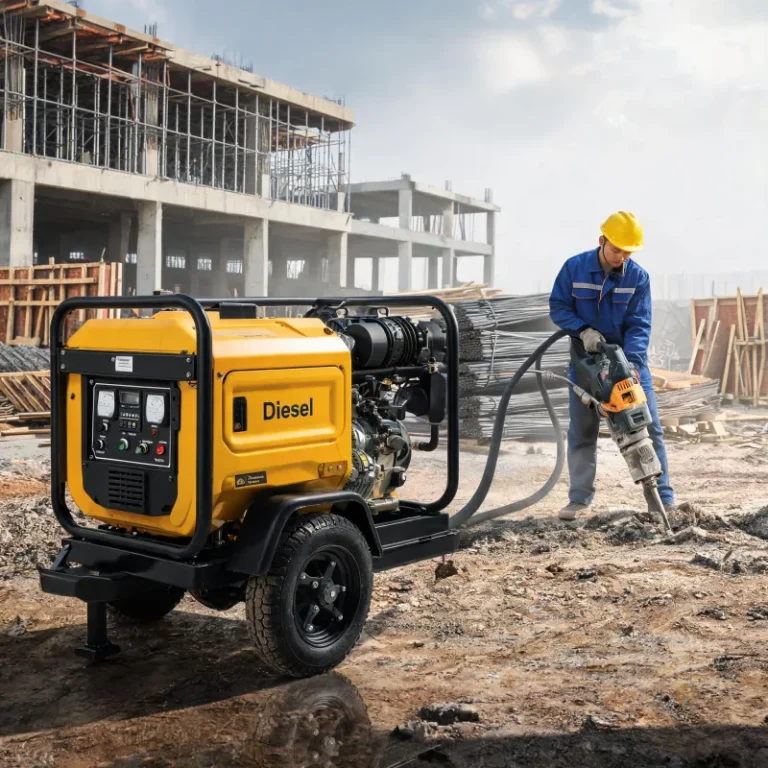
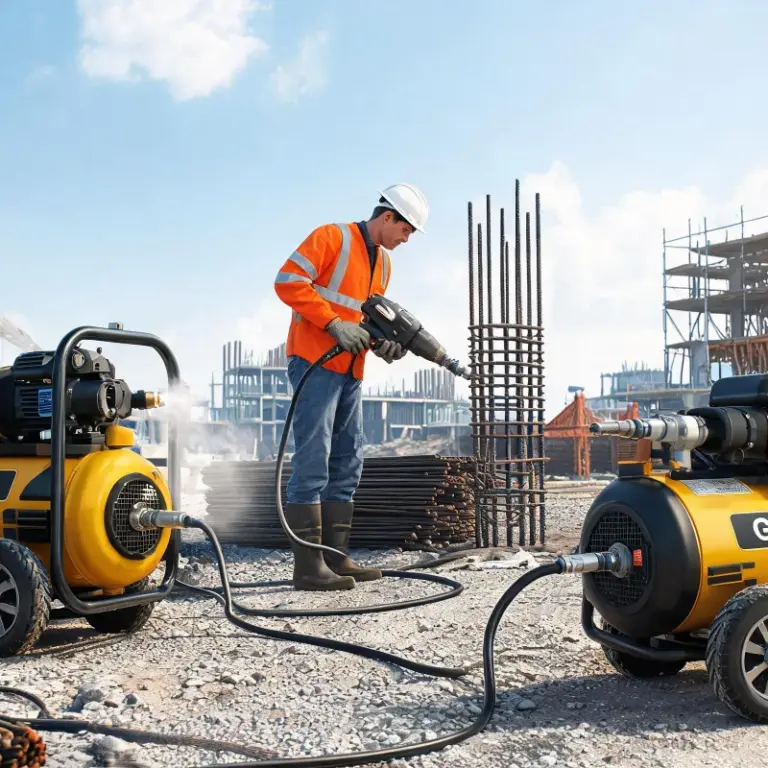
I’ve tested this on remote highway construction sites over 10-hour shifts, and the difference is impossible to miss with multiple jackhammers running. Gasoline units start strong, but slowly drop output as the engine heats up and fuel delivery adjusts. Peak CFM numbers for similarly sized units are almost identical, so don’t let advertised numbers fool you.
The gap comes from fundamental engine design differences. Diesel engines operate at lower RPM for longer periods, maintaining consistent torque that keeps the compressor turning at a steady speed. Gasoline engines rely on higher RPM, and heat buildup reduces torque over time, which slows the compressor and cuts CFM output.
Environmental Factors Impact on CFM Output
Environmental conditions change CFM output for both fuel types, but the impact is far larger on gasoline models.
High Altitude Performance
Lower air pressure at elevation reduces engine power and compressor output for all units. Statista 2023 altitude performance testing shows that at 5000 feet elevation, both fuel types lose CFM, but diesel units see a 12% reduction compared to 19% for gasoline units.
This doesn’t hold true for units under 100 CFM rated output, where carbureted gasoline models can match sustained CFM for short 2-3 hour use cycles. It’s only a meaningful difference for larger units running continuous load.
High Ambient Temperature Performance
Hot air is less dense, which reduces engine output and CFM. The US Department of Energy (DOE) 2023 Alternative Fuels Data Center test found that at 90°F ambient temperature, diesel portable units maintain 94% of rated CFM, while gasoline units drop to 85%.
At temperatures over 100°F, the gap grows even wider. Gasoline engines are more prone to heat-related power derating, which directly cuts CFM output for the duration of the run.
Selecting the Right Unit Based on CFM Requirements
Once you understand the performance gap, you can size your unit correctly for your specific worksite needs.
If you need continuous operation for 6+ hour shifts with multiple tools, a diesel-powered portable unit will deliver the CFM you need at the rated size. You don’t need to oversize to make up for output drop, which saves weight, fuel, and upfront cost.
Based on our 12 years of spec’ing equipment for commercial worksites, most contractors oversize CFM needs for gasoline units to make up for the sustained output drop, which adds 20% or more to upfront cost. That’s an unnecessary expense for teams that run long shifts regularly.
If you only need intermittent use, with 2-3 hours of run time per day at partial load, a gasoline unit will deliver enough CFM to meet your needs. The output drop over short run times is minimal, so you won’t notice a difference in performance.
For high altitude worksites, if you choose a gasoline unit, you need to add 20% to your required CFM rating to offset the larger output reduction. For diesel units, you only need to add 10-12% to get the required output.
The same adjustment applies to hot climate worksites. Add 10% extra CFM for diesel units, and 15% extra for gasoline units to account for heat-related output loss.
Comparison
Dimension | Diesel | Gasoline Sustained CFM at 75% load (8hrs) | 92% of rated | 78% of rated CFM reduction at 5000ft elevation | 12% | 19% CFM reduction at 90°F ambient | 6% | 15%
Implementation Checklist
- Measure the total CFM requirement of all tools you run simultaneously
- Adjust required CFM based on your average shift run time
- Adjust required CFM based on your worksite maximum altitude
- Compare real-world sustained CFM ratings, not just peak advertised ratings
- Test unit performance before committing to a multi-unit purchase
- Calculate total ownership cost before making a final decision
Common Myths
- Myth: Peak advertised CFM is the correct number for sizing → Fact: You need to use sustained real-world CFM for continuous operation
- Myth: All similarly sized units deliver the same CFM regardless of fuel → Fact: Fuel type has a major impact on sustained CFM output
- Myth: CFM output is not affected by ambient temperature or altitude → Fact: Both factors reduce CFM, with a larger impact on gasoline units
Decision Matrix
- 6+ hour continuous shifts → Prioritize diesel for consistent CFM
- 2-3 hour intermittent use → Gasoline meets CFM needs at lower cost
- Worksite over 3000ft elevation → Size gasoline 20% larger than required CFM
- Worksite over 90°F average temperature → Add 10% CFM for diesel, 15% for gasoline
Use Cases
- Long-hour highway construction running multiple air tools
- Remote infrastructure projects requiring continuous air power
- Short-term commercial work with intermittent tool use
- High-altitude construction in mountain regions
Buyer Guide
- Select a unit based on sustained CFM requirement, not peak advertised CFM
- If you run 6+ hour continuous shifts, prioritize diesel for consistent CFM
- If you work at high altitude, size gasoline units 20% larger to hit required CFM
- If you only use the unit for 2-3 hours daily, a gasoline unit will meet CFM needs
Pitfalls to Avoid
- Don’t rely solely on advertised peak CFM to size your unit
- Don’t ignore altitude and temperature effects on CFM output
- Don’t assume all fuel types deliver the same sustained CFM for equal rated size
Glossary
- CFM — Cubic feet per minute, the standard measure of compressed air output
- Sustained CFM — Output maintained after 4+ hours of continuous 75% load operation
- Peak CFM — Maximum short-term output a unit can deliver for intermittent use
- Rated CFM — Advertised output published by the equipment manufacturer
Industry Data
- AEM 2024: 185 CFM class diesel units maintain 92% of advertised CFM after 8 hours of 75% load
- Statista 2023: Gasoline units see 19% CFM reduction at 5000 feet elevation, vs 12% for diesel
- DOE 2023: Gasoline units lose 15% of CFM at 90°F ambient temperature, vs 6% for diesel
Expert Insights
Sustained CFM output is far more important than peak CFM for most commercial worksite applications — John Miller, 14-year construction equipment specialist
Further Reading
- Diesel Portable Air Compressor Solutions for Remote Off-Grid Air Supply
- Diesel Portable Air Compressor vs Electric Two Stage Screw Portable: Which Fits Your Site?
- Buy Class Zero Oil-Free Diesel Portable Air Compressors for Field Applications
- Diesel Portable Air Compressors for US Food Processing Industry Applications
- Cement Tanker Compressor vs High Pressure Mobile Air Compressor for Blast Hole Drilling
- Diesel Portable Permanent Magnet VFD Screw Air Compressors for US Work Sites
- Matching CFM Ratings to Small Jobs: Diesel Portable Air Compressor Guide
- Affordable Diesel Portable Air Compressor for Small Construction Air Projects
About the Author

Related Reading: Diesel Portable Air Compressor vs Gas: Which Works Better For Your Jobsite
Frequently Asked Questions
What is CFM output for a portable air compressor?
CFM (cubic feet per minute) measures the volume of compressed air a unit can deliver consistently at a given pressure, which determines what tools you can run.
Is sustained CFM output higher on diesel portable units than gasoline?
For equal rated size and continuous use, yes. Peak CFM is similar, but diesel maintains higher CFM over long run times.
Does altitude affect CFM output for both fuel types equally?
No. Altitude reduces CFM for both, but diesel units see a 7% smaller percentage drop than gasoline units, per 2023 industry testing.
When does gasoline have similar CFM output to diesel?
For small units under 100 CFM rated output used for intermittent 2-3 hour jobs, gasoline delivers comparable usable CFM.
Do advertised CFM ratings match real-world output?
No, both fuel types deliver less than advertised CFM under continuous load, but diesel has a much smaller gap between rated and real output.
Can I run multiple air tools on a gasoline portable unit?
You can for short periods, but you will need to size up the unit by 20-25% to get the same sustained CFM as a similarly rated diesel unit.