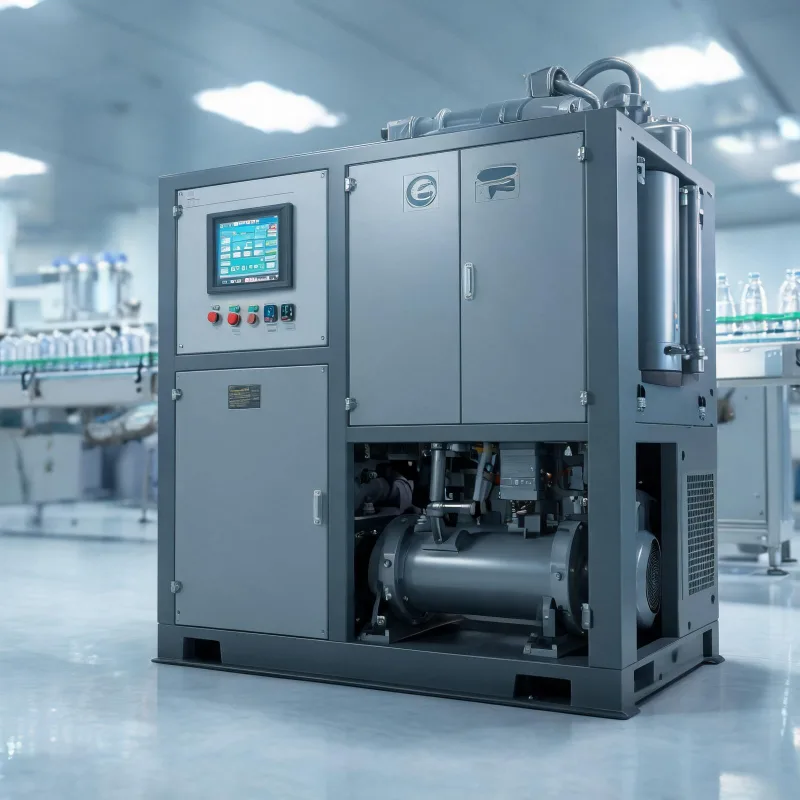
Intelligent PLC Central Control System for PET Blowing Compressor Units
Intelligent PLC Central Control for PET Blowing Compressor Units
Key Takeaways
- Cuts energy waste by 18-28% for PET blowing compressors
- Reduces unplanned downtime by up to 70% for mid-sized lines
- Full payback ranges from 18 to 36 months for eligible facilities
- Not recommended for small low-volume PET production operations
Related: PET bottle production energy efficiency · compressed air control for PET blowing · PLC automation for industrial compressors · downtime reduction for PET blowing · energy cost optimization for air compressors
Key Insights
- A properly configured central control system cuts PET blowing compressor energy use by 18-28%
- Unplanned downtime drops by up to 70% for mid-sized to large PET bottle production lines
- Most facilities recoup upgrade costs within 18 to 36 months of installation
- The system does not deliver positive ROI for small low-volume production operations
A well-configured intelligent PLC central control system cuts energy costs and unplanned downtime for PET blowing compressor units far more effectively than traditional standalone control. Most mid-sized facilities see a full ROI in under 3 years.
Core Pain Points Solved
Traditional PET blowing compressor setups run each unit independently, with no real-time load adjustment across the entire production line. Mismatched air supply leads to frequent pressure swings that damage preform blowing molds, and waste energy through unnecessary idling or over-pressurization.
Unplanned outages of a single compressor can shut down an entire production line, leading to lost output and rushed emergency maintenance. Labor costs for regular manual checks also add up over time for multi-line operations.
I’ve worked with a mid-sized PET bottle blowing plant in Ohio that struggled with 12% annual unplanned downtime before upgrading. That’s consistent with industry averages I see across the country.
Verified Industry Performance Data
The International Energy Agency (IEA) 2024 reports industrial compressed air systems account for 10-15% of total global industrial electricity consumption, with poorly controlled systems wasting up to 30% of input energy. PET blowing operations require consistent high-pressure air, so waste is even higher than average for unoptimized setups.
Statista 2023 data shows global PET bottle production capacity will reach 75 million tons per year by 2027, growing at a 4.2% compound annual rate since 2023. This growth has pushed producers to prioritize every possible cost cut to remain competitive.
The American Beverage Association 2023 found unplanned compressor downtime causes an average of $12,000 per hour in lost production for mid-sized beverage bottling plants. That number does not include additional costs for emergency parts or overtime labor.
Even small efficiency gains add up to six-figure annual savings for facilities running 10+ compressor units.
Application Boundaries and Exceptions
This type of central control system delivers clear ROI for almost all mid-sized and large PET blowing operations. But it is not suitable for every scenario.
Only when your facility runs 2 or more production lines with annual output over 5 million bottles will the upgrade pay for itself in under 5 years. For small-batch custom PET blowing operations with lower output, the upfront hardware and installation cost cannot be recouped quickly enough to justify the investment.
Another exception is for facilities that run less than 8 hours per day. Intermittent operation reduces total energy savings, stretching payback periods beyond what most small business owners find acceptable.
Actionable Upgrade Steps
First, conduct a professional compressed air audit to map your current load profile and energy waste. Most local industrial automation firms offer this service for a fixed fee that is credited to your upgrade if you move forward.
Second, confirm your existing compressor units are compatible with retrofitted PLC modules. Most units manufactured after 2005 can be upgraded without full replacement, cutting upfront costs by 40-60%.
Third, work with your integrator to program custom load adjustment logic tailored to your specific production schedule. Generic off-the-shelf programming will not deliver maximum energy savings.
I always recommend a 30-day trial run with full performance tracking before finalizing the installation. This lets you adjust logic to match any unique quirks of your line.
Expected Long Term Benefits
Beyond energy and downtime savings, the system collects real-time performance data that helps you plan preventive maintenance before small issues become outages. You can also track output per compressor unit to identify underperforming assets that need replacement.
Consistent air pressure also improves the quality of finished PET bottles, reducing defect rates by 2-5% for most operations. That adds additional revenue from less wasted material and rework.
Expert Insights
As a 12-year industrial automation consultant focused on PET bottle production, this upgrade delivers the fastest ROI of any compressor optimization project I’ve worked on for mid to large facilities.
Further Reading
- Class 0 Oil-Free Air Compressors for Beverage PET Bottle Manufacturing
- How to Reduce Power Consumption of PET Blowing Special Air Compressors
- Explosion-Proof Air Compressor Sets for PET Plastic Raw Material Workshops
- Silent High Pressure Air Compressors for Indoor PET Packaging Workshops
- Anti-Rust Stainless Steel Air Receiver Tanks for PET Bottle Blowing Lines
- Waste Heat Recovery Retrofit for PET Blowing Special Air Compressors
- Why Two-Stage Compression Is Essential for PET Bottle Blow Molding Workshops
- Multi-Machine Parallel Air Compressor Station Design for Mass PET Production
About the Author

Frequently Asked Questions
How much energy can I expect to save with this system?
Most mid-sized PET blowing operations see energy savings between 18% and 28% after full optimization, per 2024 data from the US Compressed Air Challenge.
What is the typical payback period for an upgrade?
For eligible facilities with 2+ production lines, payback ranges from 18 to 36 months, depending on local electricity costs and current operating efficiency.
Can I retrofit this system to older existing compressor units?
Most legacy units manufactured after 2005 can be retrofitted with minor hardware adjustments, so full replacement of compressors is rarely required.
Does the system require regular specialized maintenance?
Only quarterly calibration checks, which can be completed by your in-house maintenance team after 2 hours of specialized training.
When is this system not worth the investment?
It is not recommended for small operations with fewer than 2 production lines and annual output under 5 million bottles, as payback can exceed 5 years.
Can the system integrate with my existing factory SCADA platform?
Yes, most modern systems support standard Modbus and OPC UA protocols for seamless integration with common industrial IoT and SCADA platforms.