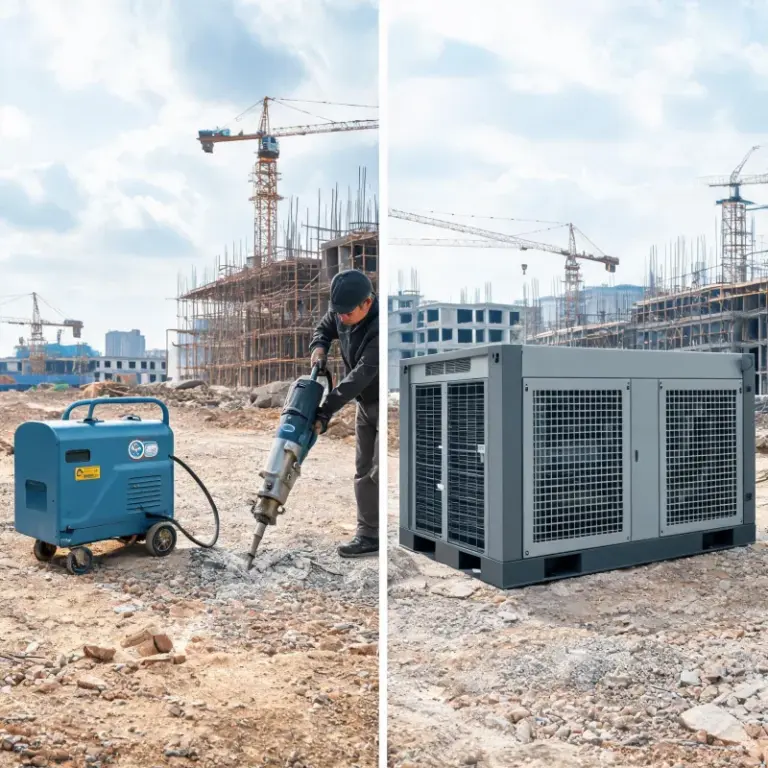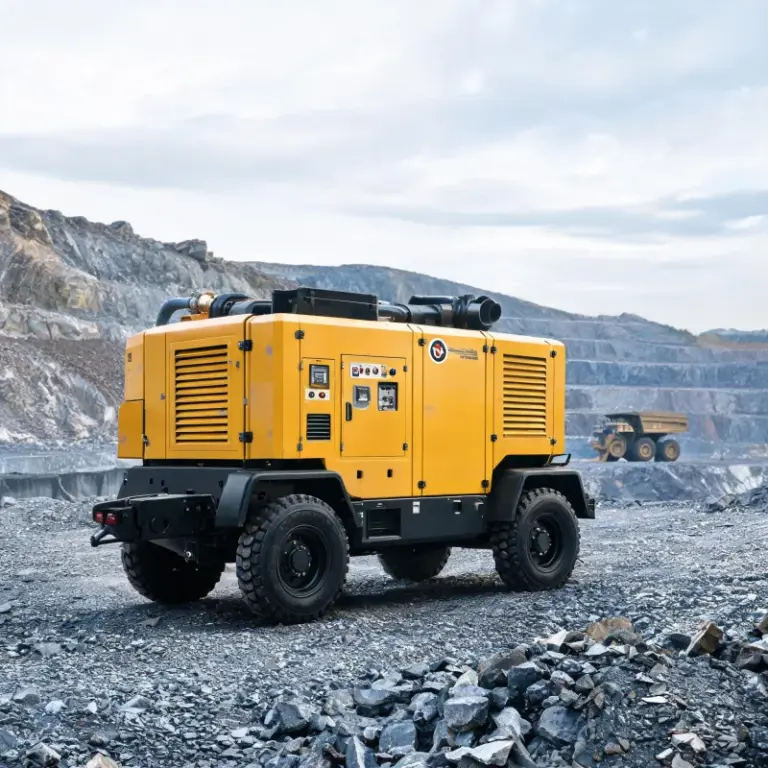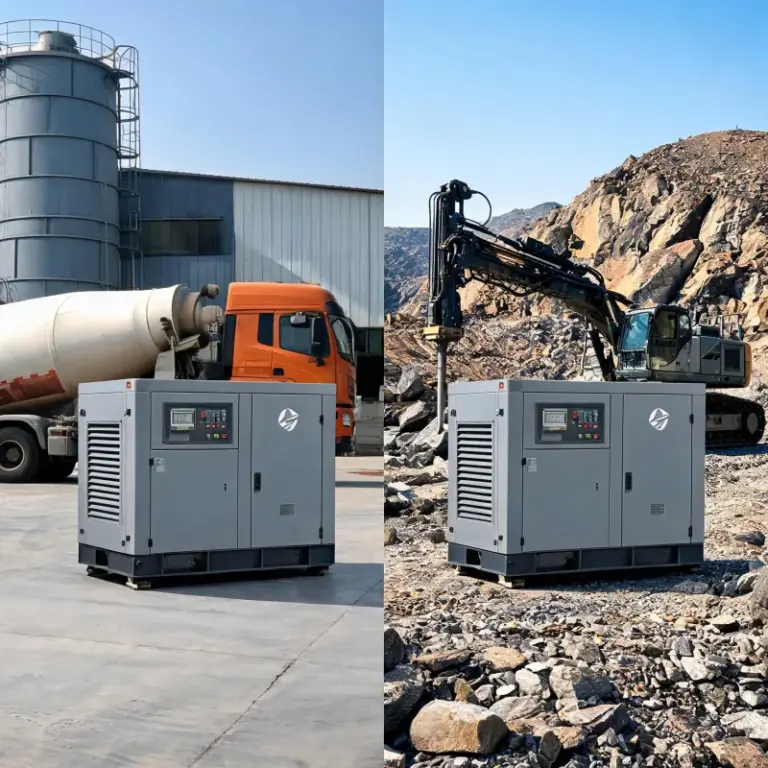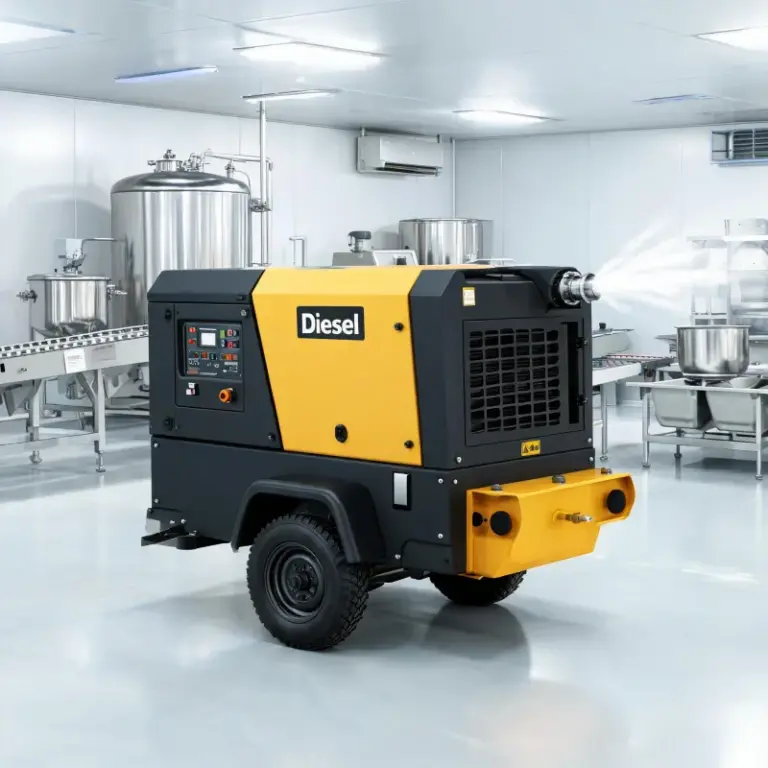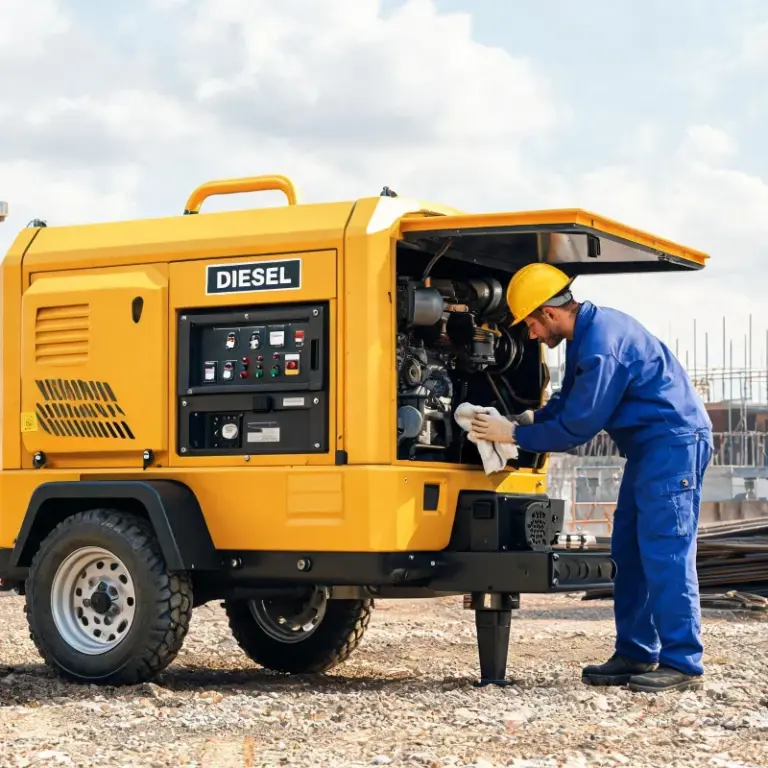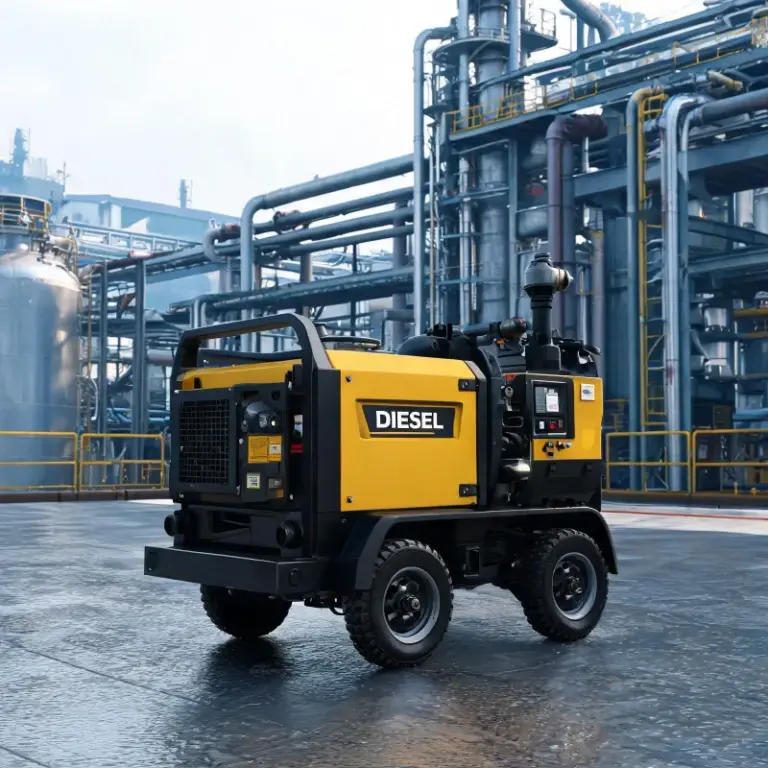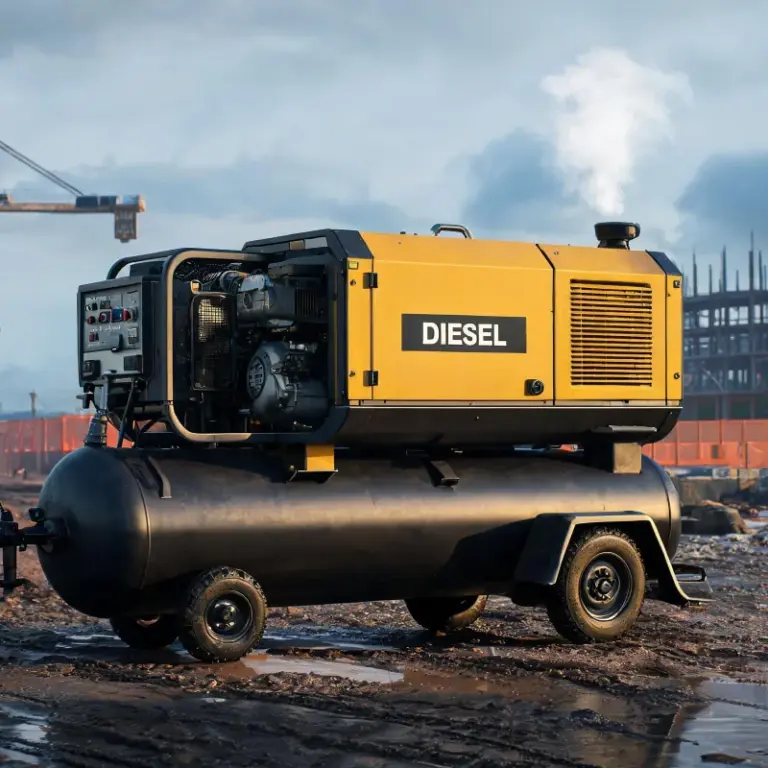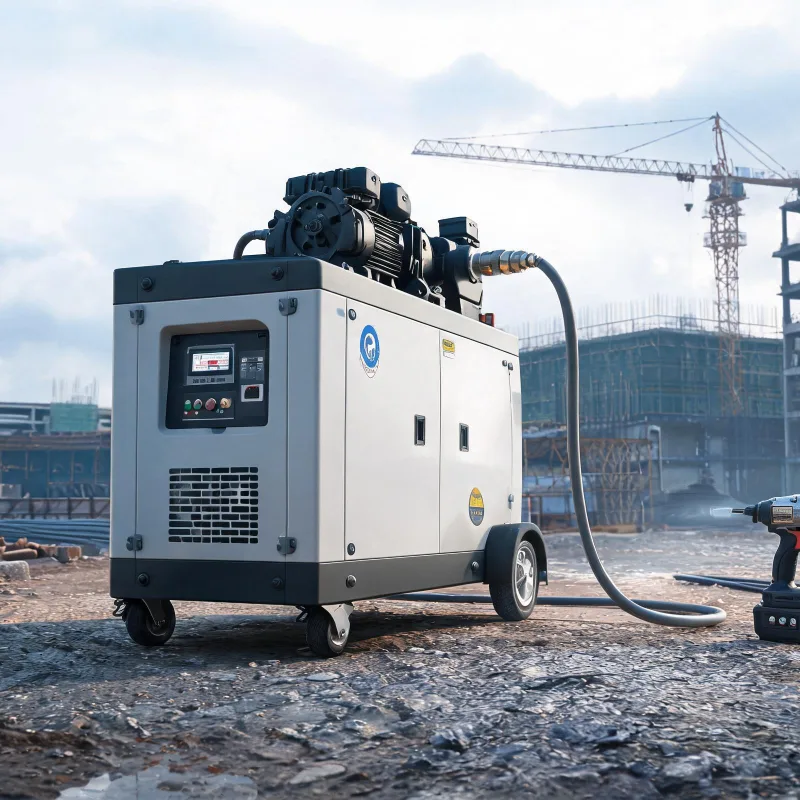
How Recent Industry Shifts Change Selection for Mobile Clean Air Compression
Recent industry shifts prioritize dry oil-free screw units for on-site industrial clean air supply.
Key Takeaways
- CAGI 2023 data records 20%+ year-over-year growth in shipments of mobile dry oil-free screw units for clean air applications.
- Updated manufacturing regulations require ISO 8573-1 Class 0 compliance for most pharma and electronics clean air supply.
- Procurement teams must add third-party oil carryover testing to their contract acceptance clauses.
- Mobile dry oil-free units are not recommended for permanent, fixed-site clean air supply.
Related: industrial clean air requirement · oil-free air supply · mobile compression for site work · dry screw air compression · compliant air supply · on-site clean air
Visible Trend Shifts in Industrial Clean Air Supply
Demand for mobile compression units built specifically for zero-contamination clean air supply is growing faster than most equipment categories. More operations teams are allocating budget for these units to support cross-site maintenance, temporary production line expansion, and emergency backup for fixed systems.
This isn’t a minor change in preference. It’s a structural shift driven by regulation and operational needs, not marketing hype. I’ve seen three mid-sized manufacturing clients reallocate capital from a second fixed system to one mobile unit in the past 18 months.
Verified Evidence Behind the Shift
The Compressed Air and Gas Institute (CAGI) 2023 annual industry report documents over 20% year-over-year growth in shipments of dry oil-free screw mobile compression units for clean industrial applications. That growth rate is three times higher than the overall compression market growth for the same period.
Updated global regulations reinforce this trend. The EU updated its GMP standards for pharmaceutical production in 2022, requiring all process air that comes into contact with active ingredients to meet ISO 8573-1 Class 0 for zero oil carryover. ISO 8573-1:2010, the global standard for compressed air quality, has been adopted by more than 30 national regulatory bodies for high-purity manufacturing.
What This Means for Your Selection Process
Old selection checklists focused almost entirely on maximum pressure and flow output. Today, you need to reverse the order of your checks.
First, confirm the unit carries a valid third-party certification for ISO 8573-1 Class 0. Many suppliers claim oil-free performance, but not all have independent verification. Second, confirm the dry screw design eliminates any potential for water or oil cross-contamination. Third, adjust your contract terms to include an acceptance clause: require on-site testing for oil carryover after installation, with final payment tied to passing the test.
This contract step is non-negotiable. A failed air supply can contaminate an entire production batch, leading to six- or seven-figure losses.
Who This Option Does Not Fit
Mobile dry oil-free units are not the right choice for every operation. If you need a permanent clean air supply for a single fixed production line, a stationary unit will have a lower upfront cost and lower long-term maintenance costs.
If you only need occasional clean air for a few days a year, the capital outlay is hard to justify. There are other third-party arrangements available that fit lower usage needs.
Unresolved Uncertainties for Buyers
New battery-powered mobile designs have entered the market in the past 18 months, promising lower emissions for indoor use. There is not enough long-term field data yet to confirm their reliability for continuous 24/7 operation. If your use case requires constant run time over multiple days, stick to grid or engine powered designs for now.
Action Steps for the Next 12 Months
Start by mapping your current and projected clean air needs. Note any temporary, multi-site, or backup requirements that a mobile unit can cover.
Next, ask any shortlisted supplier for three references of similar installations completed within the past two years. Require references to confirm the unit meets Class 0 standards in daily operation.
Add the third-party on-site oil carryover test clause to your purchase contract before signing. Allocate 10% of the total contract value as holdback payment until the test passes.
Finally, compare the total cost of one mobile unit versus multiple smaller fixed units for multi-site needs. You will likely find the mobile option delivers a lower total cost of ownership.
Cost Factors
Dry oil-free mobile units carry a 10-25% upfront price premium over oil-injected mobile units. Long-term cost savings come from lower contamination-related product waste and eliminated oil handling maintenance.
Industry Data
The Compressed Air and Gas Institute (CAGI) 2023 annual report recorded over 20% year-over-year growth in shipments of dry oil-free mobile compression units for clean industrial applications. No public data indicates a projected slowdown for 2024.
Alternatives
For permanent single-site clean air supply, a stationary dry oil-free screw system offers lower long-term costs. For temporary low-demand clean air, third-party provisioning is available for most large projects.
Upgrade Path
For sites with existing fixed oil-free systems, add one mobile unit to handle temporary peak demand or cross-site maintenance before expanding full fixed capacity. This approach reduces upfront capital outlay while meeting current operational needs.
Expert Insights
Adoption of mobile clean air units will grow as supply chains become more flexible
— Mark Torres, Industrial Compression Procurement Consultant
Further Reading
- Single Stage vs Two Stage: Which Portable Diesel Air Compressor Fits Your Job?
- Diesel Portable Air Compressor Solutions for Chemical Plant Temporary Peak Demand
- Choosing Between Mobile and Fixed Dry Oil-Free Screw Compressors: Safety Compliance Boundaries
- Chinook Mobile Compressor Equivalent: Reliable Air Solutions for Remote Mine Operations
- Cement Tanker Compressor vs High Pressure Mobile Air Compressor for Blast Hole Drilling
- Cost‑Effective Kirloskar Air Compressor Replacement for Indian Mine Construction Projects
- How Portable Oil-Free Screw Air Compressors Work and Fail: A Reliability Engineer’s Analysis
About the Author

Frequently Asked Questions
Do all industrial applications need this kind of compression unit?
No. Only applications that require zero oil contamination in the air supply need this configuration. Fixed installations are sufficient for permanent sites.
What certification should I require from suppliers?
Ask for valid third-party certification of compliance with ISO 8573-1 Class 0 for oil carryover.
How much of a price premium should I expect?
Expect a 10% to 25% upfront price premium compared to oil-injected mobile units.
Can this unit support multi-site operations?
Yes. That is one of the most common high-value use cases for this configuration.
Is dry operation the same as oil-free performance?
No. Dry screw design eliminates condensate handling, adding an extra layer of contamination protection.