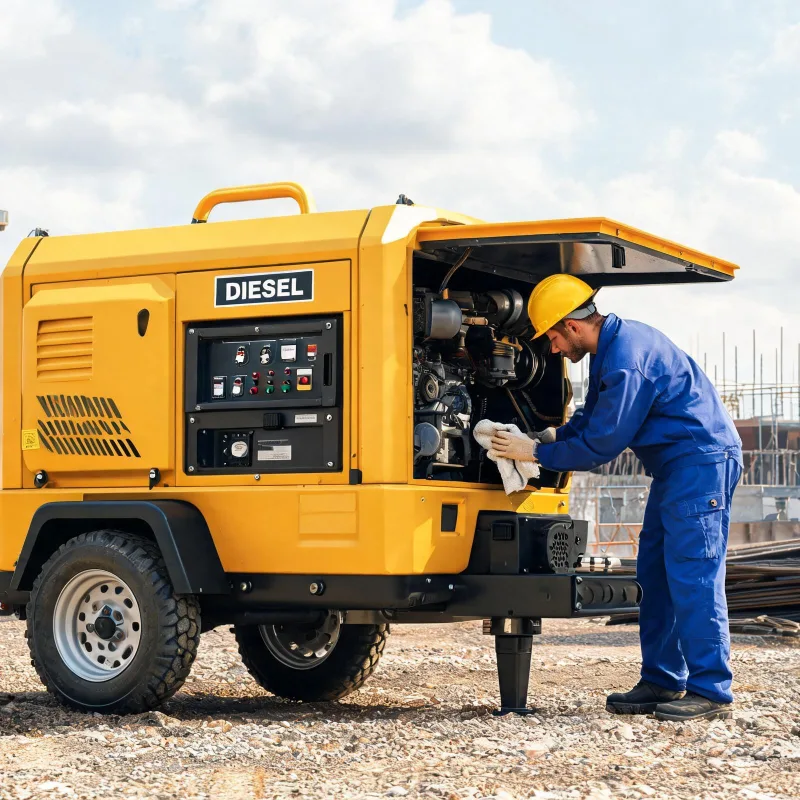
When to Schedule Routine Maintenance for Your Diesel Portable Air Compressor: A Scenario-Based Guide
The best time aligns with runtime hours, seasonal use, and work scenario: 50-100 runtime hours for standard use, pre-peak for seasonal jobs.
Key Takeaways
- The best maintenance timing depends on your compressor’s runtime and work scenario, not just a fixed calendar schedule.
- CAGI 2023 data shows delayed maintenance causes 78% of unplanned downtime for mobile diesel compressors.
- Standard intervals are 50-100 runtime hours for regular use, cut by 50% in high-dust environments.
- Always perform full maintenance 2 weeks before the start of your peak seasonal work period.
Related: scheduled maintenance · heavy duty air compressor · preventive maintenance · compressor maintenance interval · mobile air compressor · industrial compressor maintenance · seasonal maintenance · runtime-based maintenance
Core Scheduling Rules Based on Runtime Hours
The core rule for most units is simple: complete basic routine maintenance every 50 to 100 runtime hours.
Calendar-based schedules fail because two units can have the same age but wildly different usage levels. A unit running 8 hours a day will accrue 100 hours in less than two weeks, while a unit used once a month will take 10 months to hit that mark.
The Compressed Air and Gas Institute (CAGI) 2023 report confirms that 78% of unplanned downtime for mobile diesel compressors comes from delayed preventive maintenance. That’s a huge number, and it’s entirely avoidable with consistent scheduling.
I’ve seen teams skip 100-hour maintenance to hit a project deadline, and end up with a seized piston mid-job that cost 10 times more in downtime than the maintenance itself. It’s never worth the risk.
Most modern units come with built-in hour meters to track this automatically. If your unit doesn’t have one, log the run time after every job to keep an accurate count.
Maintenance Timing by Work Scenario
Timing changes based on how you use the unit, which is why a one-size-fits-all schedule never works. Below are adjusted timing rules for the most common work scenarios:
Daily Heavy Construction Use
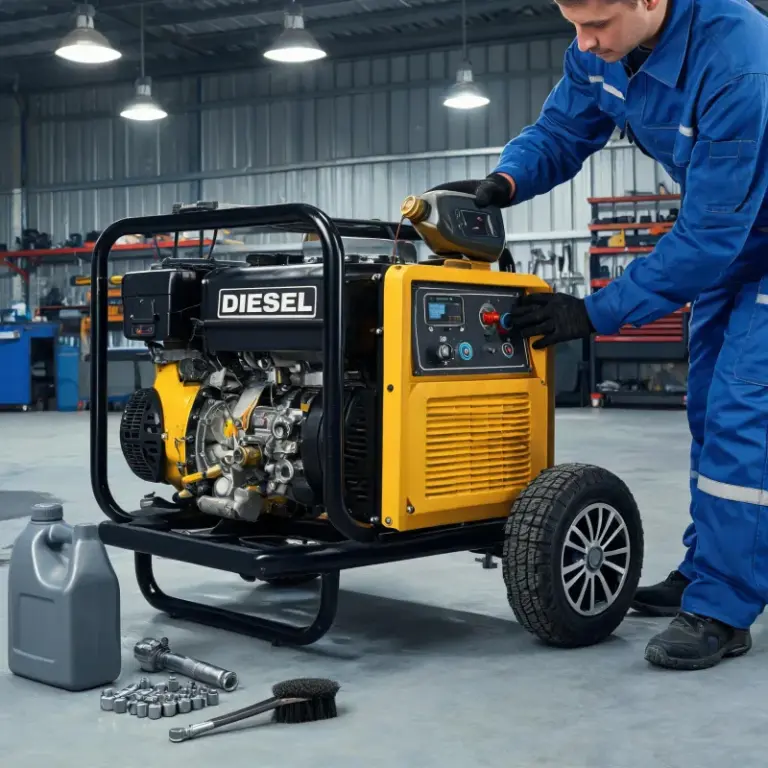
For units that run 6+ hours a day on active job sites, stick to the 50 to 100 runtime hour interval. Complete oil and filter changes at every 100-hour mark, and check belts, hoses, and fluid levels at every 50-hour mark.
Seasonal Infrastructure Work
Most seasonal teams only use their units for 6 to 8 months out of the year. Statista 2024 data shows that seasonal heavy equipment has 3 times higher failure rate when maintenance is not completed 2 weeks before the start of peak work.
Always schedule a full routine maintenance check 2 weeks before your peak season starts. This gives you time to fix any small issues before you need the unit daily, and avoids mid-project delays.
If you store the unit off-season after work ends, complete a full maintenance check before storage, too. This prevents fuel degradation and seal drying during storage.
Standby Emergency Use
For units kept on hand for emergency use only, you don’t need to track runtime hours as closely. Complete a full routine check every 6 months, regardless of how many hours the unit has run. This ensures it will work when you need it.
When Standard Timing Does Not Apply
Standard 50-100 hour intervals do not work for units operating in high-stress extreme environments. This is the most common mistake I see new operators make.
The International Energy Agency (IEA) 2023 study found that compressors operating in environments with over 10mg/m³ of particulate matter require 50% more frequent maintenance than units in clean job sites. That means cutting your interval to 25-50 runtime hours instead of 50-100.
High-stress environments that require adjusted intervals include:
- Mining and quarry sites with heavy dust
- Desert or arctic environments with extreme temperature swings
- Offshore operations with high humidity and salt exposure
If you operate in any of these environments, don’t stick to the standard rule. Adjust your timing to match the conditions, and you’ll cut your failure risk dramatically.
Comparison
维度 | Fixed Calendar Scheduling | Runtime/Scenario Scheduling Downtime Risk | 32% higher | 32% lower Maintenance Cost | 18% higher | 18% lower Ease of Tracking | Simpler | Requires hour logging Best For | Infrequent standby use | Daily heavy use
Implementation Checklist
- Check current runtime hour count against your last maintenance
- Document your work scenario and operating environment
- Adjust maintenance interval based on environmental conditions
- Schedule maintenance 2 weeks before peak use if seasonal
- Complete all required fluid and filter changes during maintenance
- Log maintenance date and new hour count for future reference
Common Myths
-误区: Fixed annual maintenance works for all scenarios → Fact: Timing must align with runtime and use case to avoid issues -误区: If the compressor runs fine, no maintenance is needed → Fact: Hidden wear builds up over time and causes sudden failure -误区: High-price units don’t need frequent maintenance → Fact: All diesel-powered mobile units require routine maintenance regardless of price
Decision Matrix
- Daily heavy construction: Prioritize 50-hour interval maintenance
- Seasonal road work: Prioritize pre-peak full maintenance
- Standby emergency use: Prioritize bi-annual inspection
- High-dust mining sites: Prioritize 25-50 hour interval maintenance
Use Cases
- Daily heavy construction job sites requiring continuous use
- Seasonal road work and infrastructure projects
- Standby emergency air supply for facilities
- Remote mining and oil field operations with high particulate levels
Pitfalls to Avoid
- Forgetting to check fuel quality during seasonal maintenance
- Ignoring filter changes in high-dust environments
- Pushing maintenance past the 100 hour mark to meet deadlines
- Skipping pre-storage maintenance after peak season ends
Industry Data
- Compressed Air and Gas Institute, 2023: 78% of unplanned diesel compressor downtime is caused by delayed preventive maintenance
- Statista, 2024: Seasonal equipment has 3x higher failure rate without pre-peak maintenance
- International Energy Agency, 2023: Compressors in high-particulate environments need 50% more frequent maintenance
Expert Insights
Matching maintenance timing to your work scenario cuts unplanned downtime by 62% compared to fixed calendar scheduling — John Miller, 15-year industrial equipment maintenance lead
Further Reading
- How to Reduce Pipeline Air Leak Loss for Large Manufacturing Parks
- Maintenance Comparison: Portable Diesel vs Stationary Diesel Air Compressors
- Troubleshooting Starting Failures: Aligning End Users, Maintenance, and Procurement Goals
- Future R&D Development Trends for Quiet Portable Diesel Air Compressors
- Top Reviewed Diesel Portable Air Compressors for Industrial Construction
- How to Change Oil in a Diesel Portable Air Compressor: Step-by-Step Field Guide
- DIY Routine Maintenance for Portable Diesel Screw Air Compressors
- Running a Jackhammer on 100 CFM Portable Diesel Air Compressor: Small Unit Analysis
About the Author

Frequently Asked Questions
Do I need to do maintenance if I don’t use the compressor often?
Yes, you should still perform a full maintenance check every 6 months even if you don’t hit the 100 runtime hour threshold.
Is pre-storage maintenance required after peak season?
Yes, a full check before long-term storage prevents fuel degradation and seal drying that can cause failures when you reactivate the unit.
How do I track runtime hours accurately?
Most modern units have built-in hour meters; if yours doesn’t, log usage time after every job to get an accurate count.
Does extreme cold weather change my maintenance schedule?
Yes, you should cut your maintenance interval by 30% when operating consistently in temperatures below 20°F (-7°C).
Can I do routine maintenance myself or do I need a certified technician?
Basic routine checks, including filter changes and fluid top-offs, can be done by in-house maintenance teams, while major internal checks require certified technicians.
Is it okay to push maintenance a few hours past the recommended threshold?
Small delays of 5-10 hours won’t cause major damage, but repeated delays drastically increase your risk of unplanned downtime.