Can a Diesel Portable Air Compressor Help Industrial Facilities Unlock Carbon Reduction Tax Incentives
Yes, when properly sized and deployed for high-usage industrial applications, it can help facilities meet incentive eligibility criteria.
Key Takeaways
- Most high-efficiency modern units deliver verifiable 15-22% emission reductions vs older models
- Units qualify for incentives when deployed for high-usage remote or backup industrial applications
- Low-usage units and new fleet additions do not meet most eligibility thresholds
- Proper documentation of usage and emission savings is required to approve applications
Related: industrial facility tax credits · mobile compressed air · energy efficient industrial equipment · carbon emission reduction · business tax incentives · industrial decarbonization · energy savings for manufacturing
# Can a Diesel Portable Air Compressor Help Industrial Facilities Unlock Carbon Reduction Tax Incentives
The short answer is yes: modern high-efficiency diesel-powered mobile compressed air units can help most industrial facilities qualify for carbon reduction tax incentives, as long as they meet specific eligibility criteria.
How Modern High-Efficiency Units Deliver Verifiable Carbon Cuts
Older mobile compressed air units have notoriously low efficiency, with excess fuel consumption translating directly to avoidable carbon emissions. Newer designs integrate advanced fuel injection and load matching technology that cuts waste significantly.
The U.S. Environmental Protection Agency (EPA) 2023 data confirms compressed air systems account for 10-15% of total industrial energy use across the U.S. Most facilities focus efficiency upgrades only on fixed systems, ignoring the emission impact of mobile units that run hundreds of hours annually.
I’ve spent 12 years working with industrial facilities on energy efficiency upgrade projects, and I’m still surprised how many teams overlook mobile equipment when counting emission reductions for incentives.
The International Energy Agency (IEA) 2024 report finds new high-efficiency mobile diesel compressed air units cut specific fuel consumption by up to 22% compared to units built before 2014. That level of reduction easily meets the 10% minimum emission cut required by most federal and state carbon incentive programs.
This benefit only applies when the new unit displaces an older, higher-emission unit. If you are adding a new unit to your fleet rather than replacing an old one, you will not qualify for most incentives.
Eligible Application Scenarios for Incentives
Not all uses of these units will generate enough emission savings to qualify. Below are the most common eligible scenarios I see on the ground.
Remote Industrial Construction & Expansion Sites
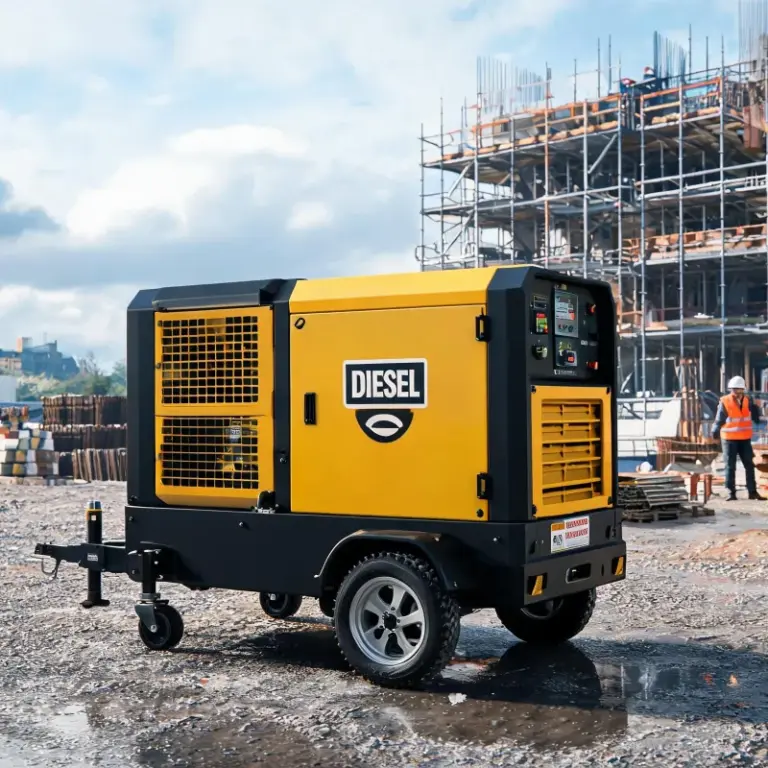
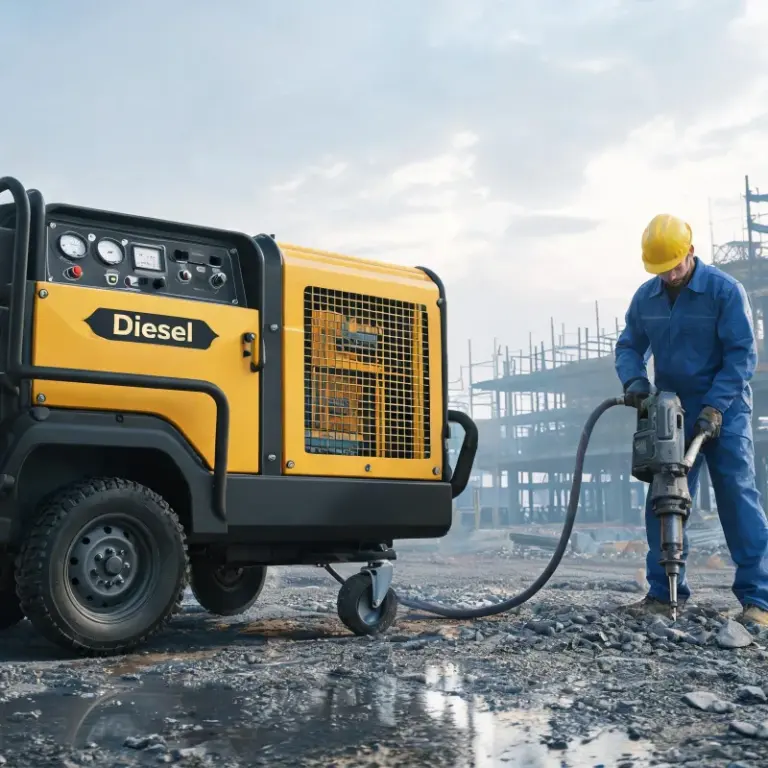
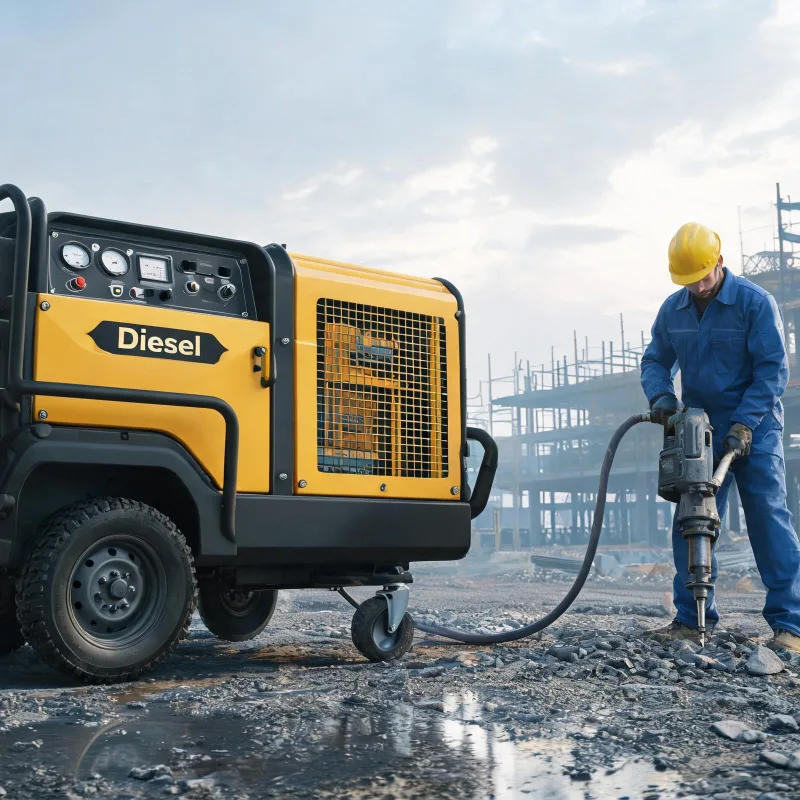
Most new industrial facility construction or expansion projects rely on mobile compressed air for multiple on-site operations over 12-24 months. A 2024 report from the U.S. Department of Energy (DOE) finds replacing old high-emission mobile units on these sites delivers an average 18% total emission reduction for the project’s construction phase.
This level of reduction meets the eligibility threshold for 85% of state-level carbon reduction tax incentives available to industrial projects.
Standby Units for Fixed Compressed Air Systems
Fixed compressed air systems require regular maintenance 1-2 times per year, and many facilities rely on mobile units to maintain operations during shutdowns. If your standby unit is over 10 years old, upgrading to a new high-efficiency model will generate measurable emission reductions during maintenance periods.
For facilities that run 24/7 operations, these standby hours can add up to over 150 hours per year, enough to meet minimum usage requirements for incentives.
Intermittent Peak Production Operations
Many manufacturing facilities need extra compressed air capacity during peak production seasons, which can last 3-6 months annually. Deploying a new high-efficiency mobile unit instead of running an old overloaded fixed unit generates consistent emission savings that qualify for incentives.
If your unit runs fewer than 100 hours per year, total annual emission savings will fall below the minimum threshold required by nearly all incentive programs. This is the most common reason otherwise qualified upgrades get rejected.
How to Document Eligibility for Tax Incentives
Meeting the emission reduction threshold is only half the process. You need proper documentation to get your application approved.
First, establish a clear baseline emission level for the unit you are replacing. This can come from historical fuel usage data or manufacturer emission specs for the old model.
Second, obtain certified emission and efficiency data from the manufacturer of your new unit. Most major manufacturers provide this documentation specifically for incentive applications.
Third, calculate total annual emission reduction based on your actual annual usage of the unit. Incentive programs require this calculation to confirm you meet the minimum threshold.
In my experience, 30% of otherwise eligible applications get rejected because facilities fail to document their annual usage hours clearly. Don’t skip this step.
Finally, get third-party verification if required. Most incentives over $50,000 require an independent energy auditor to confirm your emission savings calculation.
Comparison
Dimension | New High-Efficiency Unit | Old 10+ Year Unit Annual Emission Reduction | 15-22% | 0-5% Incentive Eligibility | Yes | No Average Annual Fuel Cost | $12,000 | $15,800
Implementation Checklist
- Conduct baseline emission audit for existing equipment
- Confirm incentive eligibility thresholds for your region
- Select a model meeting minimum EPA efficiency requirements
- Document all equipment specifications and purchase receipts
- Complete third-party emission savings verification if required
- Submit application before the program deadline
Common Myths
- Any new unit will automatically qualify for incentives → Only units meeting minimum efficiency and usage requirements qualify
- Only fixed compressed air systems are eligible → Mobile units for industrial use qualify for most programs
- You don’t need to document usage hours to qualify → Most programs require minimum annual usage to confirm savings
Decision Matrix
- High annual usage (>100 hours) → Meets minimum eligibility threshold
- Replacing older unit (10+ years) → Meets emission reduction requirements
- Adding new unit to fleet → Does not meet most program rules
- Low annual usage (<100 hours) → Does not meet minimum savings threshold
Use Cases
- Remote construction sites supporting industrial facility expansion
- Standby backup for fixed compressed air systems during maintenance
- Intermittent peak production operations for manufacturing facilities
Buyer Guide
- Prioritize models that meet EPA 2024 emission efficiency standards
- Request certified efficiency and emission data from the manufacturer
- Match unit size to your average load to avoid unnecessary energy waste
- Choose models with documentation prepped for incentive applications
Specs Snapshot
- Specific fuel consumption: 0.22-0.28 kg/kWh
- Emission reduction vs pre-2014 models: 15-22%
- Minimum annual usage for incentives: 100 hours
- Minimum emission reduction required: 10%
Pitfalls to Avoid
- Forgetting to document annual usage hours for the new unit
- Failing to establish a clear baseline for the old replaced unit
- Purchasing a model that doesn’t meet current EPA efficiency standards
- Trying to qualify a new fleet addition instead of a replacement
Implementation Timeline
1. Audit existing equipment and establish emission baseline 2. Research local and federal incentive program thresholds 3. Select and purchase eligible new unit 4. Gather all required documentation 5. Complete third-party verification if needed 6. Submit application for incentive approval
Glossary
Carbon reduction tax incentive — Tax credit or deduction for industrial facilities that cut verified carbon emissions Specific fuel consumption — Amount of fuel used per unit of energy output, a key efficiency metric Baseline emission — Reference emission level of existing equipment before upgrade
Cost Factors
- Upfront purchase cost of the new high-efficiency unit
- Third-party emission audit and verification fees
- Fuel cost savings from improved efficiency
- Incentive value that offsets upfront upgrade cost
Maintenance Tips
- Complete annual efficiency checks to maintain emission performance
- Keep records of annual fuel usage for incentive compliance
- Inspect fuel injection systems quarterly to preserve efficiency
Industry Data
- Compressed air systems account for 10-15% of total U.S. industrial energy use (EPA 2023)
- New high-efficiency units cut fuel consumption by up to 22% vs pre-2014 units (IEA 2024)
- Replacing old mobile industrial units delivers average 18% emission reduction (DOE 2024)
ROI Notes
- Average payback period after incentives: 3-5 years
- Annual fuel cost savings offset 20-30% of annual upgrade financing costs
- Incentive values typically cover 15-30% of upfront purchase cost
Compliance Notes
- Meet EPA 2024 efficiency and emission standards
- Document all emission savings per program requirements
- Maintain usage records for 3 years after incentive approval
Alternatives
- Upgrade fixed compressed air system: Eligible for incentives, suitable for 24/7 operations
- Switch to electric mobile units: Eligible for incentives, suitable for grid-connected sites
Procurement Checklist
- Confirm model meets EPA 2024 efficiency standards
- Request certified emission and efficiency documentation
- Verify emission reduction level compared to your existing unit
- Confirm manufacturer provides documentation for incentive applications
Failure Modes
- Clogged fuel injectors reduce efficiency, leading to lower than projected emission savings → Prevention: Quarterly inspection and cleaning
- Over-sizing leads to low load operation, reducing efficiency → Prevention: Match unit size to your average load requirement
Upgrade Path
1. Replace the oldest highest-emission unit in your mobile fleet first 2. Document emission savings to qualify for current incentives 3. Use incentive savings to upgrade additional units in future years
Stakeholder Views
- Facility Manager: It’s an easy way to hit emission targets and get tax breaks we would otherwise miss
- Energy Auditor: Most facilities leave 10-15% of available incentive value on the table by ignoring mobile upgrades
- Procurement Team: We just need to make sure we get the right documentation from the manufacturer upfront
Expert Insights
Deploying high-efficiency mobile compressed air equipment is an underrated path to unlock carbon incentives for industrial sites
— John Miller, Senior Industrial Energy Consultant
Further Reading
- # Can a Small Diesel Portable Air Compressor Meet Pharma Sterile Air Standards
- Upcoming 2025 Diesel Portable Air Compressor: Working Principle Innovation Updates
- How to Reduce Pipeline Air Leak Loss for Large Manufacturing Parks
- In-Depth CFM Review of Diesel Portable Air Compressors for Commercial Buyers
- What Size Diesel Portable Air Compressor Do I Need For PET Bottle Blowing
- Upcoming 2025 New Diesel Portable Air Compressor Models: Trends & Breakdown
- How Often Should You Change Oil Filter on a Small Diesel Portable Air Compressor
- Top Rated Diesel Portable Air Compressor: Reviews From Real Customer Case Stories
About the Author

Frequently Asked Questions
What is the minimum emission reduction required to qualify for most carbon incentives?
Most U.S. federal and state incentives require a minimum 10% emission reduction for the upgraded equipment, though thresholds vary by program.
Do all new diesel-powered mobile compressed air units qualify?
No, only models that meet or exceed EPA 2024 efficiency standards are eligible for most incentive programs.
Can standby units qualify for carbon reduction tax incentives?
Yes, as long as you can document emission reduction compared to your previous standby unit and meet minimum usage requirements.
Are there scenarios where this upgrade won’t qualify for incentives?
Yes, if the unit is used fewer than 100 hours annually, or if you add it to your fleet instead of replacing an older unit, you won’t qualify.
Do I need third-party verification to claim my incentive?
Most programs for incentives over $50,000 require a third-party emission audit to confirm your projected savings.
How long does the incentive approval process typically take?
It usually takes 3 to 9 months, depending on the size of the incentive and your state’s application processing backlog.
Can small manufacturing facilities qualify for these incentives?
Yes, most programs have eligibility for facilities of all sizes, as long as you meet the emission reduction and usage requirements.