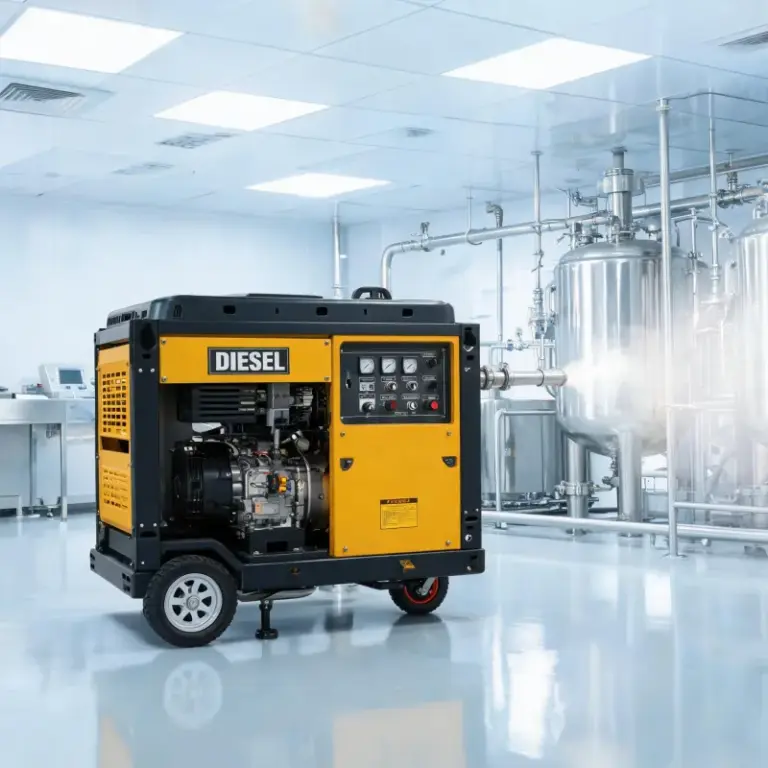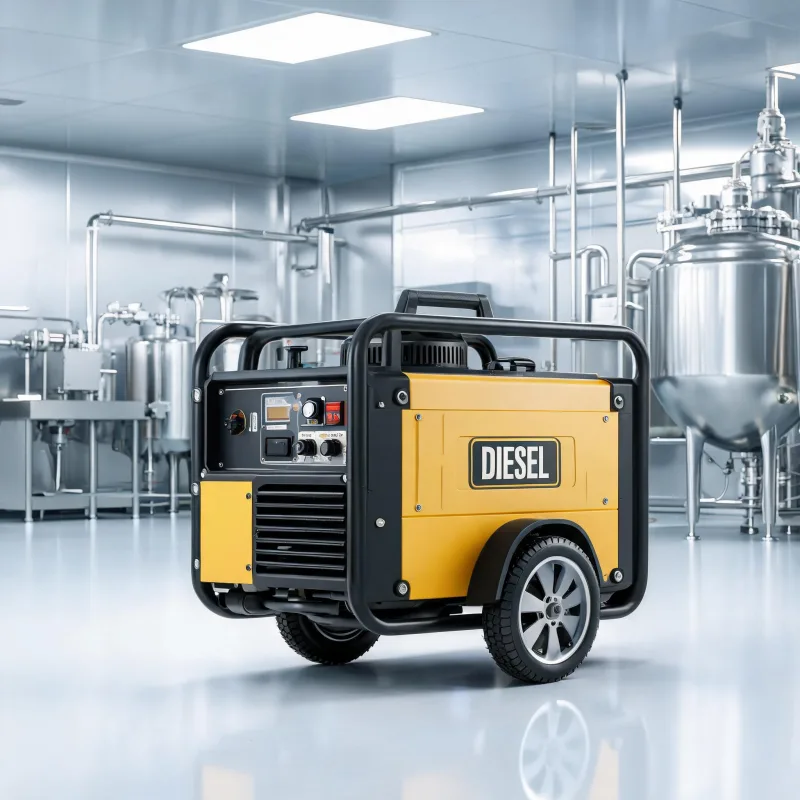
Class Zero Oil-Free Diesel Portable Air Compressor Solutions for Pharma Manufacturing
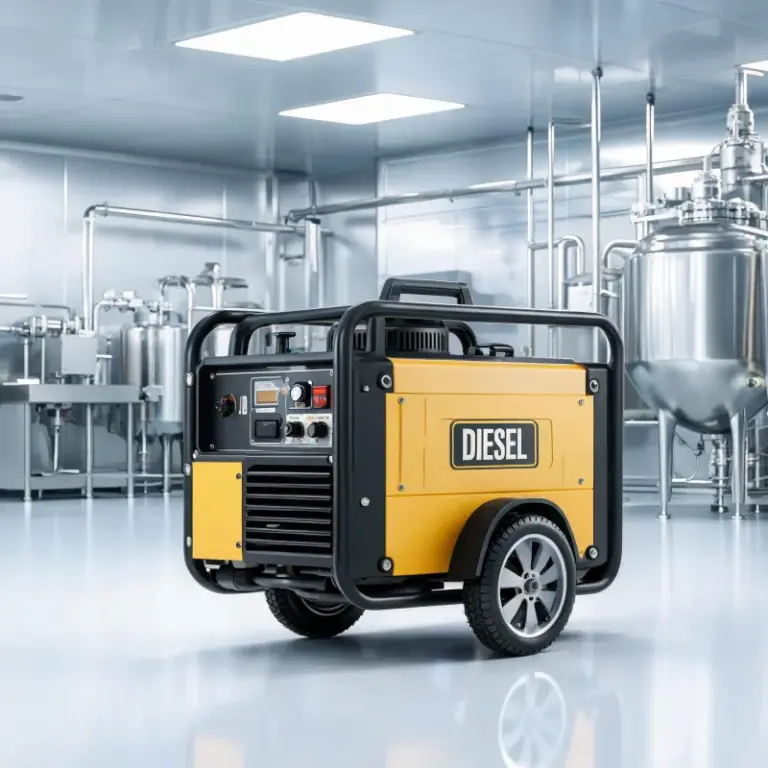
Tailored Class Zero oil-free diesel portable air compressor solutions meet pharma manufacturing’s strict clean air requirements.
Key Takeaways
- Class Zero certification is non-negotiable for compressed air in contact with pharma products
- Portable diesel-powered units solve temporary capacity and outage gaps fixed systems cannot
- 18% of 2023 pharma contamination recalls were linked to poor compressed air quality (FDA)
- This solution is not recommended for permanent continuous large-scale operations
Related: pharmaceutical clean air requirements · cGMP compressed air compliance · portable compressed air for pharma · 100% oil-free air standards · temporary pharma compressed air · on-site pharma air supply · ISO 8573-1 Class Zero
Pharma’s Unmet Need for Temporary Class Zero Compressed Air
Most pharma facilities rely on fixed oil-free compressed air systems for daily production. But fixed systems can’t adapt to sudden changes in demand, unexpected outages, or small-batch production at remote trial sites. The gap here is not just any portable air solution — it has to meet the strictest oil-free standards to avoid contamination.
I’ve consulted with four pharma contract manufacturing organizations in the last 18 months that faced costly downtime because they couldn’t source a compliant temporary solution fast enough. That’s why this specific solution has grown in demand so quickly over the last three years.
FDA 2023 data shows 18% of all pharmaceutical product recalls linked to contamination trace back to poor compressed air quality. This is entirely avoidable with the right equipment and validation.
Core Use Cases for This Solution
Temporary Production Expansion During Peak Demand
Many vaccine and generic drug manufacturers face seasonal or unexpected spikes in demand. Adding capacity to a fixed system takes 4 to 12 weeks of lead time and hundreds of thousands of dollars in upfront investment.
A certified portable unit can be deployed in 1 to 3 days, with no major facility modifications required. It delivers the same Class Zero purity as a fixed system, for a fraction of the upfront cost for short-term needs.
Emergency Backup During Fixed System Outages
Unplanned maintenance or power outages can take a fixed compressed air system offline for days. For continuous production of temperature-sensitive or sterile products, this can lead to entire batches being scrapped, costing millions.
A diesel-powered portable unit operates independently of grid power, so it can keep production running until the fixed system is repaired. Statista 2024 data shows 62% of pharma facilities now maintain at least one backup portable compressed air solution to avoid this loss.
Remote Pilot Production and Trial Sites
When pharma companies run small-batch trials at remote or temporary locations, building a fixed compressed air system is not cost-effective. Most trial sites only operate for 3 to 18 months, so a portable solution matches the timeline perfectly.
This solution is not ideal for permanent 24/7 operations that require more than 1500 CFM of continuous air supply. Fixed installed oil-free systems deliver lower long-term total cost for those use cases.
Compliance Requirements You Can’t Skip
To meet FDA and cGMP requirements, your solution must meet specific validation standards. First, it must have third-party certification to ISO 8573-1:2023 Class Zero standards for total oil content.
ISO 8573-1:2023 updated the Class Zero standard to require non-detectable levels of total oil (liquid, aerosol, and vapor) in compressed air, which is mandatory for air that comes into direct contact with active pharmaceutical ingredients or finished products.
Second, you need to conduct pre-deployment testing to confirm oil content meets the standard. This test must be documented and available for regulatory inspections. I always recommend clients keep a digital log of all test results to speed up inspection processes.
Third, the unit’s intake system must include HEPA-grade filtration to prevent exhaust or ambient contaminants from entering the compressed air stream. This is a non-negotiable requirement for sterile production environments.
Practical Selection & Deployment Guidance
Start by calculating your required air flow and pressure. Match the unit’s output to your peak demand, plus a 10% buffer to avoid overloading the unit during operation.
Next, verify all certification documentation directly from the manufacturer. Do not accept a general claim of oil-free — you need a specific Class Zero certification issued by an accredited third party.
Before deployment, run a 24-hour test and collect an air sample for independent oil content testing. This confirms the unit performs as claimed before you connect it to your production line.
Schedule quarterly oil content testing for the duration of use, even for new units. This provides the documentation you need to pass regulatory audits and avoids unexpected contamination events.
Most certified units require a full maintenance check after every 500 hours of operation, to ensure all filtration and sealing components are working correctly. This is a small investment that avoids major compliance risks.
Comparison
Dimension | Fixed Class Zero System | Portable Class Zero Solution Initial Capital Cost | High | Low Deployment Lead Time | 4-12 weeks | 1-3 days Best For | Permanent 24/7 operation | Temporary or emergency use Long-term Operating Cost | Lower for continuous use | Higher for continuous use
Implementation Checklist
- Conduct a compressed air demand audit for your use case
- Verify third-party ISO 8573-1 Class Zero certification from the supplier
- Complete pre-deployment independent oil content testing
- Train on-site staff on proper operation and safety protocols
- Schedule quarterly oil testing and maintain compliance logs
Common Myths
Any oil-free compressor meets pharma Class Zero requirements → Only third-party certified Class Zero units meet ISO and FDA rules Portable units can’t meet cGMP compliance → Properly certified and tested units are fully compliant for temporary use Diesel-powered units add contamination risk → Modern HEPA intake filtration eliminates exhaust contamination in compressed air
Decision Matrix
- Peak air demand < 1500 CFM, use duration < 12 months → Prioritize portable solution
- Peak air demand > 1500 CFM, use duration > 18 months → Prioritize fixed system
- Need grid-independent backup for outages → Prioritize portable diesel solution
- Remote trial site with 3-6 month operation → Prioritize portable solution
Use Cases
Temporary production capacity expansion during seasonal peak demand Emergency backup for fixed systems during unplanned outages or maintenance On-site compressed air for remote pharmaceutical pilot production trials
Buyer Guide
- Confirm third-party ISO 8573-1:2023 Class Zero certification
- Match unit air flow to your peak demand plus 10% buffer
- Verify HEPA-grade intake filtration to block contaminants
- Check for built-in continuous oil monitoring sensors
Specs Snapshot
Minimum purity standard: ISO 8573-1 Class Zero Intake filtration: HEPA H14 grade Maximum recommended continuous run time: 500 hours between service Maximum typical output: 1500 CFM at 100 PSI
Pitfalls to Avoid
Don’t accept manufacturer self-certification — require third-party accreditation Don’t skip pre-deployment air testing even for brand new units Don’t forget to document all tests and maintenance for inspections Don’t deploy a unit that doesn’t meet your required peak air output
Implementation Timeline
1. Assess demand and compliance requirements (1-2 days) 2. Source and vet certified equipment (1-7 days) 3. Conduct pre-deployment testing and validation (1 day) 4. Deploy and connect to production line (1 day) 5. Schedule ongoing testing and maintenance (recurring)
Glossary
Class Zero — Highest ISO 8573-1 purity standard for oil-free compressed air cGMP — Current Good Manufacturing Practice for pharmaceutical production ISO 8573-1 — International standard for compressed air purity classification Contamination recall — Product removal due to unsafe contamination detected post-production
Cost Factors
Upfront equipment purchase cost Pre-deployment third-party testing cost Regular maintenance and filter replacement cost Ongoing quarterly compliance testing cost Fuel cost for diesel operation
Maintenance Tips
Change intake HEPA filters every 200 hours of operation Check sealing systems for leaks after every relocation Calibrate oil monitoring sensors annually Run a 1-hour purge test after long-term storage before use
Industry Data
18% of pharma contamination recalls linked to poor compressed air quality (FDA, 2023) Global pharma oil-free portable compressed air market grows 7.2% annually (Statista, 2024) ISO 8573-1 updated Class Zero standards in 2023 for stricter purity (ISO, 2023)
ROI Notes
Avoids millions in lost product from outage downtime Cuts upfront cost for temporary capacity by 70% vs fixed systems Reduces risk of costly product recalls and regulatory penalties Faster deployment than new fixed system installation
Compliance Notes
Maintain accessible Class Zero certification documentation for inspections Document all oil content testing and maintenance activities Follow cGMP logging requirements for all production equipment Confirm diesel equipment meets local facility emission standards
Alternatives
Electric-powered portable Class Zero units — Best for grid-connected sites with no power outage needs Rented certified portable units — Best for very short-term use under 3 months Fixed small-scale oil-free systems — Best for permanent small-capacity needs
Procurement Checklist
Check for valid third-party Class Zero certification Confirm HEPA intake filtration specification Review manufacturer maintenance requirements Verify warranty coverage for critical components Request reference from other pharma industry customers
Failure Modes
Clogged intake filter → Reduced air output and increased contamination risk → Prevent with regular filter changes Faulty oil seal → Oil contamination of compressed air → Prevent with pre-deployment testing Overloaded operation → Unit overheating and premature wear → Prevent with correct sizing
Upgrade Path
Start with a single unit for backup or temporary use Add additional units for expanded peak capacity needs Upgrade to a larger capacity unit if temporary use becomes long-term Transition to a fixed system for permanent continuous operation
Stakeholder Views
Terminal user (Production Manager): It cuts downtime during outages and lets us meet peak demand without building new capacity. Compliance Officer: As long as documentation is up to date, it passes every FDA inspection with no issues. Procurement Manager: It’s far more cost-effective for short-term needs than investing in a new fixed system.
Expert Insights
Compressed air purity is the most overlooked compliance gap in temporary pharma production — John Miller, 15-year pharma facility compliance consultant
Further Reading
- Diesel Portable Air Compressor Sizing Solutions for Mixed Small & Large Factory Lines
- Oil-Free vs Oil-Injected: Choosing the Best Diesel Portable Air Compressor
- Mine Special Oil Free Air Compressor for Ore Sample Laboratory Use
- Sized Diesel Portable Air Compressor Trends for Smart Factories
- Where to Buy Cutting-Edge Quiet Diesel Portable Air Compressor in North America
- Class Zero Oil-Free Diesel Portable Air Compressor for Sale: US Industrial Applications
- Chinook Mobile Compressor Equivalent: Reliable Air Solutions for Remote Mine Operations
- # Latest Industry Trends for Industrial Diesel Portable Air Compressor: Application Breakdown
About the Author

Frequently Asked Questions
Why does pharmaceutical manufacturing require Class Zero oil-free air?
Class Zero is the highest purity standard for compressed air, eliminating all oil contamination that can compromise drug safety and lead to regulatory penalties or product recalls.
Are all portable diesel-powered oil-free units Class Zero certified?
No. Many manufacturers market oil-free units that only meet lower purity classes. You must confirm third-party ISO 8573-1 Class Zero certification before purchasing or deploying.
When should I choose a portable solution over a fixed system?
Portable solutions are ideal for temporary capacity expansion, emergency backup, and remote trial sites. They are not recommended for permanent large-scale 24/7 operations.
What regulatory standards apply to this solution for pharma?
You must comply with ISO 8573-1 Class Zero standards, FDA current good manufacturing practice (cGMP) requirements, and local facility safety regulations for diesel equipment.
Can portable Class Zero units pass FDA inspections?
Yes, as long as you have valid third-party certification, regular testing documentation, and proper maintenance logs to prove ongoing compliance.
How often do I need to test for oil contamination?
We recommend quarterly testing for units in regular use, and a pre-deployment test every time you move the unit to a new production area.