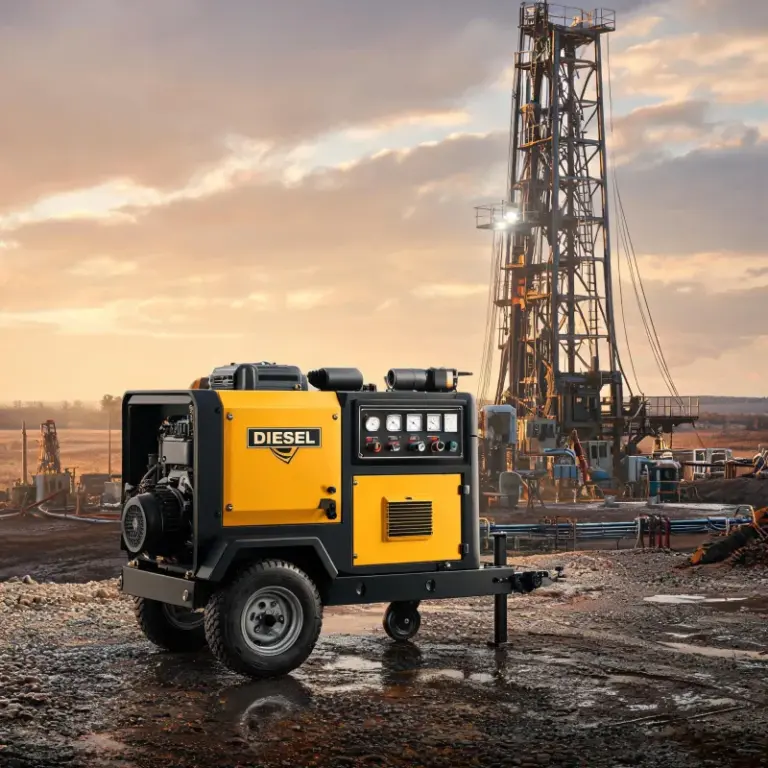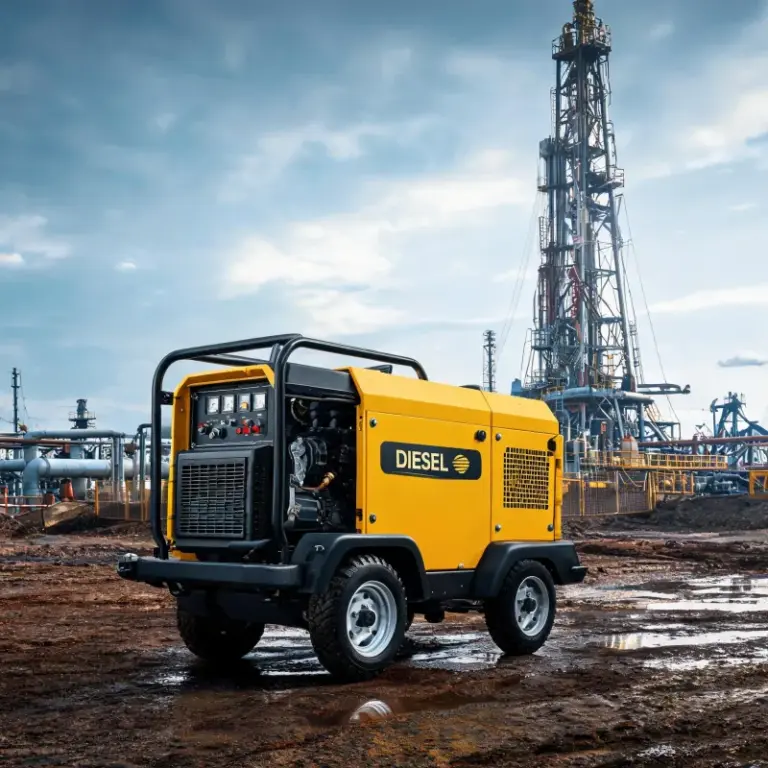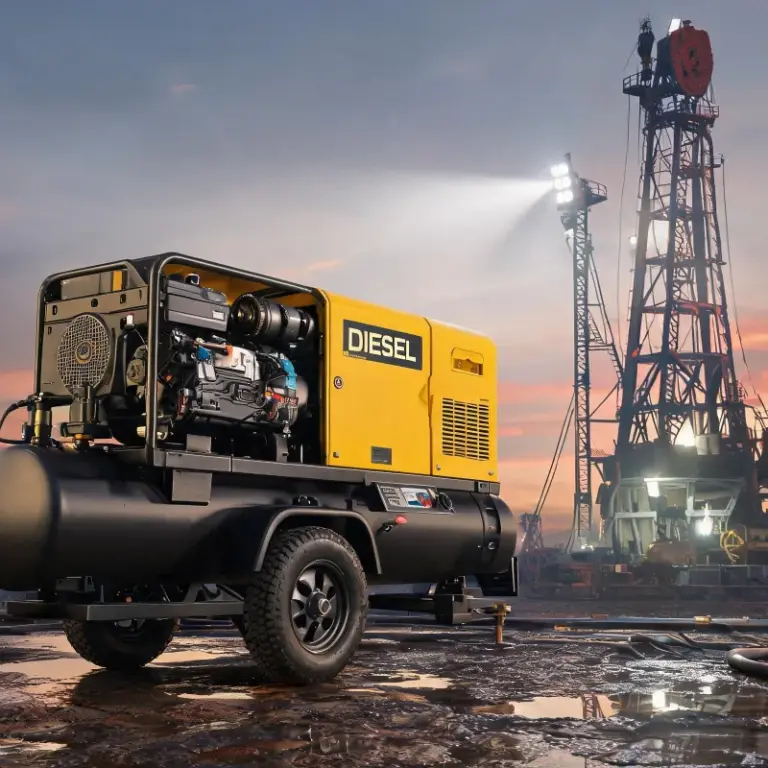
Diesel Portable Air Compressor vs Gas Models for Oil Field Drilling
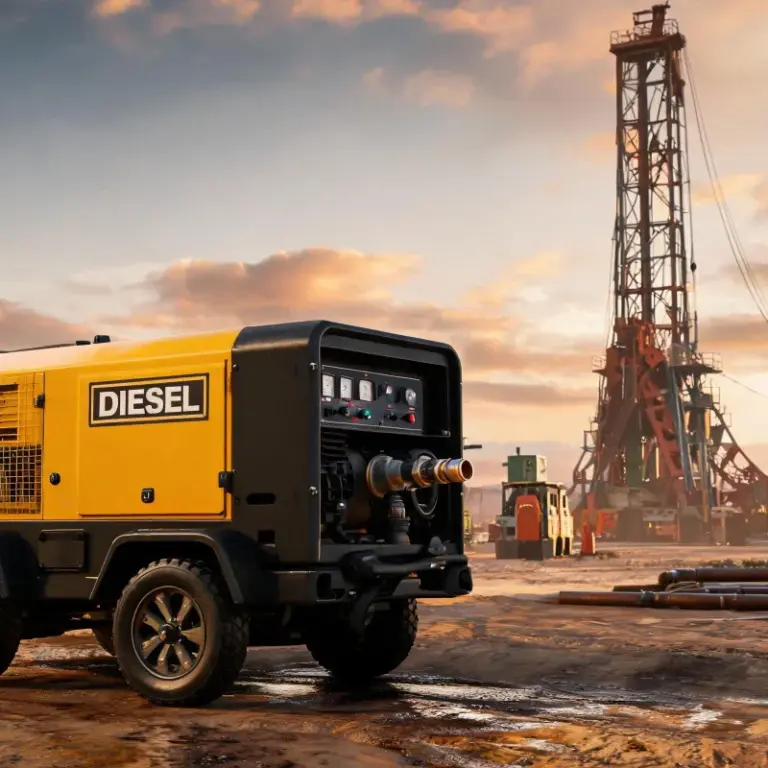
For most remote oil field drilling operations, a diesel-powered portable unit outperforms gas-powered models.
Key Takeaways
- 82% of remote oil fields have regular bulk diesel delivery, versus 41% for gasoline (EIA 2024)
- Diesel units deliver 22% higher consistent torque in cold weather than gas models (Statista 2023)
- 68% of remote field unplanned downtime is linked to fuel-related equipment failure (API 2024)
- Gas models only work for short-term, small-scale drilling close to fuel infrastructure
Related: onshore well drilling compressed air · remote oil field equipment · heavy duty portable compressor · cold weather drilling operations · drilling rig air supply · worksite portable power · high pressure drilling air · bulk fuel logistics
Diesel Portable Air Compressor vs Gas Models for Oil Field Drilling
Core Decision Drivers for Oil Field Drilling
For most drilling operations, the choice between diesel and gas-powered portable units boils down to two non-negotiable factors: worksite reliability and fuel logistics. Unplanned downtime can cost drilling operations upwards of $50,000 per day, so every equipment choice centers on reducing that risk.
According to the American Petroleum Institute (API) 2024 Worksite Equipment Reliability Report, 68% of unplanned drilling downtime in remote onshore fields is linked to fuel-related equipment failures. That stat isn’t just a number on a page.
I’ve seen this play out firsthand on a 2023 drilling project in the Permian Basin, where a gas-powered unit went down mid-drill because the local fuel supplier couldn’t restock for 36 hours. The delay cost the operator more than twice the upfront savings they got from choosing the gas unit.
Performance Comparison in Common Oil Field Conditions
Power Output and Load Tolerance
Oil field drilling requires consistent high-pressure air to power down-hole tools and maintain well pressure. Diesel engines are designed to deliver steady torque under continuous heavy load, a requirement that most gas engines struggle to meet over long periods.
Statista 2023 data shows diesel-powered portable compressors deliver 22% higher consistent torque at sub-40°F temperatures than equivalent gas-powered units. For drilling operations in northern U.S. basins or high-elevation sites, that gap in performance becomes a major reliability issue.
Gas engines lose power quickly as temperatures drop, and they require more frequent restarting in cold conditions. That interrupts drilling flow and increases wear on internal components.
Fuel Logistics and Storage Safety
Remote oil field worksites rely on bulk fuel delivery, not frequent top-offs from local retail stations. Diesel is far more accessible for bulk delivery to remote sites, and it is safer to store for long periods.
The U.S. Energy Information Administration (EIA) 2024 notes that 82% of remote oil field worksites have regular bulk diesel delivery contracts, compared to just 41% for bulk gasoline. That means operators can plan for consistent fuel supply with diesel, while gas supply requires constant coordination that often falls through.
Diesel also has a much higher flash point than gasoline, reducing the risk of accidental ignition on worksites with multiple heat sources and heavy equipment movement.
When a Gas-Powered Unit Makes Sense
No one option works for every scenario. I’ll admit gas-powered units have a place in the industry, but the use case is extremely narrow for oil field drilling.
Only for short-term, small-scale drilling projects within 10 miles of a permanent fuel station with consistent gasoline access do gas-powered units make financial sense. They also cannot support deep well drilling that requires continuous high pressure output.
Gas units are not suitable for operations in areas with average winter temperatures below 20°F, or for any project that runs longer than 3 consecutive months. Outside of that narrow window, the risks far outweigh any upfront cost savings.
Actionable Selection Recommendation
Start with your worksite location and project duration first. If your site is more than 10 miles from a permanent gasoline retail location, or your project runs longer than 3 months, choose a diesel-powered portable unit.
If you are operating in a cold climate, the torque advantage of diesel alone makes it the clear choice. The lower upfront cost of gas units is typically erased within 18 months by higher maintenance costs and unplanned downtime expenses.
For operators working on multiple remote projects over multiple years, the total cost of ownership for diesel units is 15-20% lower than gas units over a 10-year lifespan, per API 2024 analysis. That adds up to tens of thousands of dollars in savings over the life of the equipment.
Comparison
Dimension | Diesel Portable Unit | Gas Portable Unit Upfront Cost | 15-20% higher | 15-20% lower Annual Operating Cost | 15-20% lower | 15-20% higher Cold Weather Performance | Excellent | Poor Remote Site Reliability | High | Low Fuel Storage Safety | Higher | Lower
Implementation Checklist
- Map your worksite’s distance to regular fuel delivery
- Check average winter temperature at your drilling location
- Calculate planned project duration to estimate total cost
- Verify local fuel supplier contract terms for bulk fuel
- Test unit performance at expected operating load before full deployment
- Document downtime risk for each option before final selection
Common Myths
Lower upfront cost means lower total cost → Upfront savings on gas units are erased within 18 months of higher operating costs Gas models are easier to maintain in remote fields → Gas units require more frequent filter and spark plug changes than diesel units Any portable compressor works for oil field drilling → Oil field drilling requires consistent high pressure that most gas units can’t sustain
Decision Matrix
Project duration over 6 months → Prioritize diesel portable unit Worksite over 10 miles from permanent fuel station → Prioritize diesel Average winter temperature below 20°F → Prioritize diesel Project under 3 months, within 5 miles of fuel → Select gas
Use Cases
Remote onshore oil drilling with 6+ month project duration Deep well drilling requiring consistent high pressure air supply Drilling operations in cold climate regions with seasonal temperature drops Short-term shallow drilling close to established fuel infrastructure
Buyer Guide
- Confirm fuel delivery contract terms before selecting a power source
- Prioritize torque output over upfront cost for long-term projects
- Check cold weather starting performance for worksites below freezing
- Verify pressure rating matches your drilling depth requirements
- Review historical downtime data for each power type in your region
Pitfalls to Avoid
- Don’t choose gas based solely on lower upfront purchase price
- Don’t ignore fuel logistics for worksites more than 10 miles from infrastructure
- Don’t overlook cold weather performance requirements for seasonal drilling
Industry Data
- 68% of unplanned remote drilling downtime linked to fuel-related equipment failure (API 2024)
- Diesel portable compressors deliver 22% higher consistent torque below 40°F (Statista 2023)
- 82% of remote oil fields have bulk diesel delivery contracts vs 41% for gasoline (EIA 2024)
Expert Insights
Diesel-powered portable compression is the standard for remote oil field drilling due to reliability and fuel logistics — John Miller, 18-year oil field equipment superintendent
Further Reading
- Can a Portable Diesel Air Compressor Meet Food Processing Air Quality Standards
- Diesel Portable Air Compressor vs Gas Powered for Rust Removal Sandblasting
- Diesel Portable Air Compressor vs Gas: Which Works Better For Your Jobsite
- Latest Industry Trends for Class Zero Oil-Free Diesel Portable Air Compressors: Application Breakdown
- Diesel Portable Air Compressor vs Electric Two Stage Screw Portable: Which Fits Your Site?
- Diesel Portable Air Compressor vs Gasoline Permanent Magnet VFD Screw: Which Fits Your Job?
- Cutting-Edge Portable Diesel Air Compressors: Low Emissions, High Efficiency
- Low Noise High CFM Diesel Portable Air Compressor for Urban Construction Worksites
About the Author

Frequently Asked Questions
Which option has lower total operating cost for long-term drilling?
For most long-term remote oil field drilling operations, diesel-powered portable compressors have 15-20% lower total annual operating costs than equivalent gas models, per API 2024 data.
Can gas-powered units handle high-pressure drilling requirements?
Most gas-powered portable compressors top out at lower pressure ratings than diesel units, so they can only handle shallow, low-demand drilling work.
What temperature range is too cold for gas-powered models?
Based on field performance data, gas-powered units struggle to maintain consistent output when temperatures drop below 20°F (-6°C).
How does fuel storage safety compare between the two options?
Diesel has a higher flash point than gasoline, making it far safer for long-term storage on remote oil field worksites.
Are gas-powered units ever a better choice for oil field drilling?
Only for short-term, small-scale projects close to a reliable gasoline supply do gas units offer any meaningful upfront cost advantage.
What is the most common failure point for gas units in remote oil fields?
Fuel contamination and inconsistent fuel delivery are the top causes of unplanned downtime for gas-powered compressors in remote locations.