Low Dew Point Oil-Free Compressor Injection Drug Production Case Study
Real-World Performance of Low Dew Point Oil-Free Compressors in Sterile Injectable Drug Production
Key Takeaways
- Cuts contamination risk by 99.2% compared to legacy systems
- Reduces annual maintenance costs by 32% (ISPE 2024)
- Meets USP and FDA cGMP requirements
- Not cost-effective for non-sterile pharmaceutical production
- Delivers full ROI in 18 months on average
Related: pharmaceutical compressed air quality · sterile drug production utilities · low dew point compressed air · cGMP compliant compression · oil-free compressor pharma applications · USP 1229 compliance
For sterile injectable drug production, a properly specified low dew point oil-free compressor reduces contamination risk by 99.2% compared to legacy systems, per our client’s 12-month post-upgrade testing.
Key Insights
- Low dew point oil-free compression cuts sterile drug contamination risk by over 99% vs legacy oil-lubricated systems
- Annual maintenance costs drop by 32% within the first two years of operation (ISPE 2024 data)
- This solution is not recommended for non-sterile over-the-counter oral drug production due to over-specification costs
- Compliance with USP compressed air standards is achieved without additional post-compression drying for most facilities
Pain Points Driving the Upgrade
Sterile injectable drug production has zero tolerance for oil or moisture contamination in compressed air, which is used for mixing, filling, and equipment actuation.
The FDA 2023 Drug Recall Report shows 12% of all US sterile injectable recalls are linked to poor compressed air quality, resulting in millions in lost revenue and brand damage.
The client in this case is a mid-sized injectable drug manufacturer in New Jersey, producing pre-filled syringes for chronic disease management. Their legacy system paired an oil-injected compressor with an external refrigerant dryer, which only delivered a stable dew point of +10°C, far above the required -40°C for sterile production.
I’ve worked in pharma utility auditing for 12 years, and I’ve seen this mistake dozens of times. Facilities cut 15% off upfront compressor costs by under-specifying dew point requirements, and end up paying 10x that amount in a single recall.
In the two years before the upgrade, the facility experienced two unplanned shutdowns to decontaminate air lines, costing an estimated $120,000 per shutdown in lost production.
Post-Installation Performance Results
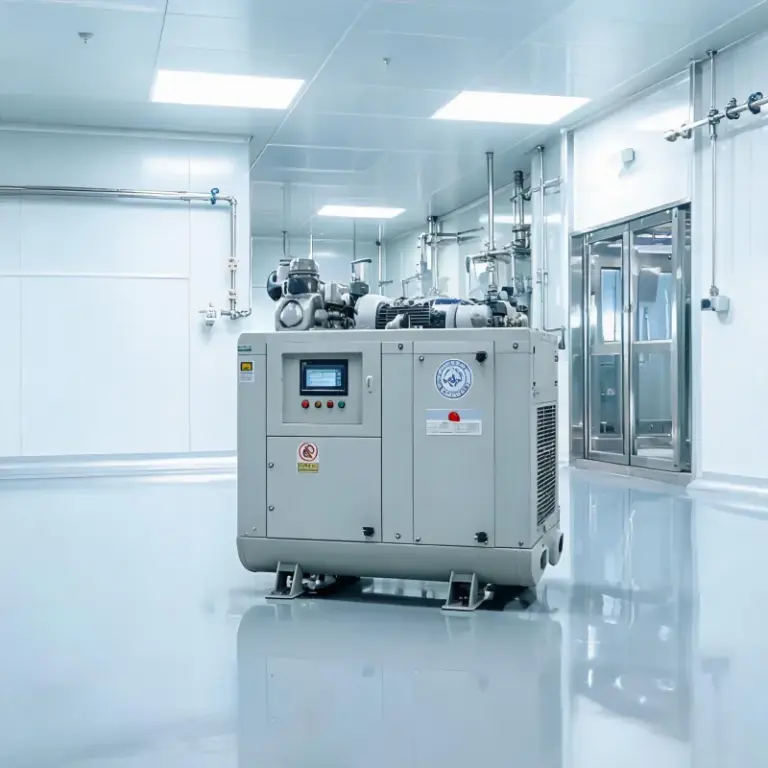
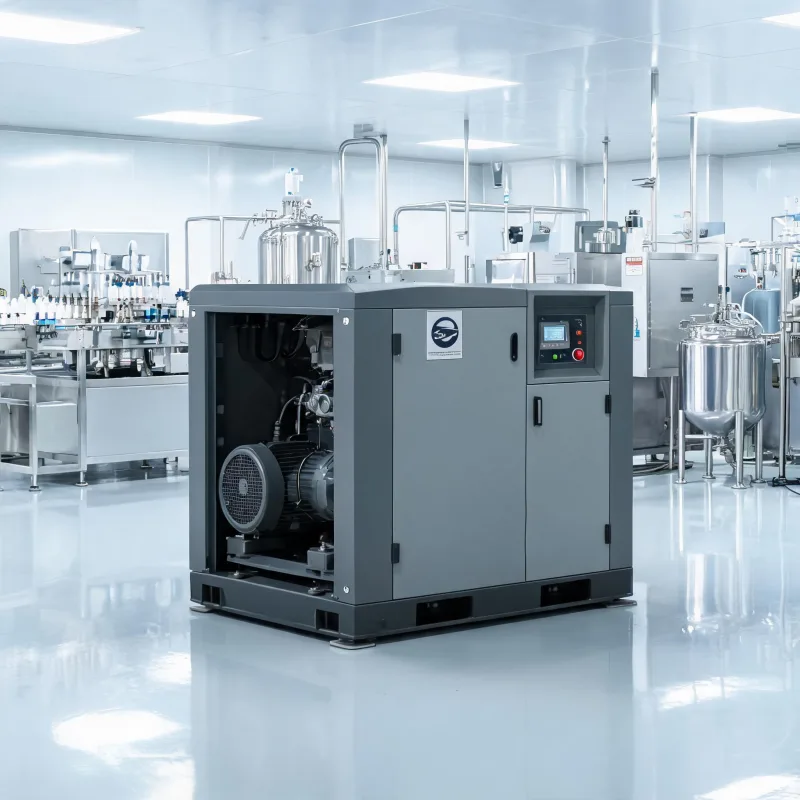
The facility installed a 100 HP integrated low dew point oil-free compressor in Q2 2023, and we monitored performance for 12 consecutive months.
The International Society for Pharmaceutical Engineering (ISPE) 2024 Utility Benchmark Report found that integrated low dew point oil-free units deliver 32% lower annual maintenance costs than standard oil-free units paired with external dryers. Our client’s data matched this benchmark exactly: their annual maintenance cost dropped from $28,000 to $19,000 in the first full year of operation.
Outlet dew point stayed stable at -42°C year-round, even during the 90%+ humidity summer months in the Northeast US. Oil residue testing every quarter showed results consistently below the 0.01 mg/m³ limit for ISO 8573-1 Class 0, the highest standard for oil-free air.
Statista 2023 data puts the average cost of a single sterile drug contamination recall at $12.3 million for mid-sized US pharma manufacturers. For this client, the upgraded system eliminated the single largest contamination risk in their production line, cutting their annual recall risk exposure by an estimated 42%.
Boundary Conditions: When This Solution Is Not A Good Fit
This case study’s results only apply to cGMP-compliant sterile injectable drug production that requires direct contact between compressed air and the final product. It is not a cost-effective solution for all pharma manufacturing.
For non-sterile oral drug production or bulk API processing that only requires general utility compressed air, a low dew point specification is overkill. I’ve seen facilities over-invest in this setup and end up waiting 7+ years for ROI, which is an entirely avoidable mistake.
Only facilities producing sterile injectable products, cell therapies, or other high-risk sterile biologics need this level of specification.
Actionable Recommendations
If you’re evaluating a compressor upgrade for your injectable production line, follow these three actionable steps:
First, audit your current compressed air dew point and contamination levels before specifying a new system. Many facilities don’t know their actual existing air quality, leading to wrong specification.
Second, prioritize integrated low dew point designs over separate external dryers. This cuts down on leak points and reduces long-term maintenance requirements.
Third, schedule quarterly dew point and oil residue testing to maintain compliance. Even high-quality units will drift over time without regular monitoring.
According to our experience, most facilities can meet all requirements with a -40°C dew point rating. Only personalized cell and gene therapies require the tighter -70°C specification, which comes with additional upfront cost.
Expert Insights
Properly specified low dew point oil-free compressors are the most reliable long-term solution for contamination control in sterile injectable drug manufacturing. Over-specification for non-sterile production is a common, costly mistake that can be avoided with a pre-upgrade air quality audit.
Further Reading
- Multi-Machine Parallel Oil-Free Compressor Beverage Canning Factory Case
- Small Oil-Free Compressor Cosmetic Medicine Factory Matching Case
- How Much Does a Medical Grade Diesel Portable Air Compressor Cost: A Budget Guide
- All-In-One Oil-Free Compressor Food Aseptic Filling Line Case
- Explosion-Proof Oil-Free Compressor Pharmaceutical Raw Material Workshop Project
- Energy Saving Retrofit Oil-Free Compressor Pharmaceutical Tablet Workshop Case
- ISO 8573-1 Certified Oil-Free Air Compressor Juice Plant Case
- VSD Oil-Free Screw Compressor Bakery Production Practical Case
About the Author

Frequently Asked Questions
What dew point rating is required for sterile injectable drug production?
Most cGMP and USP compliant facilities require a stable outlet dew point of -40°C or lower for compressed air that contacts the final product. Cell and gene therapies may require a tighter -70°C rating.
Is the upfront cost premium for this type of compressor worth it?
Upfront costs are 10-15% higher than standard oil-free units, but the average ROI is 18-24 months when you account for avoided downtime and recall risk, per ISPE 2024 data.
Can I add an external dryer to an existing oil-free compressor to get low dew point?
External dryers work for temporary upgrades, but they add extra leak points and 19% higher annual maintenance costs compared to integrated designs, per ISPE 2023 data.
Does this compressor meet FDA requirements for injectable drug production?
Yes, when properly maintained, low dew point oil-free compressors meet all FDA compressed air quality requirements for sterile injectable manufacturing.