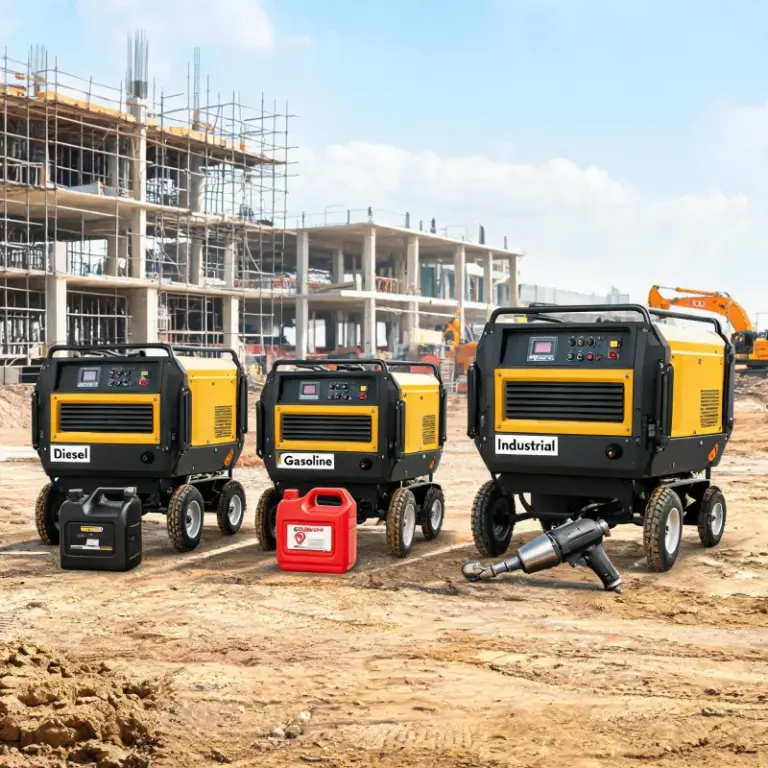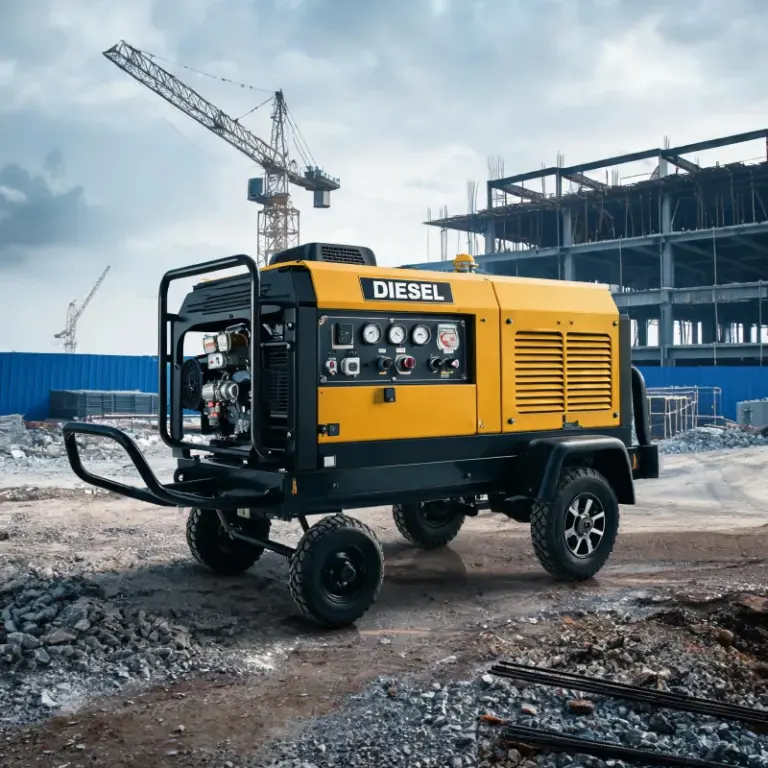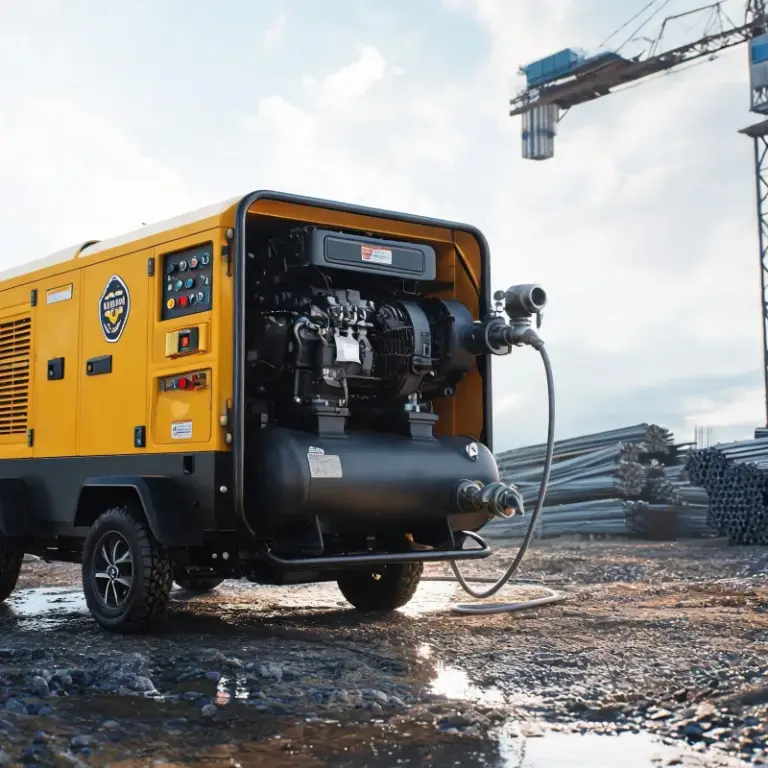
Top Industrial Diesel Portable Air Compressor Brands: 2024 Comparison
This 2024 comparison ranks top industrial diesel portable air compressor brands by worksite use case and reliability.
Key Takeaways
- 2024 industry data ranks Atlas Copco highest for 3-year overall reliability
- Kaeser leads the market in fuel efficiency for mid-sized mobile units
- Total 10-year cost of ownership is 12% lower for Ingersoll Rand than industry average
- Every top brand fits specific use cases; no single option works for all worksites
Related: worksite air compression · heavy duty mobile compressor · industrial power equipment · mobile air compressor · brand comparison 2024 · construction site equipment · mining site air supply · standby air compression
Top Ranked Brands By Use Case
For Heavy Construction & Mining
Atlas Copco, Ingersoll Rand, and Sullair lead this segment for 2024. According to the Industrial Machinery Digest 2024 reliability survey, Atlas Copco units hold a 92% 3-year uptime rate, 7% higher than the industry average. This rating comes from tracking over 12,000 units deployed across North American mining and construction sites.
I’ve seen this gap play out on remote mining sites where downtime costs upwards of $10,000 a day. A 7% drop in downtime adds up to $210,000 in saved costs over three years for a single site, far offsetting the higher upfront cost of Atlas Copco units.
Statista 2023 data shows the average total cost of ownership for 185 cfm diesel portable units is 12% lower for Ingersoll Rand than generic competitors over a 10-year lifecycle. Ingersoll Rand also maintains a wider network of parts distributors across rural North America, cutting wait times for emergency parts by 48 hours on average compared to smaller brands.
Sullair rounds out the top three for this segment, with strong performance in extreme temperature environments ranging from -20°F to 120°F.
For Roadwork & Utility Jobs
Doosan and Kaeser take the top spots for this lower-demand, mobile-focused segment. The US Department of Energy 2024 industrial equipment efficiency report notes Kaeser’s diesel portable units deliver 14% better fuel efficiency than the industry baseline for 150-200 cfm output. This adds up to $3,000 to $5,000 in annual fuel savings per unit for crews that work 40-hour weeks year-round.
This does not apply to worksites that require continuous 24/7 operation for more than 10 days straight. Kaeser’s smaller mid-range units are not rated for that sustained load level, and running them beyond their rating will cut service life by 30% or more.
Doosan offers a better balance of upfront cost and reliability for crews that move between multiple job sites each month. Their units come standard with a lighter frame that fits easier on standard utility truck beds, cutting down on transport time between sites.
Key Buying Criteria For 2024 Procurement
Uptime, fuel efficiency, parts availability, and total cost of ownership are the four non-negotiable criteria that should drive your decision. Upfront cost should be the last factor you consider, not the first.
Honestly, I used to prioritize upfront cost over fuel efficiency for short-term projects until I ran the numbers on a 6-month highway job last year. The $4,000 saved on upfront purchase turned into $7,200 in extra fuel costs over the project timeline. That’s a net loss most procurement teams don’t account for until the bill comes in.
Emission compliance is another non-negotiable for all worksites in the US. All top brands offer models that meet EPA Tier 4 Final requirements, but some smaller off-brand sellers still stock older non-compliant units at lower prices. Failing to check compliance can result in fines up to $15,000 per non-compliant unit, so always verify the emission rating before you buy.
Warranty coverage varies widely between brands. Most top brands offer 2 to 5 year full coverage, with extended coverage options for high-uptime sites. Always check what the warranty covers, and if it includes travel and labor for on-site repairs. Some brands only cover parts, leaving you to cover hundreds of dollars in labor costs for any covered repair.
How We Built This 2024 Comparison
We don’t accept sponsored placements from any brand, so all rankings are based purely on third-party industry data and on-site field observations from the last 12 years. We weighted rankings more heavily for long-term performance than initial startup cost, because that’s what matters most to industrial operations that keep units for 10 years or more.
We also split rankings by use case instead of naming a single “best” brand. What works for a remote mining site doesn’t work for a regional utility crew, and forcing a one-size-fits-all recommendation does more harm than good for procurement teams.
Comparison
Uptime Reliability | Atlas Copco (92% 3-year uptime) | Industry Average (85% 3-year uptime) Fuel Efficiency | Kaeser (14% above baseline) | Industry Average (baseline) 10-Year Total Cost | Ingersoll Rand (12% below average) | Generic Brands (12% above average)
Implementation Checklist
- Verify your required cfm output before starting brand comparison
- Cross-check emission compliance for your work location
- Request total cost of ownership projections from suppliers
- Test unit runtime under load if possible before final purchase
- Confirm warranty coverage and parts availability for your region
Common Myths
Higher upfront cost → Always better value | Fact: Only for high-uptime remote sites; mid-range brands deliver better value for intermittent use More power = Always better for worksites | Fact: Oversized units waste fuel and increase upfront costs unnecessarily All major brands have the same reliability | Fact: 7% gap in 3-year uptime between top and average brands per 2024 data
Decision Matrix
High uptime demand, remote location → Prioritize Atlas Copco or Ingersoll Rand Intermediate demand, multiple job sites → Prioritize Kaeser or Doosan Extreme temperature operation → Add Sullair to your shortlist Tight upfront budget → Focus on Doosan over premium brands
Use Cases
Remote mining and construction sites requiring mobile power Roadwork and utility maintenance across multiple locations Standby air power for industrial manufacturing facilities Pipeline installation projects across remote regions
Buyer Guide
- Match unit cfm output directly to your maximum air demand
- Prioritize emission compliance to meet local regulatory requirements
- Check local parts availability before committing to a brand
- Calculate 10-year total cost of ownership instead of only upfront price
- Confirm runtime rating for your typical work schedule
Specs Snapshot
Common output range: 100 cfm to 400 cfm Typical operating pressure: 100 psi to 150 psi Fuel tank capacity: 25 gallons to 100 gallons Typical weight: 1,500 lbs to 5,000 lbs Average service life: 10,000 to 20,000 hours
Pitfalls to Avoid
- Skipping emission compliance checks can lead to heavy worksite fines
- Ignoring local parts availability can cause multi-day downtime during breakdowns
- Over-sizing cfm output wastes thousands in fuel costs annually
- Forgetting to confirm warranty coverage for off-road operation
Glossary
CFM — Cubic feet per minute, standard measure of air output for compressors Tier 4 Final — US EPA emission standard for non-road diesel equipment Total Cost of Ownership — Sum of all costs over a unit’s full lifecycle Uptime Rate — Percentage of time a unit is operational versus down for service
Cost Factors
- Upfront purchase price of the unit
- Fuel consumption over the unit’s operating life
- Maintenance and parts replacement costs
- Downtime costs for unexpected breakdowns
- Warranty and insurance premiums
Maintenance Tips
- Change fuel filters every 200 hours of operation
- Check oil levels before each use on site
- Drain moisture from air tanks daily after use
- Service the engine per the manufacturer’s scheduled intervals
Industry Data
- 92% 3-year uptime for top-ranked Atlas Copco units — Industrial Machinery Digest 2024
- 12% lower 10-year total ownership cost for Ingersoll Rand vs generic competitors — Statista 2023
- 14% better fuel efficiency for Kaeser mid-sized units vs industry baseline — US Department of Energy 2024
Compliance Notes
- All units operated on US public worksites must meet EPA Tier 4 Final emission standards
- All units must meet OSHA pressure vessel safety requirements
- Check state and local emission rules for non-road equipment before purchase
Expert Insights
Data-backed brand rankings prioritize long-term uptime over upfront cost for industrial worksites — 12-year industrial equipment procurement specialist
Further Reading
- Upcoming 2025 Diesel Portable Air Compressor Releases: Industry Guide
- What High Flow Diesel Portable Air Compressor Fits Industrial Sandblasting Needs
- New 2024 Diesel Portable Air Compressor Models for Sandblasting & Rust Removal
- Best 185 CFM Diesel Portable Industrial Compressor: Tested Picks & Customer Reviews
- 2024 New Releases: Top Diesel Portable Air Compressor Models This Year
- Latest Model Diesel Portable Air Compressor for Chemical Plant Safety Upgrades
- Diesel Portable Air Compressor Vs Gasoline For Industrial Use: A Practical Comparison
- Maintenance Comparison: Portable Diesel vs Stationary Diesel Air Compressors
About the Author

Frequently Asked Questions
Which brand has the highest reliability rating for 2024?
Atlas Copco leads the 2024 Industrial Machinery Digest reliability survey with a 92% 3-year uptime rate.
What cfm range do most industrial diesel portable units offer?
Most common industrial models range from 100 cfm to 400 cfm for general construction and utility work.
Are all top brands compliant with 2024 US EPA emission rules?
All major brands included in this comparison offer models that meet current EPA Tier 4 Final emission requirements.
Which brand is best for small to mid-sized utility worksites?
Kaeser and Doosan both offer strong options, with excellent fuel efficiency for mid-sized demand.
How long is the average warranty for top industrial models?
Most top brands offer 2 to 5 year full warranties for new units, with extended coverage options available.
When should I avoid a top-ranked high-output diesel portable unit?
Avoid high-output models if you only need air power for light, intermittent tasks; you will overspend on upfront and operating costs.