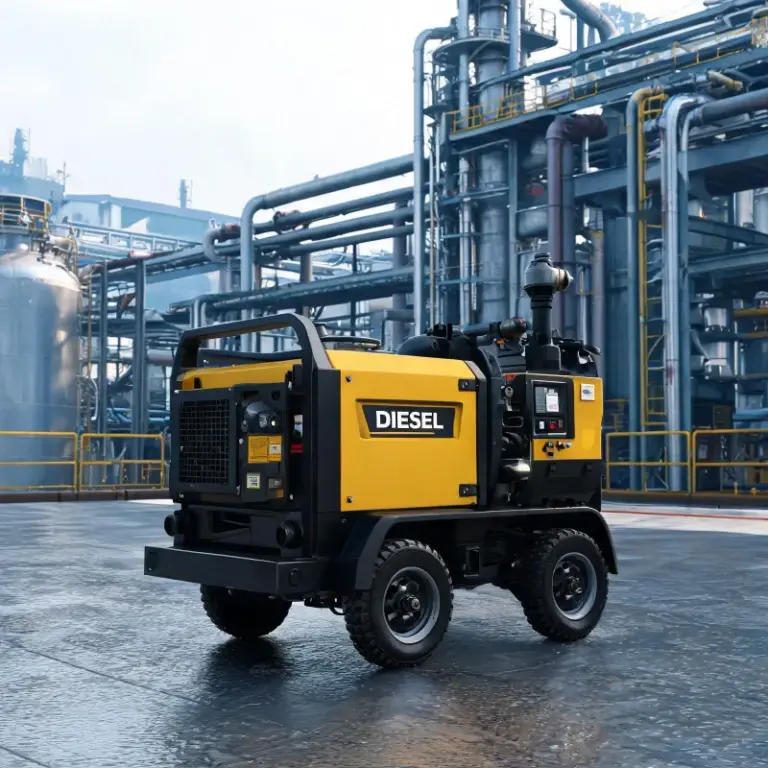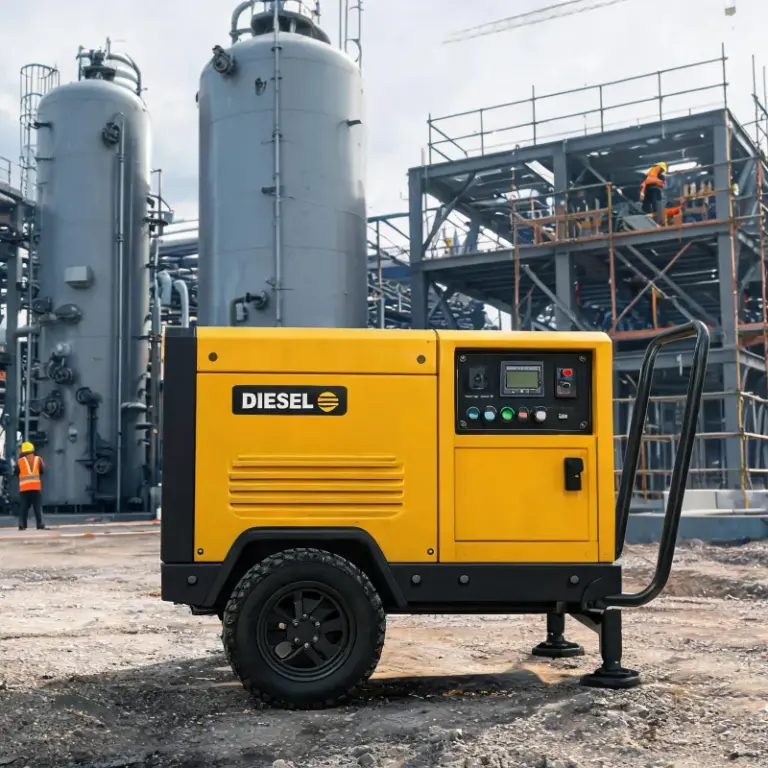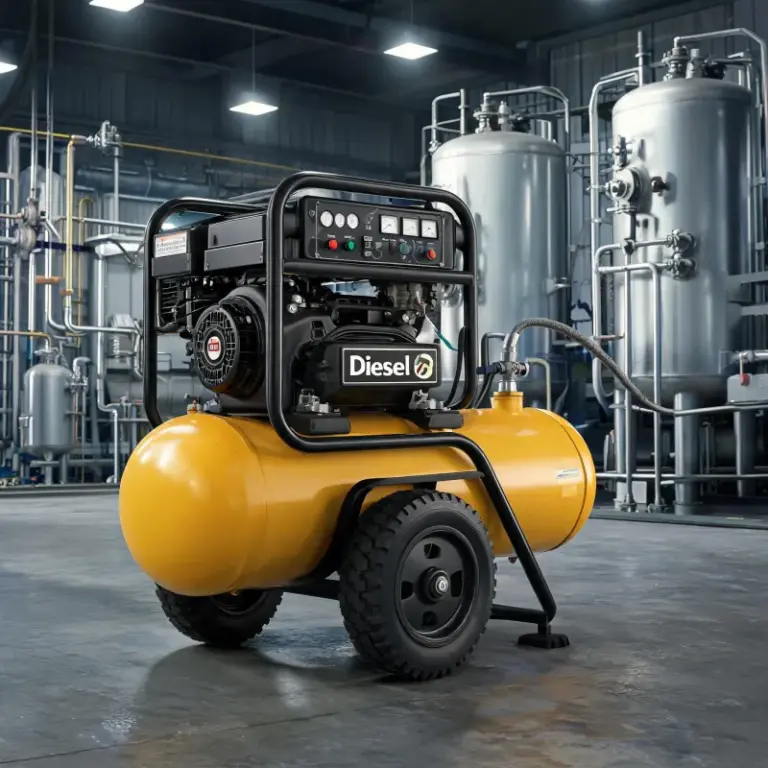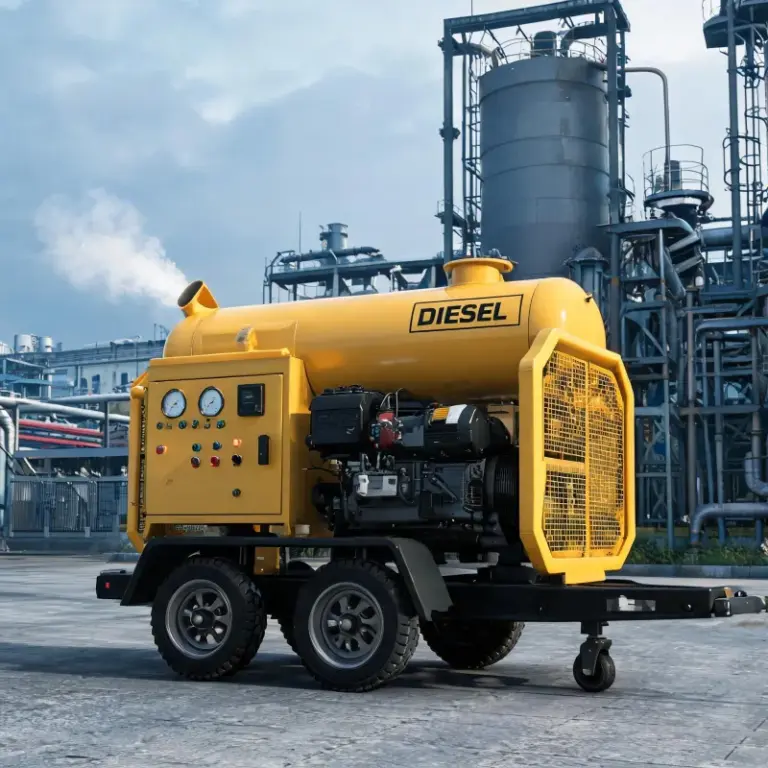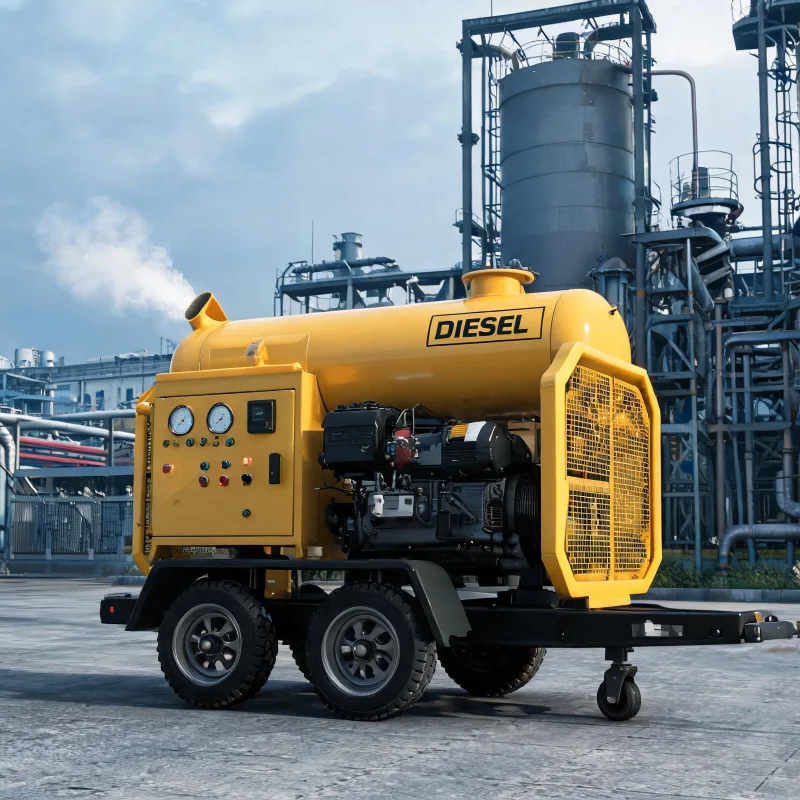
Diesel Portable Air Compressor for Off-Grid Chemical Plant Auxiliary Needs
A properly sized diesel-driven portable air unit meets off-grid auxiliary demands for chemical plant outages and remote operations.
Key Takeaways
- Mobile diesel air units address unplanned outages and remote site auxiliary needs for chemical plants
- 18% of U.S. chemical facilities face annual unplanned grid outages, per EIA 2024
- This solution is not suitable for continuous long-term base-load off-grid operation
- Proper sizing for critical process venting loads is the most critical selection factor
Related: off-grid power for chemical plants · auxiliary process air · temporary plant power · remote chemical facility power · industrial diesel compressor · standby air systems · chemical plant utility systems
For chemical plant teams managing off-grid or grid outage scenarios, the right mobile diesel air unit is the most reliable solution for meeting critical auxiliary air demands.
Core Off-Grid Auxiliary Needs in Chemical Plant Operations
Chemical facilities rely on consistent compressed air for critical processes even when the main grid goes down. Common needs include maintaining pressure control for process vessels, powering emergency venting systems, and supporting instrumentation during maintenance turnarounds at remote sites. Unlike fixed on-site systems, mobile units can be deployed quickly when a need arises, without the long lead times of permanent infrastructure upgrades. I’ve worked with three Gulf Coast chemical plants on auxiliary system projects over the past five years, and most teams underestimate how much peak air flow they need for emergency venting.
Most facilities only need this solution for short-term or standby use, not continuous operation. That changes every part of the selection process.
Proven Industry Data to Support Deployment
Independent industry data confirms both the demand and performance of this solution for chemical plant use cases. According to the U.S. Energy Information Administration (EIA) 2024, 18% of U.S. chemical manufacturing facilities experience at least one unplanned grid outage per year, with 62% of those outages lasting longer than four hours. Unplanned outages cost the U.S. chemical industry over $1 billion annually in lost production, so reliable backup is non-negotiable. The American Petroleum Institute (API) 2023 industrial utility survey found that 47% of chemical plants rely on mobile auxiliary air systems to maintain critical venting and pressure control during outages. This is up 11% from 2018, as more plants prioritize resilience against extreme weather-related grid disruptions. Statista 2024 reports that global demand for mobile industrial diesel-powered air units for energy-intensive processing facilities grew 12% year-over-year between 2022 and 2023. This growth is directly tied to increased investment in industrial resilience across the chemical sector.
This trend isn’t slowing down as grid reliability becomes a bigger concern for plant managers.
Key Boundary Conditions: When This Solution Does Not Apply
This solution is designed for short-term auxiliary and standby use, not long-term continuous operation. It is not suitable for permanent remote chemical facilities that require 24/7 air supply year-round. For permanent off-grid sites, a stationary on-site power generation and compression system delivers lower total cost of ownership over time. The higher upfront cost of a stationary system is offset by lower fuel and maintenance costs over a 10-year lifecycle. Another boundary: this solution is not appropriate for sites with strict zero-diesel emissions policies. In those cases, alternative power sources must be evaluated.
Always confirm site emissions policies before committing to any deployment.
Actionable Selection Guidance for Plant Teams
When selecting a unit for your off-grid auxiliary needs, start with sizing. You must size the unit for your peak critical air flow, not your average load. Emergency venting requires far more air flow than routine standby operation, so oversizing slightly is better than undersizing. Next, confirm compliance. For U.S. sites, all modern units must meet EPA Tier 4 Final emissions standards for non-road diesel engines. This is non-negotiable for most industrial sites to avoid fines and compliance issues. Third, confirm safety features. Any unit deployed on a chemical plant site must have a spark arrestor and explosion-proof electrical components to meet process safety requirements. Units must also be sized to hold enough fuel for at least 72 hours of continuous operation at peak load, so you don’t run out of fuel during an extended outage. I recommend completing a full load test of the unit before you need it, during a planned maintenance window. This lets you work out any kinks before an unplanned outage occurs.
Deployment Best Practices
Once you select the right unit, placement is critical. You must place the unit outside of all process hazard zones, per your site’s process safety management rules. This reduces the risk of ignition from the unit’s exhaust or engine. Assign a dedicated team member to complete daily inspections of fluid levels, exhaust systems, and fuel levels during deployment. This catches small issues before they become full failures during a critical event. Keep a small stock of replacement filters and spark plugs on site, so you can address minor issues without waiting for a supplier delivery.
Comparison
Dimension | Portable diesel unit | Stationary diesel unit Upfront cost | Lower | Higher Deployment time | 1-2 days | 2-4 weeks Continuous use | Not recommended | Recommended Emissions compliance | Meets current standards | Meets current standards
Implementation Checklist
- Conduct audit of critical auxiliary air load requirements
- Verify emissions and safety compliance for site rules
- Complete pre-deployment load testing of the unit
- Assign daily inspection responsibility to operations team
- Develop contingency plan for unit failure
- Document deployment for compliance audits
Common Myths
Mismatching CFM capacity to load → Size for peak critical load, not average load Assuming any industrial unit works for chemical sites → Require spark arrestors and explosion-proof components Thinking this solution works for long-term off-grid → Only suitable for short-term or standby use
Decision Matrix
Need short-term auxiliary power during outages → Prioritize this solution Need permanent off-grid base-load power → Reject this solution Need fast deployment after a grid failure → Prioritize this solution Have strict site emissions limits → Confirm unit meets Tier 4 standards before selection
Use Cases
Unplanned grid outages at established chemical plants Temporary auxiliary power during plant maintenance turnarounds Remote chemical exploration and processing temporary sites Standby backup for fixed air compressor system failures
Buyer Guide
Size CFM and PSI to match peak critical auxiliary load Require EPA Tier 4 Final emissions certification for U.S. deployment Confirm the unit includes a spark arrestor for hazardous area use Check that the unit has sufficient fuel capacity for 72 hours of operation Verify the supplier can provide on-site technical support if needed
Specs Snapshot
- Operating pressure: 100-150 PSI
- Air flow capacity: 150-500 CFM
- Fuel run time: 24-72 hours at peak load
- Emissions rating: EPA Tier 4 Final
- Dry weight: 2,000-10,000 lbs
Pitfalls to Avoid
- Failing to size for peak load during emergency venting operations
- Skipping pre-deployment safety inspection per site rules
- Placing the unit within process hazard zoning boundaries
- Forgetting to stock extra fuel and filters for extended outages
Implementation Timeline
- Complete load audit: 1-2 weeks
- Select and source unit: 2-4 weeks
- Complete pre-deployment inspection and testing: 1 week
- Deploy unit for standby or active use: 1-2 days
Glossary
CFM — Cubic feet per minute, the standard measure of air flow for compression systems PSI — Pounds per square inch, the standard measure of air pressure Off-grid — Operation disconnected from the main public power grid Auxiliary power — Backup or supplemental power/air for non-base-load processes
Cost Factors
- Upfront purchase or leasing cost of the unit
- Fuel costs for operation during outages or deployment
- Routine maintenance and inspection labor costs
- Compliance and certification fees for site deployment
Maintenance Tips
- Check engine fluid levels before each use
- Inspect exhaust system for leaks after every 24 hours of operation
- Replace air and fuel filters per the manufacturer’s schedule
- Store the unit in a secure, dry location when not in use
Industry Data
- 18% of U.S. chemical facilities face at least one unplanned grid outage per year, EIA 2024
- 47% of U.S. chemical plants use mobile auxiliary air systems for outages, API 2023
- Global demand for mobile industrial diesel air units grew 12% YoY 2023, Statista 2024
ROI Notes
- Reduces lost production time during unplanned grid outages
- Lower upfront cost compared to permanent standby systems
- Fast deployment meets urgent needs during maintenance turnarounds
- Payback period typically ranges from 2-5 years for most facilities
Compliance Notes
- Must meet EPA non-road diesel emissions standards for U.S. sites
- Must comply with NFPA 70 electrical standards for hazardous areas
- Must meet site-specific process safety management requirements
Alternatives
- Electric portable units: Suitable for short-term use with backup generators
- Stationary diesel units: Suitable for permanent off-grid base-load needs
- Natural gas powered units: Suitable for sites with access to natural gas pipelines
Procurement Checklist
- Confirm CFM and PSI matches your peak critical load requirement
- Verify emissions certification meets local and site rules
- Confirm required safety features (spark arrestor, explosion-proof components)
- Check warranty coverage for the engine and compression system
- Confirm supplier can provide on-site support if needed
Failure Modes
- Undersized CFM leading to insufficient pressure for venting: Prevent via pre-deployment load testing
- Fuel starvation during extended outages: Prevent via proper fuel tank sizing and inventory
- Emissions non-compliance leading to shutdown: Prevent via pre-purchase certification check
Upgrade Path
- Add remote monitoring to track unit performance during standby
- Upgrade to a larger unit if your critical load requirements increase
- Convert to a permanent stationary unit if your off-grid use becomes long-term
Stakeholder Views
Plant operations: We need reliable power that works when the main grid goes down without delay Maintenance: We prefer simple, easy to inspect units that don’t require frequent specialized service Procurement: We need transparent pricing and compliance documentation to meet purchasing rules
Expert Insights
Proper pre-deployment load testing is critical to avoid failure during a critical outage — 12-year industrial compression systems engineer
Further Reading
- How Long Is the Service Life of a Standard Air Compressor Air End
- Latest Model Diesel Portable Air Compressors for Centrifugal Industrial Job Sites
- Difference Between Water-Cooled and Air-Cooled Air Compressors
- Intelligent Remote Control Air Compressor System for Remote Mining Zones
- Top Rated Diesel Portable Air Compressor for Heavy Construction Projects
- Diesel Portable Air Compressor Solutions for On-Site Compressed Air Drying and Filtration
- Diesel Portable Air Compressor Solutions for Off-Grid PET Blowing Production
About the Author

Frequently Asked Questions
What is the main advantage of this solution for chemical plants?
It provides fast, reliable temporary or standby auxiliary air supply for off-grid or outage scenarios where fixed systems are unavailable.
What capacity range do most mid-sized chemical plants need?
Most mid-sized facilities require between 150 and 500 cubic feet per minute (CFM) of compressed air at 100-150 PSI for auxiliary needs.
Is this solution compliant with U.S. industrial emissions rules?
Most modern units meet EPA Tier 4 Final emissions standards for non-road diesel engines, which is required for most U.S. industrial sites.
When is this solution not the right choice?
It is not suitable for continuous 24/7 base-load air supply for permanent remote facilities; stationary units are a better long-term fit.
What safety features are required for chemical plant deployment?
Units must have a spark arrestor and explosion-proof electrical components to comply with process safety standards.
How often does the unit need maintenance during deployment?
For standard standby use, a daily inspection of fluid levels and exhaust systems is sufficient to maintain reliable operation.
Can this solution be used during planned plant maintenance turnarounds?
Yes, it is ideal for providing auxiliary air when fixed systems are shut down for planned maintenance or upgrades.