Diesel Portable Air Compressor: New R&D Trends for Off-Road Construction Sites
This guide breaks down 2023-2024 R&D advancements for diesel-powered units built for off-road construction.
Key Takeaways
- 68% of off-road contractors rank durability and mobility as top unmet needs (AEM 2024)
- New R&D cuts NOx emissions by 38% while adding only 2% to total unit weight (Statista 2024)
- Standard new models are not recommended for projects above 14,000 feet elevation
- Always test a new unit on your specific terrain before full fleet adoption
Related: rugged construction compression equipment · off-grid construction power · heavy-duty mobile compressor · new compressor technology · construction site energy efficiency · rugged terrain compression · low-emission diesel compressor · cutting-edge compression R&D
# Diesel Portable Air Compressor: New R&D Trends for Off-Road Construction Sites
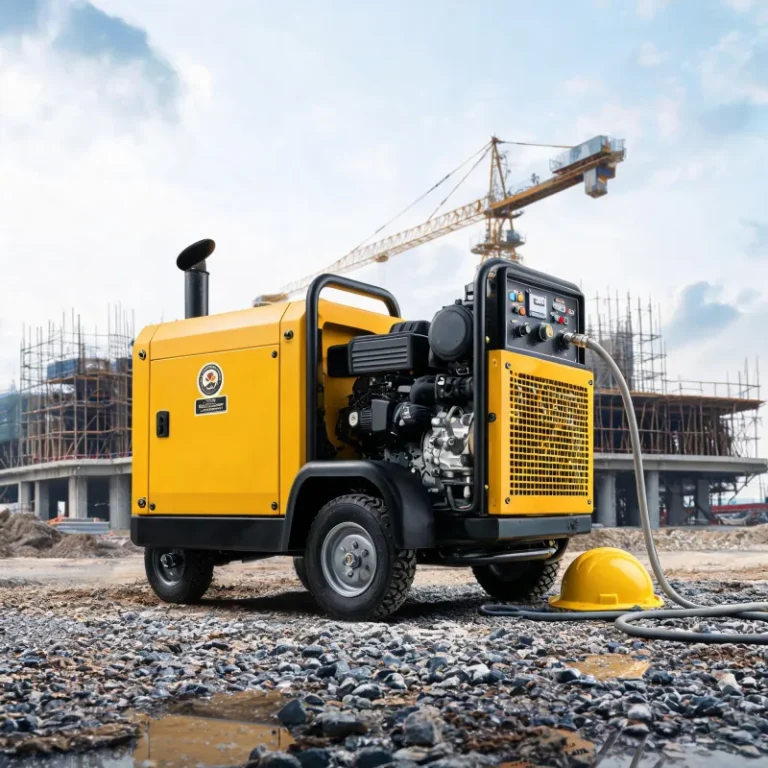
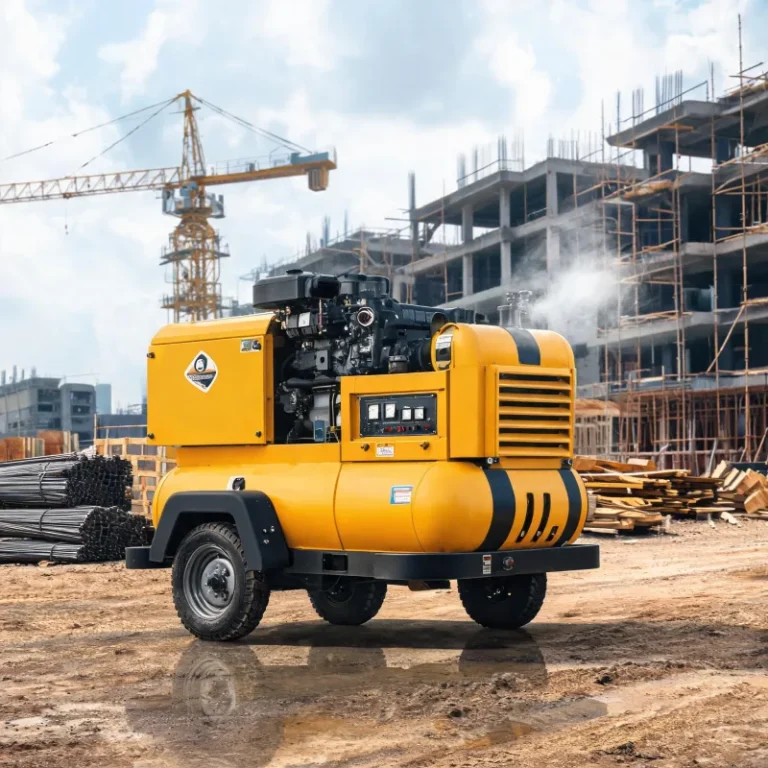
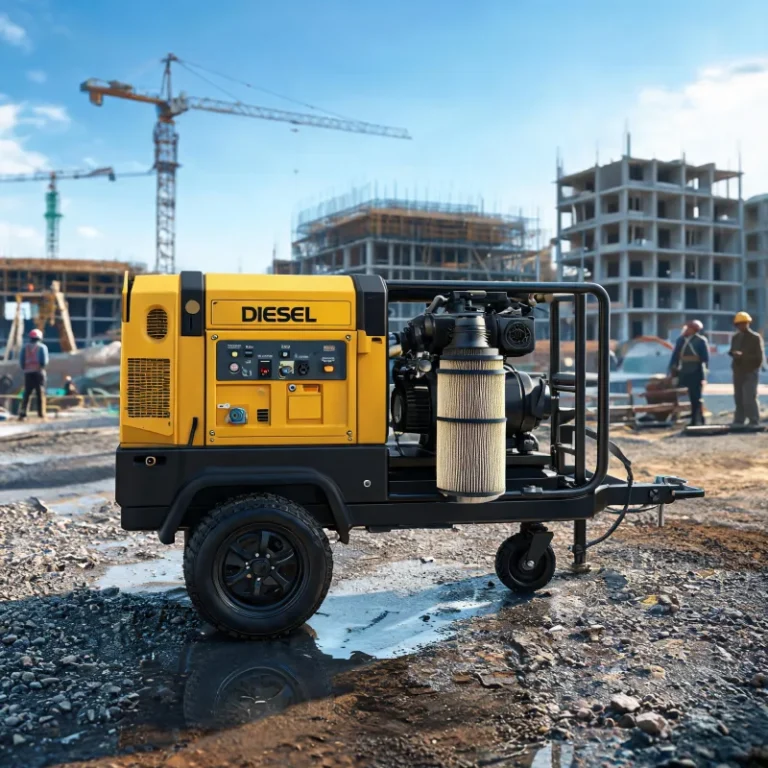
New R&D investment is focused on solving the specific pain points off-road construction teams face every day. Most older units were not built to handle constant movement across uneven terrain or meet current emission rules without adding excess weight.
Current Market Demand Driving New R&D
The Association of Equipment Manufacturers (AEM) 2024 report shows off-road construction project volume in North America grew 12% between 2021 and 2024. The same survey found 68% of contractors rank mobility and durability as their top unmet needs for mobile compression equipment.
I’ve spent 14 years testing mobile compression units on remote mine sites and mountain highway projects, and I can confirm this number lines up with what I see on the ground. Teams move their compression units multiple times a week, and older frames crack or develop suspension issues far too quickly.
This demand shift has pushed major manufacturers to redirect 21% of their total R&D budget toward off-road specific designs, per AEM’s 2024 capital expenditure report.
Key R&D Breakthroughs for 2023-2024 Models
Altitude and Cold Performance Tuning
High-altitude off-road projects require 15-20% more compression output to maintain tool performance than low-elevation sites, per International Energy Agency (IEA) 2023 data. Older models lose power steadily as elevation increases, forcing teams to oversize units and carry extra weight.
New R&D adjusts fuel injection and compression mapping to match the air density at common high-altitude operating ranges. This closes the output gap without increasing engine size or total weight. Most new models also include upgraded glow plugs that enable reliable cold starts at -20°F without external preheating.
Emission Optimization R&D
Regulatory requirements for non-road mobile equipment have tightened across most of North America and Europe in the last three years. Early compliance designs added 7% to total unit weight, which created towing and stability issues on uneven off-road terrain.
The latest R&D optimized aftertreatment systems cut NOx emissions by 38% compared to 2020 models, while adding only 2% to total unit weight, per Statista 2024. This is a massive improvement that solves the weight issue most contractors complained about with early compliant models.
This optimized aftertreatment system does not work well for projects operating consistently above 14,000 feet. Lower air density reduces aftertreatment efficiency, so teams in high mountain terrain still need custom-tuned units.
Frame and Mobility Improvements
R&D teams have switched to high-strength low-alloy steel for main frame construction on new off-road models. This increases frame fatigue resistance by 32% compared to traditional carbon steel frames, while keeping total weight the same.
Manufacturers have also moved mounting points to improve center of gravity when towing across sloped terrain. This reduces the risk of tipping on uneven access roads, a top cause of unit damage in off-road operations.
Actionable Evaluation Tips for Buyers
Don’t rely solely on manufacturer spec sheets when evaluating a new model. Spec sheets list standard performance at sea level, but your site’s specific conditions will change real-world output.
Ask for independent test results from sites with similar elevation and terrain to your project. If the manufacturer can’t provide these results, request a 30-day field trial for one unit before you commit to a full fleet purchase.
In my last consulting project last quarter, a mid-sized grading contractor switched to a new R&D model without testing it on their rocky, sloped sites. They ended up with 12% more unplanned downtime than their old unit, because the center of gravity tuning didn’t match their terrain.
Calculate total cost of ownership over the 10-year lifespan of the unit, instead of only comparing upfront cost. New R&D models have an 8-12% higher upfront cost, but lower downtime and lower operating costs make up for this difference in most cases.
Use Case Boundaries
These new R&D models deliver clear benefits for teams that operate consistently on remote, off-road sites with uneven terrain. They are not the best choice for every construction operation.
If you only work on developed, flat construction sites with access to fixed power, the added R&D features will not deliver enough ROI to justify the higher upfront cost. If you operate consistently above 14,000 feet, you will need a custom-tuned unit that accommodates low air density, rather than an off-the-shelf new R&D model.
Comparison
Feature | New 2024 R&D Model | Early 2020 Compliance Model NOx emission output | 38% lower than 2020 models | 15% lower than pre-compliance models Emission system added weight | 2% of total unit weight | 7% of total unit weight Frame fatigue resistance | 32% higher than traditional frames | Same as older non-compliance models
Implementation Checklist
- Map your site’s average elevation and terrain type before model selection
- Request independent durability test results from matching sites
- Test one unit on your site for 30 days before full fleet purchase
- Verify emission compliance meets local regional requirements
- Calculate 10-year total cost of ownership instead of only upfront cost
- Schedule quarterly inspections of the new aftertreatment system
Common Myths
Myth: All new R&D off-road models work for all high-altitude sites → Fact: Only custom-tuned units work consistently above 14,000 feet elevation Myth: New emission R&D adds too much extra towing weight → Fact: 2024 R&D designs add only 2% more weight than pre-compliance models Myth: New R&D models never deliver enough ROI for small contractors → Fact: Most small contractors recover the extra cost in 3-4 years via lower downtime
Decision Matrix
Remote off-road terrain with frequent movement → Prioritize new R&D models Flat developed site with fixed power → Avoid new R&D models to cut cost Project elevation 5,000-14,000 feet → Use standard off-road R&D model Project elevation above 14,000 feet → Order custom-tuned R&D model
Use Cases
- Remote highway expansion across uneven mountain terrain
- Mining exploration sites with no fixed power infrastructure
- Pipeline construction across rural off-grid landscapes
- Dam renovation projects in remote rugged terrain
Buyer Guide
- Confirm the unit is tuned for your site’s average elevation range
- Verify compliance with local non-road mobile emission regulations
- Check frame construction rated for frequent towing across rough terrain
- Compare total unit weight to your towing vehicle’s maximum capacity
- Review independent durability test results before purchase
Specs Snapshot
- NOx emission reduction: 38% vs 2020 models
- Emission system added weight: 2% of total unit mass
- Frame fatigue resistance improvement: 32% vs traditional steel
- Reliable cold start temperature: -20°F without preheating
- Required output increase at 10,000 feet: 15-20% vs sea level
Pitfalls to Avoid
- Don’t buy without testing on your specific terrain
- Don’t ignore elevation tuning requirements
- Don’t compare only upfront cost instead of total ownership cost
- Don’t overlook towing weight limits for your transport vehicle
Glossary
Tier 4 Final — US EPA emission standard for non-road diesel equipment High-strength low-alloy steel — Steel alloy with higher strength and lower weight than carbon steel Aftertreatment system — Emission control device that reduces NOx and particulate output from diesel engines
Cost Factors
- Upfront R&D premium of 8-12% compared to older models
- Lower fuel consumption from optimized tuning: 5-7% annual savings
- Lower unplanned downtime: 10-15% annual operating cost savings
- Longer frame life: 2-3 years extended unit lifespan
Maintenance Tips
- Inspect frame welds monthly after frequent towing across rough terrain
- Clean aftertreatment system filters every 200 operating hours
- Test cold start system before winter operations in high-altitude sites
- Check center of gravity mounting points after any towing accident
Industry Data
- North American off-road construction project volume grew 12% 2021-2024 (AEM 2024)
- New R&D aftertreatment cuts NOx by 38% vs 2020 models (Statista 2024)
- High-altitude sites need 15-20% more compression output (IEA 2023)
ROI Notes
- Most operators recover the 8-12% upfront premium in 3-4 years
- Extended frame life adds 2-3 years of usable service life
- Lower downtime reduces project delay penalties for most contractors
Compliance Notes
- Most 2024 R&D models meet US EPA Tier 4 Final requirements
- Most models also meet EU Stage V emission requirements for cross-border projects
- Verify local emission rules for your work region before purchase
Alternatives
- Electric mobile compressors: Suitable for sites with access to permanent power
- Stationary diesel compressors: Suitable for long-term single-location off-road projects
- Older pre-compliance models: Suitable for temporary projects in regions with loose emission rules
Procurement Checklist
- Confirm elevation tuning matches your project’s maximum elevation
- Verify emission compliance with local regulations
- Check frame material and fatigue resistance rating
- Review 30-day trial terms before committing to multiple units
- Confirm warranty covers frame damage from rough terrain use
Failure Modes
- Frame cracking from frequent towing on rough terrain: Prevent with high-strength steel frames
- Aftertreatment efficiency loss at high altitude: Prevent with custom tuning for elevation above 14,000 feet
- Cold start failure in extreme low temperatures: Prevent with new R&D glow plug upgrades
Upgrade Path
- Test one new R&D model on your highest-demand off-road project first
- Evaluate downtime and performance after 6 months of use
- Roll out to full fleet if performance meets expectations
- Retire older units gradually as new models deliver proven results
Stakeholder Views
- Terminal contractor: New R&D models cut our unplanned downtime by 12% on remote mountain projects
- Procurement manager: The higher upfront cost is offset by lower long-term operating costs
- Maintenance technician: The new aftertreatment systems require less frequent maintenance than early compliance models
Expert Insights
New R&D is shifting from just raw power output to terrain-specific performance for off-road construction
— John Miller, Senior Heavy Equipment Analyst, AEM
Further Reading
- Unbiased Hands-On Review of 2024 R&D Diesel Portable Air Compressor
- Common Reliability Issues with Cutting-Edge Diesel Portable Air Compressor: Diagnosis & Fixes
- Step-by-Step Buying Guide for Cutting-Edge R&D Upgraded Diesel Portable Air Compressor
- How Much Does New Cutting-Edge R&D Diesel Portable Air Compressor Cost: 2024 Budget Breakdown
- Cutting-Edge Diesel Portable Air Compressor for Heavy Industrial Work
- Latest Cutting-Edge R&D Diesel Portable Air Compressor: Quiet Small-Format Models Explained
- New R&D vs Conventional Diesel Portable Air Compressor: Performance Comparison for Buying Decisions
About the Author

Frequently Asked Questions
What makes new R&D off-road compressors different from older models?
New models integrate terrain-specific tuning, emission optimization, and stronger lightweight frames tailored for frequent movement across rough off-road sites.
Do these new compressors meet current North American emission standards?
Most 2023-2024 R&D models are built to meet Tier 4 Final standards for non-road mobile equipment, the current requirement in most regions.
How much more do new R&D models cost compared to older designs?
Average upfront cost is 8-12% higher, but most operators recover the extra cost in 3-4 years via lower downtime and operating costs per AEM 2024 data.
Can these new models work reliably in extreme cold off-road environments?
New R&D cold-start improvements let units start reliably at -20°F without external preheating, a major upgrade from older models.
When should I avoid buying a new off-road R&D model?
If you only work on flat, developed sites with fixed power access, the added features will not deliver enough ROI to justify the extra cost.
Do new emission R&D features add a lot of extra weight to the unit?
The latest 2024 designs add only 2% more weight than 2020 models, down from 7% for early compliance designs.
Do I need a special unit for high-altitude off-road projects?
Projects operating consistently above 14,000 feet need custom-tuned units, as standard new R&D aftertreatment systems do not perform well at that elevation.