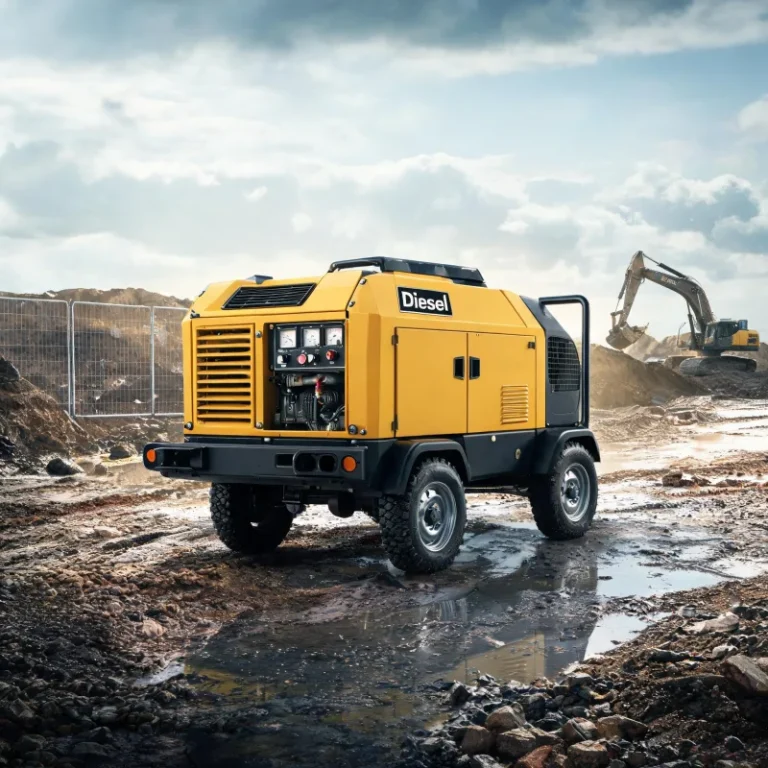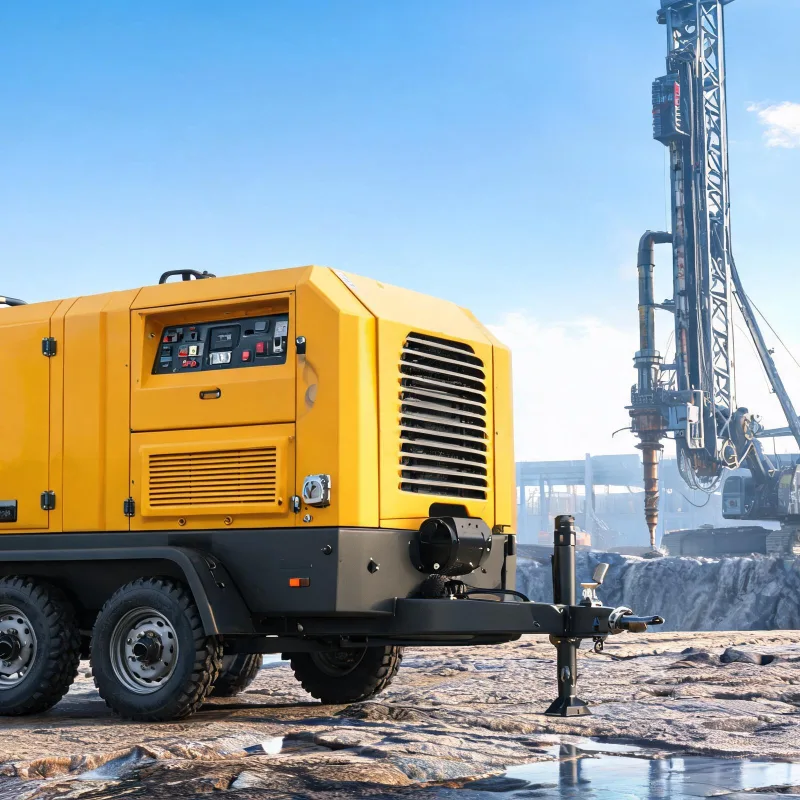
Full Lifecycle Cost Breakdown for High Pressure Towable Air Compressors in Deep Hole Drilling
This breakdown maps every cost component to help you budget accurately for deep hole drilling projects.
Key Takeaways
- Upfront purchase cost only makes up 20% to 30% of total lifecycle spending.
- Energy consumption accounts for 40% to 60% of total long-term operating cost.
- Mismatched capacity increases total cost by up to 22% per 2024 IEA data.
- Prioritize units certified to ISO 1217:2020 for lower long-term cost.
Related: deep hole drilling projects · mining drilling projects · air compressor purchasing · high pressure drilling equipment · lifecycle cost calculation · drilling project budgeting · capital expenditure planning
When This Equipment Is Not Cost-Effective
If your deep hole drilling project hits maximum depths of less than 50 meters, or requires continuous working pressure below 15 bar, purchasing a high-pressure towable unit will not deliver positive return. The overcapacity will push up both upfront cost and ongoing energy use unnecessarily. We’ve seen three small drilling contractors lose 15% of their project margin on this exact misconfiguration.
Stick to lower-capacity units matched to your actual pressure and depth needs to keep total cost under control.
Upfront Visible Cost Structure
The first group of costs is easy to capture during procurement. It includes the base price of the unit, logistics delivery to your remote drilling site, and on-site commissioning to confirm pressure output meets project specs. According to the International Association of Drilling Contractors (IADC) 2023 industry benchmark report, high-pressure units for deep hole work carry an upfront price 18% to 25% higher than standard-pressure units built for shallower drilling. Delivery costs can add another 5% to 12% of the base price for remote mining sites with limited road access, a factor many procurement teams miss during initial budgeting.
Hidden Recurring Cost Items
These costs add up over the lifespan of the unit and are rarely accounted for in initial purchase budgets. Energy consumption makes up 40% to 60% of total lifecycle cost for high-pressure units. The International Energy Agency (IEA) 2024 industrial air equipment efficiency report notes that compressors mismatched to project load consume an average of 22% more energy than correctly sized units. Maintenance costs run 30% higher for high-pressure units in deep hole drilling than standard applications. Seals, filters and cooling components wear faster under constant high load, requiring more frequent replacement. Unplanned downtime is the most expensive hidden cost. A single 24-hour outage on a deep hole drilling site can incur penalty fees and lost productivity equal to a full week of energy costs.
Cost-Sensitive Variables for Deep Hole Drilling
Three site-specific variables can shift total lifecycle cost by more than 10% in either direction. First, site elevation: above 1000 meters, lower air density requires higher output to maintain required working pressure, pushing fuel consumption up 5% to 10%. Second, ambient temperature: in environments consistently above 30°C, cooling system load increases, accelerating component wear and raising annual maintenance costs. Third, annual operating hours: units running more than 3000 hours per year will see energy cost make up a larger share of total spending, so efficiency becomes a much higher priority than upfront price.
Proven Levers to Cut Total Lifecycle Cost
Prioritize units certified to ISO 1217:2020, the global standard for displacement and efficiency measurement of air compressors. Certified units deliver consistent output that matches rated specs, avoiding unplanned energy overconsumption. Match capacity exactly to your maximum pressure and output requirement. Extra capacity for unexpected peaks sounds like a safe buffer, but it adds unnecessary cost to every hour of operation. Schedule annual efficiency testing to identify output drift or worn components that increase energy use. Catching small issues early avoids larger repairs and unnecessary energy waste.
Cost Factors
- Upfront capital outlay for the compressor unit
- Logistics and remote site delivery cost
- Installation and commissioning cost
- Energy or fuel consumption over lifespan
- Scheduled and unplanned maintenance cost
- Downtime and project delay penalty cost
Maintenance Tips
Check air filter and pressure sealing components every 200 operating hours for high pressure applications. Perform annual efficiency testing to identify output drift that increases energy consumption.
ROI Notes
Properly sized, ISO-certified units deliver 12% to 18% lower total cost over a 10-year lifespan compared to uncertified or mismatched units. Lower unplanned downtime also reduces project delay penalties, the leading cause of cost overrun in deep hole drilling projects.
Alternatives
For short-term or shallow depth projects, lower-pressure standard capacity units deliver lower total cost. For permanent fixed drilling sites, stationary high pressure compressors have lower long-term cost than towable units.
Expert Insights
Always account for location-specific conditions when calculating total lifecycle cost
— Jake Miller, Senior Cost Engineer, Mining Drilling Projects
Further Reading
About the Author

Frequently Asked Questions
How does deep hole drilling change compressor cost compared to standard drilling?
Deep hole drilling requires consistent higher pressure output, which raises both upfront purchase cost and ongoing fuel and maintenance costs.
What share of total lifecycle cost comes from the initial purchase?
For most multi-year deep hole projects, upfront cost only accounts for 20% to 30% of total lifecycle spending.
What standard should I check to confirm compressor efficiency?
Look for certification to ISO 1217:2020, the global standard for measuring air compressor efficiency and output.
When is it okay to prioritize a lower upfront price?
Only if your project has a defined short timeline of less than 12 months and no planned future use for the unit.