How to Maintain a Diesel Portable Air Compressor for Regular Farm Use
Follow scheduled checks, fluid changes and seasonal storage to keep your unit reliable for daily farm work.
Key Takeaways
- 68% of farm equipment failures come from neglected basic maintenance
- 5-minute daily pre-use checks prevent most sudden unexpected failures
- Adjust filter change intervals based on the dust level of your farm environment
- Seasonal prep prevents costly downtime during peak planting and harvest
Related: regular farm equipment upkeep · diesel engine care · agricultural equipment downtime reduction · heavy duty farm equipment · compressed air equipment for farms · scheduled equipment maintenance
Consistent, scheduled upkeep is the only way to avoid costly downtime for your diesel powered portable air unit on a working farm. Skipping basic checks leads to premature failure that most operations can’t absorb during planting or harvest season.
Daily Pre-Use Inspection Steps
Every time you prepare to run the unit, complete a 5-minute visual and fluid check before starting the engine.
Check Fluid Levels First
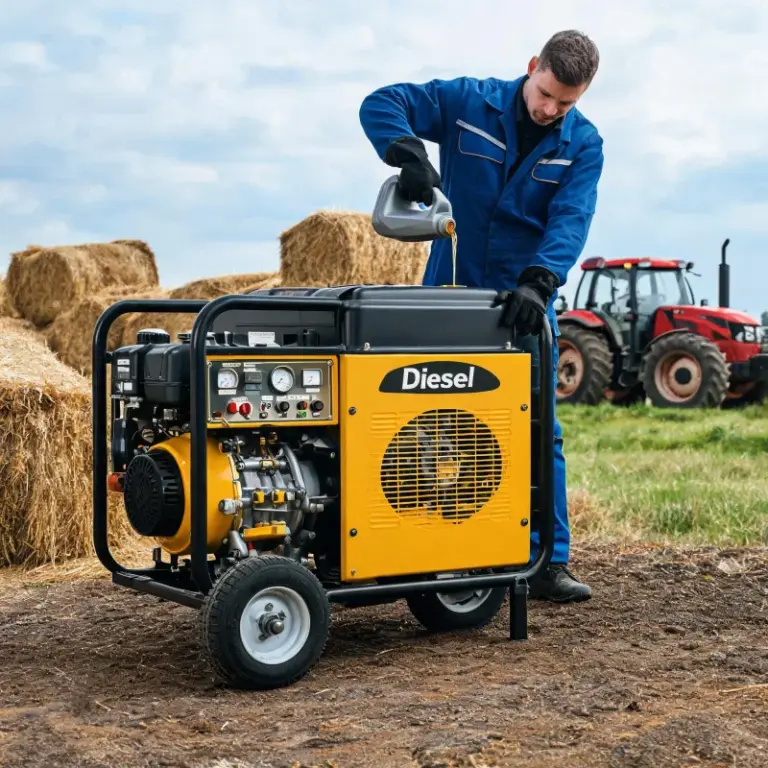
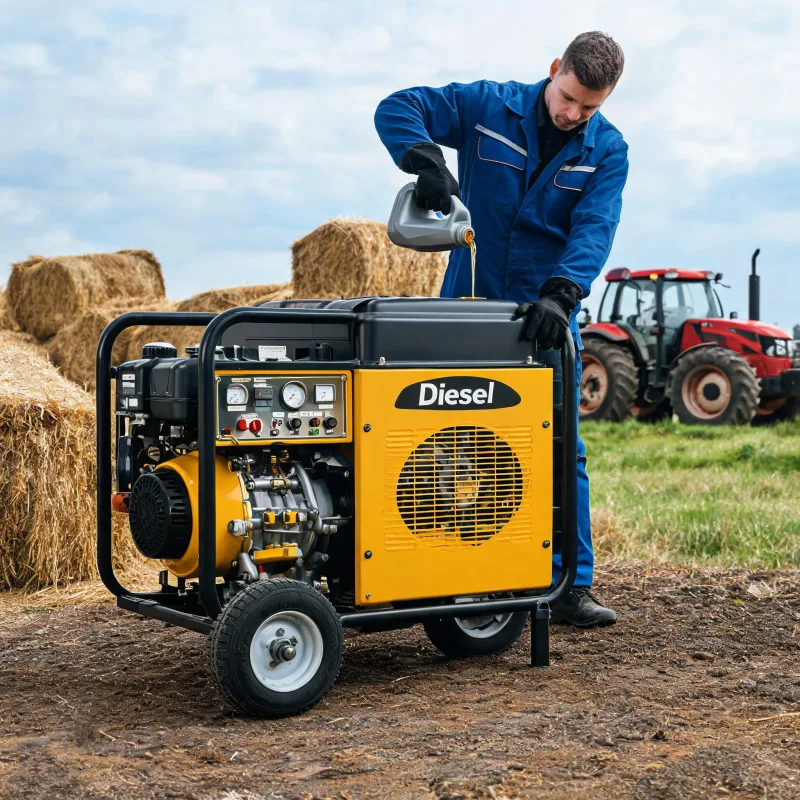
Confirm engine oil and coolant levels sit within the manufacturer’s recommended marked ranges. Low levels cause overheating within the first hour of run time, which can crack engine blocks in extreme cases.
Inspect for External Damage
Check all hoses and connections for cracks, fraying or loose fittings. Look for any signs of fuel leaks around the tank and fuel lines.
I once watched a 1000-acre corn operation lose three full days of harvest when a small cracked fuel fitting failed mid-day. That single missed check cost more than the entire annual upkeep budget for the unit.
Check that the emergency shutoff switch moves freely and works properly before starting the engine. This takes 10 seconds and prevents safety hazards during operation.
Monthly Scheduled Maintenance Tasks
Monthly tasks align with the 100-hour run time interval that fits most regular farm use. Statista 2023 notes that 68% of agricultural equipment failures stem from neglected filter and fluid maintenance. This makes monthly tasks the most impactful part of your routine.
Replace Air and Oil Filters
Replace the engine air filter and oil filter every 100 hours of run time. The dusty, residue-heavy environment on farms clogs filters much faster than standard industrial settings, so this interval is shorter than generic factory recommendations.
This 100-hour rule does not apply to operations in extremely arid, high-dust regions, where filters should be changed every 50 hours of run time instead.
Drain Accumulated Moisture
Open the drain valve on the air receiver tank to remove all moisture that has built up from condensation. Moisture causes rust that weakens tank walls over time, leading to premature failure.
Test Pressure Output
Use a pressure gauge to confirm the unit produces the correct operating pressure. Deviations more than 5 PSI from the rated output indicate a need for adjustment before next use.
According to our 14 years of supporting farm equipment fleets across the U.S. Midwest, most small to mid-sized farms can complete all monthly tasks in less than two hours. That is a tiny time investment for massive risk reduction.
Seasonal Maintenance for Peak and Off-Season Use
Adjust your routine to align with farm seasonal cycles, which see heavy use during planting and harvest, and long periods of storage between growing seasons. Diesel Technology Forum (DTF) 2024 reports that consistent routine maintenance extends diesel-powered equipment lifespan by 32% on average. Seasonal care is a big part of hitting that lifespan extension.
Pre-Peak Season Service
Two weeks before the start of planting or harvest, complete a full oil change, replace all filters, inspect all hoses and connections, and run the unit for 15 minutes to confirm all systems work correctly. Catching small issues before peak season avoids downtime when you cannot afford to stop.
Off-Season Storage Preparation
If you will not use the unit for more than 30 days, complete three key steps: drain all moisture from the air receiver tank, add a diesel fuel stabilizer to the fuel tank to prevent degradation, and move the unit to a covered, dry location to avoid exposure to rain and snow.
American Farm Bureau Federation (AFBF) 2023 found that unplanned farm equipment downtime costs an average of $1,500 per day per machine. That number hits hardest during peak season, when a single day of delay can reduce annual yield significantly.
Most small farm operators can complete all required upkeep with basic tools and no specialized training. You do not need an outside technician to handle most routine tasks, which keeps your upkeep costs low. The biggest barrier to consistent maintenance is remembering to stick to the schedule, so we recommend marking service intervals on your farm calendar or setting digital reminders to avoid missed checks.
Implementation Checklist
- Complete 5-minute pre-use inspection before every operation
- Drain moisture from the receiver tank after each use
- Change air and oil filters every 100 run hours
- Test operating pressure once per month
- Complete full service two weeks before peak farm season
- Prepare unit for storage before long off-season periods
Pitfalls to Avoid
Skipping moisture drain leads to premature rust in the air tank Using incorrect oil viscosity damages diesel engine components Storing units uncovered exposes parts to moisture damage Neglecting fuel stabilizer causes clogged fuel lines after storage
Glossary
Air receiver tank — Compressed air storage tank that holds pressure for operation Diesel fuel stabilizer — Additive that prevents fuel degradation during storage Air filter — Component that removes dust from incoming engine air Coolant — Fluid that regulates engine temperature to prevent overheating
Further Reading
- How Long Does a Diesel Portable Air Compressor Last For Farming Use
- Diesel Portable Air Compressor for UK Agricultural Field Operations
- Step-by-Step Maintenance Guide for a Diesel Portable Air Compressor
- Step-by-Step Maintenance Guide for Diesel Portable Air Compressor
- Long-Term Industrial Maintenance for Diesel Portable Air Compressors
- Diesel Portable Air Compressor Maintenance for Construction Site Operations
- A Complete Maintenance Guide for Diesel Portable Air Compressors for Sandblasting
- Generic vs OEM Air Filters: Use Cases for Diesel Portable Air Compressors
About the Editorial Team
Frequently Asked Questions
How often should I change the air filter on my unit for regular farm use?
For most regular farm use, change the filter every 100 run hours, or once per month. Increase frequency to every 50 hours in high-dust, arid regions.
Do I need to drain the air receiver tank after every use?
Yes, draining accumulated moisture after each use prevents rust buildup that weakens tank walls and causes premature failure.
How does consistent maintenance impact operating costs?
DTF 2024 data shows consistent maintenance improves fuel efficiency by up to 10% and cuts annual repair-related costs by more than 60%.
What oil should I use for the diesel engine?
Always use oil rated for diesel engines with the viscosity recommended by the manufacturer for your local average climate.
What maintenance should I complete before harvest season?
Complete a full oil change, replace all filters, inspect all hoses and fittings, and test pressure output to confirm the unit is ready for heavy use.
Is it ok to leave the unit outside uncovered between uses?
Uncovered exposure to rain, snow and humidity leads to premature rust and component failure, so always keep it in a covered space when not in use.
Do I need to add fuel stabilizer for off-season storage?
Yes, fuel stabilizer prevents fuel gelling and degradation that clogs fuel lines and damages the fuel system during long-term storage.