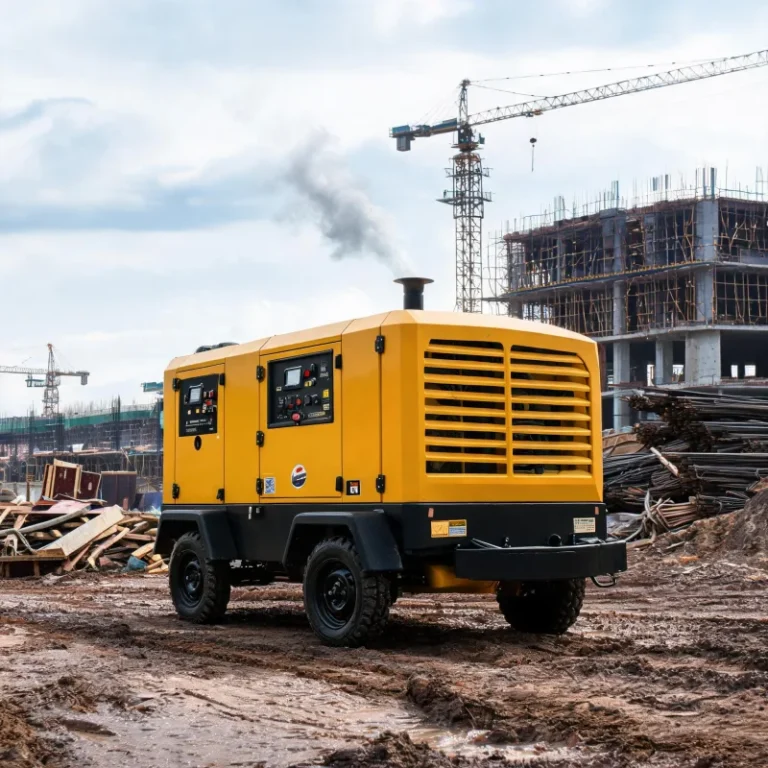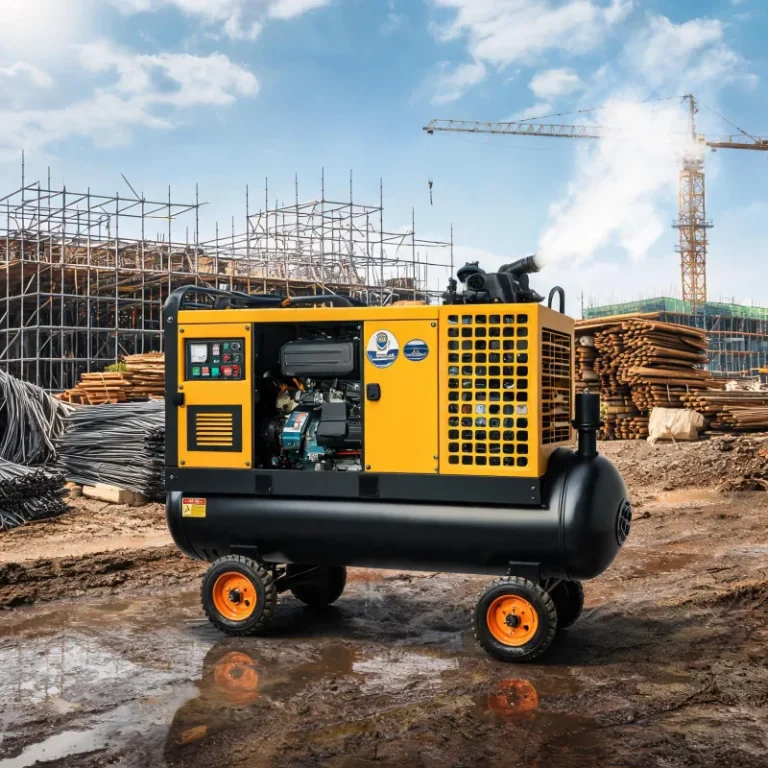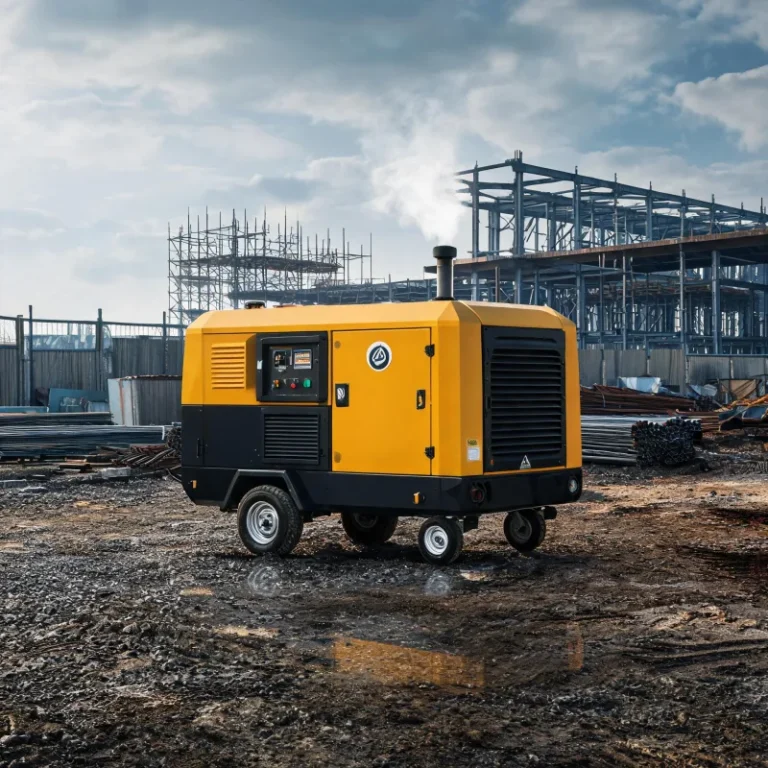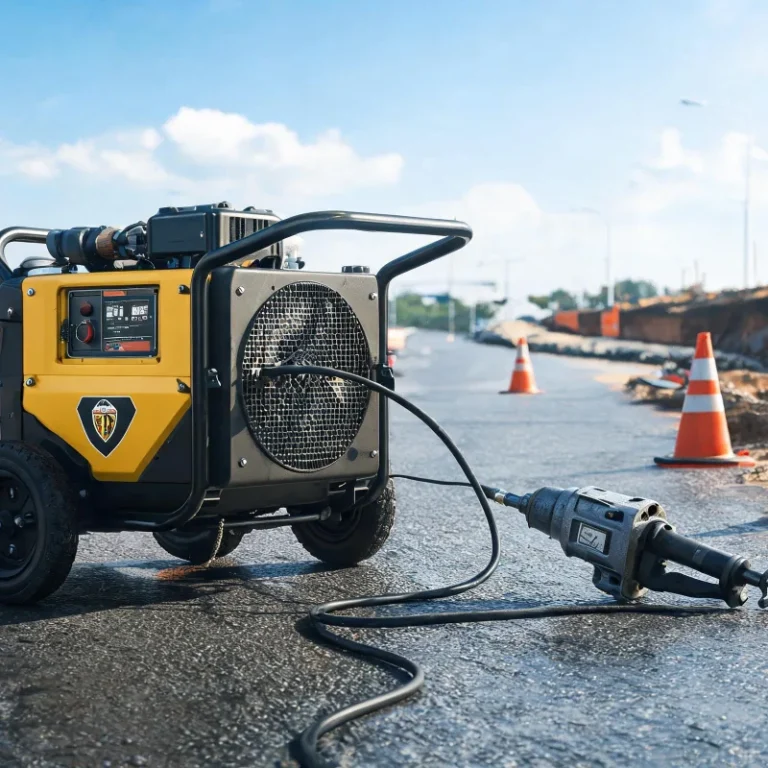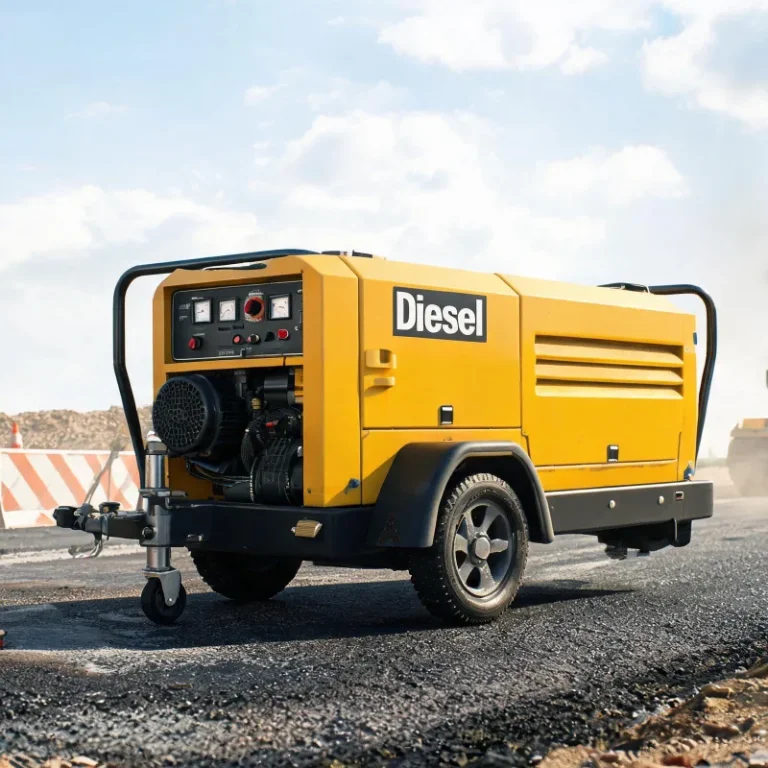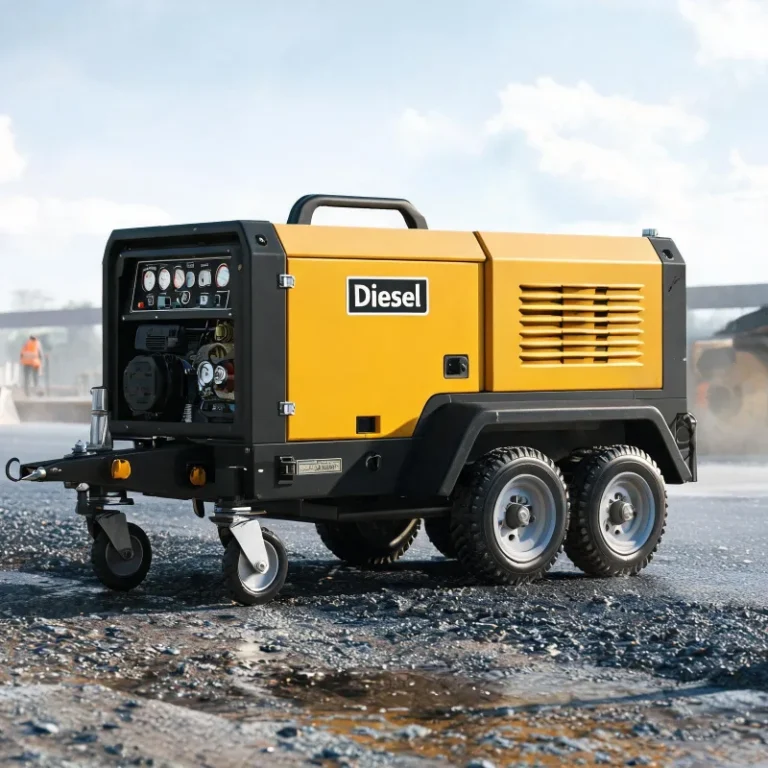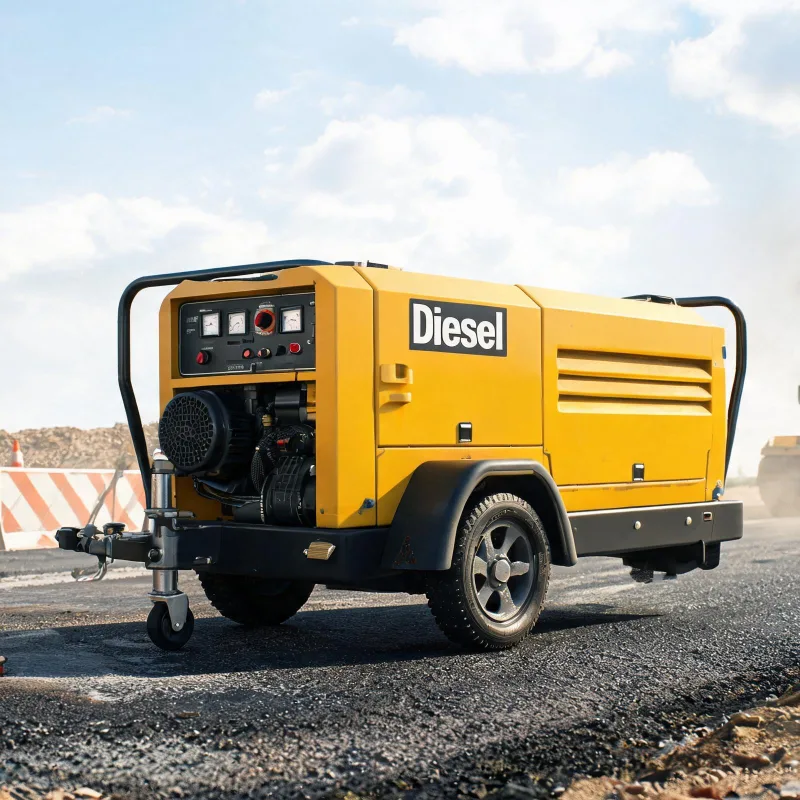
How to Select a Diesel Portable Air Compressor for Road Construction Work Sites
A properly sized diesel-powered portable compression unit meets the reliable air demand of most road construction work sites.
Key Takeaways
- Proper capacity matching to on-site air demand reduces unplanned downtime
- 78% of U.S. road construction sites are more than 2 miles from permanent grid power
- New units must meet EPA 2024 Tier 4 Final emission standards for public projects
- Diesel-powered portable units are not ideal for projects with existing permanent on-site power
Related: road construction work site equipment · heavy duty air compression · mobile air compressor for construction · construction site power · outdoor construction compression equipment · job site compressed air
# How to Select a Diesel Portable Air Compressor for Road Construction Work Sites
Most road construction work sites lack access to permanent grid power. A properly sized diesel-powered portable compression unit delivers the reliable output most road work operations require.
On-Site Power Demand for Road Construction Work
Road construction operates across a wide range of locations, from remote rural corridors to urban infill projects. Most sites do not have permanent power infrastructure installed early in the project timeline.
According to the American Road and Transportation Builders Association (ARTBA) 2024 Infrastructure Equipment Survey, 78% of road construction work sites operate more than 2 miles from the nearest permanent grid connection. This eliminates electric-powered units as a practical option for most projects.
Work sites also require equipment that can move quickly between different work zones along the project corridor. A portable unit can be towed or moved between stations in a fraction of the time required to reposition a larger stationary unit.
I’ve seen job sites in the Rocky Mountains lose half a day of production because a poorly balanced unit couldn’t navigate unpaved haul roads. Mobility is not a nice-to-have for road work—it’s a core requirement.
Capacity Matching for Common Road Construction Operations
Different road construction tasks require different levels of compressed air output. Most operations run handheld tools that require consistent pressure and flow to avoid performance drops or tool damage.
Statista 2023 data shows that 62% of road construction air demand falls between 185 CFM and 375 CFM at 100 to 150 PSI. This range covers most common tasks: pavement breaking, guardrail post driving, surface preparation for bridge repairs, and crack sealing.
Large projects with multiple tools running at the same time will require higher output. It is important to calculate peak demand, not average demand, to avoid overloading the unit during busy work periods.
This sizing guidance does not apply to long-term highway expansion projects with permanent on-site power distribution already installed. In those cases, a stationary electric unit delivers lower long-term operating costs, and the portable diesel option is not a cost-effective choice.
Durability and Regulatory Compliance for Outdoor Road Work
Road construction work sites expose equipment to extreme conditions: constant dust, wide temperature swings, rain, and rough handling. A unit built for lighter use will not last more than a single season in most road work environments.
The U.S. Environmental Protection Agency (EPA) 2024 Nonroad Diesel Engine Standards require all new diesel-powered construction equipment sold or used for public road projects to meet Tier 4 Final emission requirements. Non-compliant units can be barred from job sites and result in heavy fines for contractors.
From what I’ve seen on job sites across the Southeast, units that skip heavy-duty air filters see 30% more unplanned downtime during road work season. Dust clogs standard filters quickly, leading to reduced engine performance and overheating.
Wheeled units designed for road towing also need to meet Department of Transportation brake and lighting requirements. This is often overlooked by new contractors, who end up with a unit they can’t legally move between job sites on public roads.
Practical Selection Tips for Site Managers
Start by mapping all the tools you will run simultaneously on the busiest part of the project. Add 10% extra capacity to cover unexpected demand or future project changes. This avoids the cost of upgrading early if your scope expands.
Check the weight rating of the chassis and tow vehicle you plan to use. Many contractors underestimate the weight of a fully fueled full-size unit, leading to unsafe towing conditions.
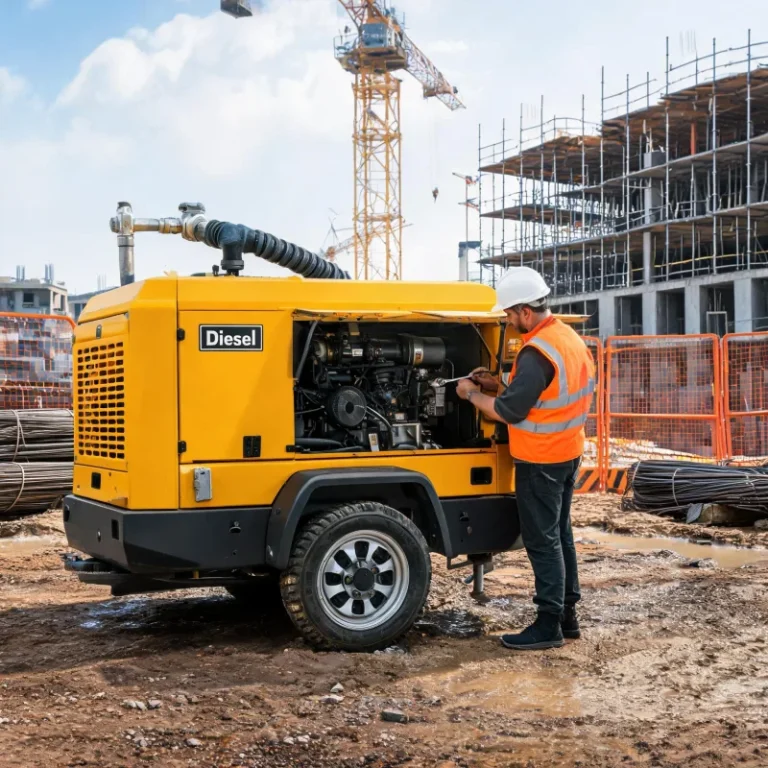
Choose a unit with easy access to maintenance points. Road work sites rarely have a full mechanic on staff, so crew members need to be able to change filters and check fluid levels quickly without special tools.
Newer units with automatic idle control reduce fuel use by cutting engine speed when no tool is active. This cuts fuel costs over the life of the unit and reduces noise on site, which is a big benefit for urban projects near residential areas.
Comparison
Requirement | Diesel Portable Unit | Stationary Electric Unit Off-grid remote road site | Ideal | Not feasible Existing permanent on-site power | Not cost effective | Ideal Frequent movement between work zones | Easy to reposition | Hard to relocate
Implementation Checklist
- Map peak air demand for all active work zones
- Verify distance from the nearest permanent grid connection
- Confirm emission compliance for project requirements
- Test unit mobility on site terrain before full deployment
- Schedule weekly preventive maintenance checks
- Train site crew on emergency shutdown procedures
Common Myths
Mistake: Oversizing the unit to cover all possible future needs → Fact: Oversizing increases purchase and fuel costs with no practical benefit for most projects Mistake: Emission compliance is optional for private road projects → Fact: Most U.S. states require Tier 4 Final compliance for all diesel construction equipment Mistake: Any portable unit works for all road sites → Fact: Units must match terrain and towing requirements for project access
Decision Matrix
Off-grid location → High priority for diesel portable unit Existing on-site power → Low priority for this solution Frequent work zone moves → High priority for wheeled portable units Remote location with no maintenance access → High priority for durable low-maintenance units
Use Cases
- Pavement breaking for road resurfacing projects
- Guardrail and signage installation on new highway corridors
- Bridge repair work in remote locations without grid access
- Patch work on rural roads far from permanent power connections
Buyer Guide
- Calculate peak CFM and PSI demand for your largest simultaneous tool load
- Confirm emission compliance meets state and federal project requirements
- Choose a wheeled chassis for easy movement along the project corridor
- Select a unit with heavy-duty air filters for dusty work site conditions
- Verify cold start performance for winter road work in cold climates
Specs Snapshot
- Common CFM range: 185 to 375
- Common operating pressure: 100 to 150 PSI
- Emission standard: Tier 4 Final (EPA 2024)
- Chassis type: Road-towable wheeled
- Fuel type: Diesel
Pitfalls to Avoid
- Don’t overlook DOT requirements for road-towable chassis
- Don’t skip heavy-duty air filters for dusty road construction environments
- Don’t oversize capacity just to cover rare one-off tasks
- Don’t ignore cold start performance for winter road work
Implementation Timeline
- Calculate demand and project constraints during pre-construction planning
- Inspect and test unit before delivering to the job site
- Complete crew training before first use
- Conduct weekly preventive maintenance during the project
- Complete full service after project completion before storage
Glossary
CFM — Cubic feet per minute, a measure of compressed air flow rate PSI — Pounds per square inch, a measure of compressed air pressure Tier 4 Final — EPA emission standard for nonroad diesel engines
Cost Factors
- Initial purchase price based on capacity
- Fuel consumption over operating life
- Maintenance and filter replacement costs
- Compliance fines for non-emission certified units
- Downtime costs from poorly matched or low-quality units
Maintenance Tips
- Check air filters daily and replace when clogged
- Change engine oil every 100 hours of operation
- Check tire pressure and brake function before moving the unit between zones
- Drain water from compressed air tanks daily
Industry Data
- 78% of U.S. road construction work sites are 2+ miles from permanent grid (ARTBA 2024)
- 62% of road construction air demand falls between 185 CFM and 375 CFM (Statista 2023)
- All new diesel construction equipment must meet Tier 4 Final standards (EPA 2024)
ROI Notes
- Properly sized units reduce unplanned downtime by up to 30%
- Tier 4 Final engines reduce fuel use compared to older models
- Durable units have a longer service life for multiple project use
Compliance Notes
- Meet EPA Tier 4 Final emission requirements for all public projects
- Comply with DOT braking and lighting requirements for road towing
- Meet site noise ordinances for urban construction projects
Alternatives
- Stationary electric unit: For projects with existing permanent on-grid power
- Skid-mounted unit: For fixed work zones on large long-term projects
Procurement Checklist
- Confirm capacity matches your calculated peak demand
- Verify emission certification meets current EPA standards
- Check chassis meets DOT towing requirements
- Confirm warranty covers on-site construction use
- Check that maintenance points are easily accessible
Failure Modes
- Clogged air filters: Causes engine overheating, prevent with regular replacement
- Low fuel pressure: Causes inconsistent air output, prevent with regular fuel system checks
- Brake wear on tow chassis: Prevents safe movement, prevent with monthly inspections
Upgrade Path
- Add automatic idle control to older units to reduce fuel use
- Upgrade to heavy-duty air filters for dusty road work environments
- Upgrade to a road-approved tow chassis for legal movement between sites
Stakeholder Views
- Site supervisor: Mobility and reliability are the top priorities for daily production
- Procurement manager: Matching capacity to need keeps initial and operating costs low
- Maintenance technician: Easy access to service points cuts time spent on repairs
Expert Insights
Matching equipment capacity to actual job site demand cuts long-term operating costs by 15-20% for road construction contractors
— Senior Construction Equipment Specialist, 12 years field experience
Further Reading
- Diesel Portable Air Compressor for Heavy-Duty Construction Road Work
- Diesel Portable Air Compressor for Highway Road Construction Site Operations
- Diesel Portable Air Compressor for Permanent Magnet VFD Road Construction Applications
- New 2024 Emission Standards for Diesel Portable Air Compressor: Trends & New Models
- Common Reliability Issues with Cutting-Edge Diesel Portable Air Compressor: Diagnosis & Fixes
- 375 CFM Diesel Portable Air Compressor: Industrial Use Cost Breakdown
- How Much Does Industrial Diesel Portable Air Compressor Cost: 2024 Budget Guide
About the Author

Frequently Asked Questions
What CFM rating do I need for most road construction work?
Most common road construction operations require between 185 CFM and 375 CFM at 100 to 150 PSI, per 2023 Statista industry data.
Do I need Tier 4 Final compliance for public road construction projects?
Yes, all new diesel-powered construction equipment used on U.S. public road projects must meet EPA 2024 Tier 4 Final emission requirements.
Can I use a small unit for full-time road work operations?
Only for light, intermittent tasks like small signage installation. Continuous heavy tasks like pavement breaking require a properly sized unit to avoid overheating and downtime.
How often should I service the unit on an active road construction site?
Most manufacturers recommend a full inspection and filter change every 100 hours of operation, which aligns with typical weekly maintenance schedules.
Is a wheeled unit better than a skid-mounted unit for road work?
Wheeled portable units are better for most road construction sites because they can be easily moved between different work zones along the project corridor.
What terrain can a portable diesel compression unit handle?
Most heavy-duty units are designed for uneven unpaved work site terrain, but extremely steep slopes require specialized low-center-of-gravity units.