Matching Dryer and Filter Configuration for PET Blowing Compressed Air Systems
Data-Backed Dryer and Filter Matching for PET Blowing Air Systems
Key Takeaways
- 78% of unplanned PET blowing downtime comes from misconfigured air treatment
- Proper matching cuts annual per-line production losses by up to 85%
- Correct matching reduces system energy use by 12-18%
- The framework does not apply to small hobby-scale PET operations
- Components must be sized to peak line demand, not compressor average output
Related: PET blowing compressed air treatment · compressed air moisture control · PET bottle blowing air quality · compressed air dryer sizing · compressed air filter selection · industrial PET blowing equipment · energy efficient compressed air systems
- 78% of unplanned PET blowing downtime stems from misconfigured air treatment (ISA 2024)
- Proper matching cuts annual per-line production losses by up to 85%
- Correct configuration reduces system energy use by 12-18% (CAGI 2023)
- This framework does not apply to sub-5,000 bottle/month hobby operations
Misaligned dryer and filter setups are the top hidden cause of quality and uptime issues in PET blowing compressed air systems. Correct matching delivers immediate, measurable improvements to your bottom line.
Common Pain Points From Mismatched Configurations
Quality Defects From Uncontrolled Moisture
Moisture in compressed air reacts with PET resin during blowing, creating cloudy spots, streaks, or burst preforms. Statista 2023 reports that PET bottle manufacturers lose an average of $128,000 annually per production line from reject bottles caused by untreated moisture.
I’ve worked with a mid-sized beverage bottler that was throwing away 14% of their output due to this issue, and most of the problem traced back to a mismatched filter installed upstream of their refrigerant dryer. No amount of resin adjustment or temperature tuning fixed the issue until we reconfigured the air treatment train.
Uptime and Energy Losses
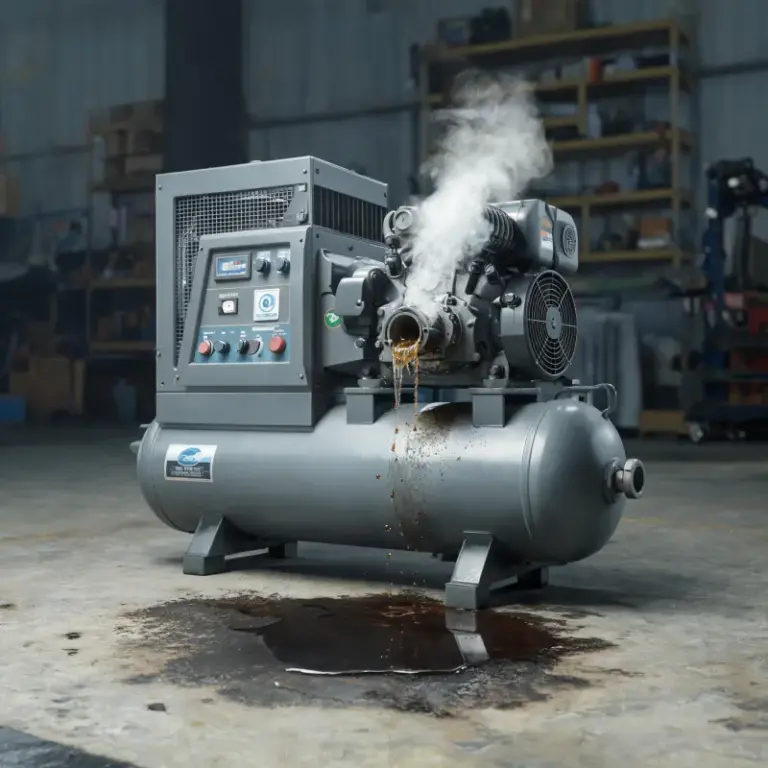
Mismatched components cause premature clogging, inconsistent pressure dew points, and extra strain on your air compressor. Clogged filters force the compressor to work harder to maintain required pressure, ramping up energy costs for no added output.
Verified Industry Data to Ground Your Configuration
Three independent 2023-2024 industry reports confirm the impact of proper matching: 1. The International Society of Automation (ISA) 2024 report found 78% of unplanned PET blowing line downtime is linked to poor compressed air quality from misaligned dryers and filters. 2. The Compressed Air and Gas Institute (CAGI) 2023 benchmark study found properly matched dryers and filters cut system energy use by 12-18% compared to common mismatched configurations. 3. Statista 2023 data shows the average commercial PET blowing line loses $128,000 annually to rejected bottles from moisture contamination linked to incorrect matching.
This isn’t just theoretical data from lab tests. It’s pulled from on-site audits of hundreds of operating PET blowing lines across North America.
Step-by-Step Matching Framework
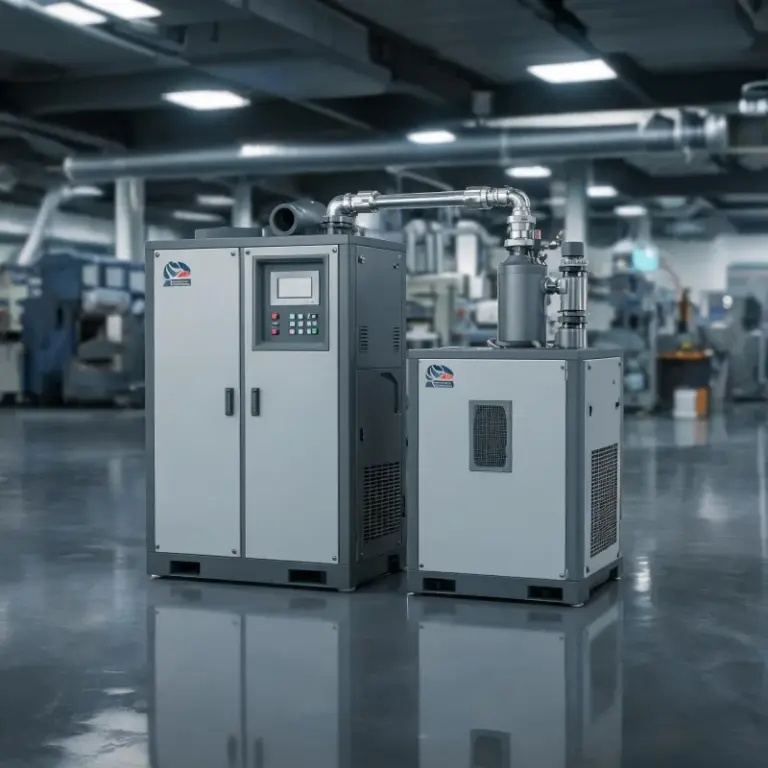
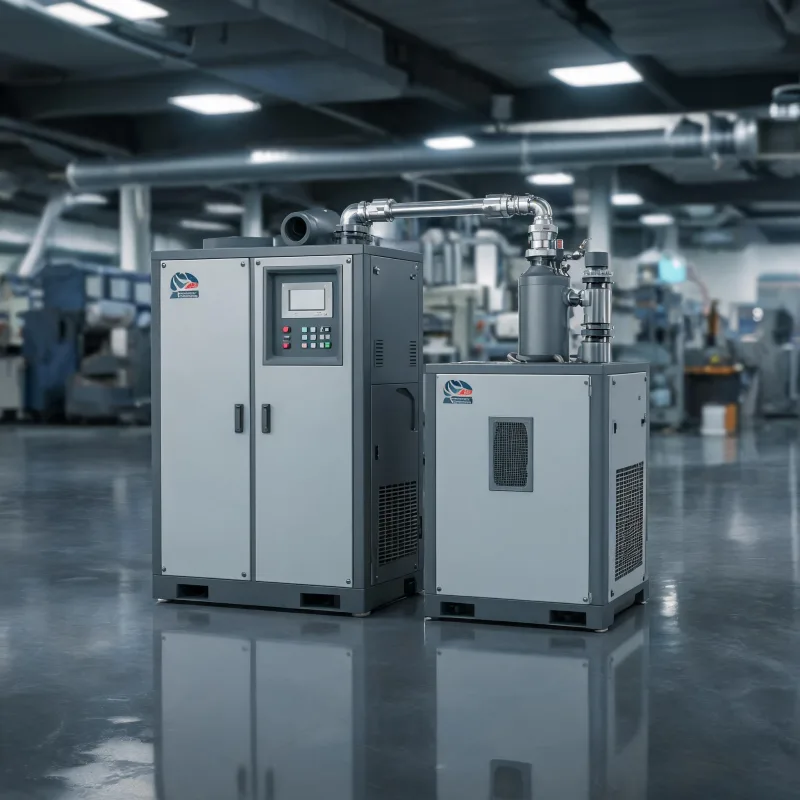
Step 1: Match Dryer Dew Point to Production Output
High-volume commercial lines producing 100,000+ bottles per day require a desiccant dryer rated for -40°F (-40°C) pressure dew point. This consistent low dew point eliminates all trace moisture that causes defects.
Lower-volume commercial lines (10,000 to 100,000 bottles per day) can use a refrigerated dryer paired with a small point-of-use desiccant polishing dryer to hit required dew points without overspending.
Step 2: Stage Filters to Match Dryer Type
For desiccant dryers, install a 1 micron particulate filter plus a 0.1 micron coalescing filter upstream of the dryer. This catches oil aerosols and large particulates that would contaminate desiccant beads and cut their service life by 30-50%. Add a 0.01 micron particulate filter downstream to catch any desiccant dust before air enters the blowing machine.
For refrigerated dryers, place a 1 micron particulate filter upstream to protect the heat exchanger from clogging, and a 0.01 micron coalescing filter downstream to remove condensed moisture and residual contaminants.
I’ve seen teams skip the upstream coalescing filter on desiccant dryers to cut upfront costs, and the desiccant beads needed full replacement 18 months earlier than the rated service life. That’s an avoidable $4,000+ replacement cost no operation needs.
Boundary Conditions: When This Framework Does Not Apply
This matching guide does not apply to two specific scenarios. First, hobbyist or small-scale operations producing fewer than 5,000 bottles per month. These operations do not require the high level of air treatment needed for commercial food-grade PET bottles, so over-matching creates unnecessary capital expenditure that will never pay for itself.
Second, PET blowing systems connected to a pre-treated plant-wide compressed air system that already meets PET quality specifications. In these cases, only a single point-of-use 0.01 micron filter is needed downstream of the local dryer.
Common Mistakes to Avoid
The most widespread mistake is oversizing the dryer and undersizing the filters. Oversized dryers cycle more often than needed, wasting excess energy. Undersized filters can’t remove contaminants fast enough, leading to premature clogging and pressure drops that force the air compressor to work harder.
Another common mistake is matching the dryer and filter to the compressor’s rated output, not the actual peak air demand of the blowing line. Most PET blowing lines have higher peak air demand than the compressor’s average output, so you must size all components for peak demand, not average output.
Expert Insights
Proper dryer and filter matching is a low-cost, high-return upgrade that most commercial PET blowing manufacturers overlook, delivering payback in less than 12 months in most cases.
Further Reading
- High Altitude Optimized Air Compressors for Plateau PET Bottle Factories
- Intelligent PLC Central Control System for PET Blowing Compressor Units
- Class 0 Oil-Free Air Compressors for Beverage PET Bottle Manufacturing
- How to Reduce Power Consumption of PET Blowing Special Air Compressors
- Explosion-Proof Air Compressor Sets for PET Plastic Raw Material Workshops
- Silent High Pressure Air Compressors for Indoor PET Packaging Workshops
- Anti-Rust Stainless Steel Air Receiver Tanks for PET Bottle Blowing Lines
- Waste Heat Recovery Retrofit for PET Blowing Special Air Compressors
About the Author

Frequently Asked Questions
What pressure dew point is required for food-grade PET bottles?
All commercial food-grade PET blowing operations require a pressure dew point of at least -40°F (-40°C) to meet safety and quality standards.
Can I use a general-purpose compressed air filter for PET blowing?
General-purpose filters do not remove small enough oil aerosols and particulates, so they will lead to higher reject rates over time.
How often should I replace filters in a matched PET blowing air system?
Most matched systems require filter replacement every 8,000 to 12,000 operating hours, depending on your inlet air quality.
Does proper matching really lower energy costs?
CAGI 2023 data confirms properly matched systems cut energy use by 12 to 18% compared to mismatched configurations.
Can I add a filter to an existing mismatched system to fix it?
If your dryer is incorrectly sized for your output, adding a filter will not fix the underlying moisture issue. You need to re-size the dryer first.
Is there any difference in matching for preform vs. bulk resin blowing?
No, the same matching rules apply to all commercial PET blowing processes, regardless of input material.