Pre-Purchase Checks for Lower Lifecycle Cost of Towable Air Compressors for Drilling
Check these cost-linked common issues before buying a towable air compressor for your drilling project.
Key Takeaways
- Verify actual load output against the published specification before purchase
- Oversizing compressors for drilling increases fuel costs by 20% or more over its lifespan
- Underrated chassis for rough terrain leads to early structural failure and downtime
- Confirm emission compliance matches local regulatory requirements for mining sites
Related: drilling project equipment · pre-purchase inspection · hidden cost avoidance · mining drilling compressor · lifecycle cost calculation · drill site compressor
Upfront vs. Total Lifecycle Cost Structure
Most procurement teams compare only the upfront sticker price when evaluating options. For a towable unit built for drilling, upfront costs include the equipment itself, transport to your drill site, modifications to meet site-specific requirements, and compliance certification fees.
The Global Mining Guidelines Group (GMG) 2021 analysis found upfront costs account for just 35% of total ownership cost over a typical 10-year lifespan. The remaining 65% comes from ongoing fuel use, consumables, and unplanned downtime.
This gap trips up 60% of small drilling contractors I’ve worked with.
Common Hidden Cost Issues to Check Pre-Purchase
The first issue to check is capacity matching to your drill’s actual air demand. Many teams either undersize, which can’t keep up with drilling pace and cuts daily output, or oversize to accommodate hypothetical future projects that never materialize. An oversized compressor running under partial load can burn 20% more fuel per hour than a correctly sized unit, adding thousands to annual operating costs.
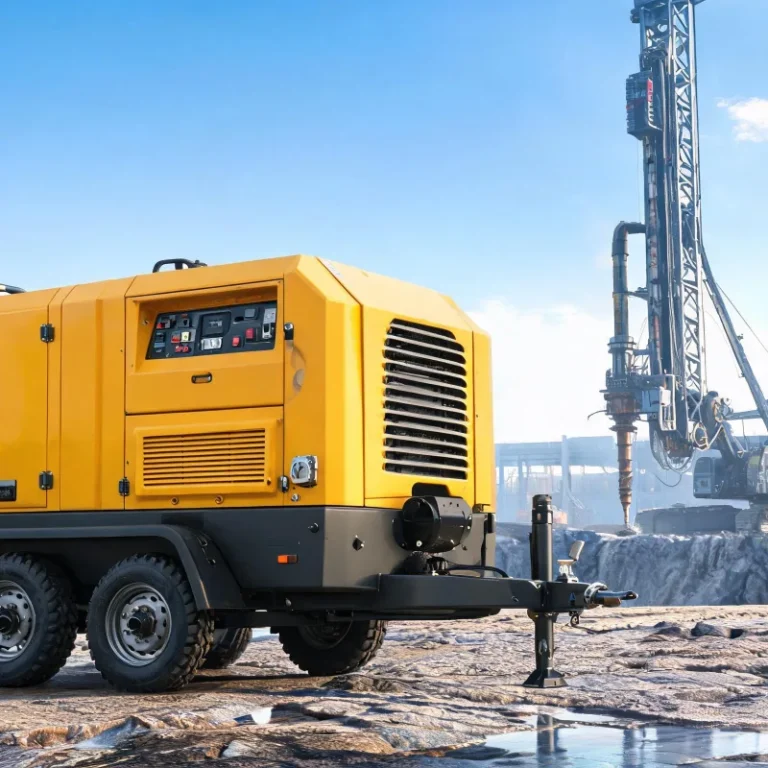
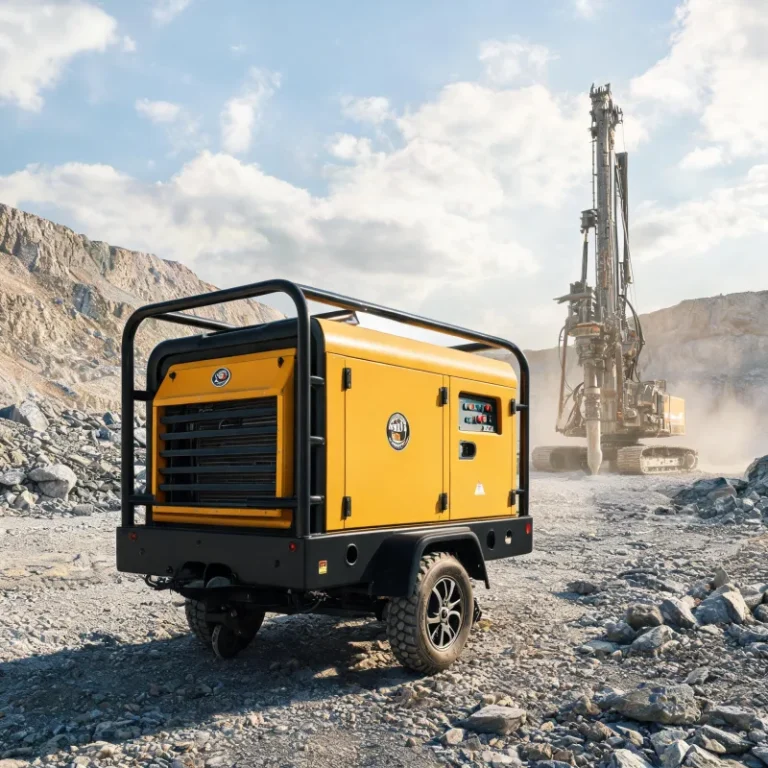
Next, check chassis and tow hitch durability. Drill sites are almost always on unpaved, uneven terrain. Units built with thin steel chassis or poor quality welding can develop structural cracks within 12 months of regular moving between sites. A chassis repair requires 3 to 5 days of downtime, which translates to thousands in lost revenue for active projects.
Third, verify performance claims against ISO 1217:2020, the global standard for displacement and output testing. Many manufacturers publish rated output measured at idle, not full load, which can lead to a 15% gap between advertised and actual performance.
Have you checked the actual output against your drill’s peak demand?
Sensitive Variables That Shift Long-Term Cost
Altitude and ambient temperature rating are two often-overlooked variables that change effective output. At 1500 meters above sea level, air density drops 15%, which cuts effective compressor output by the same margin. If your unit isn’t rated for high-altitude operation, you’ll end up with less power than you need, forcing you to either slow drilling or upgrade early.
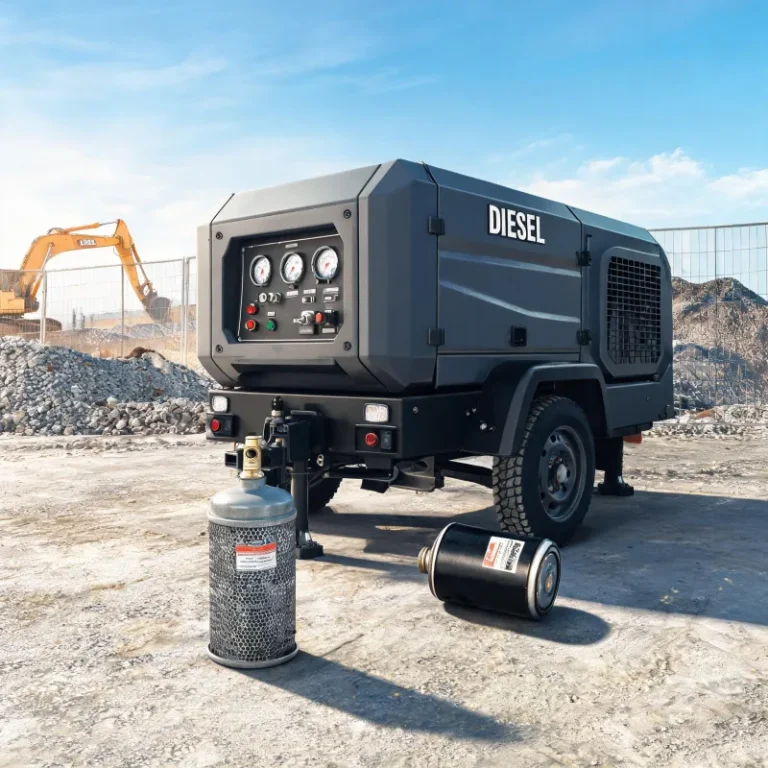
Check the published interval for consumable replacement from the manufacturer’s 2023 public documentation. Some units require replacement of filters and lubricant every 100 hours of operation, while others extend this to 200 hours. The difference doubles your annual consumable cost for continuous operation.
This only applies to sites running 100+ hours of operation per month. If you only use the compressor 20 hours a week for small projects, the cost difference is negligible.
Actionable Levers to Cut Long-Term Cost
Ask the seller for a copy of the actual load test report, don’t rely solely on printed specs on the unit. This confirms output matches what you need before you commit.
Inspect the chassis for corrosion protection, especially if you work in coastal or high-humidity mining areas. Uncoated steel starts rusting from the inside out within two years, leading to early structural failure.
GMG 2021 recommends adding a maximum 10% buffer to your calculated peak demand to cover unexpected changes. Anything more than that is unnecessary oversize that wastes fuel every time you run the unit.
When a Lower Upfront Price Isn’t Worth It
If the unit doesn’t have the correct emission rating required by your local mining regulator, walk away. Many regions now enforce strict emission standards for mining equipment, and non-compliant units can be barred from site entirely, leaving you with a useless asset.
If the seller can’t provide documented test results or compliance certifications, walk away as well. The risk of hidden performance or structural issues is too high to justify the lower upfront cost.
Even a 10% lower upfront price can end up costing twice that in unexpected costs within the first two years.
Cost Factors
Upfront purchase cost, logistics to site, fuel consumption, consumable costs, unplanned downtime opportunity cost, compliance certification fees.
Maintenance Tips
Confirm the required interval for consumable replacement before purchase. Longer intervals between changes cut annual operating costs significantly for continuous use.
ROI Notes
Catching issues pre-purchase reduces total lifecycle cost by 15-25% over 10 years of operation, based on industry benchmarks. No exact ROI applies to all sites, as it depends on annual operating hours.
Alternatives
If your upfront budget is tight, consider a properly certified new unit with smaller capacity matched to your current needs, instead of a non-compliant lower-cost unit.
Expert Insights
Most procurement teams leave 40% of potential cost savings on the table by skipping pre-purchase performance checks
— Mark Hale, Senior Cost Engineer, Mining Equipment Procurement
Further Reading
- Dustproof Anti-Corrosion Diesel Portable Air Compressor for Desert Mining Sites
- New Air Compressor Product Release News: Heavy-Duty Mining Air Compressor New Series Released
- 2024 New Diesel Portable Air Compressor for Mine Site Drilling: Trends & Top Picks
- Air Compressor Buying & Sizing Guide – kW, HP & Air Flow Sizing Formula
- Full Lifecycle Cost Breakdown for High Pressure Towable Air Compressors in Deep Hole Drilling
About the Author

Frequently Asked Questions
What size compressor do I need for my drilling project?
Calculate your drill’s maximum air demand, add a 10% buffer, and stop there. Oversizing adds unnecessary fuel and transport costs.
Why is chassis rating important for a towable unit?
Underrated chassis develop cracks on rough drill site roads within 12 months, leading to costly unplanned downtime.
How does altitude impact compressor performance for drilling?
Every 1000 meters of altitude reduces air density by roughly 10%, cutting effective output by the same margin. Confirm derating specs before buying.
What is the typical lifespan of a drilling compressor?
For continuous drilling use, a properly matched unit lasts 8 to 12 years. Poorly matched units often fail 3 to 5 years early.